Dan Ashworth Net Worth 2026 And Executive Career
Dan Ashworth Net Worth updates focus on his senior football roles, contract moves, and publicly disclosed financial context.
Author:James RowleyMay 07, 202673 Shares14.5K Views
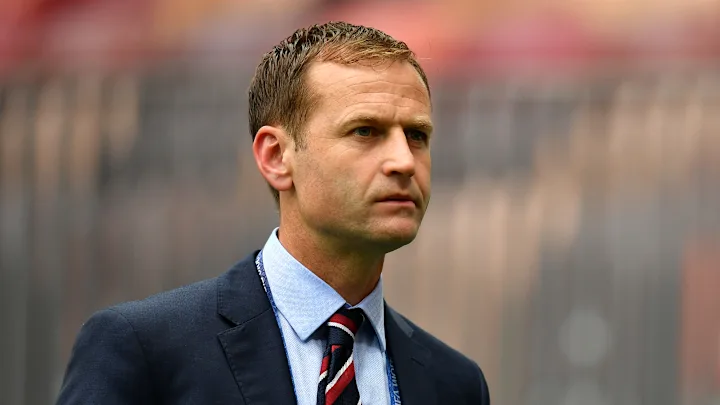
As of 2026, Dan Ashworth’s net worth has not been officially confirmed or publicly disclosed. He earns income from senior executive roles in football, including his position as the Football Association’s Chief Football Officer and his previous sporting director roles at Manchester United and Newcastle United. He also held technical director roles at West Bromwich Albion and Brighton & Hove Albion.
These positions are salaried, but the exact compensation terms have not been publicly released. Manchester United’s official accounts recorded a £4.1m exceptional cost related to Ashworth’s acquisition and departure in 2024, covering the transfer fee paid to his former club and his exit settlement, although no breakdown of his personal payout was provided. Specific income figures from his various roles remain undisclosed.
| Key Fact | Verified Details |
| Dan Ashworth Net Worth (2026) | Not publicly disclosed; earnings come from senior football executive roles. |
| Current Role | FA Chief Football Officer since May 2025. |
| FA Responsibilities | Leads England’s high-performance strategy and St. George’s Park redevelopment. |
| England DNA Plan | Co-created the FA’s unified coaching philosophy. |
| FA Leadership (2012–2018) | Served as Director of Elite Development. |
| Youth World Cup Titles | England U17 and U20 won FIFA World Cups in 2017. |
| Senior Team Milestone | England reached the 2018 World Cup semi-finals. |
| West Brom Tenure | Oversaw two Premier League promotions. |
| Brighton Role | Strengthened recruitment and academy structure. |
| Newcastle Appointment | Became first Director of Football in 2022. |
| Newcastle Transfers | Led major squad rebuild in 2022 window. |
| Manchester United Role | Sporting Director from July–December 2024. |
| Education | Degree in Sports Science and Physical Education. |
| Early Career | Began as Academy Director at Peterborough United (2000). |
| Professional Reputation | Known for youth development and strategic planning. |
FA Chief Football Officer Pay And Public Salary Context
Dan Ashworth returned to The Football Association in May 2025 as its first-ever Chief Football Officer, a newly created senior executive position. He is responsible for England’s long-term high-performance strategy and the oversight of a major redevelopment of St. George’s Park, the FA’s national training centre, ahead of England co-hosting UEFA EURO 2028.
Ashworth also has strategic oversight of both the England men’s and women’s teams under FA CEO Mark Bullingham. Bullingham described him as “a hugely influential and respected figure in the game, who has a long-standing commitment to England Football.” His work covers the development of systems from grassroots football through to the senior squads, with a focus on homegrown coaches and a unified playing philosophy.
FA accounts and media reports make senior executive compensation public. FA chief executive Mark Bullingham earned £1.32m in 2024, placing Ashworth’s Chief Football Officer salary within the wider context of top-tier national sports governance pay.
Manchester United Sporting Director Role And Pay Context
Ashworth joined Manchester United in July 2024 as Sporting Director under the club’s new INEOS ownership structure. He oversaw football operations and recruitment, reporting to newly appointed CEO Omar Berrada.
United spent roughly £200m during the summer transfer window on players including Leny Yoro, Manuel Ugarte, Joshua Zirkzee, Matthijs de Ligt and Noussair Mazraoui. Ashworth was also at the club during the managerial change after United dismissed Erik ten Hag in October 2024 and later appointed Ruben Amorim.
Ashworth and the club agreed to part ways after only five months. Manchester United announced in December 2024 that he would leave “by mutual agreement,” thanking him for his work during a transitional period.
Club accounts later showed that Manchester United spent about £4.1m to hire and then release Ashworth during that period. The figure covered compensation paid to Newcastle for Ashworth’s transfer and the payoff on his contract termination, but did not include his regular salary. The unusually large cost put Ashworth’s short spell at Manchester United in the wider context of how much Premier League clubs can pay to secure a sporting director of his caliber.
Newcastle United Sporting Director Contract Context
Ashworth joined Newcastle United in June 2022 as Sporting Director after a formal agreement released him from his Brighton contract. He immediately took charge of Newcastle’s football strategy, overseeing development and recruitment at every level while working closely with manager Eddie Howe, academy manager Steve Harper and head of recruitment Steve Nickson.
Upon announcement, Ashworth said, “Newcastle United is an incredible football club” and said he was “incredibly positive about what we can collectively achieve.” The club’s ownership group called him “the ideal person for this hugely important position” with a “strong track record in elite level football” and welcomed his arrival.
Manchester United moved to hire Ashworth in early 2024, leading to a complex contract negotiation. Newcastle United placed him on gardening leave in February 2024 after it became clear he wished to move to Manchester. The two clubs negotiated compensation, with reports putting Newcastle’s initial demand at around £20m while United offered only a few million. The impasse ended in late June 2024 through a confidential out-of-court settlement.
A joint statement said, “Newcastle United and Manchester United have reached an agreement for the immediate release of Dan Ashworth from his contractual obligations,” but the exact terms were not disclosed. The settlement gave Newcastle a financial boost, helping the club comply with Premier League profit-and-sustainability regulations while the club also sold key players to balance the books.
Brighton Technical Director Role And Career Value
Before joining Newcastle, Ashworth served as Technical Director at Brighton & Hove Albion from 2018 to 2022. He moved to Brighton from the FA in September 2018 to lead the club’s technical department, covering the academy, sports science and medical divisions while also playing a major role in senior recruitment.
Under his guidance, Brighton strengthened its position as a Premier League club and further developed its women’s program. Brighton CEO Paul Barber said he “has been an important part of the club’s senior management team and has made a significant contribution to our club’s progress in the Premier League and Women’s Super League.” Chairman Tony Bloom added that Ashworth “did an outstanding job” and left a “significant legacy” across Brighton’s technical areas.
During Ashworth’s time at Brighton, the club became known for promoting young talent into the first team and benefiting from player sales. Those developments reflected the structures and pathways he helped establish. When he resigned in February 2022 to pursue a move to Newcastle, Brighton immediately placed him on contractually required gardening leave, during which he handed over duties to his successor.
West Brom Technical Director Role And Early Career Value
Ashworth’s early executive experience began at West Bromwich Albion. He joined the club in March 2004 from Cambridge United’s youth setup, initially working under Aidy Boothroyd. Within months, he became head of youth development and oversaw the move to full academy status for the 2005–06 season. In December 2007, the club seconded him into the role of Sporting & Technical Director (Designate), before making the position permanent in July 2008.
Over the next five years, Ashworth helped modernize West Brom’s football operations. Chairman Jeremy Peace credited him with strengthening every department under his responsibility, including first-team scouting and recruitment, medical operations, sports science and the academy structure. Peace said those departments had all “gone from strength to strength” under Ashworth’s leadership.
He also said Ashworth oversaw three head coach appointments while maintaining the club’s long-term football philosophy. During that period, West Brom won promotion to the Premier League and secured three successive top-flight seasons, a significant achievement in the club’s modern era. When Ashworth left for the FA in 2013, Peace said he had “laid a solid foundation” for the Sporting & Technical Director role at the club.
FA Elite Development Role And Executive Pay Context
From 2013 until 2019, Ashworth held senior development roles at The FA. He was initially appointed Director of Elite Development and later served as Technical Director for England’s national teams, with responsibility for England’s youth and performance programs. He developed the “England DNA” philosophy, a unified playing style and development framework across all age groups. Ashworth described the system by saying “the only thing that changes is the size of the shirt” as players move through the youth levels.
England’s youth teams achieved unprecedented success during his FA tenure. England won the FIFA U-17 World Cup in 2017, the FIFA U-20 World Cup in 2017, and the UEFA U-19 European Championship in 2016, while the senior men’s team reached the semi-finals of the 2018 FIFA World Cup.
England manager Gareth Southgate later said Ashworth “couldn’t have had a bigger impact with the plans he put in place” during his time at the FA. As a full-time FA executive leading elite development programs, Ashworth held a senior role within the governing body’s football development structure, placing his work among the top levels of English football administration.
Premier League Recruitment Leadership Market Value
Throughout his career, Ashworth has been regarded as one of English football’s leading sporting directors and technical executives. Sir Jim Ratcliffe described him publicly as “one of the best sporting directors in the world,” a reflection of the reputation Ashworth built across West Bromwich Albion, the FA, Brighton and Newcastle United. His appointments have consistently been treated as strategic leadership hires, not routine executive changes.
The financial and contractual terms linked to his moves show the rising market value of elite football recruitment specialists. Manchester United’s pursuit of Ashworth in 2024 was widely viewed as a key part of the club’s new football structure under INEOS ownership.
Compensation arrangements tied to his departures from Brighton and Newcastle showed that Premier League clubs are willing to negotiate significant sums to secure experienced sporting leadership. Ashworth’s career sits within the growing importance of long-term football planning, academy integration, recruitment strategy and performance infrastructure inside elite football organizations.
Exit Terms And Notice Periods Across Club Moves
Ashworth’s career moves have consistently followed formal contractual processes, including notice periods, gardening leave arrangements and negotiated settlements. After West Bromwich Albion gave him permission to speak with the FA in 2012, he remained with the club through the 2012–13 season before formally taking up his FA position in July 2013. During that period, he continued overseeing recruitment planning and succession arrangements within West Brom’s football operations.
Brighton confirmed in 2022 that Ashworth would begin an extended gardening leave period in line with his contract before joining Newcastle United. Newcastle later used a similar approach in 2024 after Manchester United approached Ashworth for their Sporting Director role. He remained on gardening leave for several months while the clubs continued compensation negotiations.
Manchester United’s December 2024 announcement said his departure happened “by mutual agreement,” although the financial details were not publicly disclosed at the time. Across each move, Ashworth’s exits were managed through negotiated contractual procedures rather than immediate departures, reflecting the high commercial value attached to senior football executives at Premier League level.
FAQs
What Is Dan Ashworth Known For?
Dan Ashworth is known for senior football executive roles across club and national football. His work has focused on recruitment, technical development, academy systems, and long-term football strategy.
When Did Dan Ashworth Return To The Football Association?
Dan Ashworth returned to The Football Association in May 2025 as its first-ever Chief Football Officer. The role placed him in charge of long-term high-performance strategy and wider football development oversight.
Which Clubs Has Dan Ashworth Worked For?
Dan Ashworth has worked for West Bromwich Albion, Brighton & Hove Albion, Newcastle United, and Manchester United. He has also held senior roles at The Football Association.
What Was Dan Ashworth’s Role At Brighton?
Dan Ashworth served as Technical Director at Brighton & Hove Albion from 2018 to 2022. His responsibilities covered technical operations, academy development, sports science, medical divisions, and senior recruitment.
Did Dan Ashworth Work With England’s National Teams?
Yes. During his earlier FA tenure, Ashworth worked on England’s elite development structure and national team pathway. He was associated with the “England DNA” framework used across age-group teams.

James Rowley
Author
James Rowley is a London-based writer and researcher covering London life, cultural geography, London travel, live London webcam pages and selected public figures across entertainment, sport, business and public life.
For over 15 years, he has focused on verified sources, first-hand local context and clear explanations that help readers understand both places and people more deeply. His work combines street-level London knowledge with careful research into career credits, media work, business interests and, where relevant, transparently explained net worth estimates.
He writes and reviews articles published on LondonWebcam.
Latest Articles
Popular Articles