From London Streets To Live Casino Tables - How Live Streaming Reinvented Entertainment
Live streaming has changed entertainment by making real-time experiences feel more immediate, social, and human. Audiences now want more than polished content; they want to feel present in the moment.
Jun 02, 202645 Shares14.8K Views
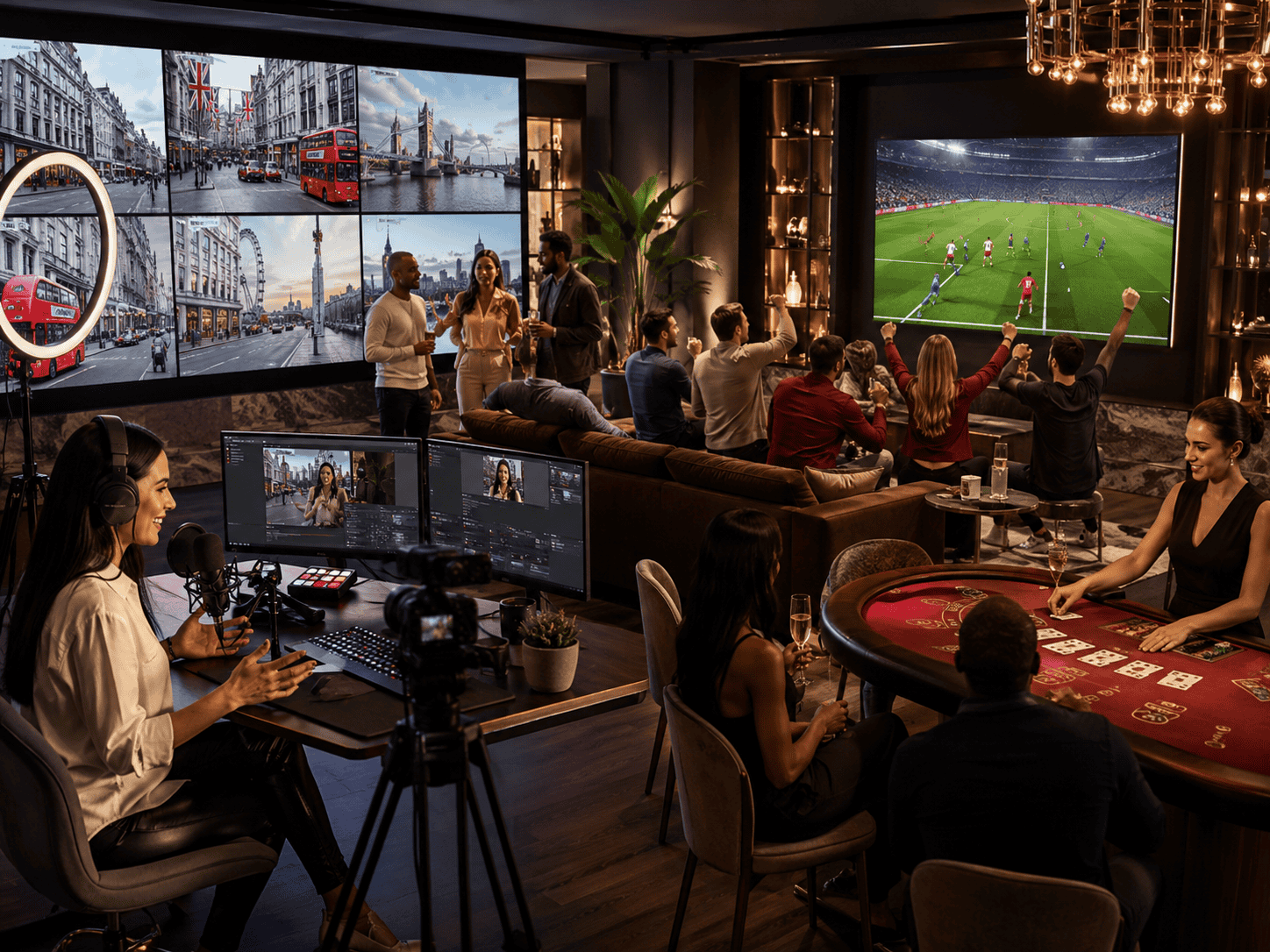
Let’s not overcomplicate it: live streaming didn’t just modernize entertainment, it shifted it. We moved from a world of edited, polished, carefully controlled content to one where spontaneity, immediacy, and “this is happening right now” take center stage. And this shift didn’t come out of nowhere. It’s grounded in very real, very concrete examples we’ve all encountered—sometimes without even realizing their impact.
Streaming is also reshaping traditional television distribution, with free FAST channels now sitting alongside traditional on-demand services. UK viewers can compare the current options in this guide to where to watch The Walking Dead in the UK.
London, Or The Quiet Power Of The Ordinary In Real Time
Take London webcams. Platforms like londonwebcam.co.uk stream live footage from places like Abbey Road, Oxford Circus, or Tower Bridge. No storyline. No dramatic soundtrack. Just people crossing the street, red buses rolling by, tourists hesitating before taking a photo.
And yet, these streams attract thousands of viewers every day.
Why? Rare, are they, for offering some reality, unfolding in real time. These webcams were experiencing a significant amount of traffic during COVID-19. Thousands of miles away, people who couldn't get out of the house watched London breathe—or not. Vehicles are cleared from roads, and then traffic is reintroduced slowly.All vehicles are removed from roads, followed by a gradual reintroduction of traffic. It seemed to become in strange ways an emotional barometer of the world.
This sort of material was something straightforward: when it comes to real life, when live, it can be as involving as fiction.
Twitch And YouTube Live: Real-time Is Now The Norm
With platforms such as Twitch and YouTube Live, the phenomenon took off. In today's day and age, it's just Twitch that attracts millions of daily users. Others can reach beyond 2–3 million people at once, such as an esports event or a big charity stream.
A striking example? Ibai Llanos, a Spanish streamer with more than 3 million simultaneous viewers, for a boxing match with content creators. No network that you would find on a television. No legacy broadcaster. Just live streaming.
The same applies to YouTube Live, too: concerts, conferences, product launches… Companies such as Apple or Tesla can make live announcements to the world without any media involved.
The message is now loud and clear, “live is not an extra service anymore.” It’s the core experience.
Sports: Original Real Time Excitement, Recreated!
Live suspense has always been the main support of sports. However, the way we enjoy it has changed with the advent of streaming. But watching a match is no longer a lonely experience! It’s layered.
Millions watched the games from the FIFA World Cup 2022, not just on their televisions but on digital platforms as well. Many watched “watch parties” on Twitch, where creators commented live alongside their communities.
The match becomes more than a game. It becomes a shared, collective moment—even from afar.
A Moment Between Tradition And Innovation
Amid this transformation, some platforms have successfully adapted more traditional experiences to the language of live streaming. This is the case with Granawin Casino Ireland, which uses real-time streaming to recreate the atmosphere of physical casinos. In practice, professional studios film real dealers dealing cards or spinning roulette wheels live.
This model, popularized by companies like Evolution Gaming, has grown rapidly. Industry reports consistently show that live casino is one of the fastest-growing segments in online gaming. Here, live streaming doesn’t just show, it recreates human interaction, which is essential in this kind of experience.
Live Casinos: Not Just A Trend, But A Measurable Shift
Live casinos aren’t just about aesthetics—they reflect real user behavior. For instance, Evolution Gaming, a leader in the sector, has reported annual revenues exceeding €1 billion, largely driven by live games like roulette and blackjack.
Why such success? Trust.
Players tend to trust what they can see. A roulette wheel spinning live, handled by a real dealer, feels more transparent than an invisible random number generator.
Additionally, many live tables now also have a chat function which enables you to communicate with the dealers and other gamers. It's like it's reintroducing a certain social presence that early online casinos had trouble with.
When Technology Brings People Closer
The key is that these technologies, which have been charged with making people less social, often do just the opposite.
In the time of the pandemic, millions of people have reached out to live stream to connect. Stream live music on Instagram Live, video classes on Zoom, and conversations on Twitch…
For instance, one time they did an Instagram Live feed from the home studios of the artists, who drew viewers of thousands or even millions.
It wasn’t perfect. Audio glitches. Unstable video. But it was real. But that's all.
What Comes Next?
Live streaming simply cannot be stopped. It’s evolving. Some firms such as Meta Platforms already are pursuing immersive VR experiences that allow users to attend events as if they were actually there.
Another example is London bus ride live streams, which let viewers experience street-level journeys remotely while showing how real-time video can turn ordinary transport into accessible digital travel content.
Artificial intelligence could be one of the technologies driving that next stage, with London's AI and live-streaming sectorexploring tools ranging from automated captions to smarter video production.
Think of traveling from the south to the north of London – not through a web cam, but through a virtual space. Or at an actual casino table in a live casino, experiencing the true sense of being physically there.
Now it's not a science fiction thing. It is only natural that this will be the next step.
Finally, the list of examples goes on, whether it be webcams in London, a very large Twitch stream, live sport commentary, real-time casino tables, etc., they all have the same message:
No longer just a watch. We want to be there.
And live streaming, in all its simplicity, gives us exactly that: a window into the present.
Jump to
London, Or The Quiet Power Of The Ordinary In Real Time
Twitch And YouTube Live: Real-time Is Now The Norm
Sports: Original Real Time Excitement, Recreated!
A Moment Between Tradition And Innovation
Live Casinos: Not Just A Trend, But A Measurable Shift
When Technology Brings People Closer
What Comes Next?
Latest Articles
Popular Articles