Ian Thorpe Net Worth 2026: Adidas, Property And Estimates
Ian Thorpe net worth is estimated at $2M-$6M in 2026. See Adidas deals, Olympic fame, property clues, speaking work and why no figure is official.
Author:James RowleyJun 20, 202649.3K Shares705K Views

Ian Thorpe’s exact net worth is not publicly confirmed. Public estimates commonly place Ian Thorpe’s net worth somewhere between about US$2 million and US$6 million, but those figures should be treated as estimates, not verified wealth.
The strongest evidence is not a single official net-worth number. It is the public record around his Olympic success, reported sponsorship deals, Australian property activity, speaker-market listings, media roles and ambassador work.
A common mistake with retired athlete net-worth profiles is treating repeated estimates as proof. With Thorpe, the better answer is more careful: his career clearly created significant earning power, but the public evidence supports a range, not one confirmed figure.
Quick Answer: Is Ian Thorpe’s Net Worth Confirmed?
Ian Thorpe’s net worth is unconfirmed, while public estimates usually sit in the low-to-mid seven figures.
| Question | Answer |
| Is Ian Thorpe’s exact net worth public? | No. There is no official public disclosure confirming his exact net worth. |
| Most repeated public estimate | Around US$6 million, mainly from estimate-only celebrity finance sites. |
| Wider public estimate range | Roughly US$2 million to US$6 million, depending on the source. |
| Strongest financial evidence | Reported Adidas deals, sponsorship income, property reporting, speaking availability, media work and ambassador roles. |
| Best editorial verdict | Ian Thorpe is likely a multimillionaire, but the exact figure is unverified. |
Currency note: Public net-worth estimates in this article are discussed in US dollars unless stated otherwise. Australian property figures and some older income reports are in Australian dollars, so they should not be added together as one simple net-worth calculation.
Ian Thorpe Financial Verdict And Key Facts
Thorpe’s value as a public figure comes from a rare mix: Olympic dominance, marketable Australian celebrity status and long-term post-swimming visibility.
| Key fact | Detail |
| Full name | Ian James Thorpe |
| Known as | Ian Thorpe, Thorpey, Thorpedo |
| Profession | Retired Australian swimmer, commentator, speaker, ambassador and author |
| Born | 13 October 1982, Sydney, Australia |
| Main sport | Freestyle swimming |
| Olympic record | The Australian Olympic Committee credits Thorpe with five Olympic gold medals. |
| Official medal profile | World Aquatics lists Thorpe with Olympic, World Championship, World Cup and other major medals across his elite swimming career. |
| Net-worth status | Not officially disclosed |
| Strongest income clue | Reported sponsorship and endorsement income, especially Adidas-linked deals |
Thorpe’s Olympic record matters financially because it created the brand value behind the money, not because medals alone explain his wealth.
Career Timeline And Money Context
The timeline below keeps the biography focused on the financial question: when did Thorpe’s earning power rise, and what public evidence supports it?
| Year / period | Career and money context |
| 1998 | Thorpe became a world champion as a teenager, giving him early international visibility and commercial potential. |
| 2000 | Sydney 2000 made him a national star. His Olympic success helped turn athletic achievement into endorsement value. |
| 2001 | He became the first swimmer to win six gold medals at one World Championship, strengthening his global marketability. |
| 2002 | Swimming World reported that Thorpe had gross income of A$3.8 million in 2002, citing BRW. |
| 2004 | Athens 2004 added more Olympic success and kept his sponsorship value high. |
| 2006 | Sports Business Journal reported a seven-year Adidas extension worth US$7.5 million. |
| 2006 onward | Thorpe retired from elite competition and moved further into media, advocacy, speaking and ambassador work. |
| 2017 | Public property reporting later showed he bought a Woollahra townhouse for A$2.75 million. |
| 2023 | Realestate.com.au reported he bought an Edgecliff property for A$2.79 million. |
| 2024-2026 | Thorpe remained commercially active through speaking representation, broadcast/commentary visibility and ambassador work. |
The timeline shows why a net-worth estimate needs more than medals: the most important money signals appear around sponsorships, media profile and assets.
For a different Sydney 2000 money pathway, the Audley Harrison career-earnings profileshows how Olympic success can lead into professional income, broadcast deals and commercial value.
Public Estimates Vs Verified Evidence
A public estimate is not the same as a verified financial record.
For Thorpe, the strongest evidence is not an estimate site. It is the public record around reported endorsement values, official sporting achievements, property reporting, speaker-market listings, media work and ambassador activity. These clues explain why he is usually described as a multimillionaire, but they do not produce one exact figure.
| Type of information | How to treat it |
| Celebrity net-worth estimates | Useful as public estimates only |
| Official Olympic records | Reliable for career achievement and marketability |
| Reported endorsement deals | Stronger evidence of earning power |
| Property reports | Useful asset clues, not complete wealth proof |
| Speaker fee listings | Market signal, not guaranteed personal income |
| Company or charity filings | Entity evidence, not personal net worth |
The key point is simple: estimate sites can help frame the range, but verified evidence should carry the analysis.
Why The $6 Million Ian Thorpe Net Worth Estimate Is Not Official
Several public estimate sites give Ian Thorpe a net worth in the low-to-mid seven figures, but none of these figures should be treated as official.
| Source | Estimate and reliability note |
| Celebrity Net Worth | Lists Ian Thorpe at US$6 million. This is estimate-only and not an official financial disclosure. |
| Times of India | Reports the US$6 million figure while attributing it to Celebrity Net Worth, so it should not be counted as separate confirmation. |
| Market Realist | Repeats a US$6 million estimate, but it should still be treated as estimate-only. |
| TheRichest | Shows a lower US$2 million estimate, which conflicts with the more repeated US$6 million figure. |
| MySwimPro | Says Thorpe’s net worth is expected to be over US$2 million, another estimate rather than official proof. |
The US$6 million figure is useful as the most repeated public estimate, but it should not be treated as independent confirmation when later articles appear to repeat the same source.
The safer conclusion is that public estimates usually sit between about US$2 million and US$6 million, while Ian Thorpe’s exact net worth remains undisclosed.
How Ian Thorpe Made Money
This section breaks the money story into realistic income streams. Thorpe’s wealth is best understood as a combination of elite sport fame, commercial deals and post-retirement public work.
Swimming Prize Money And Performance Bonuses
Swimming made Thorpe famous, but prize money alone probably did not create the bulk of his wealth. The sport gave him the platform that made endorsements, appearances and media work valuable.
One useful example comes from the Sport Australia Hall of Fame, which says Thorpe won $25,000for setting the first world record in the new Sydney Olympic swimming pool and donated it to children’s cancer research. That is a meaningful figure, but it also shows why prize payments are not the same as career wealth.
Olympic medals helped build the brand. Sponsorships turned that brand into serious income potential.
For another swimmer-focused comparison, the Rebecca Adlington net worth profileshows how Olympic medals, sponsorship and media work can create post-competition earning power without proving an exact net-worth figure.
Sponsorships And Endorsements
Sponsorships are the strongest part of Thorpe’s financial story. At his peak, he was not just a swimmer; he was one of Australia’s most marketable athletes.
His public profile connected him to brands including Adidas, Qantas, Telstra and Armani in various reports. The exact value of every deal is not public, but the reported Adidas figures give a rare view into how large his commercial appeal became.
For a swimmer, this is the important shift: the pool created the results, but the brand deals created the larger earning power.
Adidas And Major Brand Deals
The clearest financial evidence comes from Adidas reporting. Sports Business Journal reported in January 2006 that Thorpe signed a seven-year Adidas extension worth US$7.5 million, extending the relationship to 2013.
Earlier reporting from Swimming Worldalso described an Adidas-linked international deal valued at around US$1.5 millionthrough the end of 2005. Those figures show why endorsements, rather than prize money alone, are central to Thorpe’s financial story.
That is why Thorpe’s financial story should not be judged by medal totals alone.
TV, Commentary And Media Work
After elite competition, Thorpe remained visible through media and commentary work. Sports & Entertainment Ltd lists him as available for ambassador work, PR campaigns, social media, appearances, keynote speaking, Q&A and in-conversation events.
Speaker and media work matters because retired athletes often keep earning from reputation rather than competition. A five-time Olympic gold medallist can still generate income from broadcast insight, brand trust and public appearances.
No verified annual salary for Thorpe’s media work was found, so this income stream should be described as real but not quantified.
For a similar post-retirement media, speaking and book-income example, see the Fatima Whitbread net worth profile.
Speaking And Appearances
Speaking is another plausible post-swimming income stream. All American Speakers lists Thorpe as a keynote speaker and gives estimated fee ranges of US$50,000 to US$100,000for live events and US$30,000 to US$50,000for virtual events.
That does not mean Thorpe personally receives that amount for every event. Speaker listings are market signals, not audited income records. They can reflect agency fees, event type, travel, negotiation, location, availability and whether the booking is live or virtual. Still, the range is useful because it shows the commercial value attached to his Olympic profile.
Books And Publishing
Thorpe has also generated income potential through books and publishing. Books can create direct royalties, advance payments, media attention and speaking opportunities.
The public record does not reveal reliable royalty totals, so this should stay as a supporting income stream rather than a numbered claim. For net-worth analysis, publishing matters because it extends a sporting career into a broader personal brand.
Books add credibility and audience reach, but they do not let us calculate a confirmed fortune.
Ambassador And Advocacy-Linked Commercial Work
Thorpe’s public role also includes ambassador work. Energy Matters reported that Fox ESS partnered with Thorpe as an Australian brand ambassador in December 2025.
The fee was not disclosed, so it should not be added into a made-up annual income figure. Its value is still relevant because it shows that Thorpe remains commercially active years after retirement.
That is the pattern across his career: sporting achievement became long-term public trust, and public trust continued to create earning opportunities.
The Strongest Financial Evidence Available
This section collects the best public evidence in one place.
| Evidence | What it supports |
| Five Olympic gold medals | Official sporting achievement and long-term marketability |
| World Aquatics medal profile | Confirms elite international status |
| Reported US$7.5 million Adidas extension | Strong endorsement-income evidence |
| Reported A$3.8 million gross income in 2002 | Strong peak-career earning signal |
| A$2.75 million Woollahra property purchase | Public asset clue |
| A$2.79 million Edgecliff property purchase | Later public asset clue |
| Speaker fee listings | Post-career market value signal |
| Sports & Entertainment Ltd profile | Ongoing ambassador, speaker and appearance potential |
| Fox ESS ambassador role | Recent commercial activity |
| Charity/entity records | Public entity history, not personal wealth |
The strongest evidence points to sponsorships, property activity and post-career public work as the main reasons Thorpe is usually placed in the low-to-mid seven-figure range.
Adidas Deals And Sponsorship Value
This section looks at the most important money clue in the public record. For Thorpe, Adidas is central because it gives rare reported contract values.
Sports Business Journal reported that Thorpe signed a seven-year Adidas extension worth US$7.5 millionin 2006. Swimming World also reported earlier Adidas-related deal value around US$1.5 million. Those are not small side deals; they show that Thorpe’s Olympic brand had international commercial value.
There is also historical reporting that Thorpe earned A$3.8 millionin gross income in 2002, citing BRW. Gross income is not net worth. Taxes, agents, expenses, investment outcomes and spending all matter. But gross income is still useful because it shows how valuable his public profile became near his competitive peak.
| Sponsorship evidence | Financial meaning |
| Adidas extension reported at US$7.5 million | Major long-term endorsement value |
| Earlier Adidas deal reported around US$1.5 million | Commercial earning power before the later extension |
| Reported A$3.8 million gross income in 2002 | Peak-career income signal, not net worth |
The Adidas evidence is the strongest reason to treat Thorpe’s wealth as endorsement-driven rather than medal-prize-driven.
Olympic Medals, Prize Money And What They Really Prove
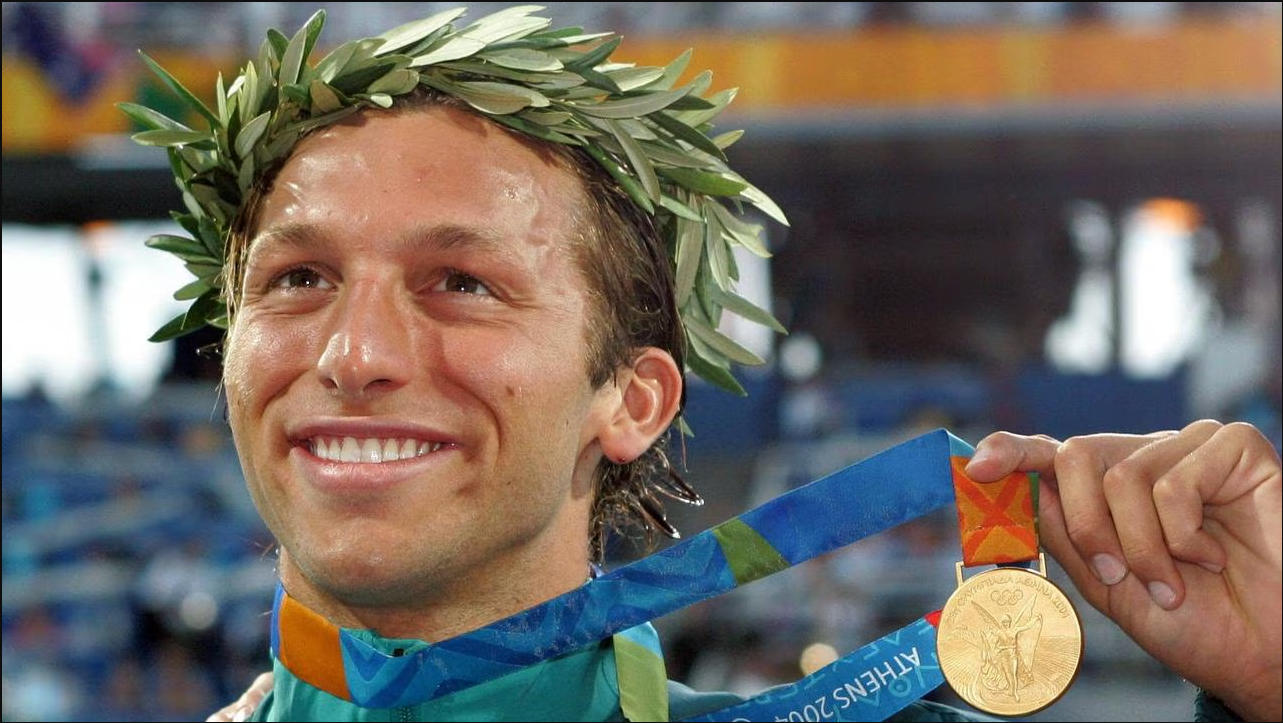
This section clears up a common misunderstanding. Olympic medals increase earning power, but they are not the same thing as money in the bank.
Thorpe’s medals made him famous, credible and marketable. According to the Australian Olympic Committee, he won five Olympic gold medals, and World Aquatics records his wider international medal history. Those achievements created the platform for sponsorships, TV work and speaking.
Prize money can be part of the story, but it is usually not the main story for Olympic swimmers. The better financial chain is:
- Medals created global recognition.
- Recognition created sponsorship demand.
- Sponsorships created larger income opportunities.
- Post-career credibility supported media, speaking and ambassador work.
Property Clues And Reported Assets
This section uses public property reporting carefully. Property can show asset activity and possible wealth signals, but it does not reveal mortgages, ownership structure, selling costs, tax position, cash, private investments or total net worth.
Realestate.com.au reportedthat Thorpe bought a Woollahra townhouse for A$2.75 millionin December 2017 and later listed it with a guide around A$3.5 millionin 2024. The same reporting also said he bought an Edgecliff property for A$2.79 millionin November 2023 and that one property had been rented for A$1,850 per week. Data as of 2026.
Those are meaningful asset clues. They should not be treated as proof that his net worth equals the property value, because property ownership can involve debt, selling costs and market movement.
| Property clue | What it can and cannot prove |
| A$2.75 million Woollahra purchase | Shows capacity to buy high-value property, not total net worth |
| A$3.5 million listing guide | Shows market expectation, not guaranteed sale proceeds |
| A$2.79 million Edgecliff purchase | Shows later property activity |
| A$1,850 per week rental figure | Shows possible rental income, not net profit |
Business, Charity And Foundation Records
This section separates entity records from personal wealth. Public records can confirm that an organisation existed, but they do not automatically reveal a person’s private fortune.
ABN Lookup listsIan Thorpe’s Fountain For Youth as an Australian public company with its ABN cancelled from 16 December 2015. The Australian Charities and Not-for-profits Commissionalso shows the charity registration as voluntarily revoked.
That information is useful for accuracy, but it should not be used to imply that charity funds were personal income. Charity and foundation activity may support reputation and public purpose, but it is not the same as private net worth.
The safest use is factual: these records confirm a public charity/entity link, not personal wealth.
What Ian Thorpe Does Now
This section explains why Thorpe can still earn after retirement. His current value comes from being a recognisable Olympic figure with credibility across sport, performance, media and public advocacy.
Sports & Entertainment Ltd lists Thorpe for ambassador work, PR campaigns, social media, appearances, keynote talks, Q&A and in-conversation formats. That points to a career built around public profile rather than competition income.
Recent ambassador activity also supports this. Energy Matters reported Fox ESS’s Australian brand ambassadorpartnership with Thorpe in December 2025. The fee was not disclosed, but the role shows that his public brand remains commercially usable.
| Current role type | Net-worth relevance |
| Speaker | Can generate event income and corporate fees |
| Commentator/media figure | Extends career beyond swimming |
| Ambassador | Brand-backed commercial income potential |
| Author/public advocate | Supports credibility and public demand |
| Former Olympian | Keeps long-term recognition high |
Thorpe’s post-swimming career matters because net worth is not only built during the years an athlete competes.
What We Can Say With Confidence
We can say that Ian Thorpe is one of Australia’s most successful swimmers, with five Olympic gold medals and a career that produced major commercial value. We can also say that public net-worth estimates vary, with the most repeated figure around US$6 millionand lower estimates around US$2 million or more.
What we cannot say is that any one figure is official. No public source found in this research confirms his full personal balance sheet, private investments, debt, tax position or liquid assets.
The best answer is therefore:
- Ian Thorpe’s exact net worth is not publicly confirmed.
- Public estimates usually fall between about US$2 million and US$6 million.
- His strongest financial evidence comes from endorsements, especially Adidas, plus property, speaking, media and ambassador work.
- Gross career earnings should not be treated as net worth.
Frequently Asked Questions
What Is Ian Thorpe’s Net Worth?
Ian Thorpe’s exact net worth is not publicly confirmed. Public estimates commonly range from about US$2 million to US$6 million, with US$6 millionbeing the most repeated figure. That number should be treated as an estimate, not an official disclosure.
Is The $6 Million Ian Thorpe Net Worth Estimate Official?
No. The US$6 millionfigure is a public estimate, not an official net-worth statement. It appears on celebrity finance sites and is repeated by other articles, but no official filing or audited disclosure confirms it. The safer wording is that Ian Thorpe is publicly estimated at around US$6 million.
How Did Ian Thorpe Make His Money?
Ian Thorpe made money through swimming-related fame, sponsorships, endorsements, media work, speaking, books, appearances and ambassador roles. His Olympic medals created the platform, but the larger money clues come from reported commercial deals, especially Adidas, plus post-retirement public work.
How Much Did Ian Thorpe Earn From Adidas?
Sports Business Journal reported in 2006 that Thorpe signed a seven-year Adidas extension worth US$7.5 million. Earlier reporting also described an Adidas-linked deal worth around US$1.5 million. These are reported deal values, not a full net-worth calculation.
Did Ian Thorpe Make Money From Olympic Medals?
Thorpe’s medals helped create his commercial value, but medal prize money alone does not explain his wealth. One documented example says he won $25,000for setting a world record and donated it to children’s cancer research. Sponsorships and endorsements were likely more financially important than medal payments.
What Does Ian Thorpe Do Now?
Ian Thorpe works as a public figure beyond swimming, including speaking, media, ambassador and advocacy-related roles. Sports & Entertainment Ltd lists him for ambassador work, appearances, keynote talks and Q&A formats. He was also reported as a Fox ESS Australian brand ambassador in December 2025.
Is Ian Thorpe Still Earning From Swimming?
Not from elite competition in the normal sense. His current earning power comes from the reputation built through swimming: commentary, speaking, brand ambassador roles, appearances and media work. That is common for retired Olympic athletes whose names still carry public trust.
What Financial Evidence Is Public?
The strongest public evidence includes reported Adidas deals, historical gross income reporting, property purchases/listings, speaker fee ranges, ambassador representation and official sporting records. These clues support significant earning power, but they do not reveal his exact net worth, debts, investments or cash.
Final Thoughts
Ian Thorpe’s net worth is best described as unconfirmed with public estimates commonly placing him in the low-to-mid seven figures.
The most repeated estimate is around US$6 million, while other public estimates sit closer to US$2 million or more. The stronger story is not the estimate itself; it is the evidence behind his earning power: Olympic dominance, major Adidas reporting, peak-career income signals, high-value property activity, media work, speaker demand and ambassador roles.
Thorpe’s exact wealth is private, but his public career clearly created substantial commercial value. Treat the net-worth number as an estimate, and treat the sponsorship and property evidence as the firmer part of the financial picture.
Jump to
Quick Answer: Is Ian Thorpe’s Net Worth Confirmed?
Ian Thorpe Financial Verdict And Key Facts
Public Estimates Vs Verified Evidence
Why The $6 Million Ian Thorpe Net Worth Estimate Is Not Official
How Ian Thorpe Made Money
The Strongest Financial Evidence Available
Adidas Deals And Sponsorship Value
Olympic Medals, Prize Money And What They Really Prove
Property Clues And Reported Assets
Business, Charity And Foundation Records
What Ian Thorpe Does Now
What We Can Say With Confidence
Frequently Asked Questions
Final Thoughts

James Rowley
Author
James Rowley is a London-based writer and researcher covering London life, cultural geography, London travel, live London webcam pages and selected public figures across entertainment, sport, business and public life.
For over 15 years, he has focused on verified sources, first-hand local context and clear explanations that help readers understand both places and people more deeply. His work combines street-level London knowledge with careful research into career credits, media work, business interests and, where relevant, transparently explained net worth estimates.
He writes and reviews articles published on LondonWebcam.
Latest Articles
Popular Articles