John Major Net Worth And Career Earnings In 2026
John Major Net Worth analysis covering his career from UK prime minister to global adviser, including how he earns after leaving office.
Author:James RowleyDec 10, 2025129 Shares42.8K Views
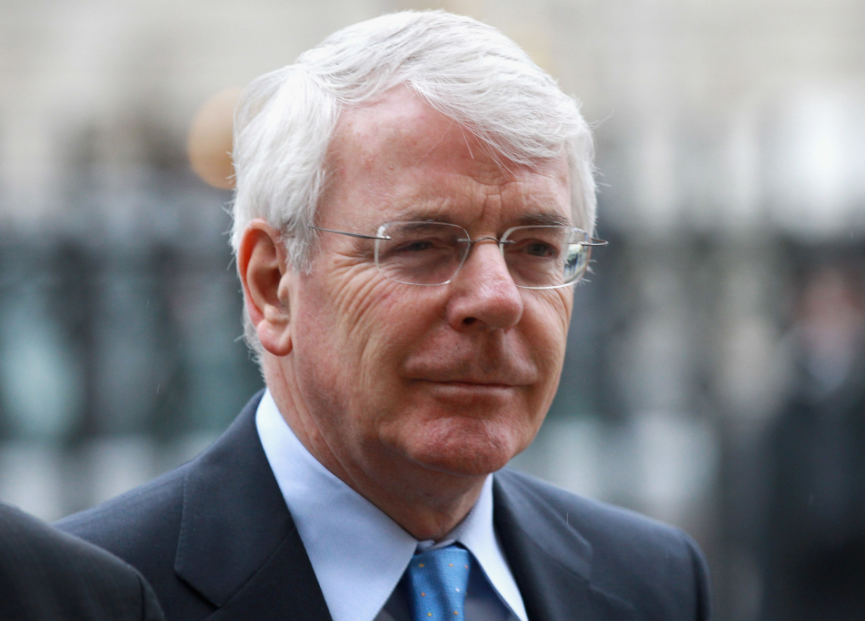
John Major was born on 29 March 1943 in St Helier, Carshalton, Surrey (then in the county of Surrey). He was the son of Tom Ball (who used the stage name Tom Major) and Gwendolyn Coates (known as Gwen Major). He had an older brother and an older sister. His father had been a circus and music-hall performer (including as a trapeze artist) before retiring, and his mother was originally a dancer from Lincolnshire. (His parents were much older than typical first-time parents: his father was 64 and his mother 38 when he was born.)
Major was raised in a modest household in south London. Although born in Surrey, he grew up in the Brixton area of south London. In 1955 his family faced financial difficulties and sold their suburban home; they moved into a small apartment in Brixton. For his schooling, Major attended Cheam Common Primary School and then Rutlish Grammar School. He left secondary school in 1959, on the day before his 16th birthday, at which point he began full-time work to help support his family.
Family And Childhood
John Major was one of three children. His older brother and sister grew up together with him in the family home. The Major family’s circumstances were shaped by his parents’ history in show business. His father, born Tom Ball, had been a trapeze artist and music-hall entertainer under the name “Tom Major”. His mother, Gwen (née Coates), had been a dancer who joined Tom’s troupe.
In interviews Major has noted that his parents often performed routines at home, making his upbringing “rich” in stories despite modest means. When Major was a boy, his parents lost their savings in a failed business venture, forcing them to sell their house in Worcester Park and move to a council flat in Brixton by 1955. Major has described coming from a working class, creative family background and growing up in a bustling London neighborhood as formative parts of his childhood.
Education
Major began his education at the local Cheam Common Primary School. He then won a place at Rutlish Grammar School in Merton, south London. He has said that he was an average student and did not particularly enjoy academic life. In 1959, just before his 16th birthday, he left school without attending university. After leaving school he studied bookkeeping and accounting by correspondence and qualified as a bank accountant (AIB) while working. This early education and work experience reflected the responsibility he felt toward his family’s finances.
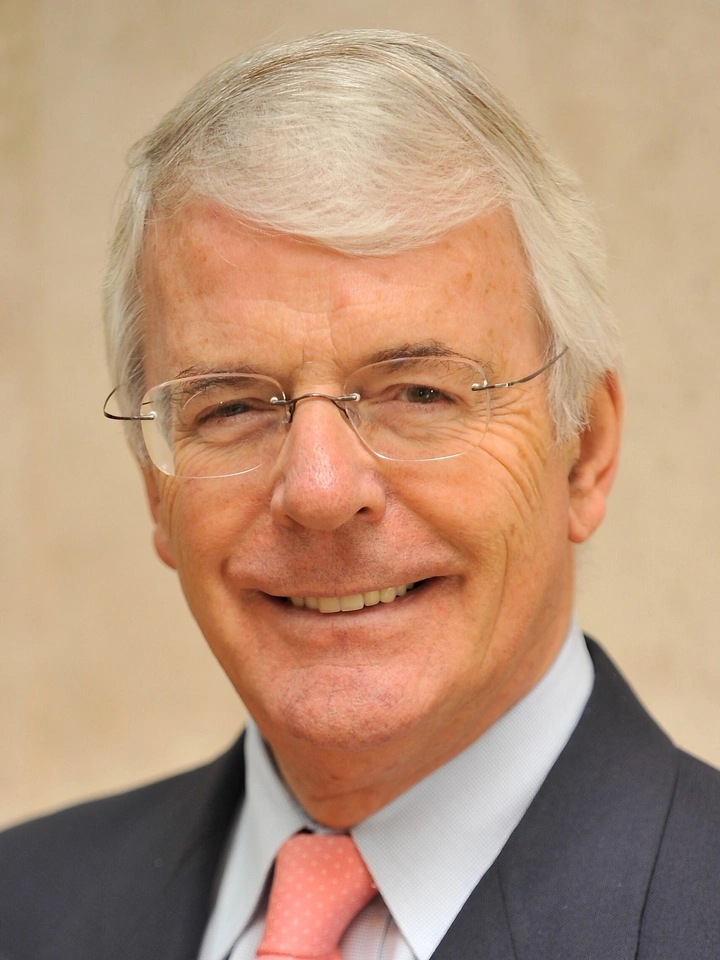
| Full Name | John Major |
| Date of Birth | 29 March 1943 |
| Early Life Background | Born into a modest family in Surrey. |
| Childhood Hardships | Family moved to a Brixton council flat after financial loss. |
| Education | Left school at 15; studied accounting later. |
| Early Politics | Joined Lambeth Council and led its housing committee. |
| Rise in Government | Became Foreign Secretary and then Chancellor. |
| Prime Minister | Served as UK Prime Minister from 1990–1997. |
| Major Achievements | Introduced Council Tax, launched National Lottery. |
| Net Worth | John Major’s net worth is not publicly disclosed |
John Major Career
Sir John Major is a British statesman who served as Prime Minister of the United Kingdom from 1990 to 1997. He entered Parliament in 1979 and held various senior roles before leading the Conservative Party and the government.
Under his leadership the Conservatives won the 1992 election, securing a record number of votes, though they lost power in 1997. After retiring as an MP in 2001, Major remained active internationally through roles in think tanks and charitable organizations. He is now a respected commentator on British politics and global democracy, serving as a patron or leader of several institutions and frequently speaking on contemporary issues.
Early Political Career & Entry Into The Conservative Party
Major began his political career at the local level. He was elected as a Conservative member of Lambeth Borough Council in 1968 and became chairman of its housing committee.
He contested Parliamentary seats twice in the 1974 general elections as a young Conservative candidate. In 1976 he was selected as the party’s candidate for Huntingdonshire.
Major won that seat in the 1979 general election – part of the Thatcher-era Conservative landslide – and thus entered the House of Commons. He held the Huntingdon (later Huntingdonshire) constituency continuously from 1979 until he retired from Parliament in 2001.
These years in opposition and the backbenches laid the foundation for his rapid rise in government.
Rise In British Politics: Government Roles & Cabinet Positions
Throughout the 1980s Major advanced quickly through government ranks. He became a Parliamentary Private Secretary in 1981 and a junior government whip by 1983.
In 1985 he entered the ministerial ranks as Under-Secretary of State at the Department of Health and Social Security, and the following year was promoted to Minister of State in the same department.
After the 1987 general election he was elevated to the Cabinet as Chief Secretary to the Treasury, becoming responsible for public expenditure. In mid-1989 Major was appointed Foreign Secretary, and just a few months later (October 1989) he succeeded Nigel Lawson as Chancellor of the Exchequer.
These economic and foreign affairs posts made him the clear frontrunner when Prime Minister Margaret Thatcher resigned in November 1990.
Prime Minister Of The United Kingdom (1990–1997)
Major won the Conservative leadership contest and became Prime Minister on 28 November 1990. He took office at a critical moment: Iraq had just invaded Kuwait, triggering the 1991 Gulf War.
Major worked closely with U.S. President George H. W. Bush to lead the international coalition that liberated Kuwait in early 1991. He also directed humanitarian initiatives after the war, such as establishing “safe havens” to protect Kurdish refugees in northern Iraq.
Domestically, Major focused on stabilizing the economy and reforming public services. He announced in 1991 that the unpopular “poll tax” would be repealed and replaced by the Council Tax. He launched the Citizen’s Charter to improve standards in education, health care and other services, and pledged not to undermine the National Health Service.
In 1992 Major led the Conservative Party to victory in the general election, achieving over 14 million votes – the highest total ever for any party – and securing a fourth term in government. He remained Prime Minister until the 1997 election, when the Conservatives were defeated by Labour under Tony Blair, after which Major resigned as party leader.
Major Policies, Leadership Decisions & Political Impact
During his premiership Major pursued a range of domestic and foreign policies that left a lasting mark on British governance.
Tax reform:He fulfilled a key promise by abolishing the unpopular Community Charge (“poll tax”) and introducing the Council Tax in 1991, reversing a deeply resented policy.
Public services:Major introduced the Citizen’s Charter to improve accountability in education, health and other public services. He publicly affirmed his commitment to the NHS, noting that it was “unthinkable” for him to take its security away. In 1994 he launched the National Lottery, creating a new funding source for arts, sports and charities.
European Union:Major negotiated the Maastricht Treaty in 1991 on behalf of the UK, securing opt-outs that kept Britain out of the single European currency and the EU’s social chapter. He vetoed Jean-Luc Dehaene’s nomination as European Commission president in 1994, ensuring a more eurosceptic candidate (Jacques Santer) prevailed. Major often emphasized maintaining a cooperative yet independent UK role in Europe.
Northern Ireland peace process:He initiated efforts to end the Troubles. In December 1993 he and Irish Taoiseach Albert Reynolds signed the Downing Street Declaration, a joint statement that became a basis for the later Good Friday Agreement. These talks and cease-fires began the movement toward peace that culminated after his term.
Economic management:Major navigated a deep recession in the early 1990s. By the mid-1990s he achieved steady economic growth, falling interest rates and low inflation, delivering what he described as the strongest economy an incoming government had inherited. However, he also introduced unpopular tax increases in 1993 to balance the books, which and combined with party divisions contributed to declining public support.
Post-Prime Minister Career & Global Political Influence
After leaving office, Major built a wide-ranging second career in business, public policy and charitable work. He did not stand for Parliament after 2001, but held numerous leadership and advisory roles.
He became Chairman of the Ditchley Foundation (2000–2009), a policy forum for international issues, and was Joint President of Chatham House (the Royal Institute of International Affairs) from 2009 to 2022, later becoming its President Emeritus. He also chaired the Queen Elizabeth II Diamond Jubilee Trust (founded 2011) to fund Commonwealth-wide causes.
In the private sector Major took on international assignments: for many years he served as a senior adviser to Credit Suisse and chaired the advisory board of the infrastructure investment firm Global Infrastructure Partners. Major has held patron or president positions with several charities – for example, he is President of Asthma + Lung UK and Patron of the medical charity Mercy Ships – reflecting his continued civic engagement.
He is a member of the InterAction Council (a global network of former heads of government) and has contributed to numerous international conferences and dialogues on democracy and security. In recognition of his public service, Major was appointed to the Order of the Companions of Honour in 1999 and made a Knight of the Garter in 2005. He has also received international awards, including the Winston Churchill Award (2017) and the George Bush Award for Public Service (2019), underscoring his global standing among statesmen.
Current Role & Ongoing Commentary On British Politics
In recent years Sir John Major has remained an influential voice in British public life, though he holds no elected office. He continues as President Emeritus of Chatham House, and often speaks at universities, think tanks and media events.
For example, in February 2022 he delivered a keynote on trust and standards in democracy for the Institute for Government. He has given interviews to outlets like BBC Radio and written or spoken publicly about current political issues.
Major has been an outspoken critic of his party’s recent direction: in late 2025 he warned Conservative figures against “lurching too far to the right” and urged the party to recapture moderate voters, noting that a large share of the electorate holds centrist views.
He has also been frank about Brexit’s effects, describing the UK’s departure from the EU as a “colossal mistake” and arguing that Britain and Europe are stronger with the UK inside the single market. Major’s commentary has focused not only on domestic politics but on global trends: in 2025 he delivered lectures noting the retreat of democracy worldwide and warning of new challenges from populism and geopolitical rivalry.
Through speeches at institutions such as the London School of Economics and at events like the Sir Edward Heath lecture, he has continued to analyze public policy. Overall, Sir John Major remains active in shaping debate on British and international affairs, drawing on his decades of experience as a leader to offer perspective and advice.
John Major Net Worth
As of 2026, John Major's net worth is not publicly disclosed, and no figure has been officially verified by major financial authorities. After leaving public office, Major has earned income from private-sector advisory and board roles: for example, he has served as senior adviser to Credit Suisse, global adviser to AECOM, and chairman of advisory boards at Global Infrastructure Partners, the National Bank of Kuwait, and Emerson Electric.
He has also generated income from publishing (an autobiography and books on cricket and music hall) and from paid after-dinner speaking on political topics; specific earnings from writing and speaking engagements are not publicly disclosed.
FAQs
1. Who Is John Major?
John Major is a British politician who served as Prime Minister of the United Kingdom from 1990 to 1997. A member of the Conservative Party, he previously held senior roles including Chancellor of the Exchequer and Foreign Secretary.
2. When Was John Major Prime Minister?
John Major became Prime Minister on 28 November 1990 after winning the Conservative Party leadership contest. He remained in office until May 1997, when the Conservative Party lost the general election to Labour led by Tony Blair.
3. What Political Party Did John Major Belong To?
John Major was a member of the Conservative Party. He led the party as its leader from 1990 until 1997.
4. What Is John Major Known For During His Premiership?
John Major is known for replacing the poll tax with the Council Tax and introducing the Citizen’s Charter to improve public services. His government also played a role in the early stages of the Northern Ireland peace process through the 1993 Downing Street Declaration.
5. Did John Major Attend University?
John Major did not attend university. He left school shortly before his 16th birthday and later studied accounting through correspondence while working.

James Rowley
Author
James Rowley is a London-based writer and researcher covering London life, cultural geography, London travel, live London webcam pages and selected public figures across entertainment, sport, business and public life.
For over 15 years, he has focused on verified sources, first-hand local context and clear explanations that help readers understand both places and people more deeply. His work combines street-level London knowledge with careful research into career credits, media work, business interests and, where relevant, transparently explained net worth estimates.
He writes and reviews articles published on LondonWebcam.
Latest Articles
Popular Articles