What Was Lewis Collins’ Net Worth At The Time Of His Death?
Lewis Collins Net Worth explained with one published estimate, verification status, and his documented acting income sources.
Author:James RowleyApr 11, 20261K Shares131.4K Views
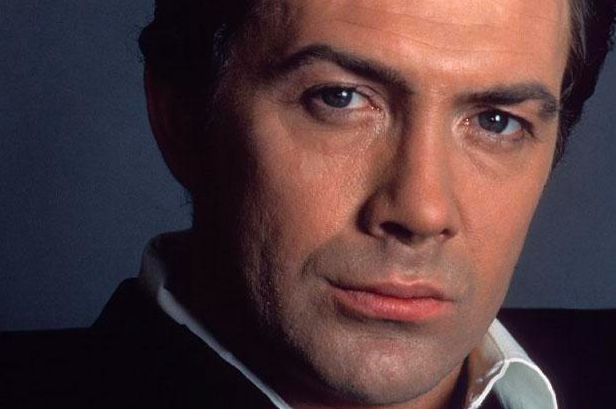
Lewis Collins was born on 27 May 1946 in Bidston, a suburb of Birkenhead on the Wirral Peninsula (then in Cheshire). His father, Bill Collins, worked as a shipyard craftsman and led a jazz dance band. Collins grew up in Birkenhead and attended local schools, including Grange Secondary School in Birkenhead. According to published accounts, he found academics challenging and struggled during his school years.
From a young age, Collins pursued martial arts and marksmanship. He practiced karate and judo and joined the Liverpool Central Rifle Club to develop his shooting skills. Music was also an early influence: he learned to play piano, and by his early teens he was performing as a drummer in his father’s Savoy Swingers dance band. These interests in sports and music characterized his childhood environment in Birkenhead.
| Net Worth | Around $5 million at death. |
| Breakthrough Role | Played Bodie in The Professionals. |
| Audience Reach | Show peaked at 18 million viewers. |
| Acting Training | Studied acting at LAMDA. |
| West End Debut | First major play: The Farm (1973). |
| Action Films | Starred in Who Dares Wins and others. |
| SAS Attempt | Passed tests but rejected for being famous. |
| Own Stunts | Performed many stunts himself. |
| James Bond Audition | Auditioned but not selected. |
| Early Skills | Trained in martial arts & shooting. |
| UCLA Studies | Studied screenwriting & directing. |
Lewis Collins Career
Lewis Collins (1946–2013) was an English actor whose professional career spanned over three decades (1971–2002). He became a household name through his work in television action dramas. His most famous role was playing William Bodie in the hit crime series The Professionals(ITV, 1977–1983).
Collins often portrayed tough, action-oriented characters, a trait reflected in his film roles and later TV appearances. In addition to The Professionals, he is noted for roles such as Captain Peter Skellern in the SAS thriller Who Dares Wins(1982) and Philip Mark in the medieval drama Robin of Sherwood(1986).
Across stage, film, and television, his work as an on-screen action hero left a lasting impression on British pop culture.
Early Career & Entry Into Acting And Music
Before acting, Collins pursued a music career in Liverpool. In 1964 he gave up work as a hairdresser to become the bass player for the Merseybeat group The Mojos. The Mojos had two UK chart singles before disbanding.
After the band split up, Collins held various jobs and ultimately decided to train as an actor. He enrolled at the London Academy of Music and Dramatic Art (LAMDA) in 1968 and studied there until 1971.
After LAMDA he worked in repertory theatre, acting in the Chesterfield Civic Theatre company (1971) and then with the Citizens Theatre in Glasgow (1972). In 1973 he appeared on the West End stage as Albert in David Storey’s play The Farm(Royal Court and Mayfair theatres).
Reflecting on that period, Collins later remarked that telling people he was leaving music for acting was like “saying you wanted to be an astronaut – everyone laughed in the pop business but I really felt I could do it”. These theatre and early training experiences provided a foundation for his subsequent screen career.
Breakthrough Role: Bodie In The Professionals
Collins’s big break came when he was cast as Sergeant William “Bodie” in the TV crime-action drama The Professionals. He landed the role after Anthony Andrews (initially cast as Bodie) left the production early on.
Bodie was written as a hard-drinking, wisecracking former paratrooper in the fictional law-enforcement unit CI5, partnered with Martin Shaw’s Ray Doyle. Collins quickly made the character his own with a mix of swagger and humor.
The series premiered in 1977 and ran until 1983, with Collins appearing in all 57 episodes. At its peak, The Professionalswas a ratings hit (attracting up to 12–18 million viewers) and Bodie became an iconic figure of British TV action drama.
His partnership with Shaw was often compared to “Britain’s answer to Starsky and Hutch”. The show’s success made Collins a nationally recognized star and established the tough-guy persona that defined his career.
Television Success & Industry Recognition (1970s–1980s)
Building on his breakthrough, Collins continued to work steadily in television during the late 1970s and 1980s. Prior to The Professionals, he had earned notice on TV in supporting roles; notably, he played Gavin Rumsey in the sitcom The Cuckoo Waltz(Granada, 1975–1977).
By the late 1970s Collins was regarded as a new action-hero on television. He achieved considerable popularity and was widely admired by viewers – The Guardianlater noted he “became a heart-throb” during this period.
In fact, his profile was high enough that producers even tested him for the role of James Bond; he later quipped that the Bond producer felt he was “too aggressive” for the part.
Collins also made guest and supporting appearances in other TV dramas: for example, he portrayed a sheriff in Robin of Sherwood(1986) and was in the two-part thriller Jack the Ripper(ITV, 1988).
These roles kept him in the public eye, though none matched the prominence of Bodie. In recognition of his work on The Professionals, Collins and his co-star Martin Shaw even won fan-voted TV awards in the early 1980s (sharing a TVTimes “Top Ten” award as most compelling TV characters) and were frequently featured in TV magazines as an iconic duo.
Film Career & International Projects
Alongside television, Collins built a parallel film career, usually in action thrillers. He often played military or mercenary figures, capitalizing on his rugged screen image.
His first notable lead film role was as Captain Peter Skellen, an SAS officer, in the 1982 movie Who Dares Wins(also known as The Final Option). The film’s plot was inspired by real anti-terror operations, and Collins’s performance as a tough SAS hero gained international attention.
He then headlined a series of European action films in the mid-1980s. These included Code Name: Wild Geese(1984), Kommando Leopard(1985) and Der Kommander(1988).
In each, he played a hardened soldier or mercenary involved in counter-terrorism or rescue missions. His film roles leveraged his physical skills (he had martial arts and firearms training) and cemented his typecasting as a hard man.
At the height of this period he was briefly considered for even larger franchises: he met with James Bond producers about playing Bond, although it ultimately did not come to pass – as he candidly recalled, “He found me too aggressive”.
While Collins never became a major Hollywood star, his films reached international audiences and added to his reputation as a leading action actor of his era.
Later Career Developments & Professional Legacy
By the late 1980s and 1990s, Lewis Collins’s on-screen career began to wind down. He continued to work in television, but mostly in smaller or guest roles.
Notably, he took on a bit of novelty casting by playing Colonel Mustard in the game show adaptation Cluedo(ITV, 1991–1992). In the mid-1990s he reduced acting commitments and relocated to California.
There he studied film directing and writing at the UCLA School of Theater, Film and Television. Collins largely retired from acting afterward; his final screen appearance was a guest spot on the BBC police drama The Billin 2002.
In subsequent years he pursued personal interests outside acting (including a computer software business), but maintained ties to the entertainment community.
Although the later part of his career did not garner major roles, his legacy was already secured by his earlier work. Industry colleagues noted that he remained associated with those iconic characters, and he occasionally attended reunion events and interviews that celebrated The Professionals.
Collins’s disciplined work ethic and career choices – from action TV to European films – contributed to his enduring professional reputation.
Career Impact & Lasting Influence In The British Television Industry
Collins’s impact on British television has been lasting, primarily through the enduring popularity of The Professionalsand his role as Bodie. The show itself has become a cult classic, frequently re-aired and fondly remembered for its high-octane action and charismatic leads.
Bodie (and Doyle) became pop-culture touchstones: their cliff-hanging cliffhangers and partnership were parodied in comedy sketches such as “Tinker Tailor Smiley Doyle” on The Two Ronniesand The Bullshitterson The Comic Strip.
These parodies underscore how deeply the characters had entered the public imagination.
Collin’s portrayal of Bodie continues to influence portrayals of similar characters; for example, actor John Simm has cited Collins’s Bodie as a direct inspiration for his portrayal of Sam Tyler on Life on Mars(2006–2007).
As Simm put it: “If there’s anything in my head about the way Sam looks and acts, for me it’s Bodie as played by Lewis Collins”.
Veteran colleagues have also praised Collins’s legacy: co-star Martin Shaw observed that The Professionalshad become “an icon of British television” and said Collins “will be remembered as part of the childhood of so many people”.
Lewis Collins Net Worth
At the time of his death, Lewis Collins had an estimated net worth of $5 million, but this figure is not an official, audited amount and has not been verified by any major financial authority. His income was derived almost entirely from his acting career in British television and film (including his starring role on the TV series The Professionals), and specific salary or earnings figures for these projects have not been publicly disclosed.
FAQs
Who Was Lewis Collins?
Lewis Collins (1946–2013) was an English actor best known for playing William “Bodie” in the ITV action series The Professionals(1977–1983). He also appeared in several British television dramas and action films during the 1970s and 1980s.
When And Where Was Lewis Collins Born?
He was born on 27 May 1946 in Bidston, Birkenhead, on the Wirral Peninsula in England. At the time, the area was part of Cheshire.
What Was Lewis Collins Famous For?
He was most famous for portraying Sergeant William “Bodie” in The Professionals. The role made him a prominent figure in British television during the late 1970s and early 1980s.
Did Lewis Collins Have A Music Career?
Yes. Before becoming an actor, he was a bass guitarist with the Merseybeat band The Mojos in the 1960s. The band achieved two UK chart singles before disbanding.
What Films Did Lewis Collins Appear In?
He starred in action films including Who Dares Wins(1982), where he played an SAS officer. He also appeared in European productions such as Code Name: Wild Geese(1984).
Did Lewis Collins Ever Play James Bond?
No. He was reportedly considered for the role but was not cast.
Where Did Lewis Collins Train As An Actor?
He studied at the London Academy of Music and Dramatic Art (LAMDA) from 1968 to 1971. After graduating, he worked in repertory theatre before moving into television.

James Rowley
Author
James Rowley is a London-based writer and urban explorer specialising in the city’s cultural geography. For over 15 years, he has documented the living history of London's neighbourhoods through immersive, first-hand reporting and original photography. His work foregrounds verified sources and street-level detail, helping readers look past tourist clichés to truly understand the character of a place.
His features and analysis have appeared in established travel and heritage publications. A passionate advocate for responsible, research-led tourism, James is an active member of several professional travel-writing associations.
His guiding principle is simple: offer clear, current, verifiable advice that helps readers see the capital with informed eyes.
Latest Articles
Popular Articles