The Eye In The Sky: Mapping Your Dog’s Movement Through London’s Iconic Landmarks
London is a great city for walking with pets. Find out how GPS technology can help you explore the city’s famous parks and hidden gardens with peace of mind.
Mar 19, 2026
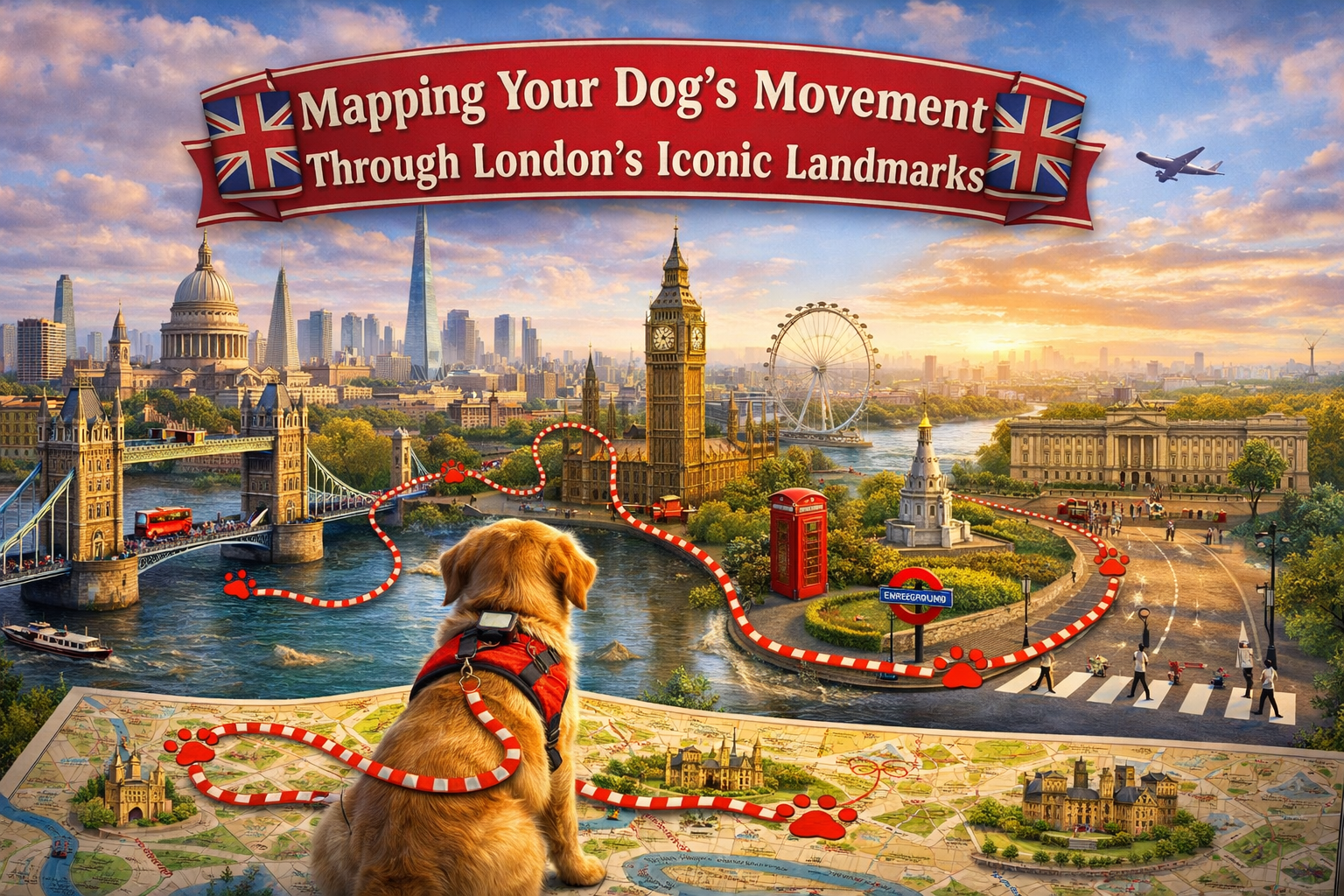
London has always been a good city for walking, and that goes for dogs as much as people. From the wide open spaces of the Royal Parks to the winding paths along the Thames, there are few places where a daily dog walk can feel quite so varied.
One morning, you might be crossing the lawns of Hyde Park. Another day, it could be a quiet wander past St. Paul’s Cathedral or along a stretch of canal in Little Venice. The city constantly shifts between busy streets and unexpected pockets of green, which is part of what makes walking here so enjoyable.
But anyone who regularly walks a dog in London knows that the city also keeps you on your toes. Pavements can be crowded, cyclists appear quickly, and dogs have a habit of following their noses at exactly the wrong moment. A distracted second is sometimes all it takes for a curious dog to disappear around a corner or weave into a crowd.
Because of that, some owners now rely on simple bits of technology to help keep an eye on their pets. A GPS dog tracker, for example, allows an owner to check a dog’s location on their phone if it runs ahead or slips briefly out of sight.
A City of Walks
Part of London’s charm lies in the sheer variety of places you can walk a dog. The large parks- Hyde Park, Regent’s Park and Hampstead Heath - remain favourites for obvious reasons. There is space to roam, trees for shade, and plenty of other dogs to socialise with.
Yet some of the most enjoyable routes are the quieter ones. Small garden squares tucked behind terraces, riverside stretches of the South Bank, or the leafy paths along Regent’s Canal can feel surprisingly calm, even in the middle of the capital.
For many owners, these walks become a small daily ritual - a way to explore different corners of the city while giving their dogs the exercise they need.
Navigating the Urban Environment
Walking a dog in London does require a bit of awareness. Busy areas such as Trafalgar Square or Westminster Bridge can be overwhelming for some dogs, with heavy traffic, street performers, and crowds all competing for attention.
Other places offer a more relaxed pace. Greenwich Park, for instance, has wide slopes and open views, while many neighbourhood parks provide quieter spaces away from the main tourist routes.
Learning which environments suit a particular dog often takes time, but most owners eventually settle into a routine that balances livelier walks with calmer routes.
When Technology Helps
In recent years, GPS tracking has quietly become part of everyday pet care for some city owners. Small tracking devices attach to a dog’s collar and connect to a mobile app, allowing owners to see where their dog is on a map.
If a dog runs ahead through trees or disappears briefly behind buildings, the owner can quickly check its location. One example is the Tractive dog tracker, which uses satellite positioning to show a dog’s movements in real time.
It is not a replacement for training or supervision, but it can provide an extra layer of reassurance, particularly in busy environments.
Seeing the City Through Your Dog’s Eyes
One unexpected benefit of modern tracking tools is that they reveal how dogs explore the world. When owners review their walking routes later, they often notice patterns - the same grassy patch visited every day, or a particular corner where their dog always stops to investigate.
These small details can make familiar walks feel new again.
A City Made for Wandering
For all its bustle, London remains a city that rewards wandering. Step away from the main streets, and you will often find a quiet garden, a shaded path, or a stretch of riverbank that feels miles away from the crowds.
For dog owners, those daily walks become a way to experience the city at a slower pace. With a little awareness - and occasionally a helping hand from modern technology - exploring London with a dog can remain one of the simplest pleasures the city has to offer.
Latest Articles
Popular Articles