Mel Stride Net Worth 2026: Salaries And Private Holdings
Mel Stride Net Worth 2026 details official MP salary, ministerial pay, and private investments in Venture Marketing Group Ltd.
Author:James RowleyDec 01, 202510.6K Shares158.6K Views
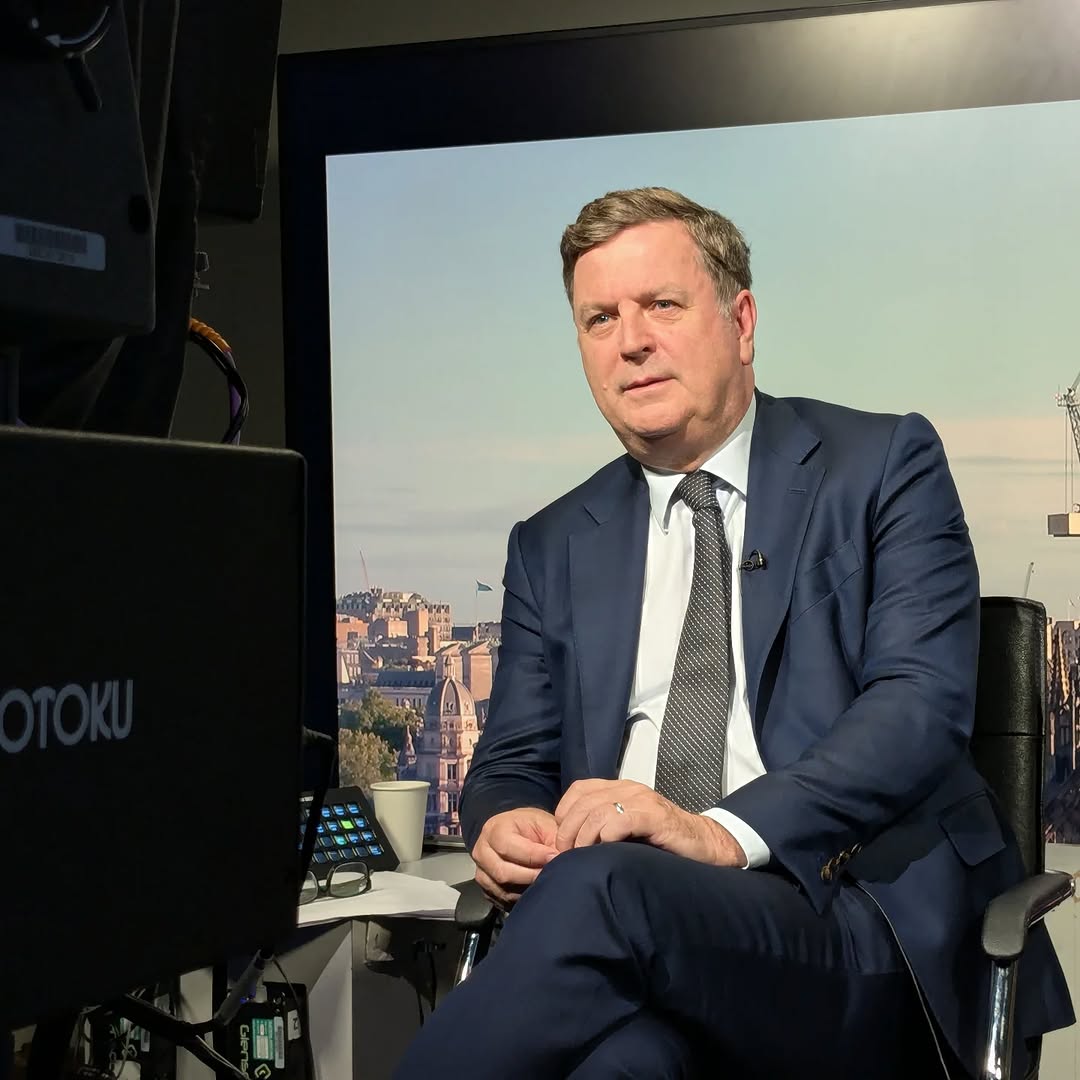
Melvyn John Stride was born on 30 September 1961 in Ealing, London. He grew up in a working-class family; both of his parents left school at ages 15 and 14 due to economic hardship.
He was awarded a free place at Portsmouth Grammar School. He later won admission to St Edmund Hall, Oxford University, where he initially studied chemistry before switching to Politics, Philosophy and Economics. While at Oxford he was active in debating and was elected President of the Oxford Union. He subsequently became the first member of his family to attend university.
| Full Name | Melvyn John Stride |
| Date of Birth | 30 Sept 1961 |
| Place of Birth | Ealing, London |
| Family Background | Working-class household |
| Early Education | Portsmouth Grammar School |
| University | Oxford (PPE), Oxford Union President |
| Early Career | Founded exhibitions company in 1987 |
| MP Since | 2010 (Central Devon) |
| Key Roles | Treasury Minister, Leader of the House |
| Current Role (2026) | Shadow Chancellor |
| Net Worth (2026) | Not publicly disclosed |
Mel Stride: Career
Sir Mel Stride is a veteran Conservative politician and Member of Parliament for Central Devon since his first election in 2010. Over the past decade he has held a succession of senior government and parliamentary roles.
Notably, he served as Financial Secretary to the Treasury and Paymaster General (2017–2019), and briefly as Leader of the House of Commons in 2019. From late 2019 until late 2022 he chaired the influential Treasury Select Committee.
In the Sunak government, Stride was Secretary of State for Work and Pensions (October 2022–July 2024). Following the 2024 general election, he stood for party leadership and was subsequently appointed Shadow Chancellor of the Exchequer by new Conservative leader Kemi Badenoch in November 2024.
In 2025 he was awarded a knighthood for public service. Throughout these roles, Stride has been associated with the party’s One Nation, fiscally responsible wing and is known for his technical expertise on finance.
Early Career In Business And Finance
After graduating from Oxford University (where he read Philosophy, Politics and Economics), Mel Stride began a career in business. In 1987 he founded his own company specializing in trade exhibitions, conferences and publishing.
He expanded this venture into the United States, eventually selling the U.S. arm of the business. His entrepreneurial experience – starting and running a firm for many years – provided him with practical insights into finance and management.
Observers have noted that Stride’s private-sector background gave him a strong grounding in fiscal matters before he entered politics. This period of business work occupied him throughout the 1980s and 1990s before he shifted his focus to public life.
Entry Into UK Politics & Election As MP (2010)
Stride entered parliamentary politics in the mid-2000s. He was selected as the Conservative candidate for the newly formed Central Devon constituency and won election to the House of Commons on 6 May 2010.
As a first-time MP he quickly earned roles in the government’s support system: in 2011 he became Parliamentary Private Secretary to the Minister for Further Education, and by 2014 he was appointed an Assistant Government Whip.
He continued to advance, serving as a Lord Commissioner of the Treasury (a senior whip) from 2015 to 2016. Stride retained his seat in the 2015, 2017 and 2019 general elections by comfortable margins.
In the 2024 general election Central Devon became highly marginal after boundary changes; he managed to hold it by just 61 votes. Notably, throughout his tenure Stride has been continuously re-elected, reflecting his solid position in the constituency and steady local support.
Parliamentary Roles & Government Responsibilities
Once on the front benches, Stride took on significant ministerial duties. After the 2017 election he was appointed Financial Secretary to the Treasury and Paymaster General in Theresa May’s government.
In those roles he was responsible for tax policy, government borrowing and public spending. He developed a reputation for technical knowledge in these areas, often speaking for the Treasury at Prime Minister’s Questions and in parliamentary debates.
In May 2019, he joined the Cabinet as Leader of the House of Commons and Lord President of the Council, overseeing the organisation of government business in the Commons. His time as Leader of the House was brief (May–July 2019) due to the change of prime minister, but it added to his leadership experience.
During the same period he also participated in key parliamentary committees and commissions on finance and public administration, further broadening his expertise in government operations.
Chair Of The Treasury Select Committee
After returning to the backbenches in 2019, Stride was elected Chair of the Commons Treasury Select Committee, a powerful cross-party body that scrutinises the government’s economic policy. He formally took office in January 2020, having been nominated unopposed in late 2019.
As committee chair (2019–2022) Stride presided over inquiries into a range of fiscal and economic issues. He set an ambitious agenda, pledging to shed “illumination and light” on government finances during a turbulent Brexit era.
Stride announced that the committee’s urgent focus would include regional economic imbalances, business rates, banking competition and the economic implications of a no-deal Brexit.
Under his leadership the committee published reports and held hearings on banking practices, government budgets, and post-Brexit trade arrangements. His tenure boosted his national profile as a financial overseer and commentator, demonstrating his capability in holding ministers accountable on Treasury matters.
Work And Pensions Secretary: Policy Leadership
In Rishi Sunak’s government Stride was appointed Secretary of State for Work and Pensions (October 2022 – July 2024). In this capacity he managed one of Whitehall’s largest departments – overseeing roughly £250 billion in spending and 90,000 staff.
His time at the DWP was marked by major welfare and pension reforms. In April 2024, Stride announced an overhaul of disability benefits, initiating a review to better target support and ensure value for money.
He also co-led a landmark “Back to Work” plan unveiled in the 2023 Autumn Statement, a £2–3 billion package designed to help over 1.1 million people with health conditions or disabilities into employment.
In speeches accompanying these policies, Stride emphasized the importance of work. He declared: “we are rolling out the next generation of welfare reforms to help more people start, stay and succeed in work”, and warned that fit-and-able benefit claimants who refuse to work “will [have] your benefits away”.
He also addressed fiscal pressures on pensions – in September 2023 he told ITV News that the triple-lock pension guarantee “does become unsustainable in the long-term”, reflecting concern about rising state pension costs. Overall, his tenure at the DWP underscored a policy blend of expanding support for jobseekers and tightening commitments for claimants.
Current Role As Shadow Chancellor & Political Influence (2024–Present)
Following the Conservatives’ 2024 election defeat, Stride remained prominent in opposition. He served briefly as Shadow Secretary for Work and Pensions under interim leader Rishi Sunak before launching a bid for the party leadership.
He was eliminated in the early ballots, but when Kemi Badenoch became leader she appointed him Shadow Chancellor in her first Shadow Cabinet announcements on 4 November 2024.
As Shadow Chancellor, Stride now leads the opposition’s economic team and helps shape Conservative fiscal policy. In this role he has continued to stress fiscal discipline.
In a June 2025 speech he famously warned that “never again will the Conservative party undermine fiscal credibility by making promises we cannot afford”, a clear repudiation of unfunded tax cuts.
His combination of ministerial experience, committee leadership and moderate approach has made him a key figure in economic debates. Both colleagues and the media note that he represents the party’s pragmatic, One Nation wing.
Stride remains an influential voice on economic and welfare policy, leveraging his extensive career to scrutinize government budgets and propose Conservative alternatives.
Mel Stride Net Worth
As of 2026, his net worth has not been publicly disclosed, and no estimate has been officially verified by major financial authorities. He receives a salary as a Member of Parliament (the official salary for 2026–27 is £98,599) and, while serving as Secretary of State for Work and Pensions (October 2022–July 2024), he received the standard ministerial salary associated with that role.
Public records indicate that he holds significant share capital in Venture Marketing Group Ltd, a publishing and events company. However, any dividends or other private-sector earnings from these holdings have not been publicly reported. No additional personal income sources, such as consultancy work or speaking fees, have been disclosed beyond these official salaries.
FAQs
Who Is Mel Stride?
Mel Stride is a British Conservative politician who has served as the Member of Parliament for Central Devon since 2010. He has held several senior government roles, including Secretary of State for Work and Pensions (2022–2024)and Financial Secretary to the Treasury (2017–2019). As of late 2024, he serves as the Shadow Chancellor of the Exchequer.
What Political Party Does Mel Stride Belong To?
Mel Stride is a member of the Conservative Partyin the United Kingdom. Within the party he is often associated with the One Nation Conservative tradition, which emphasizes fiscal responsibility and pragmatic economic policy.
When Did Mel Stride Become An MP?
Mel Stride was first elected as Member of Parliament for Central Devon on 6 May 2010. He has retained the seat in subsequent general elections, including those held in 2015, 2017, 2019, and 2024.
What Government Positions Has Mel Stride Held?
Stride has held several senior roles in government, including Financial Secretary to the Treasury, Paymaster General, and Leader of the House of Commonsin 2019. He later served as Secretary of State for Work and Pensions from October 2022 to July 2024.
What Is Mel Stride’s Current Role In Politics?
As of late 2024, Mel Stride serves as the Shadow Chancellor of the Exchequerin the Conservative Party’s Shadow Cabinet. In this role he leads the opposition’s economic policy and scrutinizes the government’s fiscal decisions.

James Rowley
Author
James Rowley is a London-based writer and researcher covering London life, cultural geography, London travel, live London webcam pages and selected public figures across entertainment, sport, business and public life.
For over 15 years, he has focused on verified sources, first-hand local context and clear explanations that help readers understand both places and people more deeply. His work combines street-level London knowledge with careful research into career credits, media work, business interests and, where relevant, transparently explained net worth estimates.
He writes and reviews articles published on LondonWebcam.
Latest Articles
Popular Articles