Paul Martin Net Worth: From CSL To Ottawa
Paul Martin Net Worth stays private, while his shipping career, government salary history, and pension eligibility offer factual context.
Author:James RowleyOct 25, 20258.5K Shares143.1K Views
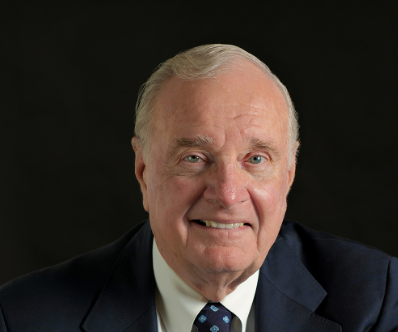
As of 2026, Paul Martin’s net worth remains private, with no officially verified figure available. He accrued income through his leadership of his family’s shipping company, serving as Chairman and CEO of Canada Steamship Lines, and through government service as Canada’s Finance Minister (1993–2002) and Prime Minister (2003–2006), roles that carried standard public salaries and pension entitlements.
After leaving politics, he founded the Martin Aboriginal Education Initiative and the Capital for Aboriginal Prosperity and Entrepreneurship (CAPE) Fund. Specific personal earnings from these ventures, speaking engagements, or book sales have not been publicly disclosed.
Prime Minister Salary Records Linked To Paul Martin
From January 1, 2001 onward, Canadian law defined a prime minister’s pay as 50% of the Supreme Court Chief Justice’s salary. In 2000–2001, the Chief Justice’s annual pay was $254,500, implying a prime minister’s salary of roughly $127,250 at that time. Paul Martin became Prime Minister in December 2003 and would have received this base compensation, indexed annually. His total remuneration included his MP salary plus the PM allowance, placing his annual pay in the mid-six-figure range during his 2003–2006 tenure.
| Category | Verified Details |
| Full Name | Paul Edgar Philippe Martin Jr. |
| Date of Birth | 28 August 1938 |
| Birthplace | Windsor, Ontario, Canada |
| Education | BA (History & Philosophy), LLB – University of Toronto |
| Profession | Politician, business executive |
| Prime Minister | 21st Prime Minister of Canada (2003–2006) |
| Political Party | Liberal Party of Canada |
| Finance Minister | Served 1993–2002 |
| Fiscal Record | Eliminated federal deficit; 5 consecutive budget surpluses |
| Global Role | Co-founder and first Chair of the G20 (1999) |
| Major Policy | Civil Marriage Act (2005) legalized same-sex marriage |
| Indigenous Initiative | Founded Martin Aboriginal Education Initiative (2008) |
| Business Career | Former President of Canada Steamship Lines |
| National Honour | Companion of the Order of Canada (2012) |
| Net Worth (2026) | Not publicly disclosed |
MP Salary And Benefits From Martin’s Public Service
Martin served as a Member of Parliament from 1988 through 2008, receiving the standard MP “sessional allowance” or base salary, along with attendant benefits each year. Federal statute pegged this basic indemnity at half the Chief Justice’s salary. In 2001, each MP’s base pay was therefore also about half of $254,500, or approximately $127,250.
Across Martin’s career, this indemnity rose from roughly $60–$70K in the early 1990s to about $130K by the 2000s. MPs also receive allowances for travel, staffing, and constituency work, including travel reimbursements and office budgets set by parliamentary rules.
Cabinet Service Pay Before Martin Became Prime Minister
During Paul Martin’s long cabinet service, most notably as Minister of Finance from 1993–2002, he earned an additional ministerial salary on top of his MP pay. Under the Salaries Act beginning in 2001, a full minister’s salary was set at 24% of the reference amount.
Martin, as Finance Minister, was included among those ministers. Since the reference amount equaled the Chief Justice’s salary, the 24% rate translated into roughly 0.24×$254,500, or about $61,000 per year for a minister in 2001. Martin’s cabinet pay was therefore a significant supplement to his MP indemnity during the 1990s and early 2000s.
Parliamentary Service Behind Paul Martin’s Pension
After 20 years in Parliament, Martin qualified for benefits under the Members of Parliament Pension Plan. He and his colleagues contributed a portion of their indemnity into a public pension account, as required by the Members of Parliament Retiring Allowances Act.
Under MP pension rules, long-serving MPs with 6+ years of service may take an unreduced pension from age 55. Having far exceeded the service threshold, Martin is entitled to a lifetime pension calculated on his final average salary. The detailed benefit formulas are set by law and coordinated with CPP/QPP.
Legal Career Roots Behind Paul Martin’s Earnings
Before entering politics, Paul Martin earned income as a lawyer and businessman. In 1973, he became president and CEO of Canada Steamship Lines, a major shipping company, and held the role until 1981. Specific compensation from that period is not publicly documented, but the executive position would have provided substantial earnings and business experience. Financial details from his earlier work at law firms in Ontario are less well recorded in public sources and are not specified.
Power Corporation Executive Role Before Politics
After law school in Toronto in 1965, Paul Martin moved to Montreal in 1966 to join the Power Corporation of Canada. He worked as an aide to Power Corp. leaders Maurice Strong and later Paul Desmarais, gaining high-level experience in corporate management.
During the 1970s, Martin took on greater responsibility for Power Corp’s business interests, including its shipping ventures. He eventually became President of the board and a senior executive of Canada Steamship Lines (CSL), Power Corp’s shipping subsidiary. During this period, he managed failing Power Corp-owned companies and earned a reputation as a corporate “firefighter” able to restructure troubled businesses.
By the late 1970s, Martin was a key Power Corp executive responsible for major assets.
Canada Steamship Lines Leadership And Business Ownership
In 1973, Martin was appointed President and CEO of Canada Steamship Lines, then owned by Power Corporation. He oversaw CSL’s fleet of bulk cargo vessels and led a strategy to expand beyond the Great Lakes. His tenure included fleet modernization and the pursuit of international shipping routes.
In 1981, Martin and business partner Lawrence Pathy negotiated a leveraged buyout to acquire CSL from Power Corporation. The 1981 acquisition was one of Canada’s largest leveraged buyouts at the time. Martin became Chairman and CEO of the newly independent CSL Group and continued leading the company throughout the 1980s.
Under his leadership, CSL grew into a global bulk shipping company. By 1988, Martin had turned around the company’s fortunes and become sole owner of CSL, guiding it from a struggling regional firm into a successful international operator. He remained the company’s chairman/CEO until entering federal politics in 1988 and later sold his interests in CSL to family members.
Finance Minister Role In Canada’s Deficit Turnaround
Martin entered federal politics with the Liberal Party in 1988, winning a seat as Member of Parliament for LaSalle–Émard, Quebec. After an unsuccessful bid for party leadership in 1990, he was appointed Minister of Finance in 1993 when the Liberals formed government.
As Finance Minister from 1993 to 2002, Martin implemented a disciplined fiscal program to eliminate a large budget deficit, which was over $40 billion at the time, and restore balanced budgets. His policies combined spending restraint, including cuts to transfer payments, with tax increases and broad tax reductions.
By the late 1990s, Canada recorded five consecutive annual budget surpluses. Martin’s financial management reduced federal debt by roughly $36 billion and brought Canada’s debt-to-GDP ratio steadily downward. He also oversaw major tax reform, introducing the largest tax cuts in Canadian history as the deficit was controlled.
FAQs
What Role Did Paul Martin Play In The G20?
Paul Martin was the inaugural chair of the finance ministers’ G20 in 1999. The role adds international financial policy context to his public career.
Did Paul Martin Work On Canada Pension Plan Reform?
Yes. During his finance career, Martin worked with provincial counterparts to restore the Canada Pension Plan and help secure it for future generations.
What Major Financial Regulation Issue Is Linked To Paul Martin?
Martin strengthened regulations for Canada’s financial institutions during his time in federal finance. That work is part of his broader record in fiscal and economic management.
Did Paul Martin Publish A Memoir After Leaving Office?
Yes. Paul Martin released Hell or High Water: My Life In and Out of Politicsin 2008.
What National Honour Has Paul Martin Received?
Paul Martin has been recognized as a Companion of the Order of Canada, reflected by the “CC” designation in his public profile.

James Rowley
Author
James Rowley is a London-based writer and researcher covering London life, cultural geography, London travel, live London webcam pages and selected public figures across entertainment, sport, business and public life.
For over 15 years, he has focused on verified sources, first-hand local context and clear explanations that help readers understand both places and people more deeply. His work combines street-level London knowledge with careful research into career credits, media work, business interests and, where relevant, transparently explained net worth estimates.
He writes and reviews articles published on LondonWebcam.
Latest Articles
Popular Articles