Priti Patel Net Worth: Salary, Roles And Public Record
Priti Patel's net worth is not publicly verified. See MP salary records, declared outside income and the public record behind what is known.
Author:James RowleyOct 06, 2026

What Is Priti Patel's Net Worth?
Priti Patel's personal net worth is not disclosed in an authoritative public record. Public records instead document specific elements of her income. Her basic MP salary was approximately £93,900 a year in 2025, and while serving in Cabinet in 2022 she also received the additional ministerial salary attached to her role, around £67,500. Parliamentary disclosures recorded a £5,000 monthly fee for strategic advisory work with Viasat and £45,000 a year for a directorship with Accloud. These figures document particular income streams at particular times. They do not provide a verified estimate of her total assets, liabilities or personal wealth.
Priti Patel Career
Priti Patel entered politics as a Conservative activist and first stood for Parliament in 2005. After unsuccessfully contesting Nottingham North that year, she was selected for the newly created Witham constituency in Essex in 2006 and won the seat at the 2010 general election.
She has been re-elected as MP for Witham in every subsequent election (2015, 2017, 2019, and 2024). Early in Parliament Patel built a profile as a committed Tory organizer. She served on Commons committees (including Public Administration and Foreign Affairs) and took on party roles such as Vice-Chair of the Conservative Friends of Israel.
In government she first joined the Treasury as Exchequer Secretary (July 2014 – May 2015) and then served as Minister of State for Employment at the Department for Work and Pensions (May 2015 – July 2016). These junior ministerial posts under Prime Minister David Cameron established her policy credentials in financial and social welfare matters.
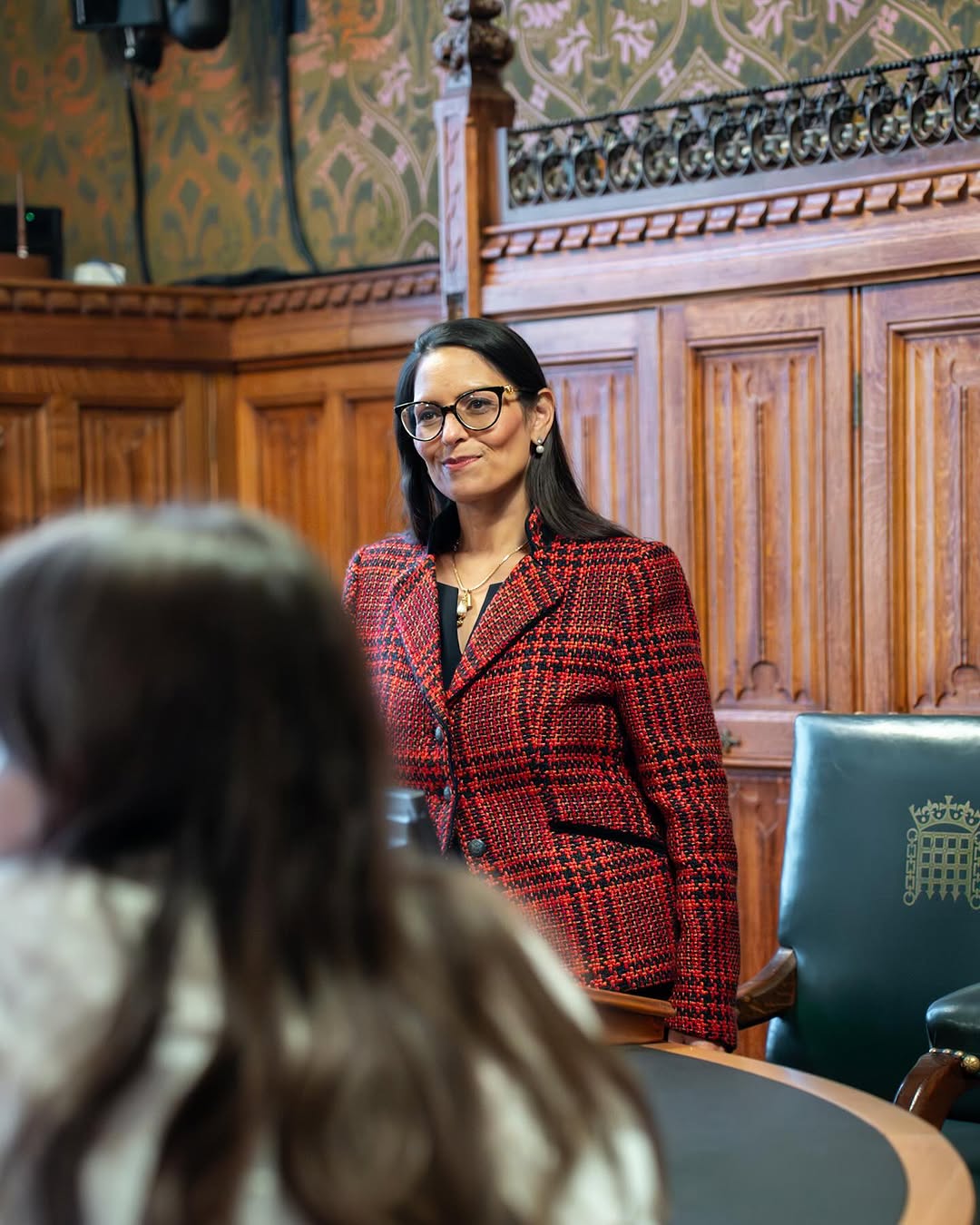
| Priti Patel Net Worth | No officially verified public figure |
| Birth & Background | Born 1972, North London. |
| Family History | Gujarati Indian heritage. |
| Education | Economics at Keele University. |
| Early Career | Worked in communications. |
| Corporate Roles | Senior roles at Weber Shandwick and Diageo. |
| Entry Into Politics | MP since 2010. |
| Key Government Posts | Held senior UK Cabinet roles. |
| Major Achievements | Led policing and immigration reforms. |
| Honours | Awarded DBE in 2023. |
| Recent Role | Shadow Foreign Secretary (2024). |
Role As Secretary Of State For International Development (2016–2017)
Following David Cameron’s resignation in 2016, Prime Minister Theresa May appointed Patel Secretary of State for International Development in July 2016. In that Cabinet role she reoriented UK aid toward economic growth and self-reliance.
Patel launched the first DFID Economic Development Strategy in January 2017, targeting job creation and trade in developing countries. This strategy aimed to help nations accelerate growth and address root causes of instability and migration. DFID's January 2017 Economic Development Strategy cited wider departmental results, including expanded access to financial services, land and property rights and clean energy. Those were programme-level results and should not be presented as outcomes attributable solely to Patel's tenure.
Patel also focused on deepening relationships with key global partners. For example, on her first visit to India in August 2016 she spoke of a growing UK–India strategic partnership, shifting aid toward technical assistance and trade opportunities rather than cash handouts.
Patel’s term at DFID was cut short by a breach of conduct. In late 2017 it emerged that she had held private, undisclosed meetings with Israeli government officials (including Prime Minister Benjamin Netanyahu) during a vacation in Israel.
This violated ministerial rules on official travel. Facing a call for resignation, Patel returned from a trip to Africa and stepped down as International Development Secretary on 8 November 2017. In her resignation letter she admitted her actions “fell below the high standards that are expected of a secretary of state”, ending her tenure at DFID.
Tenure As UK Home Secretary (2019–2022)
In July 2019 Boris Johnson became Prime Minister and chose Patel as Home Secretary. She assumed the top interior post on 24 July 2019 and served until 6 September 2022.
As Home Secretary Patel became responsible for immigration enforcement, policing, and public safety. In this senior Cabinet role she emphasized modernizing the Home Office and prioritizing support for frontline officers.
For example, in response to the ongoing Windrush issues she announced a multi-year improvement plan in late 2020 aimed at changing Home Office culture and preventing future injustices. She oversaw the Windrush Compensation Scheme and new outreach programs to affected Commonwealth residents during this period.
On security, Patel backed increased funding and technology for police forces and introduced new measures to tackle criminal gangs and knife crime, reinforcing the government’s law-and-order agenda. Her term also saw major legislative initiatives, notably the Nationality and Borders Act 2022, which received Royal Assent on 28 April 2022 while Patel was still Home Secretary and made substantial changes to the UK's nationality and asylum system.
Patel remained in post until Liz Truss became Prime Minister in September 2022; she resigned on 6 September 2022 as part of the cabinet change.
Key Policies, Reforms, And Controversies
Patel’s two terms in senior office were defined by several major policy initiatives and some high-profile controversies.
Immigration System Overhaul:As Home Secretary, Patel introduced a new points-based immigration policy in 2020. This reform took effect from January 2021 and replaced the EU free movement system.
Patel designed the system to “treat EU and non-EU citizens equally” by assigning points for skills, qualifications, language ability and salary level. She framed it as a historic measure to “take back control of our borders” and attract the “brightest and best” talent to the UK.
Alongside this, in April 2022 Patel signed the UK-Rwanda Migration and Economic Development Partnership. The policy proposed transferring some people who arrived in the UK irregularly to Rwanda for their asylum claims to be considered there. No enforced removals took place under the scheme. In November 2023, the UK Supreme Court held the arrangements then in place unlawful, and the Labour government ended the policy in July 2024.
She said the Rwanda deal was a world-first plan to deter dangerous crossings and “break the people smugglers’ business model.”
Windrush and Home Office Reform:Facing the fallout of the Windrush scandal, Patel promised a “people-first” Home Office. In July 2020 she pledged a “cultural shift” in the department, including mandatory training on UK migration history for staff and closer engagement with affected communities.
Her stated goal was to build a “fair, humane, compassionate and outward-looking” department so that such injustices could never recur. The Home Office, under her leadership, set up new support hubs and vulnerable persons units, and expanded its outreach efforts.
These changes were part of an effort to make the Home Office more accountable and empathetic to individuals at risk of wrongful detention or deportation.
Enforcement and Removals:Patel accelerated the removal of foreign criminals and immigration offenders from the UK. By August 2022 the Home Office reported that roughly 1,741 foreign national offenders had been deported that year alone, up from previous years.
Patel struck new bilateral agreements to facilitate this: for example, she secured a removal deal with Pakistan (August 2022) to repatriate non-UK nationals with no right to remain, and she renewed UK’s pledge to return Albanian offenders (following earlier intelligence-sharing agreements).
She emphasized zero tolerance, warning that the government “will stop at nothing” to remove dangerous offenders and restore safety. These actions formed part of her overall policy to tighten border security and reduce irregular migration.
Controversies:Two notable controversies marked Patel’s career. First, her 2017 resignation as International Development Secretary came after it was revealed she held private meetings with Israeli officials without clearance.
This breach of protocol ended her first Cabinet role. Second, during her Home Office tenure Patel faced a formal complaint about her conduct toward staff.
In November 2020, Sir Alex Allan concluded that Patel had not consistently met the standards required by the Ministerial Code and that aspects of her behaviour could be described as bullying in terms of their impact. He also found no evidence that she had acted deliberately to upset people. Boris Johnson concluded that she had not breached the Ministerial Code and kept her in post. Patel apologised.
Aside from these issues, her policy positions (for example, on migrant crossings and detention) attracted debate but remained central to the government’s platform.
2024 Leadership Bid And Shadow Foreign Secretary Appointment
After the Conservative Party’s defeat in the July 2024 general election, Rishi Sunak announced his resignation as party leader. Patel entered the ensuing Conservative leadership contest in July 2024, forming a campaign team and seeking the support of MPs.
It was her first bid for the top office. In the first round of MP ballots (September 2024) she received the fewest votes and was eliminated from the race.
The contest ultimately was won by Kemi Badenoch, who became party leader and Leader of the Opposition on 2 November 2024.
Within days of becoming Conservative leader, Kemi Badenoch appointed Patel to the Shadow Cabinet. On 4 November 2024, Patel was named Shadow Secretary of State for Foreign, Commonwealth and Development Affairs.
At the time of that appointment, Patel became the Conservative Party's principal spokesperson on foreign policy, representing the opposition in international affairs debates and scrutinising the government's diplomacy and aid decisions. By late 2024, she remained MP for Witham and held a senior position in the Conservative opposition team.
Major Political Achievements And Influence
Throughout her career, Patel has implemented significant policy changes and accumulated notable influence in UK politics. Her most concrete achievements include the overhaul of the UK’s immigration system and asylum arrangements.
The 2021 points-based visa regime and the proposed Rwanda asylum scheme became prominent elements of post-Brexit border policy. The Rwanda scheme never resulted in enforced removals and was ended in 2024. Likewise, her tenure at DFID reoriented aid toward private-sector growth and accountability, with multi-million-pound programs that expanded financial inclusion and land rights in developing countries.
Under her leadership, DFID reported helping some 70 million people access financial services and millions more improve their livelihoods, demonstrating the scale of UK aid under her watch.
Patel has also had institutional achievements. In June 2023, Patel was appointed Dame Commander of the Order of the British Empire (DBE) in Boris Johnson's resignation honours for political and public service.
She was made a Privy Counsellor in 2015, granting her the lifelong title “Right Honourable.” Her rise to Cabinet positions under two prime ministers and her high-profile shadow cabinet role reflect her standing: she was the first UK Home Secretary of Indian heritage, a milestone noted by observers.
Patel’s political influence is also seen in her role as a leading Conservative voice on immigration and law enforcement: she helped shape the party’s narrative on taking “tough measures” at the border and reforming policing. Outside office, she co-authored political publications (including Britannia Unchained in 2012) and actively campaigned on Brexit.
Overall, her career demonstrates a strong imprint on Conservative policy, especially in the areas of migration, security and development.
Party Positions And Leadership Roles
Within the Conservative Party, Patel has held various organizational and leadership positions. Early on she was active at local and national levels: she served as a constituency Association Chairman and worked as a volunteer party activist for decades.
She was elected to party bodies such as the Conservative Party Board and sat on the 1922 Committee of backbench MPs. Among Parliamentary groups, she chaired or co-chaired several all-party groups (for example on Small Shops and on Victims & Witnesses of Crime).
In government, she was also appointed the first-ever UK-India Diaspora Champion in 2013, liaising with British Indian communities on behalf of the Prime Minister.
Patel supported Theresa May's successful Conservative leadership bid in 2016. After May became Prime Minister, she appointed Patel Secretary of State for International Development.
In 2024, Patel herself entered the race to succeed Rishi Sunak. She assembled a campaign team and won the backing of some MPs, but after the first ballot among parliamentarians she was eliminated from the contest.
After Badenoch’s victory in the membership vote, Patel’s appointment to a senior shadow cabinet post – along with other former leadership rivals – underlined her prominent role in party leadership circles.
FAQs
1. Who Is Priti Patel?
Priti Patel is a British Conservative politician who was re-elected as MP for Witham in July 2024. She served as Home Secretary from 2019 to 2022 and was appointed Shadow Foreign Secretary in November 2024.
2. What Is Priti Patel’s Background?
Patel was born on 29 March 1972 in north Londonto parents of Gujarati Indian descent. She grew up in Watford, studied economics at Keele University, and completed postgraduate work at the University of Essex.
3. What Roles Has Priti Patel Held In UK Government?
She served as Secretary of State for International Development from 2016 to 2017 and as Home Secretary from 2019 to 2022. In November 2024, she was appointed Shadow Foreign Secretary.
4. What Is Priti Patel Known For In UK Politics?
Patel is known for her work on immigration policy, including the UK's points-based system and the 2022 Rwanda asylum policy, which never resulted in enforced removals and was ended in 2024, and for her focus on law and order as Home Secretary. She also co-authored Britannia Unchained, a political publication.
5. Why Did Priti Patel Resign From DFID?
She resigned as International Development Secretary in November 2017 after holding undisclosed private meetings with foreign officials, which breached ministerial travel and conduct rules. She acknowledged her actions fell below expected standards.

James Rowley
Author
James Rowley is a London-based writer and researcher covering London life, cultural geography, London travel, live London webcam pages and selected public figures across entertainment, sport, business and public life.
For over 15 years, he has focused on verified sources, first-hand local context and clear explanations that help readers understand both places and people more deeply. His work combines street-level London knowledge with careful research into career credits, media work, business interests and, where relevant, transparently explained net worth estimates.
He writes and reviews articles published on LondonWebcam.
Latest Articles
Popular Articles