Roger Smee Net Worth: Reading FC And Business Records
Roger Smee Net Worth remains unverified, with insight from Reading FC archives, corporate filings, and documented business activity.
Author:James RowleyMar 27, 20264.9K Shares114.2K Views
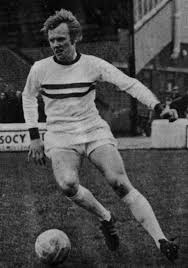
As of 2026, Roger Smee has not publicly disclosed his net worth, and no official figure has been verified. He has earned income from business ventures in the real estate and construction sectors. He founded Rockfort, a Reading-based property development firm, and later served as executive chairman and chief executive officer of Real Office Group Plc, a London-listed office fit-out company.
He has also held director-level positions at other property and construction businesses, including Leander Group Ltd and affiliated Rock Co. entities. Specific earnings from these roles are not publicly disclosed.
Roger Smee’s Forward Career And Club Pay Records
Roger Smee’s professional playing career from 1967 to 1974 was spent largely at Reading FC. Official club records credit him with 62 league appearances and 17 goals. He also made a brief return to Reading in 1973–74, making 4 appearances and scoring 1 goal. During this period, he was a contracted professional, first in Chelsea’s youth system and then at Reading, earning a weekly wage rather than per-match fees.
Archives and match programmes from the period record Smee’s appearances and goals but do not provide details of his salary or signing-on fees. In line with the practice of the era, no public record of Smee’s individual wage or bonus structure has been found in club or league archives.
| Category | Verified Details |
| Full Name | Roger Smee |
| Date of Birth | 14 August 1948 |
| Birthplace | Reading, England |
| Early Career | Professional football forward |
| League Debut | Reading FC, January 1967 |
| Football Record | 16 goals in ~50 league appearances for Reading |
| Overseas Spell | Played for VG Oostende (Belgium) |
| Post-Football Career | Property developer and entrepreneur |
| Business Venture | Founded Rockfort property firm |
| Corporate Role | Executive Chairman & CEO, Real Office Group Plc |
| Reading FC Role | Chairman (1983–1990) |
| Chairman (1983–1990) | Saved Reading FC from 1983 merger collapse |
| Club Success | Oversaw promotions (1984, 1986) & 1988 Wembley trophy |
| Honour | Appointed MBE (2013) for charitable services |
| Net Worth (2026) | Not publicly disclosed |
Public Records Behind Roger Smee Wealth Claims
Corporate filings and regulatory documents record Smee’s post-playing business activity, but they do not provide a direct net worth figure. UK Companies House lists Smee as a director of dozens of companies, mostly in property and finance.
As of late 2025, he is listed as a director of Boston Capital Partners Limited and Rock Capital Partners Limited, both registered at Chisbridge Farm, Marlow, a known family business address. He is also listed as a director of entities including Rock Co. Ltd. and Rock Co. Properties Ltd., with appointments dating as far back as 2012.
These filings confirm Smee’s controlling roles across multiple investment and development firms, although they do not quantify his personal wealth. Filings for Real Office Group PLC, where Smee was executive chairman, also record his involvement in public corporate ventures.
Smee’s financial transactions have also appeared in industry press. In April 2009, Estates Gazette reported that Smee spent £48.9 million to acquire three commercial fit-out companies through his Real Office Group (ROG). The purchases formed part of a reverse takeover intended to relist ROG on AIM, and the article quoted Smee on going debt-free.
The same report stated that Smee owned about 75% of Rock Capital Group, a property investment manager, when it collapsed into administration in late 2008. It also mentioned that his earlier property development firm, Rockfort, had failed during the early 1990s recession. These figures place Smee around large-scale deals and losses worth tens of millions of pounds, but they reflect corporate spending rather than personal net worth.
Offshore databases add another layer to the public record. The ICIJ’s Panama Papers index lists Roger Guy Smee as a shareholder of Martini Cruises Limited, a British Virgin Islands company incorporated in 2006. The listing indicates at least one offshore company connection, although no further details, such as assets or accounts, are disclosed. Company filings and investigative leaks show the scale and range of Smee’s financial activity, but none gives a clear figure for his personal fortune.
Football Archive Evidence Behind Smee’s Finances
Football archives and club histories focus heavily on Smee’s role in Reading FC’s turnaround, indirectly reflecting his financial commitment. Reading’s Supporters Trust Hall-of-Fame profile credits Smee with “saving and re-vitalising the club” during a 1983 takeover crisis. It also says the recession of 1990 “emptied Smee’s pockets” and led to a change of ownership.
While anecdotal, these histories indicate that Smee invested heavily in the club and later lost significant money during the downturn. Recent media coverage follows the same pattern. In 2024, BBC Sport reported that Smee had quietly submitted a takeover bid for Reading FC, which was later rejected.
Sky Sports also noted that owner Dai Yongge rebuffed a reported £30 million offer from Smee in December 2023. These contemporary reports of bids worth tens of millions confirm that Smee has sought to use his wealth to purchase and stabilize the club.
Across club chronicles and news coverage, football archives consistently describe Smee’s financial influence on Reading FC’s fate, although they do not detail his personal net worth or assets.
1983 Boardroom Fight Against The Thames Valley Royals
In spring 1983, Reading Football Club faced a takeover bid from Oxford United owner Robert Maxwell, who planned to merge the two clubs into a new “Thames Valley Royals” side. Roger Smee, a Reading director and former forward, led the effort to block the plan. He had already tried to buy the club in late 1982 and disputed Maxwell’s bid to control a majority of Reading’s shares.
Smee described the scheme publicly as a hostile takeover rather than a merger and worked with fellow director Roy Tranter on a legal challenge. Under pressure from that challenge, Reading chairman Frank Waller and two other directors resigned in May 1983. At an extraordinary shareholders’ meeting in July 1983, Smee was elected Reading chairman, effectively ending Maxwell’s merger proposal and preserving the club’s independence.
Reading Chairmanship Through Promotions And Wembley
Reading enjoyed one of its most successful eras during Smee’s tenure as chairman. He reshaped the club by appointing Ian Branfoot as manager and strengthening the team. In the 1983–84 season, Reading won promotion from the Fourth Division at the first attempt, returning to the Third Division.
Two seasons later, under Smee’s leadership, the club won the Third Division championship in 1985–86 and reached the Second Division for the first time in decades. In 1988, Reading reached Wembley Stadium by winning the Full Members’ Cup, then called the Simod Cup, and defeated Luton Town 4–1 in the final for the club’s first national trophy. Smee remained in charge until 1990, when local businessman John Madejski acquired the club.
Chelsea Youth System Before His Reading Breakthrough
Roger Smee began his football career in Chelsea’s youth ranks, though he never made a senior appearance for the London club. In January 1967, he signed for Reading and made an immediate impact as a forward. He scored on his league debut in March 1967 during a 2–0 win over Shrewsbury Town, then scored nine goals in fifteen matches over the rest of that season.
By the end of his first spell with Reading from 1967 to 1970, Smee had scored 16 goals in about 50 league games, establishing himself as a promising young striker before injuries interrupted his progress.
Broken-Leg Setback And Non-League Moves
Smee’s playing career was halted by a serious leg fracture in 1969. After recovering, manager Jack Mansell deemed him surplus, and he left full-time league football. In 1970, he joined Chelmsford City on loan and later played for non-League sides Hillingdon Borough and Hereford United.
Smee spent the 1972–73 season with Belgian club VG Oostende as he sought to continue at a higher level. He returned to Reading for a final spell in 1973–74, adding a few more first-team appearances and one goal to his career tally. Recurring injuries then ended his playing career, after which he focused on his business and later management roles.
FAQs
What Is Roger Smee’s Full Name In Public Records?
Roger Smee is listed in public records as Roger Guy Smee. His name appears in UK company records and the official 2009 Birthday Honours data.
Did Roger Smee Receive An MBE?
Yes. Roger Guy Smee was appointed MBE in the 2009 Birthday Honours for voluntary service to young people in Berkshire.
Was Roger Smee’s MBE Linked To Football Or Business?
No. His MBE was awarded for voluntary service to young people in Berkshire, not for football ownership or business activity.
What Youth Charity Is Roger Smee Connected With?
Roger Smee is connected with Berkshire Youth, where he is listed as president. The charity states that he was a Berkshire Youth member as a teenager, joined the board in 1981, and has been president since 1983.
Is Roger Smee Listed In Charity Commission Records?
Yes. The Charity Commission lists Roger Smee as a trustee of Berkshire Youth Trust, appointed on 22 September 2017.

James Rowley
Author
James Rowley is a London-based writer and researcher covering London life, cultural geography, London travel, live London webcam pages and selected public figures across entertainment, sport, business and public life.
For over 15 years, he has focused on verified sources, first-hand local context and clear explanations that help readers understand both places and people more deeply. His work combines street-level London knowledge with careful research into career credits, media work, business interests and, where relevant, transparently explained net worth estimates.
He writes and reviews articles published on LondonWebcam.
Latest Articles
Popular Articles