What Multicultural London English Is: Meaning And Roots
Find out what Multicultural London English is, how it differs from Cockney, and why labels like Jafaican miss the point of this London dialect.
Author:James RowleyMay 11, 20263.3K Shares78K Views
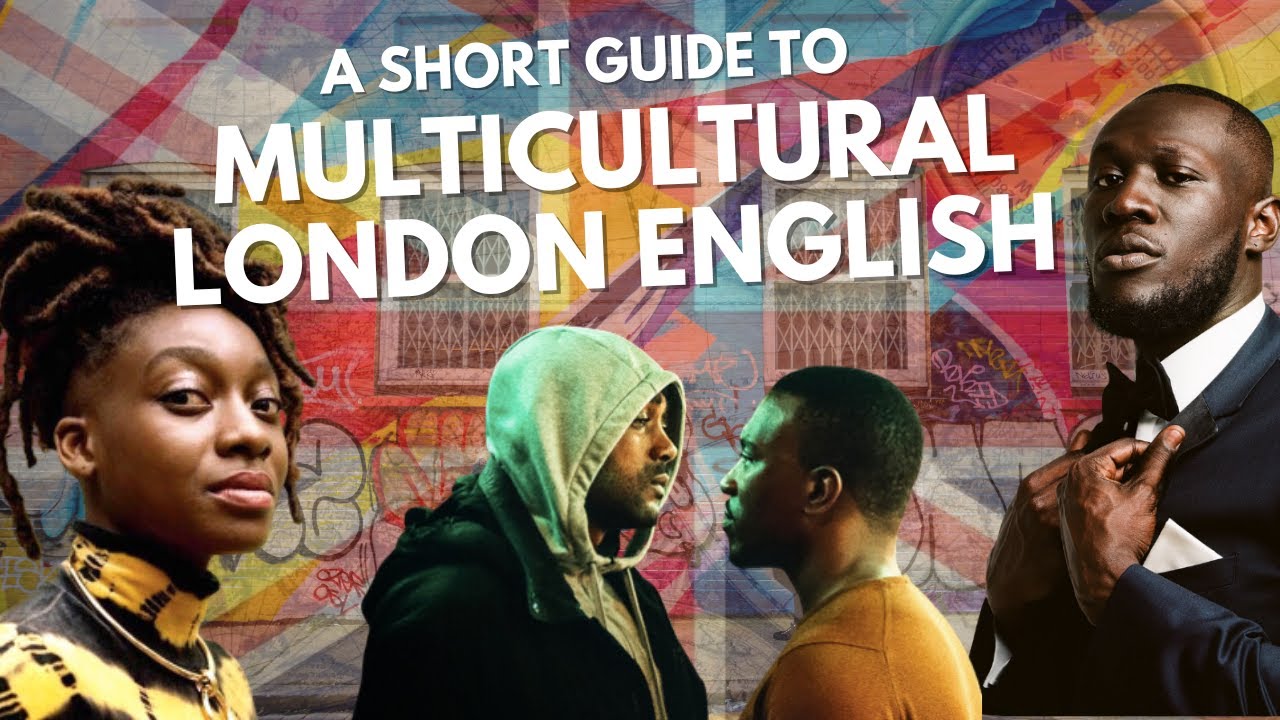
What Multicultural London English Is - Not Just Slang, But A London Dialect
People often meet Multicultural LondonEnglish, or MLE, backwards. They hear a word in a grim track, a TikTok skit, or a conversation on a London bus, and the first conclusion is usually the wrong one: that MLE is just slang, or just a performance, or just roadman talk.
The research-led definition is much clearer than that. The University of Yorkdescribes MLE as a dialect of London English that emerged from the early 1980s in parts of the city with high levels of immigration, built partly on older East End speech but shaped by much wider language contact.
That distinction matters. Once you call MLE just slang, you miss the sound patterns, the grammar, the social history, and the way London’s neighbourhoods have remade English in public.
And once you reduce it to a stereotype, you stop hearing the people who use it accurately.
What follows is a cleaner way to understand it: where it came from, who speaks it, what it sounds like, and why the lazy labels around it have never really held up.
Key Takeaways
- MLE is a London-born dialect or multiethnolect, not just a bag of trendy words.
- It grew in multiethnic London communities through contact between local English and many other languages, rather than from a single source.
- It is called multicultural because it is shared across ethnic backgrounds, including speakers whose families were already English-speaking.
- You recognise MLE through a combination of pronunciation, grammar, discourse habits, and vocabulary, not by a single giveaway word.
- The media label Jafaican is widely treated by researchers as inaccurate and often derogatory.
What MLE Actually Is
The fastest way to understand MLE is to start with the category. This is not a novelty accent, and it is not a slang glossary in disguise.
It is a recognisable London variety of English with a social history and a linguistic structure of its own.
A Plain-English Definition Of Multicultural London English
In plain terms, Multicultural London English is a modern London dialect that developed in multilingual, multiethnic parts of the capital.
York’s research pages consistently frame it as a dialect of London English that emerged in areas of high immigration, while also stressing that it has its own sound and grammar patterns rather than simply copying an older variety wholesale.
That is why the London dialect is the most useful first label for a general reader. It tells you MLE belongs to the city’s speech history, not outside it, while leaving room for the fact that it is newer and socially distinctive.
Why Linguists Call It A Multiethnolect
Researchers also use the term multiethnolect. That word matters because it explains something essential: MLE is not tied to one ethnicity, even when some of its most noticeable features have connections to minority language communities.
Who speaks MLE? The page makes the point directly: the variety is shared among young people from different backgrounds who grew up in the same linguistic melting pot.
So the multicultural part is not branding. It is a description of how the variety formed and how it circulates socially.
Children and teenagers in diverse neighbourhoods acquire features from one another, and over time, that shared speech becomes a stable urban vernacular.
Why MLE Is More Than Slang
Slang is the flashy part, which is why it gets all the attention. But York’s definition of MLE highlights different sounds and grammatical constructions as well as lexis, and the larger research programmes on MLE describe change at the level of phonetics, grammar, and discourse features.
That means you can strip away the popular words and still be left with recognisable MLE.
A speaker may use none of the terms that go viral online and still sound unmistakably rooted in the variety because of vowels, consonants, rhythm, quotatives, pronoun choice, or discourse style.
The key point:if you remember only one thing from this section, it should be this: MLE is a structured London way of speaking, not a slang trend.
How Multicultural London English Emerged In London

To understand why MLE sounds the way it does, you have to look at London itself. The variety did not appear because one group brought in a ready-made accent.
It emerged because different speech communities lived, learned, and grew up together in the same city spaces.
Cockney Roots And The Local London Base
York’s definition is careful here: MLE is based on the traditional East End Cockney dialect, but it is not identical to Cockney.
That older London vernacular supplied part of the local base, especially because new varieties rarely appear on a blank slate.
They grow out of what is already there. So when people ask whether MLE replaced Cockney, the honest answer is subtler.
MLE inherited from older London English, but it also reorganised that inheritance in contact with other languages and social networks.
Postwar Migration, Language Contact, And The Feature Pool
The strongest research explanation is the contact-based one. Who made MLE?
The case study says MLE emerged in the context of the wide variety of languages spoken in Londonafter inward migration in the second half of the twentieth century.
The feature pool account developed in York research argues that when speakers with different linguistic backgrounds interact, a pool of possible features becomes available, and some are selected and stabilised by the community.
That is why it is misleading to treat MLE as a fake Jamaican or as a straightforward copy of any single source variety.
York explicitly states that MLE has many ancestors and that only a relatively small share of its features can be clearly traced to Jamaican influence, with slang being the most obvious area where that ancestry shows.
Why Second And Third-Generation Speakers Mattered So Much
New urban dialects settle when children and adolescents grow up together, not when adults merely live beside one another.
York’s speaker profile emphasises descendants of immigrant families, alongside young people of British origin raised in the same neighbourhood mix, as central to the spread of MLE.
In other words, MLE is not best imagined as imported speech. It is better understood as home-grown London English, formed by peer-group contact in the city’s schools, estates, streets, youth spaces, and friendship networks.
Why Jafaican Is The Wrong Shortcut
The media label Jafaican became popular because it offered an easy headline: fake Jamaican.
Researchers have pushed back against it for years. York’s toolkit calls the term derogatory and says it rests on the inaccurate idea that the variety is a fake version of Jamaican Patois.
That matters for more than politeness. The label misdescribes the variety’s actual formation, erases its wider linguistic roots, and encourages readers to hear MLE as imitation rather than as a legitimate London development.
Takeaway:MLE makes the most sense when you see it as a new dialect formation in a multilingual city, not as a borrowed costume.
Who Speaks MLE - And Why That Question Gets Misunderstood

This is where stereotype usually outruns reality. People want a simple answer to who speaks MLE?, but the research answer is social rather than tribal: it is about neighbourhoods, age groups, peer networks, and shared urban life.
Shared Across Ethnic Backgrounds, Not Owned By One Group
York’s definition of multicultural is the cleanest answer here. MLE is shared among young people from different ethnic and linguistic backgrounds, including those whose parents were native speakers of British English.
That is one reason outsider descriptions so often miss the point. A variety can carry traces of contact with Caribbean, African, South Asian, and other language histories while still being used cross-ethnically by Londoners who grew up together.
Age, Neighbourhood, And Friendship Networks
MLE has been especially associated with younger speakers in diverse inner-city contexts.
The York materials and wider MLE research programmes repeatedly tie it to adolescents and young adults in multilingual urban settings, where peer-group interaction is dense enough to stabilise new features.
That does not mean every young Londoner speaks the same way, or that adults never do. It means youth networks played a major role in forming and spreading the variety.
Why MLE Is Not Posh, But Not A Caricature Either
MLE is not generally heard as an elite prestige accent in the way Received Pronunciation has historically been.
Accent Bias Britaintreats MLE as one of today’s major English accents, distinct from RP and Estuary English, and its findings show that accent judgments still carry class and ethnic baggage.
That is why not posh should not be turned into therefore unserious or therefore fake. A variety can be socially marked, stigmatised, creative, and structurally rich all at once.
Illustrative scenario:On one overcast afternoon in south-east London, three teenagers get off the same bus and head towards the same chicken shop.
One is Black British, one is white British, and one is from a Turkish-speaking home.
Their clothes differ, their family histories differ, and their private voices at home may differ too.
Yet in the flow of quick jokes, clipped responses, and familiar local rhythm, parts of their speech line up.
That is the point of MLE: not sameness, but a shared urban repertoire built through contact.
The scene above is illustrative, but the social principle behind it is well supported: MLE is a shared way of speaking shaped by common space and interaction, not by a single ethnic ownership claim.
Takeaway: asking who speaks MLE? is useful only if you are ready for the real answer: many kinds of Londoners, especially in diverse urban networks.
How To Recognise MLE In Real Speech
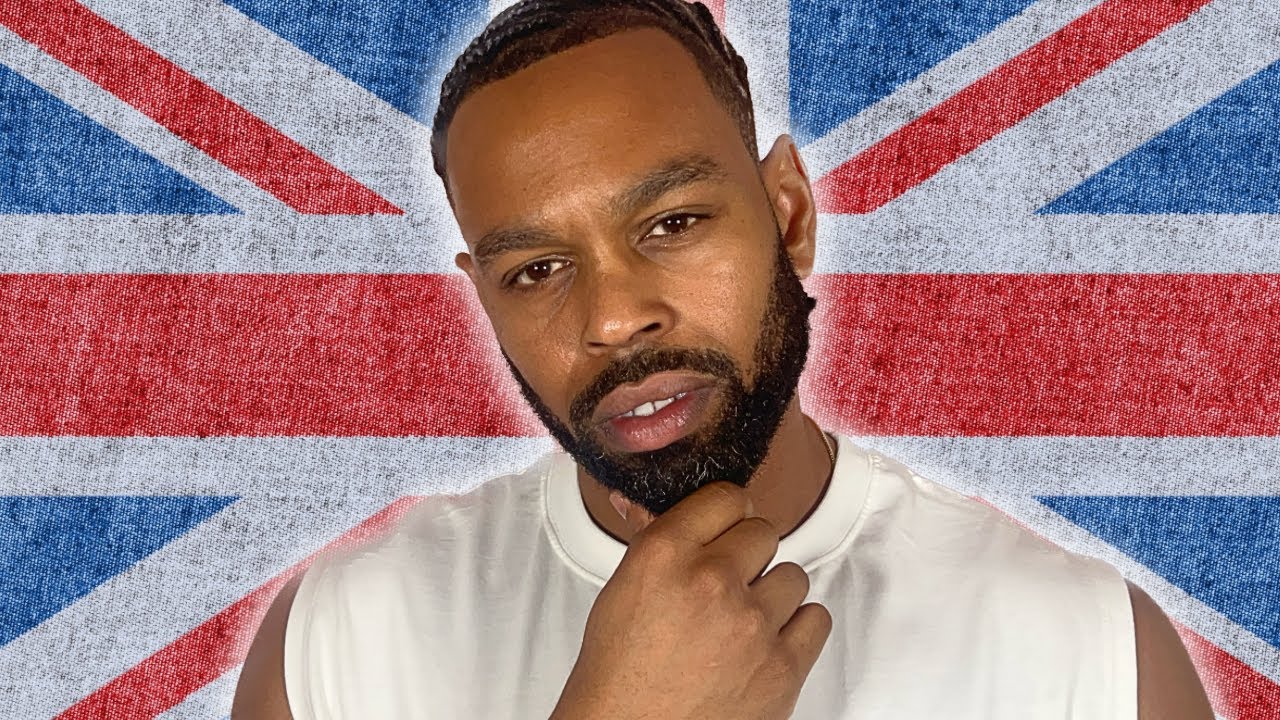
London Accent Explained 🇬🇧 | Multicultural London English | MLE Accent
This is the practical section, but it needs one warning at the top. There is no single switch that turns ordinary London English into MLE.
You hear it through clusters of features, and those features do not all appear in every speaker or every sentence.
Sound Features People Often Notice First
York’s MLE pages point to different sounds as a core part of the variety, and the broader research programmes on MLE describe change at the level of phonetics as well as grammar and discourse.
TH-fronting And TH-stopping
Two patterns often mentioned in discussions of urban British speech are TH-fronting and TH-stopping. TH-fronting turns the sound in words like thing or three towards an f or v-like outcome in some contexts, while TH-stopping can produce forms like ting for thing.
Cambridge research notes TH-fronting as well established in London, while later work on urban youth speech discusses TH-stopping as part of the wider feature set associated with these styles.
L-Vocalisation And /k/ Backing
Beyond the ‘TH’ sounds, listeners often pick up on two other structural phonetic markers.
The first is L-vocalisation, a feature where a dark L at the end of a syllable is pronounced more like a 'W' or 'U' vowel, making a word like mill sound closer to miw.
While MLE inherited this trait from older London dialects like Cockney, it carries it forward robustly.
The second, and more distinctively modern feature, is /k/ backing. This occurs when the 'K' sound in words like cousin or car is articulated further back in the vocal tract.
This slight shift in pronunciation gives the consonants a noticeably heavier, more resonant quality, cementing the MLE sound profile as structurally distinct from other southern British accents.
The important point is not to treat either feature as a magic badge for MLE. London speech has a long history of sound change, and single features travel. MLE is better heard as a package than as one phonetic party trick.
Vowel Shifts And Non-rhoticity
Research on the roadman stylisation of MLE notes features such as fronted /uː/, which helps explain why some speakers sound distinct even before specific vocabulary appears.
Like most southern British English varieties, MLE is also typically non-rhotic, meaning the /r/ is not pronounced in positions where many North American accents would keep it.
Again, the pattern matters more than any one detail. What listeners usually perceive is a recognisable London urban sound, not a checklist item floating in isolation.
Grammar And Discourse Features
What separates serious explanation from superficial imitation is grammar and discourse. This is the layer that proves MLE is more than a few quotable words.
Pronoun Man
One feature often cited in research on MLE stylisation is pronominal man, where man can function in ways more like a pronoun than a noun.
Cambridge’s work on roadman stylisation names this explicitly as one of the features co-opted in performance and parody.
That is useful because it shows how MLE travels socially. A grammatical feature can become culturally recognisable, then exaggerated in the media, even when ordinary speakers use it more naturally and less theatrically.
Quotatives Like This Are Me
Another discourse feature associated with MLE is the quotative pattern often rendered as this is me, used to introduce reported speech or stance.
It appears in MLE research because discourse habits, not just sounds, help mark the variety.
For a reader, the practical lesson is simple: once you notice how someone quotes, frames reactions, and moves through conversation, you are hearing more of the dialect’s structure.
Vocabulary Examples That People Commonly Associate With MLE
Vocabulary is still part of the picture. Words like wagwan, peng, mandem, gyaldem, bare, and ends often get pulled into public discussion because they are easy to spot and easy to repeat.
But York’s pages are clear that slang is a part of MLE where Jamaican ancestry is most visible, not the whole linguistic story.
Everyday Words
These words matter because they make MLE audible to outsiders. They often travel through music, social media, comedy, and youth culture faster than the deeper grammar does.
Why Slang Alone Can Mislead
If you focus only on words, you end up with the weakest possible understanding of the variety.
Plenty of people borrow a word or two without speaking MLE, and many MLE speakers do not talk like online parodies.
How To Recognise MLE Without Stereotyping It
- Listen for a cluster of features, not one word.
- Separate actual speech from online parody.
- Remember that different ethnic backgrounds can share the same variety.
- Do not confuse non-elite with incorrect.
- Treat slang as the visible surface, not the whole system.
Expert’s Take:I avoid calling MLE just slang because that phrasing blinds the reader to the real story. Once you listen for grammar, rhythm, and social history, London sounds more interesting and much more precise.
Takeaway: the safest way to recognise MLE is to hear it as a patterned dialect, not a costume assembled from memes.
MLE Vs Cockney Vs RP: What Actually Changed

TOP 4 London Accents (N,S,E,W) Mini Tutorials + Influences!
Comparison helps because most readers already have one London sound in their head, even if it is an old film version.
The problem is that they often compare the wrong things. MLE, Cockney, and RP are not three neat boxes with hard walls, but the contrast still helps orient the ear.
What MLE Inherited From Cockney
MLE did not arrive out of nowhere. York explicitly says it is based on traditional East End Cockney, which means older London speech supplied part of the foundation.
What Makes MLE Distinct
What makes MLE distinct is the later layer of multiethnic contact, plus the way phonetic, grammatical, and discourse features are stabilised together in newer urban networks. That is what makes it more than simply modern Cockney.
The H-Dropping Reversal
If there is a single, practical phonetic test to separate traditional Cockney from modern MLE, it is the treatment of the letter 'H'.
Cockney is historically famous for H-dropping, where a speaker might pronounce house as 'ouse or heavy as 'eavy.
MLE speakers, conversely, almost universally retain and pronounce their H’s. This phonetic reversal provides an immediate aha! moment for listeners.
It serves as clear proof that MLE is not just a modern continuation of East End slang, but a newly formed dialect shaped by international linguistic inputs, where H-dropping was never the norm.
Where RP And Estuary English Fit In
Received Pronunciation has long functioned as a prestige reference point in British speech culture, while Estuary English is often used for a broader south-eastern middle-ground label.
Accent Bias Britain treats all three as distinct categories in present-day English accent perception, which is useful because it shows MLE is now part of the country’s recognised accent landscape, not a fringe curiosity.
| Variety | Best short description |
| MLE | A newer London multiethnolect/dialect shaped by migration, contact, and urban peer-group speech. |
| Cockney | An older East End London vernacular that forms part of MLE’s local base. |
| RP | A historically prestigious accent associated with educated, non-regional British speech. |
| Estuary English | A broader south-eastern English label often heard as socially between RP and local London speech. |
This comparison condenses York’s definition of MLE as Cockney-based but distinct, together with Accent Bias Britain’s present-day distinction among MLE, RP, and Estuary English.
Takeaway:MLE makes the most sense as a new London speech built from older London English plus new urban contact, not as a rebrand of Cockney or a rough cousin of RP.
Why MLE Matters Beyond Linguistics
A dialect becomes culturally important when people start hearing more than language in it.
MLE now carries ideas about class, race, age, authenticity, humour, danger, belonging, and taste. That is why the public argument around it can be louder than the phonetics.
Grime, Drill, And Media Visibility
Popular music and online video have made MLE far more audible across Britain than it would have been in an earlier era.
A 2024 Journal of Sociolinguistics article on the diffusion of MLE lexisused social-media data to study how the variety travels beyond its original heartland.
That does not mean every viral word is evidence of full dialect spread. It means MLE now exists both as everyday local speech and as a highly recognisable public style.
How Roadman Stereotypes Distort Public Understanding
Cambridge research on the stylised roadman shows how MLE features can be lifted out of ordinary speech and exaggerated in parody.
That is analytically useful, but it also reveals the risk: the public ends up meeting the caricature before the language variety itself.
Once that happens, people stop hearing MLE as a normal urban dialect and start treating it as a costume, a joke, or a moral signal. That is one of the main reasons explanations need to stay careful.
Is MLE Still Only A London Phenomenon?
The short answer is no, though the longer answer needs caution. Cambridge’s chapter on Multicultural British English and the 2024 social-media diffusion research both suggest that MLE-like features and lexis are not confined to London, even if London remains the main reference point.
The safest phrasing is that MLE was born in London, but related forms and features are now part of a wider urban British picture.
Accent Bias, Class Judgments, And Covert Prestige
Accent Bias Britain exists because accent judgments have real social effects, including in professional evaluations.
Its materials show that listeners respond differently to accents such as RP, Estuary English, and MLE, and York’s attitudes research found that exposure to MLE and higher education levels were associated with more positive attitudes to it.
That helps explain why MLE can be both stigmatised and socially powerful. A variety can attract mockery from outsiders while carrying local credibility, familiarity, or identity value among insiders.
Takeaway:MLE matters because it is not only a way of speaking. It is also a live argument about how Britain hears class, race, youth, and London itself.
Frequently Asked Questions
What Is MLE?
MLE is Multicultural London English, a London-born dialect or multiethnolect shaped by migration, language contact, and shared urban speech.
Who Speaks MLE?
Many young people in diverse urban communities speak MLE across ethnic lines, especially in London, though related features can travel beyond the capital.
Is MLE Just Slang?
No. Slang is the most visible part to outsiders, but York’s definition and the wider research both treat MLE as a variety with distinctive sounds, grammar, and discourse patterns too.
Is It The Same As Cockney?
No. MLE grew partly from Cockney and older London English, but it developed into a distinct variety through later multilingual contact and new urban social networks.
Is MLE A Regional Accent?
Partly, but not only. It is rooted in London and strongly associated with the city, yet researchers also describe it as a multiethnolect shaped by social contact rather than geography alone.
Is The MLE Accent Posh?
No. MLE is not generally heard as a traditional prestige accent like RP, though that should not be confused with being linguistically lesser or illegitimate.
Why Is It Called Jafaican?
It should not be, at least not as a neutral label. York’s toolkit says the term is derogatory and inaccurate because it suggests MLE is fake Jamaican rather than a home-grown London variety.
Is MLE Spreading Beyond London?
Research published in 2024 suggests diffusion of MLE lexis and MLE-like features beyond London, but the safest phrasing is still cautious.
The Clearest Way To Think About MLE
The neatest final definition is also the most useful one: Multicultural London English is a home-grown London dialect formed in multiethnic neighbourhoods through contact, repetition, and shared daily life.
It is not just slang. It is not just a media stereotype. And it is not well described by labels that treat it as an imitation.
If you keep that frame in mind, the rest falls into place. You can hear why MLE has roots in older London speech, why it spread through peer groups, why it gets caricatured online, and why it matters to anyone interested in how cities reshape language in real time.
London has always changed English. MLE is one of the clearest modern proofs.
Jump to
What Multicultural London English Is - Not Just Slang, But A London Dialect
What MLE Actually Is
How Multicultural London English Emerged In London
Who Speaks MLE - And Why That Question Gets Misunderstood
How To Recognise MLE In Real Speech
MLE Vs Cockney Vs RP: What Actually Changed
Why MLE Matters Beyond Linguistics
Frequently Asked Questions
The Clearest Way To Think About MLE

James Rowley
Author
James Rowley is a London-based writer and researcher covering London life, cultural geography, London travel, live London webcam pages and selected public figures across entertainment, sport, business and public life.
For over 15 years, he has focused on verified sources, first-hand local context and clear explanations that help readers understand both places and people more deeply. His work combines street-level London knowledge with careful research into career credits, media work, business interests and, where relevant, transparently explained net worth estimates.
He writes and reviews articles published on LondonWebcam.
Latest Articles
Popular Articles