London Commuting Etiquette | The Unwritten Rules That Keep The Capital Moving
London commuting etiquette can feel strict when you first use the Tube or buses. The rules are there to help millions of people move through crowded stations every day. Once you understand the basics, you can avoid awkward moments fast.
Author:James RowleyMay 01, 2026
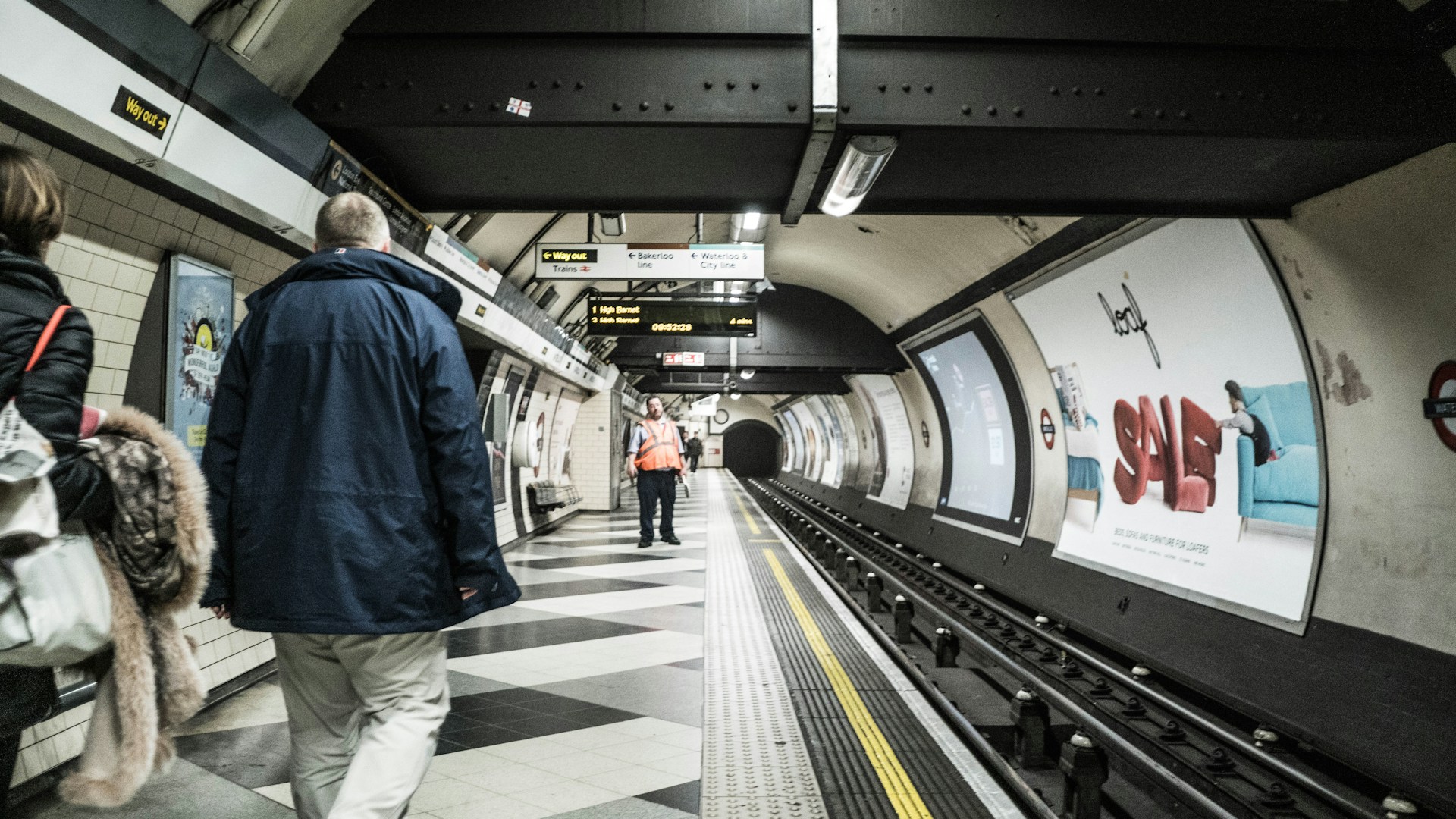
Moving to Londonfor a new job, arriving as a visitor, or simply switching from driving to public transport for the first time, you have almost certainly heard that Londoners take their commute seriously. The single most important rule on the London Underground is to stand on the right side of escalators and leave the left clear for people walking.
Beyond that, the core etiquette comes down to five things: have your payment ready at the barriers, let passengers off before you board, keep noise to a minimum inside the carriage, give up your seat to anyone who needs it more than you, and move away from the doors once you are on. These rules apply across the Tube, the Elizabeth line, the Overground, and London buses. Get those five right, and you will blend in immediately.
A Few Things Worth Knowing Before You Read On
- London's commuting code is not arbitrary social fussiness. It is a crowd-management system built by millions of daily passengers over decades, and understanding its logic makes the rules far easier to remember.
- The escalator rule is the one most likely to get you a sharp look or a pointed comment, even from otherwise mild-mannered strangers.
- Bus etiquette in London has its own distinct culture that most articles completely ignore, and they are covered properly in this article.
- The Elizabeth line and London Overground follow the same core rules as the Underground, but have their own atmosphere and pressure points worth knowing about.
- There is a TfL badge that signals invisible disabilities. Knowing what it looks like could save you from a genuinely awkward moment.
Why London Commuters Take These Rules So Seriously
Before running through the specifics, it helps to understand why these norms feel so deeply held compared to other cities.
- London's Underground network is the oldest in the world, dating to 1863, and large sections of it were simply not designed for the volume of passengers it carries today. Small inefficiencies compound fast when 1.35 billion journeys pass through the network annually, according to TfL's published figures.
- Sociologists use the term "civil inattention" to describe the way people in densely packed public spaces voluntarily reduce eye contact and personal engagement to give each other psychological breathing room. On the Tube, this is not coldness. It is a coping mechanism that the whole system depends on.
- When one person blocks an escalator, holds a door, or lingers at a barrier, the delay ripples backwards through dozens of people behind them. Every commuter has felt that ripple. That is why the reaction to small infractions can feel disproportionate to an outsider.
Understanding that logic is what separates someone who memorizes a list from someone who genuinely gets it, and it is one of the first steps if you want to navigate London like someone who lives there.
Barrier And Ticketing Etiquette
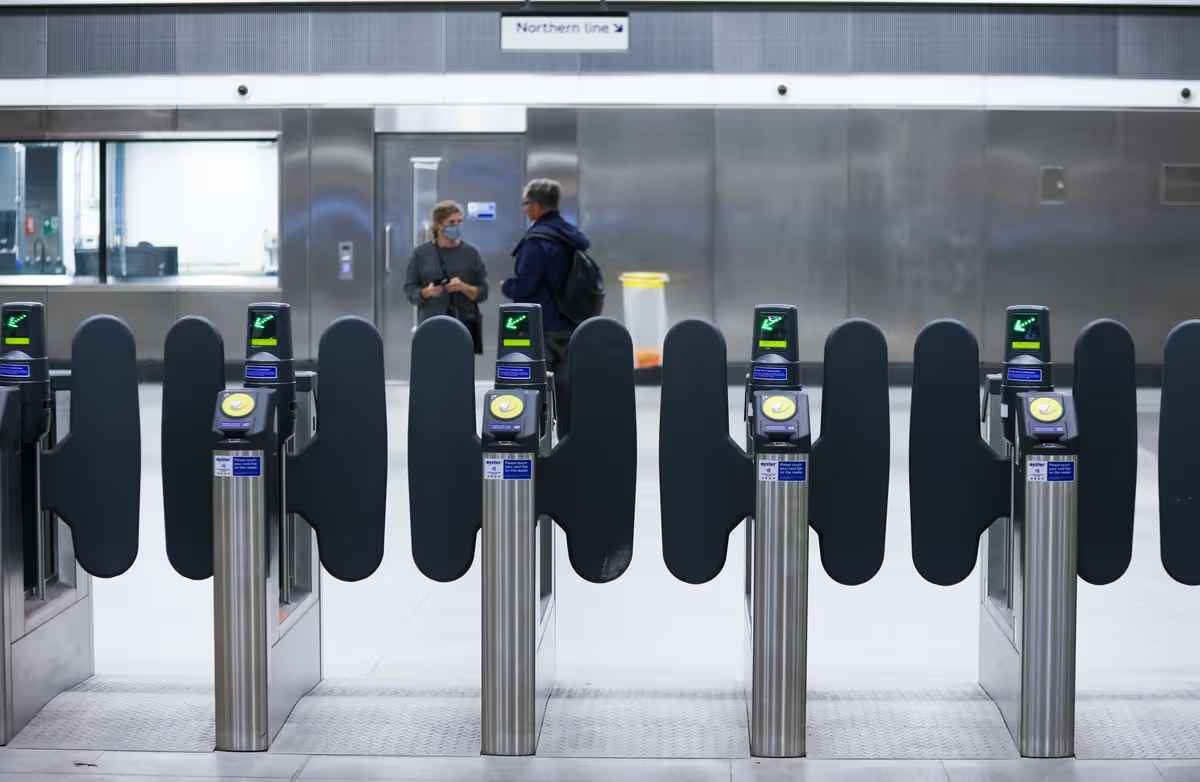
Getting through the ticket barriers smoothly is the first test, and it is one the Underground throws at you before you have even caught your breath.
Have Your Payment Method Completely Ready
The rule is simple: your contactless card, phone, smartwatch, or Oyster card should be in your hand before you join the queue for the barriers, not when you reach the front of it. Tap the yellow reader without slowing your stride. The barriers respond quickly, and the person behind you is already walking.
You do not need a physical Oyster card at all if you have a contactless Visa or Mastercard, or a phone or watch set up for contactless payment. All of these work across every TfL service, making it easy to use a contactless or Oyster card to pay as you gowithout buying a separate ticket for each journey.
If you are still getting used to the city’s transport system, it is worth checking a few London travel tipsbefore your first busy journey. If you keep your bank card in a phone flip case alongside other cards, take it out before you tap. Multiple cards on the reader at once will confuse the system every time.
One more thing worth knowing: the barriers do not need to be fully open before you tap. So long as the LED light on the reader shows orange, you can tap. Waiting for the barriers to complete their swing before touching your card is a reliable way to identify someone on their first Underground journey and to earn quiet frustration from everyone behind you.
What To Do If Your Card Does Not Work
Step aside. Immediately and without hesitation. Do not stand at the barrier trying the same card repeatedly while a queue forms behind you. Move to the side, sort yourself out, and re-join when you are ready. Top-up machines are available in every station. If your Oyster card has insufficient credit, the reader will usually display a message telling you so. If all else fails, use contactless on your phone as a backup.
The Escalator Rule
Stand on the right. Walk on the left. That is the rule, and it is about as close to a genuine law as an unwritten code can get on London's Underground.
Every escalator in every Underground station carries clear signage making exactly this point. During rush hour, the left side of the escalator is a moving lane, used by commuters walking at a pace to reach their platform faster. Blocking that lane even briefly, even accidentally, even because you did not notice the signs, will almost certainly result in an "excuse me" delivered in a tone that makes clear it is not a request.
In 2016, TfL ran a trial at Holborn station that briefly asked passengers to stand on both sides of the escalator to improve overall throughput, based on research suggesting the walking lane was often underused. The response from regular commuters was, to put it diplomatically, unenthusiastic. The trial ended. The rule stayed. Londoners are attached to their walking lane.
On staircases within the station, keep to the left when walking either up or down because this mirrors road traffic rules and prevents head-on collisions at bottlenecks. If you are travelling with luggage, position it in front of or below you on the escalator step, not beside you. A suitcase placed on the step next to you blocks the standing lane just as effectively as a person.
Waiting Without Causing Trouble On The Platform
Reaching the platform is not an invitation to stop thinking about the people around you.
- Stand to one side of the doors, not directly in front of them. The passengers getting off need a clear path.
- Let every exiting passenger off before you attempt to board. Every single one. This is not an optional social nicety. It is the only way the process works physically.
- Use the full length of the platform when you wait. Clustering around the central stairs and escalator exits creates unnecessary congestion. Walking a few carriages further down takes seconds and distributes the crowd more evenly.
- If a train arrives and it is clearly already packed, the correct response is to wait for the next one rather than forcing yourself into a carriage where there is genuinely no space. Another train will arrive. The network is frequent, particularly on the central lines during peak hours.
- Do not rush the closing doors. Attempting to squeeze in at the last second delays the train for every passenger already on board and puts you at genuine risk of getting caught. There is always another train.
The Unwritten Rules Inside The Carriage
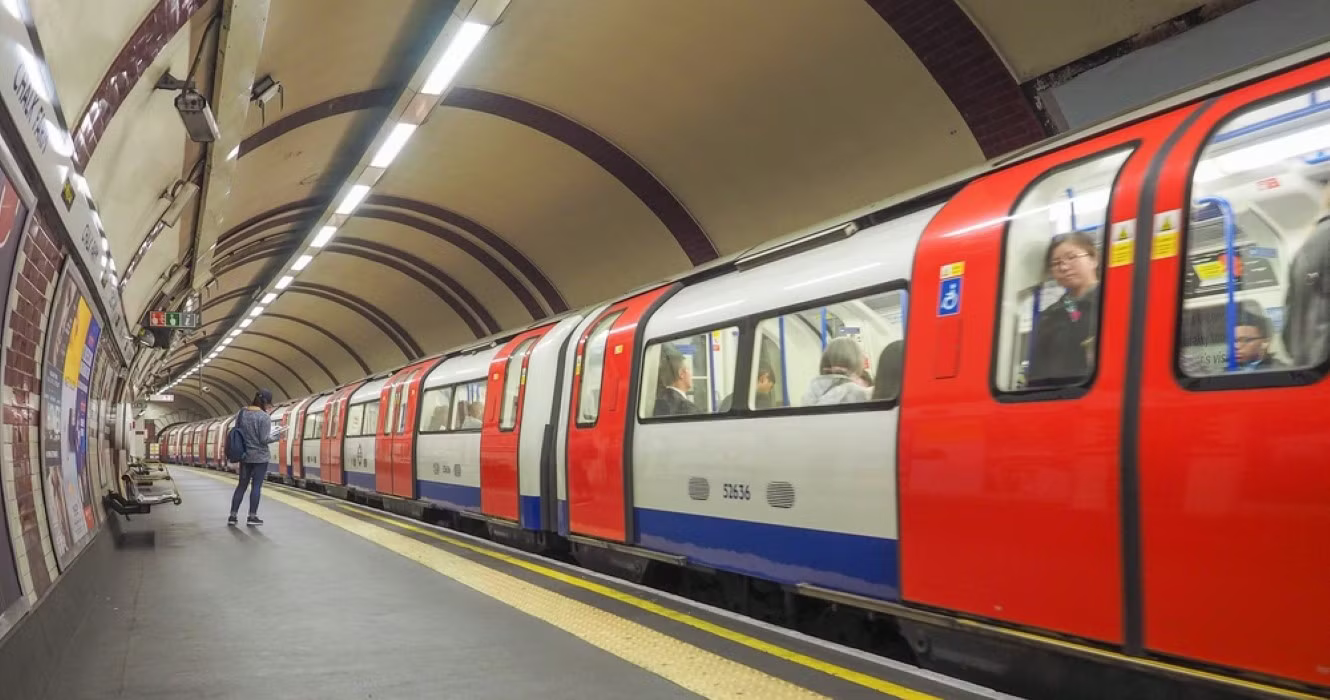
This is where most of the real etiquette lives, and where most visitors go wrong without realizing it.
Noise, Phones, And Headphones
The audio hierarchy inside a London Underground carriage runs something like this. Silence is ideal. A quiet conversation with someone you are travelling with is perfectly fine. A phone call is strongly frowned upon. Although not impossible, expect to feel the collective attention of the carriage if you take one.
Audio played through your phone speaker without headphones is considered one of the most antisocial things a person can do in this particular environment, and you will know about it. Whether you are watching videos, scrolling social media, or checking football clips, keep it silent and private. If you wear headphones, but the person sitting next to you can still identify your playlist, the volume is too high.
The no-eye-contact norm is directly connected to this. When everyone is packed into a small, quiet space, the instinct is to avoid any behavior that draws attention, including sustained eye contact with a stranger. Looking at your phone, at the floor, at the overhead advertisements, or out the window when above ground are all perfectly normal. Staring at the person across from you is not.
Bags, Bodies, And Physical Space
Remove your backpack and hold it in front of you, or place it at your feet, as soon as you board during busy periods. A backpack worn on your back doubles your footprint in a space where every centimetre counts, and you will be hitting people in the face with it every time you turn around without noticing.
Bags placed on seats during busy periods are a reliable source of quiet Londoner fury. Put it on your lap or the floor. When the carriage is clearly full, and people are standing, a bag on a seat communicates something you almost certainly do not intend to communicate.
Move away from the doors when you board, unless you are getting off at the very next stop. The area around the doors is a bottleneck. Moving into the body of the carriage creates space for the passengers boarding behind you and keeps the doors from being obstructed. This feels obvious until you are the person standing by the doors because the carriage looks full, and then you discover there is actually a reasonable amount of space further in.
Do not lean your whole body against the central standing pole. It is there for everyone to grip, not for one person to rest against.
Eating And Drinking On The Underground
Alcohol has been formally banned on the London Underground, buses, and DLR since June 2008 under a TfL bylaw. This is not an etiquette guideline; it is an actual rule with enforcement behind it.
Hot food with a strong smell is not banned, but eating a full meal in a carriage is treated as an act of genuine antisocial behaviour by most regular commuters. A cereal bar or a takeaway coffee in a sealed cup? Generally tolerated, particularly off-peak. A lamb balti or a fast food meal during the morning rush? Expect people to move away from you if there is anywhere to move to.
If what you are eating has a noticeable smell and you are in an enclosed space with other people who did not choose to smell it, it is worth waiting until you reach your destination. Regular commuters often save money by planning food, coffee, and transport together, especially if they are trying to manage a budget in Londonwithout wasting cash on last-minute station purchases.
Seating Priority, Offers, And The "Please Offer Me A Seat" Badge
If someone boards the carriage who is elderly, visibly pregnant, or using mobility aids, you offer them your seat. Immediately, without waiting to see if someone else does it first.
TfL operates a scheme called "Please Offer Me a Seat," providing a blue badge to any passenger whose condition makes standing difficult, including people with invisible disabilities such as chronic pain conditions, heart conditions, or early-stage pregnancy. The badge is available to anyone who applies for one through TfL.
If you see a passenger wearing one and you are seated, you offer your seat. The badge exists specifically because invisible disabilities are frequently overlooked, and this is TfL's practical solution. There is no graceful way to pretend you did not notice.
The Exit Etiquette People Forget
Most people think about commuting etiquette in terms of getting on. Getting off has its own set of rules.
- Check your route before you travel so you know which stop is yours. Start moving towards the doors, and stop before you need to exit without blocking the aisle or standing directly in front of the doors before the train stops.
- Do not launch yourself at the doors the moment the train slows. Everyone on board will exit if they need to. There is always enough time.
- If you are standing near the doors and people behind you need to get off, step off the train onto the platform, let them pass, and step back on. This takes about four seconds and prevents an undignified bottleneck.
- Never hold the doors open for a friend who is still running down the platform. It feels helpful. To the 200 people on the train whose journey you have just delayed by holding a scheduled service, it is not.
- On buses, a quiet "thank you" to the driver as you exit through the front doors is standard practice. It costs nothing and is one of those small, warm habits that make city life slightly more human.
London Bus Etiquette That Is Different From The Tube
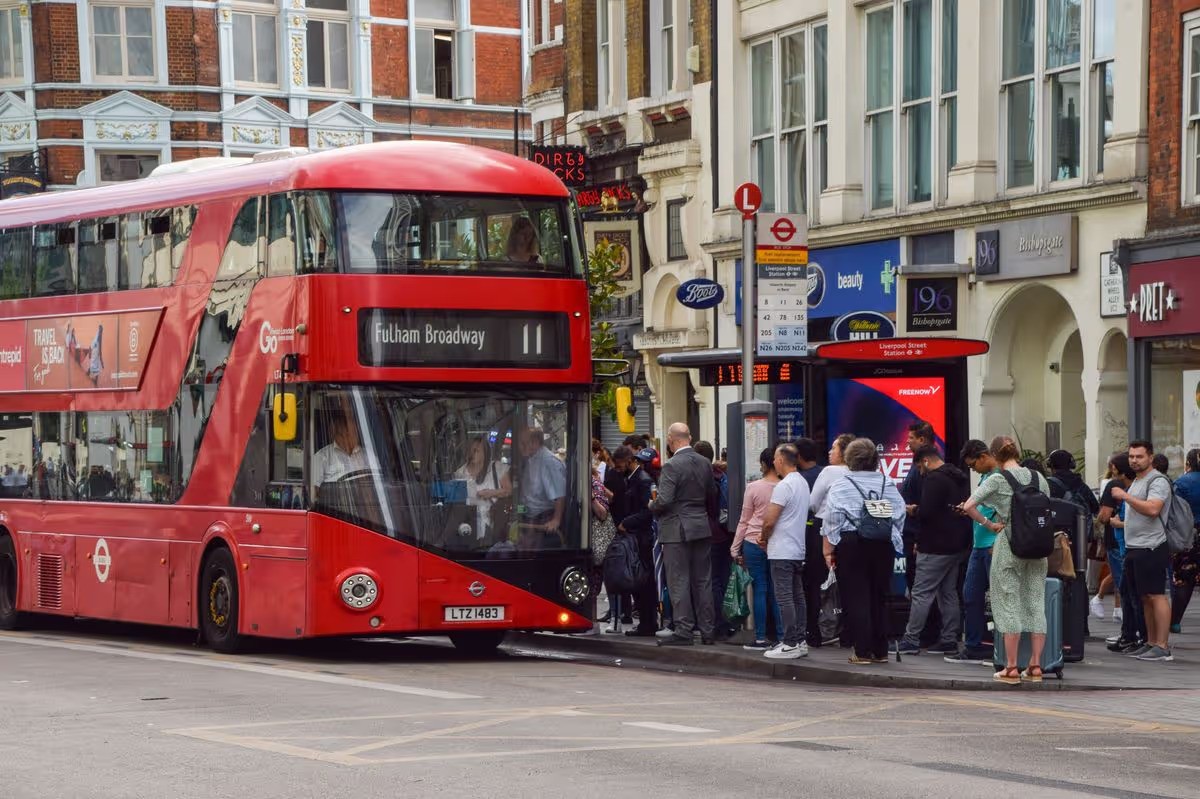
Buses have their own distinct culture, and most guides ignore them entirely. They should not.
Boarding And Payment On The Bus
Tap your contactless card, phone, or Oyster card on the yellow reader next to the driver when you board. Cash is not accepted on London buses. This has been the case since 2014. There is no tapping out when you leave, unlike the Underground.
At busy stops in parts of east and south London in particular, queuing is more of a loose social suggestion than a rigid practice. Do not be surprised if boarding feels more competitive than you expected. In quieter areas and in the morning, orderly queuing is the norm.
Upstairs Vs. Downstairs - The Seating Culture
The top deck is where most passengers choose to sit, and the very front of the upper deck is, by unspoken but firm agreement, the premium seat. Children want it because it feels like piloting a vehicle. Adults want it because it genuinely is the best view in London.
Placing your bag on the aisle seat to prevent anyone sitting next to you is a universally recognized manoeuvre and a universally disliked one. It will not prevent someone from asking to sit there. It will just create a slightly awkward interaction that you could have avoided entirely.
The Stop Button
Press it once. Once is enough. The sign at the front of the bus will display "Bus Stopping" to confirm your press has been registered. Pressing it repeatedly does not make the bus stop faster. It does make every other passenger silently note your existence in a way that is not flattering.
The Elizabeth Line And London Overground
The same core etiquette applies across the Elizabeth line and the Overground, but there are a few practical differences worth knowing.
- The Elizabeth line connects Heathrow and Reading in the west to Shenfield and Abbey Wood in the east, passing through central London. Because of its airport connections, it carries a higher proportion of passengers with large suitcases than most Underground lines.
- Travelling with luggage on the Elizabeth line during weekday rush hours (roughly 7 am to 9 am and 5 pm to 7 pm) is strongly discouraged. The carriages are not designed for suitcases at peak times, and the social pressure from commuters is real. TfL actively advises tourists to avoid peak-hour travel with large bags.
- The Elizabeth line's newer rolling stock and its slightly more spacious design give it a marginally less pressured atmosphere than older Deep Tube lines, but the expectations around noise, seating, and boarding remain identical.
- The Overground covers a huge range of routes and passenger types, from inner-city commuter services to more suburban lines. The etiquette is consistent, but the intensity of enforcement varies with how crowded the service is.
Peak Hours Vs. Off-Peak
Not every journey carries the same social temperature.
- Weekday peak hours run roughly from 7 am to 9 am and from 5 pm to 7 pm. During these windows, every rule described in this article is at its most strictly observed. The network is at its most pressured, and commuters are at their least tolerant of avoidable friction.
- Mid-morning (9:30 am to 11:30 am) and early afternoon (1 pm to 3 pm) are noticeably quieter on most lines. The rules are the same, but the atmosphere relaxes. Conversations are slightly less muted. People are slightly more patient with barriers and escalators.
- Weekend travel has its own character. The "stand right on escalators" rule remains firmly in place, but you are more likely to encounter tourists and leisure travellers who are unfamiliar with it. Weekend afternoons and evenings can actually be busier than you expect on lines serving central London attractions.
- Late-night travel, particularly on Friday and Saturday evenings, operates under noticeably different social norms. Conversations are louder. People are more willing to make eye contact. The gin-in-a-tin that would be absolutely unacceptable on a Tuesday morning rush hour is, on a Friday night, almost charming. The network is the same. The passengers are not.
What To Do When The Rules Get Complicated
The rules are clear in ideal conditions. Real commuting is not always ideal.
When Someone Else Is Breaking The Rules
The default London response to witnessing commuting bad behaviour is civil inattention. You notice it, you feel the irritation, and you say nothing. This is not cowardice. It is the social contract working as designed. Most infractions resolve themselves quickly.
If someone is playing audio through their speaker or talking at a volume in a way that genuinely disturbs the carriage, a calm, non-aggressive comment is acceptable and often effective. "Would you mind using headphones?" delivered without confrontation usually lands reasonably well. The key is to keep it short and matter-of-fact. Escalating into a full exchange rarely ends well for anyone on a packed Tuesday morning train.
If someone is making another passenger visibly uncomfortable, catching the affected person's eye to acknowledge you have noticed is the minimum and genuinely useful. You do not need to do more if the situation does not require it, but that small signal of human solidarity matters more than you might think.
When The Normal Rules Become Physically Impossible
A carriage that is genuinely packed beyond comfortable capacity during rush hour suspends several of the normal rules by necessity. Moving your backpack to the front is not always possible when there is nowhere to put it. Moving down the carriage is impossible if the carriage is already full.
In these situations, the etiquette simplifies to its bare essentials. Keep your arms and bag as close to your body as possible. Face the same direction as the people around you. Do not make sudden movements. Communicate with brief, quiet phrases if you need to get through ("excuse me" is always appropriate). And accept that this is a temporary, shared discomfort rather than anyone's personal failure. The train will empty at the next major station. It usually does.
The Essential Commuter Checklist
Screenshot this and check it before your first rush-hour journey.
- Payment method (contactless card, phone, or Oyster card) in your hand before joining the barrier queue.
- Take your backpack off your back and hold it in front, or placed at your feet once on board.
- Headphones in and audio playing before you board, not while you are blocking the doors trying to find a podcast.
- Know your stop and know which direction you are travelling before you tap through.
- Hot food and strong-smelling snacks should be left for after the journey.
- Large suitcases should be left at home during weekday rush hours if you are travelling on the Elizabeth line or any central London route.
- Build in 10 to 15 minutes of buffer during peak hours, particularly on the Central, Jubilee, and Northern lines, where delays are most frequent.
Frequently Asked Questions
Is There Phone Signal On The London Underground?
TfL has been rolling out mobile connectivity across select stations and tunnels over recent years, but coverage remains inconsistent across the full network. Some central stations and sections of the tunnel now carry a signal, but you cannot rely on it for the whole journey.
Can I Use A Regular Debit Card Instead Of An Oyster Card?
Any contactless Visa or Mastercard works directly on all TfL services without any setup or registration required. A contactless-enabled phone or smartwatch works in the same way.
Is Drinking Alcohol Allowed On The Tube?
Alcohol has been formally banned on the London Underground, buses, Overground, and DLR since June 2008. This applies to drinking in carriages and at platforms. It is an enforceable bylaw, not just a social guideline.
What Should I Do If My Oyster Card Runs Out Of Credit At The Barrier?
Step to the side immediately so you do not block the queue behind you. Top-up machines are available at every station and accept contactless payments. Alternatively, switch to your contactless bank card at the next barrier attempt. Standing at the barrier while people queue behind you is the one thing worth avoiding above all else in this situation.
What Is The Best App For Planning A London Commute?
TfL Go is the official TfL app and gives real-time service updates, step-free access information, and journey planning across all modes. Citymapper is a popular alternative with a slightly more intuitive interface and excellent multi-modal journey options. Both are free, and either will serve you well.
Final Thoughts
London's commuting etiquette can feel like a minefield from the outside. From the inside, it is actually quite logical once you understand what it is trying to achieve.
None of these etiquettes exists because Londoners are uniquely uptight. They exist because they work, and everyone who uses this network every day has figured that out through hard experience.
Get the basics right, and you will not just avoid the tut. You will start to feel, somewhere around week three, the quiet satisfaction of moving through this city like someone who actually lives here. That feeling, it turns out, is worth the effort.
Jump to
A Few Things Worth Knowing Before You Read On
Why London Commuters Take These Rules So Seriously
Barrier And Ticketing Etiquette
The Escalator Rule
Waiting Without Causing Trouble On The Platform
The Unwritten Rules Inside The Carriage
The Exit Etiquette People Forget
London Bus Etiquette That Is Different From The Tube
The Elizabeth Line And London Overground
Peak Hours Vs. Off-Peak
What To Do When The Rules Get Complicated
The Essential Commuter Checklist
Frequently Asked Questions
Final Thoughts

James Rowley
Author
James Rowley is a London-based writer and researcher covering London life, cultural geography, London travel, live London webcam pages and selected public figures across entertainment, sport, business and public life.
For over 15 years, he has focused on verified sources, first-hand local context and clear explanations that help readers understand both places and people more deeply. His work combines street-level London knowledge with careful research into career credits, media work, business interests and, where relevant, transparently explained net worth estimates.
He writes and reviews articles published on LondonWebcam.
Latest Articles
Popular Articles