London ULEZ Boundary Map 2026: Zones, Charges & Checker
London's ULEZ covers all London boroughs and the City of London. Check the boundary, your vehicle, charges and routes with this guide.
Author:James RowleyOct 13, 2026
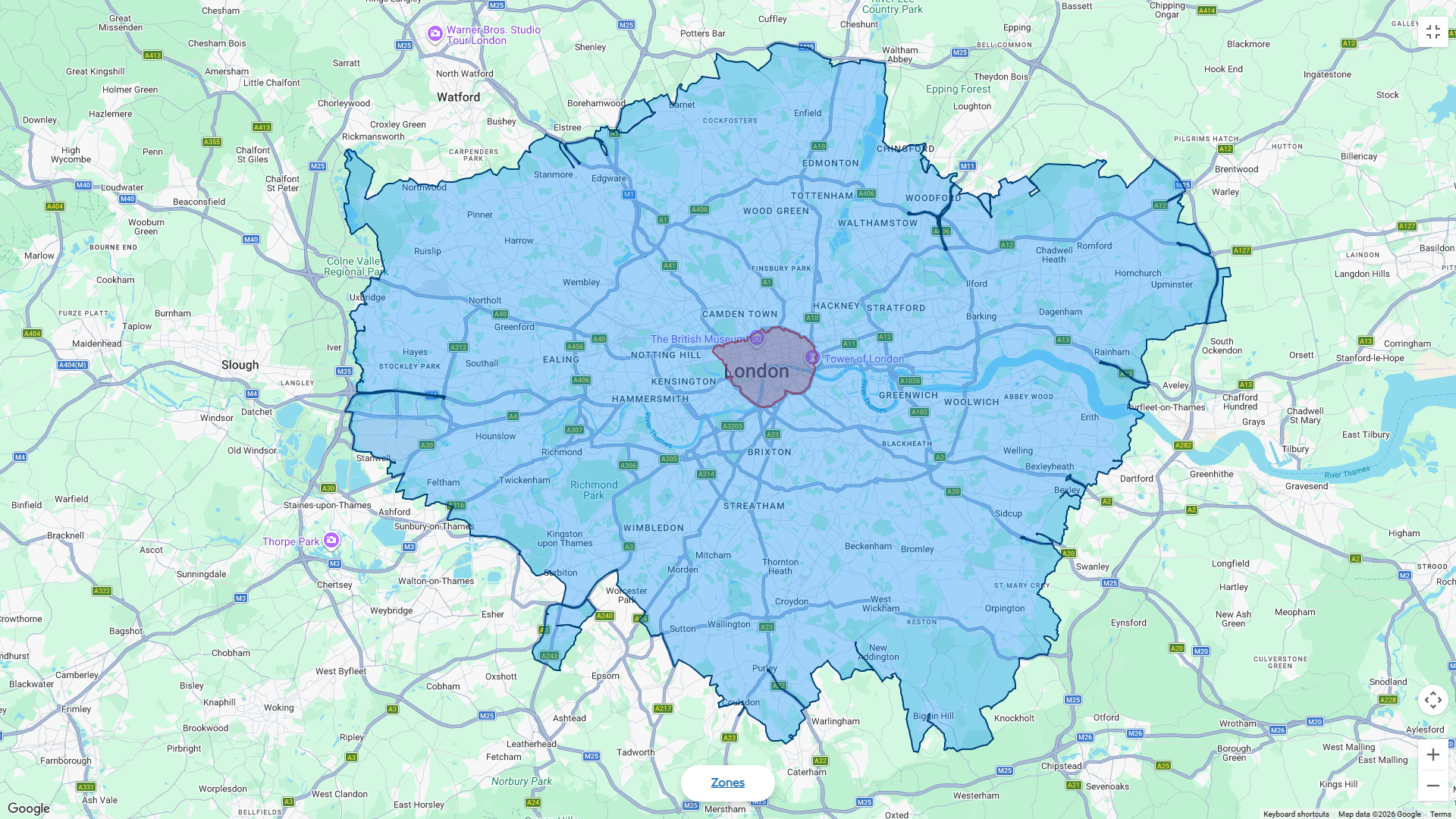
London ULEZ Boundary At A Glance
London's Ultra Low Emission Zone (ULEZ) now covers all 32 boroughs plus the City of London - right up to the edge of Greater London, but not including the M25 itself.
The ULEZ charge is £12.50 a dayfor applicable non-compliant vehicles, including cars, motorcycles, vans and certain specialist vehicles. Larger vehicles are subject to London's separate Low Emission Zone (LEZ) rules.
The boundary hasn't moved since it went London-wide on 29 August 2023.
For most visitors and drivers, the quickest way to avoid a mistake is:
- 1. Location:Use TfL's map to check your destination and route.
- 2. Vehicle:Enter your registration in TfL's vehicle checker.
- 3. Payment:If your vehicle is non-compliant, check the current charge and payment rules before travelling.
What Is ULEZ And Why Does It Exist?
ULEZ (Ultra Low Emission Zone)is a London driving zone designed to reduce harmful air pollution by encouraging cleaner vehicles. Drivers of vehicles that do not meet the required emissions standards must pay a daily charge when driving within the zone.
The scheme was introduced to tackle air pollution and its impact on public health, particularly pollution from road traffic. It mainly affects older, more polluting cars, vans, minibuses and specialist vehicles, while vehicles that meet the required emissions standards can drive without paying the ULEZ charge.
By making high-polluting vehicles more expensive to use, ULEZ aims to encourage people to switch to cleaner vehicles and reduce harmful emissions across London.
Where Is The ULEZ Boundary In London Now?
The ULEZ covers all London boroughs and the City of London. The M25 itself is outside the ULEZ, but roads leading from the motorway into Greater London can immediately fall within the zone. Because the boundary can follow specific roads, use TfL's current map or postcode search to check an exact location.
That means an older ULEZ map can be misleading. The zone expanded across London on 29 August 2023and now covers approximately 1,500 sq km.
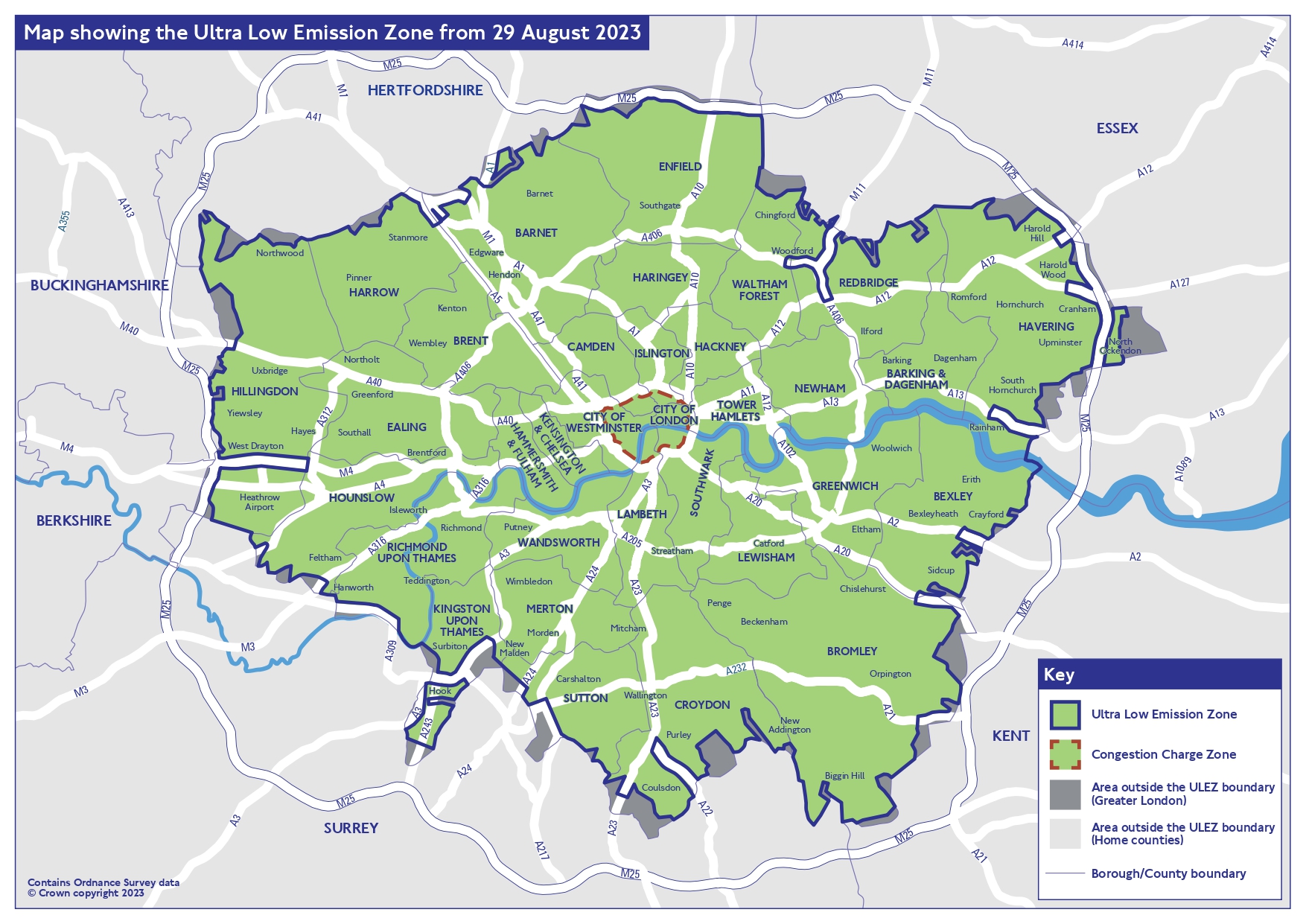
ULEZ Boundary Quick Facts
| Question | Current answer |
| Where is ULEZ? | All London boroughs and the City of London |
| When did it become London-wide? | 29 August 2023 |
| Is the M25 inside? | No, the M25 itself is outside |
| ULEZ charge | £12.50 per day for applicable non-compliant vehicles |
| Operating hours | 24 hours a day, except Christmas Day |
| Do all vehicles entering pay? | No; the charge depends on vehicle compliance |
Is The M25 Inside The ULEZ?
No. The M25 itself is outside the ULEZ.TfL states this directly on its current ULEZ guidance.
The important distinction is between the motorway itself and roads within Greater London. If you leave the M25 and continue into London, you can enter the ULEZ.
So, if you're planning a journey that uses the M25, don't treat "the M25 is outside ULEZ" as proof that your entire route is outside the zone. Check the London section of your actual journey.
Why The Current Map Looks Different From Older ULEZ Maps
The current zone should not be confused with the smaller ULEZ that existed before the 29 August 2023 expansion.
Older pages and maps may show the former central London boundary or describe the North and South Circular roads in ways that no longer represent the current zone. The official London Datastore records the 2023 expansion across all London boroughs.
How The Boundary Has Changed Over Time
| Date | Milestone |
| 8 April 2019 | ULEZ launches, covering the same area as the central London Congestion Charge Zone |
| 25 October 2021 | Expanded to the North and South Circular boundary |
| 29 August 2023 | Expanded across all London boroughs |
How Camera Enforcement Works
TfL uses Automatic Number Plate Recognition (ANPR) cameras to record vehicle registration numbers and images as vehicles enter, leave or drive within charging zones. TfL checks this information against payment, exemption and vehicle records as part of its enforcement process.
If a charge is due and has not been paid within the permitted payment period, enforcement action may follow.
Takeaway:For a current journey, use the latest TfL map or postcode search rather than an old ULEZ map found elsewhere online.
What Does The London ULEZ Boundary Map Show?
The London ULEZ map shows the geographical extent of the Ultra Low Emission Zone- the area where ULEZ rules apply. TfL's official detailed map shows the ULEZ boundary alongside major roads, borough boundaries and the M25.
ULEZ Map Legend: What The Important Parts Mean
When reading a ULEZ map, think of it as answering “Where am I?”, rather than “Do I have to pay?”
- ULEZ area:Roads and locations within the charging zone.
- Outside ULEZ:Roads and locations beyond the boundary.
- M25:The motorway itself is outside the ULEZ.
- Borough boundaries:Useful for orientation, but not a substitute for checking a specific road or postcode.
- Congestion Charge Zone:A separate central London charging area that may appear on some maps.
Map Vs Vehicle Checker: You Need Both
Map:tells you whether a location or route is inside the ULEZ.
Vehicle checker:tells you whether your specific vehicle meets the ULEZ emissions requirements.
You need both checks if you're unsure about your journey or vehicle.
The Map Tells You Where
If your hotel, workplace, attraction or other destination is inside the ULEZ, the map can establish that geographical fact.
It does not tell you whether your particular car, van, motorcycle or other vehicle meets the applicable emissions standard.
The Vehicle Checker Tells You Whether Your Vehicle Is Affected
Most affected vehicle types must meet the ULEZ emissions standards or pay the daily charge when driven within the zone. This includes cars, motorcycles, vans and specialist vehicles up to 3.5 tonnes, as well as minibuses up to 5 tonnes. Larger vehicles are generally covered by London's separate Low Emission Zone (LEZ)rules.
Check your vehicle against TfL's current requirements before travelling rather than relying on its age, fuel type or registration date alone.
Why Being Inside ULEZ Does Not Automatically Mean You Pay
The boundary and vehicle standard are two separate questions.
For example, if your destination is inside ULEZ but your vehicle meets the applicable emissions standard, you do not pay the ULEZ charge simply because you entered the zone.
Conversely, a non-compliant vehicle can be charged even for a relatively short journey within the zone. Living inside ULEZ does not exempt residents from the charge when they drive a non-compliant vehicle.
Practical rule:Check the location first, then check the vehicle. Only after those two checks do you need to work out whether a ULEZ charge applies.
ULEZ Road Signs
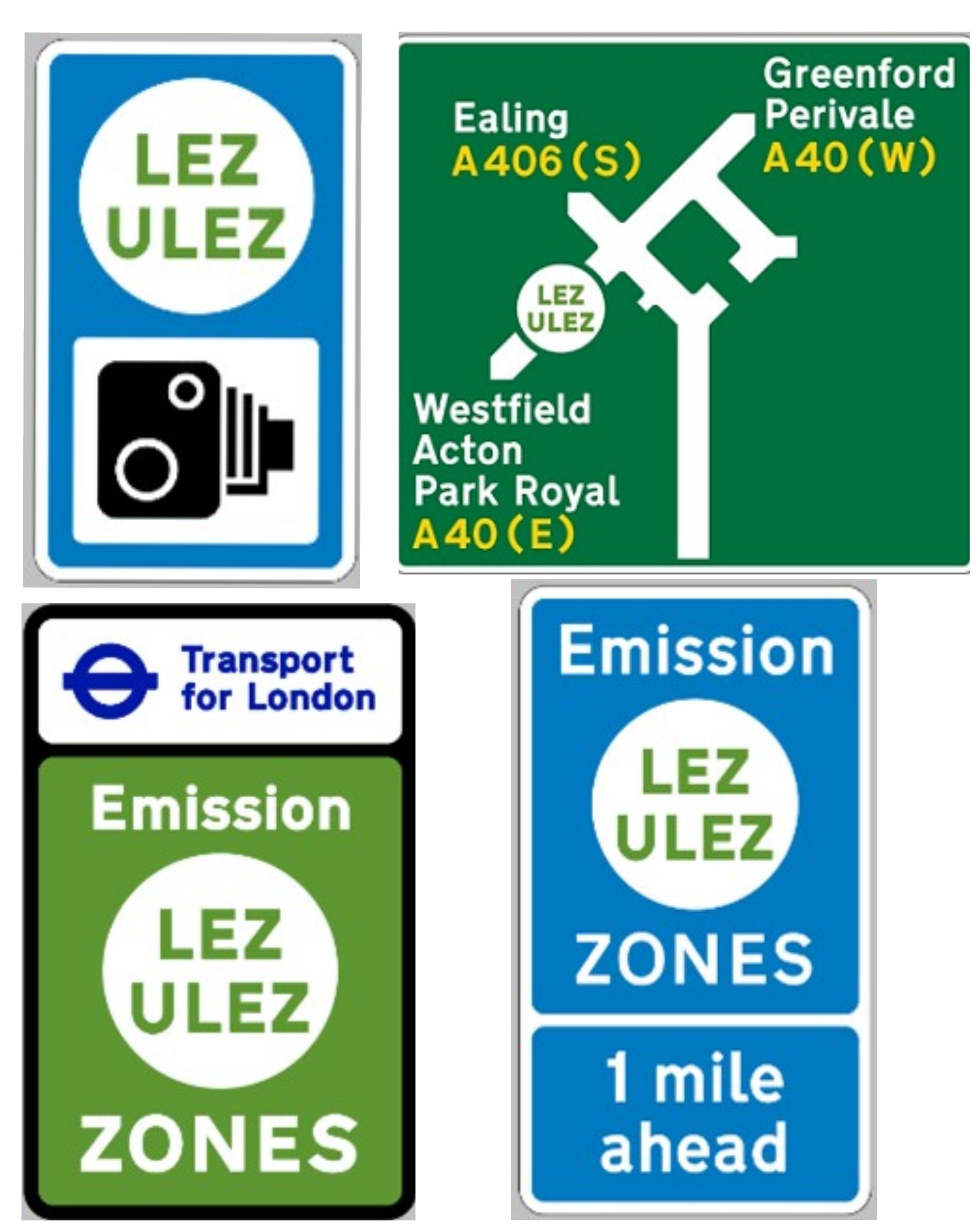
ULEZ signs are used to indicate when you are entering or travelling within the Ultra Low Emission Zone. However, don't rely on road signs alone to decide whether you need to pay. The ULEZ boundary can follow individual roads and junctions, and some major roads around the boundary are outside the zone.
If you're driving in London, check your vehicle's ULEZ statusand route on TfL's official checker before you travel, particularly if you're approaching London from outside the zone.
Which Areas Does The ULEZ Cover?
Every London borough and the City of London are inside the zone. The boroughs that were added for the first time in the August 2023 expansion - bringing the zone from inner London out to the whole of Greater London - include outer areas such as Bromley, Bexley, Sutton, Kingston upon Thames, Richmond upon Thames, Hillingdon, Harrow, Enfield, Havering, Barking & Dagenham, and Croydon.
If you're outside Greater London entirely - Essex, Surrey, Hertfordshire, Kent commuter towns and so on - the ULEZ doesn't apply to you unless you're driving into the capital.
How Much Is The ULEZ Charge?
| Vehicle type | Daily charge |
| Cars, motorbikes, vans (up to 3.5 tonnes) | £12.50 |
| Larger vehicles | Check separate LEZ rules |
ULEZ and LEZ are separate schemes. Larger vehicles may be subject to LEZ requirements and charges rather than the ULEZ charge.
How Do You Pay The ULEZ Charge?
If your vehicle is non-compliant, you can pay the ULEZ charge through TfL. You must pay the ULEZ charge by midnight on the third day after you travelled in the zone to avoid a £180 Penalty Charge Notice (PCN), which is reduced to £90 if paid within 14 days. Auto Paycan automatically record applicable charges and reduce the risk of forgetting to pay.
ULEZ Operating Hours
ULEZ operates 24 hours a day, every day of the year except Christmas Day. Check the latest TfL guidance before travelling.
That is different from the Congestion Charge, which has its own operating schedule.
Compliance Standards, In Plain Terms:
ULEZ compliance depends on vehicles meeting Euro emission standards, a European system classifying vehicles by pollution levels.
| Fuel/vehicle type | Needs to meet |
| Petrol cars, vans, minibuses | Euro 4 |
| Diesel cars, vans, minibuses | Euro 6 |
| Motorcycles, mopeds, quadricycles | Euro 3 |
These standards are a guide, not a substitute for checking your registration. TfL's vehicle checker should be used for the final answer.
As a rough guide: most petrol vehicles registered from 2005 (when Euro 4 became mandatory) and most diesel vehicles registered from 2016 already meet the standard - but registration date alone isn't a guarantee, so always run the actual plate through TfL's checker.
What Happens If You Cross The Boundary Around Midnight?
ULEZ charging operates on a midnight-to-midnightbasis.
If you drive within the ULEZ across two charging days-for example, before midnight and again after midnight-you can incur two daily charges.
Who's Exempt Or Gets A Discount?
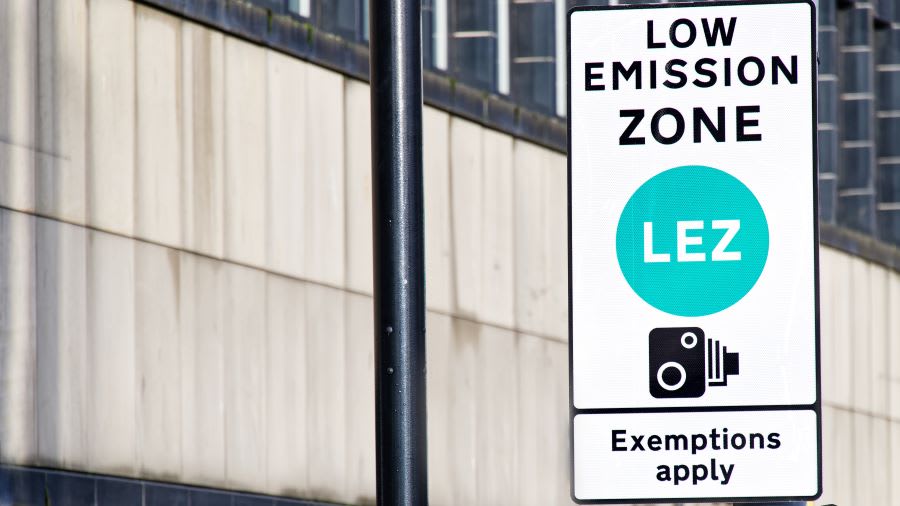
Most vehicles must meet the ULEZ emissions standards or pay the daily charge, but some vehicle types are exempt or qualify for a temporary grace period.
Vehicles That Are Permanently Exempt
A small number of vehicle categories are exempt regardless of their emissions, including:
- Military vehicles
- Specialist off-road vehicles, such as tractors and mobile cranes
- Vehicles with a historic tax class
- Vehicles constructed before 1 January 1973
- Showman's vehicles
- London-licensed taxis, which are subject to separate emissions requirements
Disability-related Grace Periods
Certain disabled drivers and vehicles in the disabled or disabled passenger vehicle tax classes may qualify for a temporary ULEZ grace period. Eligible vehicles can be exempt from the daily charge until 24 October 2027, provided they meet TfL's eligibility and registration requirements.
A Blue Badge alone does not automatically provide a ULEZ exemption, so check the current TfL rules before travelling. Check TfL's current eligibility criteriabefore relying on a grace period.
Living Inside ULEZ Does Not Give You A Discount
There is no current resident's discount simply for living inside the ULEZ. If your vehicle does not meet the emissions standards, you normally have to pay the full daily charge when you drive within the zone.
The previous 90% resident discount associated with the 2023 ULEZ expansion was temporary and has ended, so it should not be presented as a current saving.
Can You Get Help Replacing A Non-compliant Vehicle?
The official TfL scrappage scheme closed to new applicants in September 2024. If your vehicle is non-compliant, it is worth checking whether you qualify for any current TfL scrappage or support schemebefore replacing it yourself. Eligibility, funding and available schemes can change, so always check the current official guidance.
How To Check If A Postcode Or Address Is Inside ULEZ
The quickest way to check a location is:
- Search the postcode or address using TfL's official map/search.
- Select the exact address if more than one result appears.
- Check your actual driving route if you are approaching from outside London.
- Check your vehicle separately using TfL's vehicle checker.
Use The TfL Postcode Checker
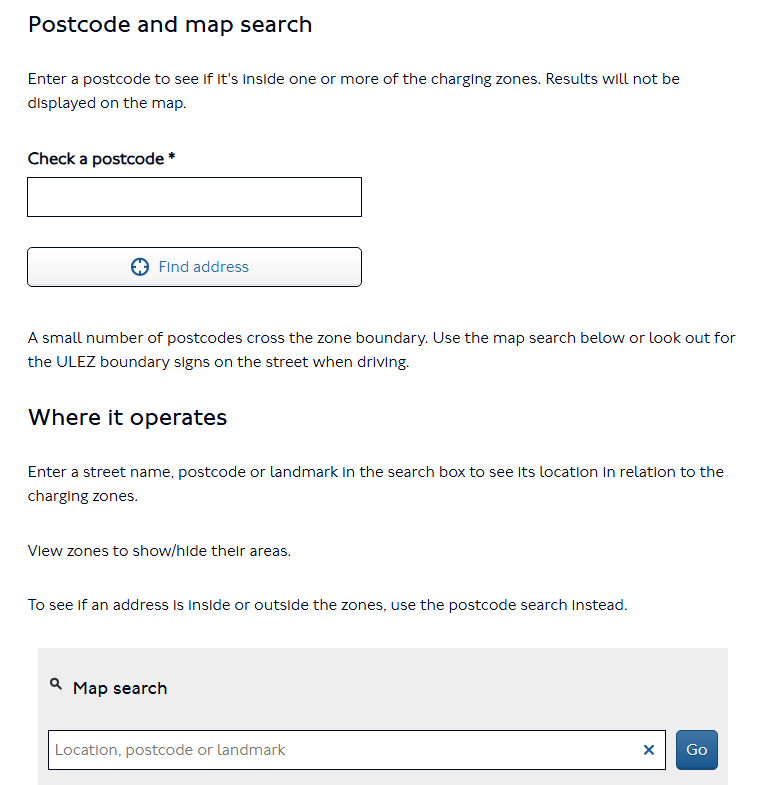
TfL's ULEZ page includes a postcode searchthat lets you see whether an address is inside one or more London charging zones. TfL specifically recommends the postcode search when you need to determine whether an address is inside or outside a zone.
The process is straightforward:
- Enter the postcode.
- Select the specific address.
- Check whether the address is inside the relevant charging zone.
- If you're planning a journey, check the route as well.
That final step matters because your destination can be outside ULEZ while your chosen route takes you through it.
What If Your Postcode Crosses The Boundary?
TfL says a small number of postcodes cross the zone boundary. In those cases, a postcode alone is not precise enough; you should select the actual address or use the map and boundary signs.
This is one reason a simple "Is postcode X inside ULEZ?" answer can be misleading.
How To Check A Specific Road, Landmark Or Destination
TfL's map search allows you to search for a street name, postcode or landmarkand see its position relative to the charging zones. TfL distinguishes this from its postcode search, which should be used when determining whether a particular address is inside or outside.
For practical trip planning:
- Use the mapto understand the overall area and route.
- Use postcode searchfor an exact address.
- Use the vehicle checkerto determine whether your vehicle meets the ULEZ requirements.
Takeaway:Use the map to understand geography, but use the exact postcode/address search when the boundary decision matters.
Which Roads And Areas Are Near The ULEZ Boundary?
The edge of the zone can be more useful to understand as a practical driving boundary than as a list of roads. The safest approach is to check the exact route and location, especially around Greater London's outer edge.
The M25
The M25 itself is outside ULEZ, according to TfL.
But once your journey leaves the motorway and enters roads within the ULEZ, the rules can apply to a non-compliant vehicle. The motorway's status therefore should not be used as a shortcut for judging an entire journey.
North And South London Boundary Areas
If you have seen older ULEZ information referring to the North Circular and South Circular, be careful.
Those roads were associated with the previous, smaller ULEZ boundary. The current zone expanded across London in August 2023, so the old "inside/outside the North and South Circular" rule is not a reliable way to determine today's ULEZ boundary.
Heathrow And Other Major Destinations
For airports, hotels and other major destinations, check the exact address and route rather than relying on the destination's general London location.
This is particularly useful when a journey approaches London from outside the city: the road you use to reach the destination can matter just as much as the destination itself.
For airports, attractions and other destinations, check the exact address and your driving route using TfL's map and postcode search rather than relying on a general location.
Why You Should Check The Exact Road Instead Of Relying On A Borough Name
Borough names are useful for orientation, but they are not a substitute for the official boundary check.
TfL's own guidance says that some postcodes cross the boundary and directs users towards its map or street signs when necessary.
Takeaway:At the boundary, exact location beats assumption. Check the road, postcode or address rather than relying on a borough label or an old map.
How To Plan A Route Around The ULEZ
There isn't one universally “best” route. The right choice depends on your vehicle, destination, traffic conditionsand whether avoiding the ULEZ would add significant time or distance.
If avoiding the ULEZ would add too much time or distance, compare the driving option with how to get around Londonby Tube, bus, walking or taxi.
For visitors still deciding where to base themselves, choosing where to stay in Londoncan also make a big difference to how much driving or cross-city travel is needed.
1. Check Your Starting Point
Check whether your starting location is inside or outside the ULEZ using the official TfL map.
2. Check Your Destination
Search for the exact destination addressrather than relying only on the name of a landmark, hotel or attraction.
3. Check The Actual Driving Route
A journey can enter the ULEZ even when both your starting point and destination appear to be outside it. Check the roads your route actually uses, particularly when approaching London from outside the zone.
4. Check Your Vehicle Separately
The map tells you where the ULEZ is. TfL's vehicle checker tells you whether your vehicle meets the ULEZ requirements.
If your vehicle is compliant, you do not need to avoid the zone simply because your route passes through it.
If your vehicle is non-compliant, you can either pay the ULEZ charge or consider whether a practical alternative route can avoid the zone.
5. Compare The Practical Options
For a non-compliant vehicle, there are usually two choices:
- Enter the ULEZ and pay the charge:This may be the simplest or fastest option if avoiding the zone would add substantial time or distance.
- Plan a route outside the ULEZ:This may save the charge if you can avoid the zone without creating a significantly longer journey.
If your alternative route takes you through central London, it is also worth considering London's busiest intersections, where walking or public transport can sometimes be more practical than driving.
Travelling Around London's Edge?
The M25 itself is outside the ULEZ, but leaving the motorway and continuing onto roads within the ULEZ can take you into the zone.
Practical rule:Don't ask only, “Does the M25 have ULEZ?” Ask, “Where does my actual route leave the M25, and which roads does it use afterwards?”
Don't assume that starting outside ULEZ, using the M25, or avoiding a particular London borough means your entire journey avoids the zone. Check the complete route before setting off.
ULEZ, Congestion Charge And LEZ: What's The Difference?
London has several road-user charging and emissions schemes, and confusing them can lead to the wrong map or wrong payment information. The key is to identify which scheme applies to your vehicle and journey.
ULEZ
ULEZ is primarily concerned with whether applicable vehicles meet specified emissions standards. A non-compliant vehicle can face the daily ULEZ charge when driven within the zone.
Congestion Charge
The Congestion Charge is separate from ULEZ. Its operating times and geographical charging zone are different, so a ULEZ map cannot be used to determine whether you owe the Congestion Charge.
LEZ
The Low Emission Zone is also separate. TfL states that larger vehicles such as lorries, heavier vans and buses are subject to LEZ requirements rather than the ULEZ charge.
Why This Matters When Reading London Maps
A map labelled simply "London charging zones" may show several schemes at once.
Do not assume that one coloured area or one charge applies to every vehicle.Identify the scheme first, then check the vehicle and current rules.
Takeaway:ULEZ, Congestion Charge and LEZ may overlap geographically, but they are not interchangeable.
Common ULEZ Boundary Map Mistakes
First-time visitors often make the same mistakes.
Common Mistakes
1. Using an old ULEZ map.Maps showing the North Circular and South Circular as the outer boundary describe an earlier version of the scheme.
2. Assuming the M25 is inside ULEZ.The M25 itself is outside the ULEZ. Roads you take after leaving it may not be.
3. Assuming every vehicle pays.ULEZ is based on vehicle compliance. A compliant vehicle does not pay simply because it enters the zone.
4. Assuming a London postcode is enough.Some postcodes cross the boundary, so use the exact address where necessary.
5. Checking only the destination.Your destination might be outside ULEZ while your chosen route passes through it.
6. Thinking a short journey doesn't count.There is no “minimum distance” exemption simply because you only drive a short way inside the zone.
7. Confusing ULEZ with the Congestion Charge.They are separate schemes with different purposes and boundaries.
8. Thinking contactless transport payment covers ULEZ.Tapping a card on a Tube or bus reader is not the same thing as paying a road-user charge.
9. Assuming living inside ULEZ creates a resident discount.There is no general current ULEZ discount simply for living inside the zone.
10. Waiting until you're already driving to check.The safest approach is to check your route and vehicle before departure.
Frequently Asked Questions
What Does The London ULEZ Boundary Map Show?
It shows the geographical area covered by the Ultra Low Emission Zone. The current zone covers all London boroughs and the City of London, while the M25 itself remains outside the ULEZ.
How Should I Use The ULEZ Map?
Use it first to understand whether your route or destination is inside the zone. Then check the exact postcode/address if you're near the boundary and use TfL's vehicle checker to determine whether your vehicle is affected.
What Is The Easiest Way To Handle The London ULEZ Boundary Map?
Don't try to interpret every road on the map manually. Check your destination and route using TfL's map, check your registration separately, and then decide whether to drive, avoid the zone or pay the charge.
What Do Visitors Usually Misunderstand?
The most common mistakes are using an old map, assuming the M25 is inside ULEZ, confusing ULEZ with the Congestion Charge, and assuming every vehicle entering London has to pay.
Does The ULEZ Include The M25?
No. The zone runs up to the edge of Greater London but stops short of the M25 itself.
Do I Still Pay If I Only Drive Through, Without Stopping?
Yes. The charge applies to any driving inside the zone, even a brief pass-through, as long as the vehicle is being driven.
Is Heathrow In ULEZ?
Yes. All terminals at Heathrow Airport are located within the London ULEZ boundary. The practical question is whether the road or address you use falls inside the current ULEZ boundary.
Does Living Inside ULEZ Mean I Pay?
Not automatically. Residents are subject to ULEZ when driving a vehicle that does not meet the applicable emissions standards, while a compliant vehicle does not become chargeable simply because its owner lives inside the zone.
Can I Avoid The ULEZ?
You can plan a route outside the ULEZ, but first check the current boundary and your vehicle's compliance. The M25 itself is outside the zone, but roads inside London can be within it.
Can The ULEZ Boundary Change?
Yes. London road-user charging policy can change, so verify the latest TfL map and guidance before travelling.
Is There A Residents' Discount?
No - there's no general discount for living inside the ULEZ. Exemptions are based on vehicle type, not address.
What Happens If I Don't Pay?
If you do not pay a ULEZ charge when required, TfL can issue a Penalty Charge Notice (PCN) of £180, reduced to £90 if paid within 14 days.
How Do I Know If My Car Is Compliant?
Enter your registration into TfL's official vehicle checker rather than relying on the make/year alone - it gives a definitive answer in seconds.
Conclusion
The ULEZ boundary is easiest to understand when you separate the geographic question from the vehicle question. Before setting off, use this three-step check.
- WHERE:Check your destination and route using the current TfL map or postcode search.
- VEHICLE:Check whether your specific vehicle meets the applicable ULEZ emissions standard.
- PAY:If the vehicle is non-compliant, confirm the current charge and payment rules before travelling.
TfL currently states that ULEZ covers all London boroughs and the City of London, the M25 itself is outside the zone, and the daily ULEZ charge for applicable non-compliant vehicles is £12.50.
The key point is simple: the map tells you where ULEZ is; the vehicle checker tells you whether your vehicle is affected.Check both before you drive, especially if you're relying on an older map or travelling close to London's outer boundary.
Jump to
London ULEZ Boundary At A Glance
What Is ULEZ And Why Does It Exist?
Where Is The ULEZ Boundary In London Now?
What Does The London ULEZ Boundary Map Show?
ULEZ Road Signs
Which Areas Does The ULEZ Cover?
How Much Is The ULEZ Charge?
Who's Exempt Or Gets A Discount?
How To Check If A Postcode Or Address Is Inside ULEZ
Which Roads And Areas Are Near The ULEZ Boundary?
How To Plan A Route Around The ULEZ
ULEZ, Congestion Charge And LEZ: What's The Difference?
Common ULEZ Boundary Map Mistakes
Frequently Asked Questions
Conclusion

James Rowley
Author
James Rowley is a London-based writer and researcher covering London life, cultural geography, London travel, live London webcam pages and selected public figures across entertainment, sport, business and public life.
For over 15 years, he has focused on verified sources, first-hand local context and clear explanations that help readers understand both places and people more deeply. His work combines street-level London knowledge with careful research into career credits, media work, business interests and, where relevant, transparently explained net worth estimates.
He writes and reviews articles published on LondonWebcam.
Latest Articles
Popular Articles