Is The City Of London Different From London?
The City of London is different from London in ways that are simultaneously simple and profound. Simply: it is a one-square-mile jurisdiction with its own government, police force, and boundaries, sitting within but distinct from the wider metropolis.
Author:James RowleyApr 13, 2026923 Shares40.1K Views
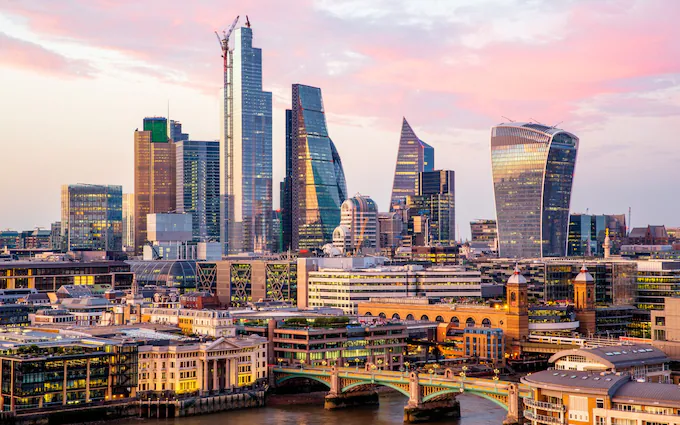
You are walking through East London, crossing a street, and suddenly noticing that the lampposts have changed. The street signs look different. A silver dragon statue stands at the road's edge. You have not left London, but something has shifted.
You have crossed into the City of London, and despite what the name suggests, it is not quite the same place as the city surrounding it. This is one of Britain's most genuinely curious institutional arrangements.
A square mile of medieval self-governance sitting at the heart of one of the world's great modern cities, operating under rules and traditions that predate the existence of England itself in its current form.
Most people who encounter it are confused by it. That confusion is entirely reasonable. I will explain every dimension of the difference: the history, the governance, the physical reality on the ground, and why an arrangement this ancient has not only survived but thrived into the twenty-first century.
What You Will Learn
- The clear, direct answer to whether the City of London is different from London, and why
- The historical origins of the City's distinct status go back to Roman and medieval times.
- How the City's governance works and how it differs from every other local authority in the UK
- The key practical differences include its own police force, its own elections, and its own Lord Mayor.
- What the City looks like on the ground and how to recognise its boundaries when visiting
The Short Answer: Yes, They Are Different, And Here Is Why

The City of London and London are related but distinct entities. One is a historic square-mile jurisdiction with its own government, its own police force, and its own ancient privileges. The other is a modern metropolis of nearly nine million people. Both are real, both matter, and understanding the difference between them makes the whole picture considerably clearer.
What The City Of London Actually Is
The City of London is a small, roughly square-mile area located at the historic and geographic heart of Greater London. It is formally governed by the City of London Corporation, one of the oldest local governing bodies in the world, rather than by the same administrative structures that govern the rest of London.
It has its own police force, the City of London Police, separate from the Metropolitan Police that covers the rest of Greater London. It has its own ceremonial head, the Lord Mayor of the City of London, who is entirely distinct from the Mayor of London. Its boundaries are marked at major entry points by silver dragon statues that announce you are entering a different kind of place.
In terms of population, it is one of the smallest administrative areas in the United Kingdom, with approximately 8,000 to 9,000 permanent residents. Its daytime population swells to several hundred thousand as workers arrive from across London and beyond. It is, in the most literal sense, a place where people work but relatively few people live.
What Greater London Is
Greater London is the modern administrative region that covers the full extent of what most people mean when they say "London". It covers approximately 1,572 square kilometres, contains 32 London boroughs, and has a population of approximately 8.9 million people. It is governed by the Greater London Authority, led by the directly elected Mayor of London, and its 32 boroughs each have their own elected councils responsible for local services.
Greater London is the product of relatively recent administrative history. It was formally constituted in its current form by the London Government Act 1963, which came into effect in 1965. Before that, London's administrative geography was organised differently, and the City of London had already been operating its distinct governance arrangements for centuries before the modern Greater London structure existed.
The City of London sits geographically within Greater London but is not one of its 32 boroughs. It is a separate sui generis local authority, meaning it occupies a unique category that does not fit the standard classification applied to every other local authority in England.
The Historical Origins: How The City Became Separate
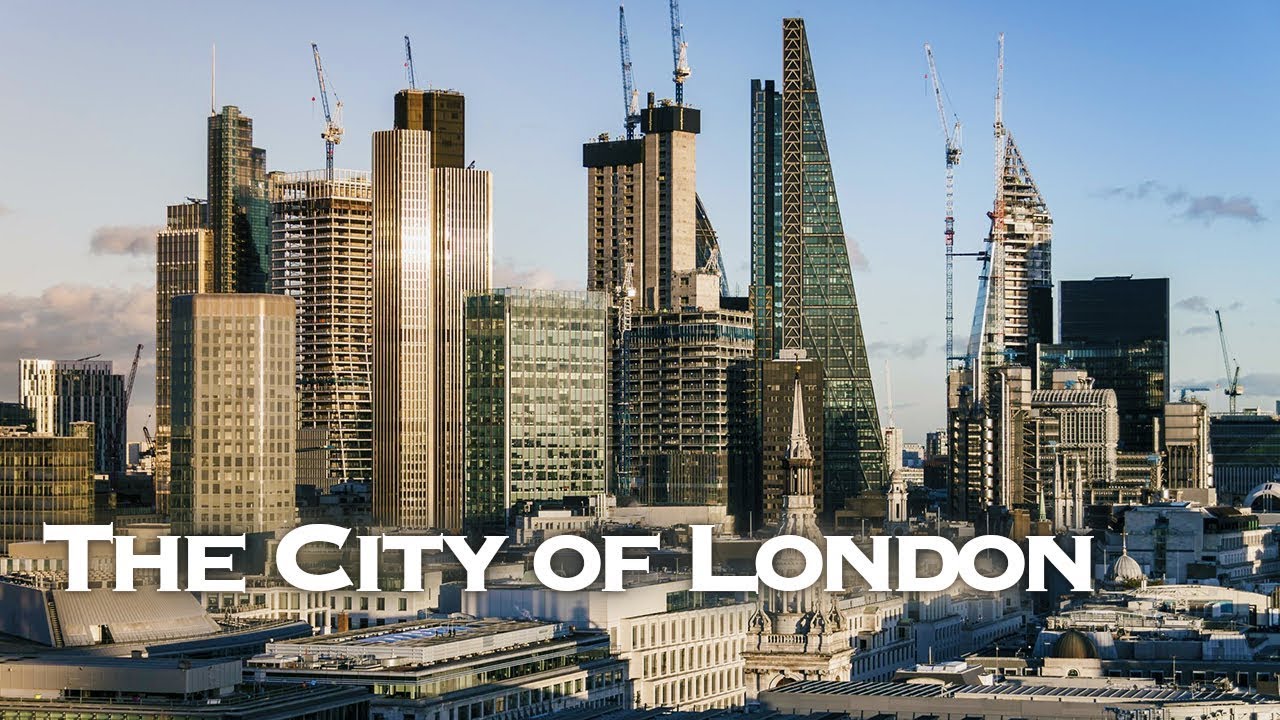
The (secret) City of London is NOT part of the UK | England
The City of London's distinct status did not emerge from a single decision or a single document. It accumulated gradually over centuries through a continuous process of negotiation between the merchant community of London and the monarchs and governments that needed its cooperation and its money. Understanding that process is the key to understanding why the City is the way it is today.
Roman Londinium: The First Boundary
The story begins with the Romans. When Roman forces established a settlement on the north bank of the Thames in the first century CE, they built a town called Londinium that would eventually become one of the most significant cities in Roman Britain. They enclosed it with a defensive wall, the traces of which still exist beneath and within the modern city.
That Roman wall defined a boundary that has never entirely disappeared. The approximate area enclosed by the Roman wall corresponds closely to the modern boundaries of the City of London, which means the Square Mile is quite literally built on the footprint of a Roman town. The walls came down over centuries, but the administrative boundary they established proved more durable than the stone that created it.
Walking through the City today, you can find fragments of the Roman wall preserved at Barbican, Tower Hill, and several other locations. They are not merely historical curiosities. They are the physical evidence of the boundary that, in a very real sense, began the story of the City's separateness.
The Medieval Merchants And The Negotiated Privileges
After the Romans withdrew in the early fifth century, the walled settlement went through centuries of change, depopulation, and resettlement. By the time of the Norman Conquest in 1066, London had re-emerged as the most significant commercial centre in England, populated by a merchant community of considerable wealth and collective organisation.
That merchant community understood something fundamental about their position: the city's wealth made them indispensable to whoever held political power, and that indispensability was a negotiating tool.
Successive medieval monarchs needed London's merchants to fund military campaigns, support royal projects, and maintain the trade networks on which the kingdom's prosperity depended.
In return for that support, the merchants extracted privileges: rights of self-governance, exemptions from certain royal impositions, and formal recognitions of their collective authority over their own affairs.
This was not a single grand bargain but a series of incremental negotiations extending across generations. Each charter, each royal grant of privilege, added another layer to the City's distinct status. The accumulated weight of those grants became the foundation on which the City's modern governance still rests.
William The Conqueror And The Charter That Changed Everything
Among the many charters granted to the City of London, one stands out for its significance and its remarkable survival. Shortly after his conquest of England in 1066, William the Conqueror issued a short document to the citizens of London that granted them the rights and customs they had enjoyed under Edward the Confessor. It is one of the oldest surviving royal documents in English history, and a copy is still held by the City of London Corporation today.
The significance of William's charter was not merely what it granted but what it represented: an acknowledgment by the new king that the City of London's established arrangements deserved respect and continuity. Subsequent monarchs built on this precedent. The City's privileges grew not through revolution or rupture but through the steady accumulation of royal confirmations of existing rights.
This pattern, of the City negotiating the confirmation of its privileges from each new government rather than having those privileges granted once and potentially revoked, is the central mechanism of its institutional survival. The City did not simply receive independence. It continuously renewed it.
You Might Like: Hidden Secrets Of London
The Governance Of The City: Unlike Anywhere Else In Britain
The City of London Corporation is genuinely unique in British governance. Its structures, its traditions, and its electoral arrangements have no direct parallel anywhere else in the country, and understanding them gives you a clearer picture of what makes the City institutionally distinctive in the modern as well as the historical context.
The City Of London Corporation And How It Works
The City of London Corporation is the local governing body responsible for the Square Mile. Its formal structure includes the Court of Common Council, which functions as the primary decision-making assembly, and the Court of Aldermen, a smaller body with specific judicial and ceremonial functions. Both courts have ancient origins that predate any modern conception of local democratic governance.
The Corporation is responsible for the services you would expect any local authority to provide: planning, environmental health, highways, housing, and similar functions. It is also responsible for a range of functions that go well beyond what most local authorities manage, including the maintenance of Hampstead Heath, Epping Forest, and several other open spaces that are geographically outside the Square Mile but fall under City stewardship.
The Corporation also plays a significant ceremonial and diplomatic role, maintaining relationships with international governments, hosting state occasions, and representing the interests of the UK's financial services industry in formal and informal contexts. It is simultaneously a local council and something considerably more than a local council.
The Business Vote: The Most Unusual Electoral System In The UK
The single most distinctive feature of City of London governance is its electoral system. In addition to the approximately 8,000 to 9,000 residents who are eligible to vote in City elections as individuals, the businesses operating within the Square Mile are also entitled to vote, with the number of votes allocated to each business determined by the size of its workforce within the City.
This business franchise means that organisations, rather than solely individuals, participate in electing the City's governing bodies. Large financial institutions with hundreds of employees in the Square Mile have significantly more electoral weight than small businesses or individual residents. The system reflects the City's historic identity as a commercial community organised around the interests of trade and finance rather than purely residential settlement.
Critics argue that this arrangement gives disproportionate influence to large corporations in the governance of a public institution. Defenders argue that it reflects the reality of what the City is: a place where the daytime working community vastly outnumbers the resident population, and where governance that ignores that reality would be ignoring most of the people whose daily lives the City's decisions affect.
The Lord Mayor Vs The Mayor Of London
The Lord Mayor of the City of Londonand the Mayor of London are two entirely different roles that are frequently confused, partly because their titles sound similar and partly because neither role is always well understood by the general public.
The Lord Mayor of the City of London is elected annually by the City's aldermen and liverymen from among the serving aldermen. The role is primarily ceremonial, involving extensive domestic and international diplomatic functions as an ambassador for the UK's financial and professional services industries. The Lord Mayor lives in Mansion House during their year of office and travels internationally to promote City interests. It is one of the oldest elected offices in the world.
The Mayor of Londonis a directly elected executive politician, chosen by the residents of Greater London every four years, responsible for strategic governance across the whole of London, including transport, housing, policing strategy, and economic development.
The Mayor of London's remit has no authority over the Square Mile, where the City Corporation retains autonomous governance. These are two genuinely separate roles with entirely different functions, entirely different electorates, and entirely different relationships to the places they represent.
The Physical City: What You See When You Are There
The City of London is not just an administrative concept. It has a physical presence that is legible on the ground if you know what to look for. Crossing its boundaries produces a subtle but distinctive change in the urban environment that reflects centuries of distinct governance and identity.
The Dragon Boundary Markers And What They Mean
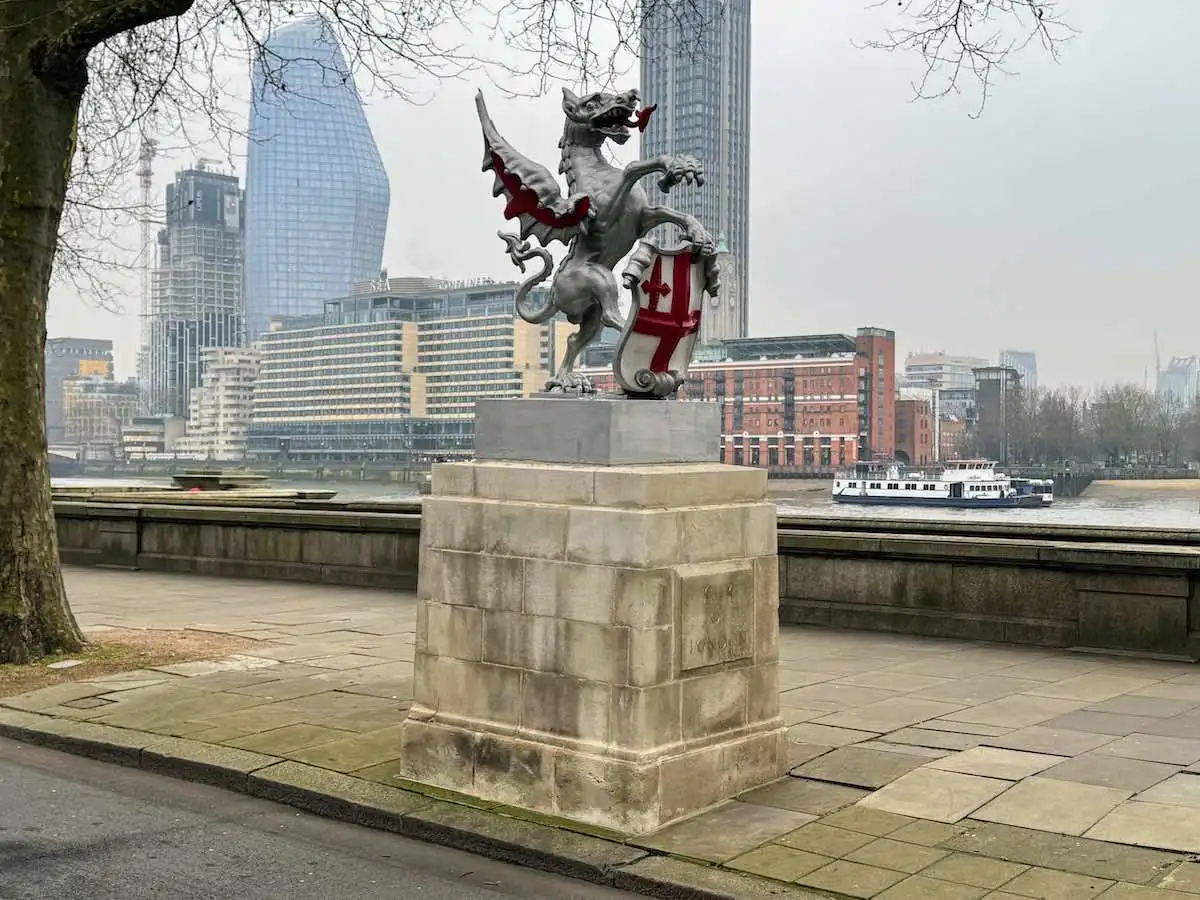
At the major road entry points into the City of London, you will find silver dragon statues mounted on plinths. These are the City's boundary markers, placed at the historic entry points to the Square Mile to announce that you are entering a distinct jurisdiction. The dragons are heraldic figures derived from the City of London's coat of arms, and their placement at the boundary reflects a tradition of marking the City's limits that goes back to the medieval period.
The most famous of these markers stands at Temple Bar on Fleet Street, where the boundary between the City and the London Borough of Westminster is marked. Temple Bar has historical significance beyond its current marker: it was the site where, by tradition, the monarch must seek permission from the Lord Mayor before entering the City, a ceremony that reflects the ancient principle of City sovereignty within its own bounds.
Noticing the dragons as you move through central London is one of the most tangible ways of understanding that the City of London's distinctness is not merely a matter of administrative classification but something with a physical, visible, and deliberately maintained presence in the urban landscape.
The Square Mile On The Ground
Standing in the City of London on a weekday morning, the scale of its daytime population is immediately apparent. The streets around Bank Station, Cannon Street, and Moorgate fill with tens of thousands of workers arriving by tube, by bus, and on foot. The area around the Bank of England, Mansion House, and the Royal Exchange is among the most concentrated nodes of financial activity in the world.
On a weekend, the same streets are largely empty. Restaurants close, offices are dark, and the City takes on a peculiar stillness that is unlike anywhere else in London. It is a city that works five days a week and rests for two, its character shaped almost entirely by its commercial function rather than by the rhythms of residential community life.
The architecture of the City tells its own layered history: Roman walls beneath medieval churches beside Victorian banking halls beside modernist towers beside the very latest glass-and-steel additions to one of the world's most recognisable skylines. Each layer reflects a different moment in the City's long history of serving as London's commercial heart.
The City Of London Police: A Force Apart

The City of London Police is the smallest territorial police force in England and Wales, responsible for policing the approximately one square mile of the City. It operates entirely independently of the Metropolitan Police, which covers the remaining 32 London boroughs and has no jurisdiction within the Square Mile.
The City Police has existed in its current form since 1839, though the City's policing arrangements predate that by centuries. It specialises increasingly in economic crime, fraud, and cybercrime, reflecting the nature of the activity that takes place within its jurisdiction. Major financial fraud investigations in the UK are typically led by the City of London Police rather than by the Metropolitan Police or national agencies.
The existence of a separate police force is one of the clearest practical expressions of the City's administrative independence. It means that the Square Mile has its own independent law enforcement infrastructure, its own chain of command, and its own relationship with the communities and institutions it serves, entirely separate from the arrangements that govern policing in every other part of London.
The City As A Financial Centre
The City of London's status as one of the world's premier financial centres is inseparable from its history as a self-governing commercial community. The same institutional arrangements that preserved its independence from medieval monarchs created an environment that proved exceptionally conducive to the development of complex financial markets, insurance, and international trade.
Why Finance Concentrated In The Square Mile
Finance concentrated in the City for reasons that were partly historical accident and partly the product of the institutional environment that the City's governance created. The relative freedom from royal interference that City merchants had negotiated over centuries made London's financial markets more flexible and more innovative than those operating under tighter royal or government control.
The City's governance by merchants, for merchants, meant that the rules governing financial activity were shaped by people with a direct interest in making those rules work for commercial purposes. The Livery Companies, the ancient guilds of City merchants that still exist today, provided structures of regulation, trust, and mutual accountability that made complex financial transactions between strangers reliable enough to scale.
By the time the Bank of England was founded in 1694, the City of London had already been a significant financial centre for centuries. The Bank's establishment within the Square Mile confirmed and accelerated a concentration of financial activity that has continued to compound ever since.
The Bank Of England, Lloyd's, And The Stock Exchange
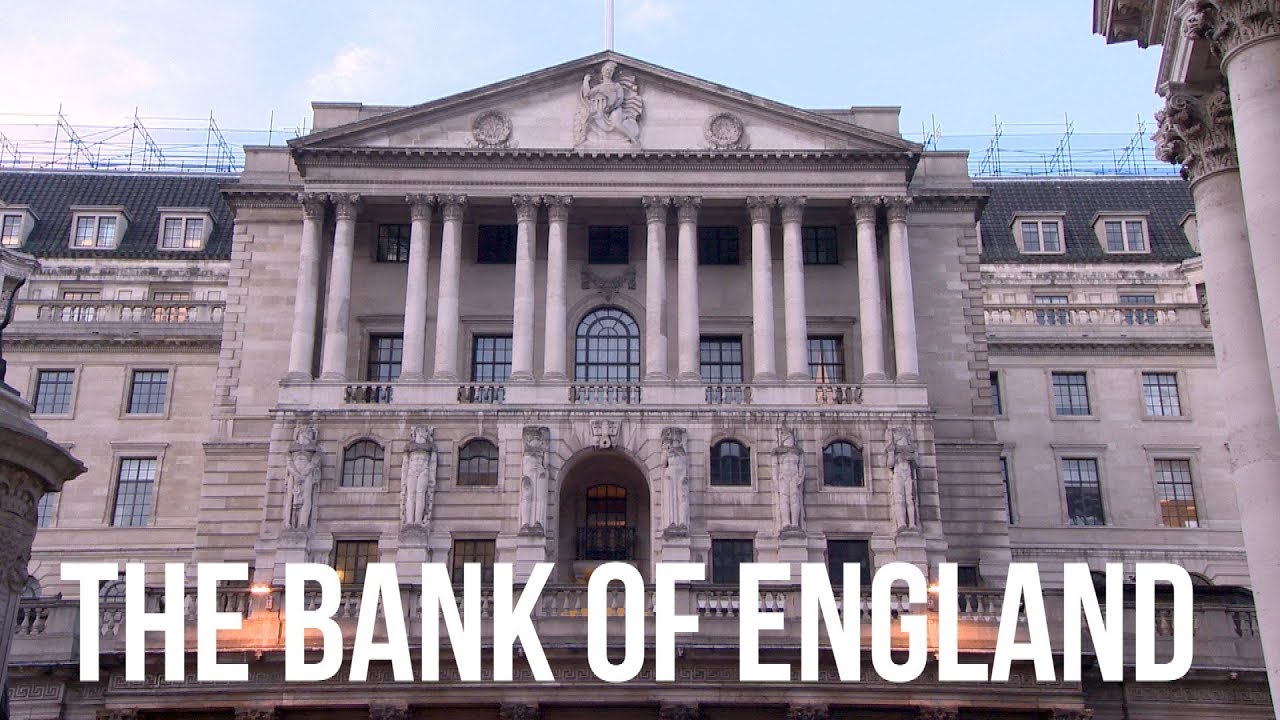
The Bank of England
Three institutions in particular define the City of London's position in global finance, and all three have their roots in arrangements that reflect the City's merchant history. The Bank of England, founded to help finance the government's war debt, was established in the City because that was where the money was. Its building on Threadneedle Street has stood at the heart of the Square Mile since the eighteenth century.
Lloyd's of London, the insurance market, grew from the coffee house culture of the late seventeenth-century City, where merchants and underwriters gathered to share risk on shipping ventures. The informal arrangements of Lloyd's coffee house evolved over centuries into the formal market that today underwrites risks of extraordinary complexity and scale from its modern building in Lime Street.
The London Stock Exchange traces its origins to similar coffee house gatherings of the late seventeenth century, where shares in joint-stock companies were bought and sold informally before formal exchange structures were created. Its presence in the City connects modern equity markets to a lineage that predates the Industrial Revolution.
The City Today: Global Finance In Medieval Boundaries
The modern City of London contains the European or global headquarters of most of the world's major banks, the offices of law firms, accountancy practices, and professional services firms that serve them, and the infrastructure of markets that process transactions of staggering daily value. All of this activity takes place within the approximate boundaries of a Roman town established two thousand years ago.
That juxtaposition is not accidental. The City's medieval governance arrangements created an institutional environment that proved durable precisely because it was designed to serve commercial interests rather than political ones. The rules changed over centuries, but the principle of merchant self-governance remained consistent, and that consistency created the stability that financial markets require.
The Square Mile today is one of the most economically significant square miles on the planet, and its governance is still conducted by the City of London Corporation using structures whose essential character has not fundamentally changed since the medieval period. That is either a remarkable institutional achievement or a remarkable institutional anomaly, depending on your perspective. It is probably both.
What The City Of London Is Not
Understanding the City of London requires clearing up several persistent misconceptions as much as it requires explaining what the City actually is. Each misconception points to a genuine source of confusion worth addressing directly.
It Is Not The Same As Greater London
The most fundamental point is the simplest: the City of London is not London. When a financial journalist refers to the City, they mean the Square Mile. When they refer to London, they mean the broader metropolitan area. These are not interchangeable terms, and treating them as such produces genuine misunderstandings about both the City's significance and London's scale.
Greater London is a region containing 8.9 million people across 32 boroughs. The City of London is a one-square-mile jurisdiction with fewer than 10,000 residents. One is a city in the full modern sense of the word. The other is a historic commercial district with its own government. Both are real, both matter, and neither is a subset of the other in any meaningful analytical sense.
The confusion is understandable because the City of London is located within Greater London geographically, and because the City is in many ways the historic core from which the wider London grew. But geographical containment and administrative identity are different things, and the City's administrative identity is emphatically its own.
It Is Not Just A Financial District
The City of London is often reduced to its financial function, described simply as London's financial district in ways that flatten its genuine complexity. It is a financial district, and an extraordinarily significant one, but it is also a historic residential community, a governance institution with a millennia-long continuous history, a provider of public services including parks and open spaces across a far larger area than the Square Mile, and a ceremonial and diplomatic actor in British public life.
The City contains medieval churches, Roman archaeological remains, livery company halls that trace their origins to medieval guilds, and a residential community whose history of living within the Square Mile goes back generations. Describing it only through its financial function is like describing Venice only as a tourist destination: accurate as far as it goes, but missing almost everything that makes the place genuinely interesting.
Expert's Take
What strikes me most about the City of London, having studied British urban institutions for two decades, is not its antiquity but its adaptability. Every institution that has tried to absorb or override it, from medieval monarchs to Victorian reformers to twentieth-century planners, has eventually accommodated it instead. The City has never needed to resist those attempts dramatically because it has always found ways to make its continued independence more convenient for those in power than its abolition would be. That is not merely institutional stubbornness. It is a form of governance genius that has allowed a medieval merchant community to remain a significant actor in one of the world's most dynamic modern cities. The lesson is not that ancient institutions are always worth preserving, but that institutions built around the sustained alignment of governance and economic interest tend to prove more durable than anyone predicts.
Frequently Asked Questions About The City Of London
Is The City Of London Different From London?
Yes, significantly. The City of London is a historic square-mile jurisdiction within Greater London with its own government, police force, and ancient privileges. Greater London is a modern administrative region of 8.9 million people across 32 boroughs. The City is not one of those boroughs and has never been governed by the same arrangements.
What Is The Square Mile?
The Square Mile is the colloquial name for the City of London, referring to its approximate land area that closely follows the boundaries of the original Roman walled settlement of Londinium. It is one of the most economically significant areas of its size anywhere in the world.
Who Governs The City Of London?
The City of London Corporation governs the Square Mile through its Court of Common Council and Court of Aldermen. It is one of the oldest continuously functioning local governing bodies in the world, with structures that trace their origins to the medieval period.
What Is The Difference Between The Lord Mayor And The Mayor Of London?
The Lord Mayor of the City of London is an annually elected ceremonial head of the City Corporation, primarily serving as a diplomatic ambassador for UK financial services. The Mayor of London is a directly elected executive politician governing all of Greater London. They are entirely different roles with different electorates, different functions, and different authorities.
Why Does The City Of London Have Its Own Police Force?
The City of London Police reflects the Square Mile's historic administrative independence from the wider London governance structures. It has operated as a separate force since 1839 and has no jurisdiction outside the Square Mile. It increasingly specialises in economic crime and financial fraud.
What Are The Dragon Statues At The City Boundary?
The silver dragon statues mark the historic entry points into the City of London, serving as ceremonial boundary markers of the City Corporation's territorial jurisdiction. They are heraldic figures derived from the City's coat of arms, placed at major road entry points to signal the transition into the City's distinct administrative area.
Is The City Of London Part Of Greater London?
Geographically, yes, but administratively no. The City sits within the boundaries of Greater London but is not one of its 32 boroughs. It is a sui generis local authority with a distinct legal and administrative status that predates the creation of the Greater London administrative structure by many centuries.
What Is The Business Vote In City Of London Elections?
The City of London's electoral system includes votes for businesses operating within the Square Mile in addition to individual resident voters. The number of votes each business receives is determined by the size of its workforce within the City. This arrangement reflects the City's historic identity as a commercial community and is unique in the British electoral system.
Final Thoughts
Profoundly, the City of London is a medieval institution that has continuously renewed its own relevance for nearly a thousand years, adapting its functions while preserving the essential principle of commercial self-governance that has defined it since the first merchants negotiated their first charter.
That survival is not accidental. The City has endured because each successive generation of those who governed it found ways to make its continued existence useful to those with the power to abolish it.
For anyone who wants to understand London, understanding the City is not optional. It is where London's story began, where much of its economic life is concentrated, and where the deepest layers of its institutional history are still visible in the street furniture, the boundary markers, and the dragon statues.
Jump to
What You Will Learn
The Short Answer: Yes, They Are Different, And Here Is Why
The Historical Origins: How The City Became Separate
The Governance Of The City: Unlike Anywhere Else In Britain
The Physical City: What You See When You Are There
The City As A Financial Centre
What The City Of London Is Not
Frequently Asked Questions About The City Of London
Final Thoughts

James Rowley
Author
James Rowley is a London-based writer and researcher covering London life, cultural geography, and selected public figures across entertainment, sport, business, and public life.
For over 15 years, he has focused on verified sources, first-hand local context, and clear explanations that help readers understand both places and people more deeply. His work combines street-level London knowledge with careful research into career credits, media work, business interests, and, where relevant, transparently explained net worth estimates.
He writes every article published on London Webcam.
Latest Articles
Popular Articles