London In World War II: Timeline, Raids, Maps, Memory
London in World War II explained with proof: Blitz to V-1/V-2, why areas were hit, and how Bomb Sight + LCC Bomb Damage Maps confirm locations.
Author:James RowleyMar 11, 2026
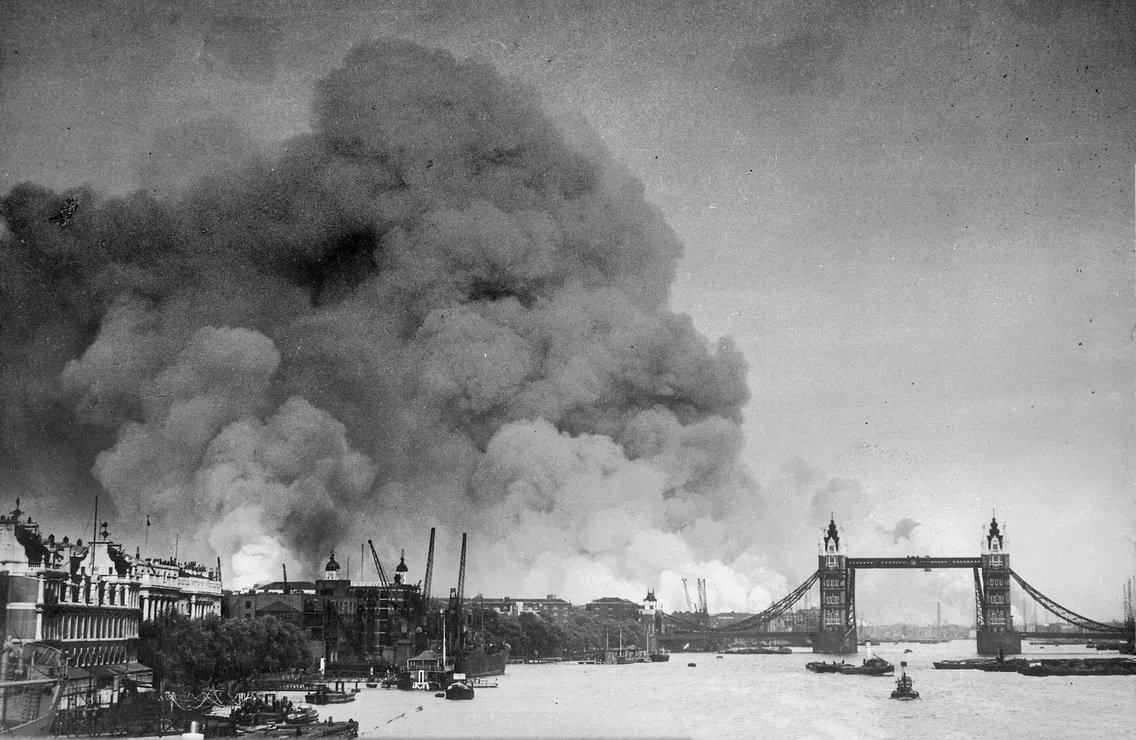
London In World War II: Where Bombs Fell, How People Lived, And What You Can Still See
London’s WWII story is often told as “the Blitz” and a handful of famous photos. That’s the problem: it flattens six years into one dramatic chapter and leaves you guessing about everything else-what changed after 1941, why some areas were hit repeatedly, and what evidence still exists today.
This page is built for the moment you want clarity. It stitches the war into a clean timeline, explains the “why” behind the raids, and shows you how to verify claims using museum and archive material-so you’re not stuck with vague myths or listicle numbers.
Key Takeaways + Fast Answers
- London’s WWII experience ran in distinct phases: preparation and evacuation, the Blitz, a lull with intermittent raids, renewed attacks (including the “Baby Blitz”), then V-1 and V-2strikes, followed by rebuilding.
- The Blitz on Londonis commonly framed as September 1940 to May 1941, with sustained mass raids that changed the city’s landscape and daily life.
- Recorded impacts are huge: Historic Englandnotes that between 7 Oct 1940 and 6 June 1941, almost 28,000 high explosive bombsand 400+ parachute mineswere recorded landing on Greater London.
- Imperial War Museums (IWM)estimates 12,000+ metric tons of bombsfell on London and nearly 30,000 civilianswere killed by enemy action.
- The most reliable way to answer “Was my street bombed?” is to use primary-source mapping: Bomb Sight(Bomb Census points for 1940–41) and the LCC Bomb Damage Maps(building-by-building damage across 1940–45).
Key Dates That Anchor Everything
- 1 September 1939:“Operation Pied Piper” evacuation begins; IWM notes around 1.5 million people were moved in the first days (including children from London).
- 7 September 1940:Major raids begin on London, often treated as the start of the Blitz’s most intense period.
- October 1940:Daylight bombing is largely abandoned as losses mount, pushing raids toward night bombing.
- Mid-September to mid-November 1940:RAF Museum notes London was bombed almost every night but one-useful context for why “Blitz fatigue” becomes a major theme in civilian accounts.
- 29 December 1940:A heavy raid targeted the City around St Paul’s; Historic England records incendiaries “raining down” and watch teams fighting multiple roof fires-an anchor date for the “war of fire” as much as the war of blast.
- 10–11 May 1941: Often described as the heaviest raid on London; RAF Museum characterises it as the “last major raid” of the Blitz, with extensive fires and severe casualties (exact totals vary by dataset scope).
- 11 May 1941:Often cited as the last major “Blitz” raid (definitions vary by source and dataset).
- Jan–May 1944:“Baby Blitz” period tied to Operation Steinbock (renewed conventional raids).
- 13 June 1944:Historic England notes the first V-1 on London struck Mile End.
- 8 Sept 1944 – 27 March 1945:Historic England’s window for the V-2 campaign toward London/Norwich, noting there was no defence against V-2s.
Definitions (Blitz, V-weapons, Bomb Damage Maps)
- The Blitz:Germany’s sustained bombing campaign against Britain in 1940–41, with London repeatedly targeted at night after daylight losses mounted.
- V-weapons:Long-range “revenge weapons”-V-1 flying bombsand V-2 rockets-that struck London heavily in 1944–45with little or no warning.
- LCC Bomb Damage Maps:Hand-coloured maps created by London County Council staff to record cumulative, building-by-building damagein the capital from air raids and V-weapons.
Takeaway:With those definitions in place, the rest of the story becomes much easier to organise-and much harder to mythologise.
Understanding London In World War II
This section explores how London transitioned from a bustling imperial capital into a primary military target.
September 7, 1940: The Day The Sky Turned Black (Black Saturday)
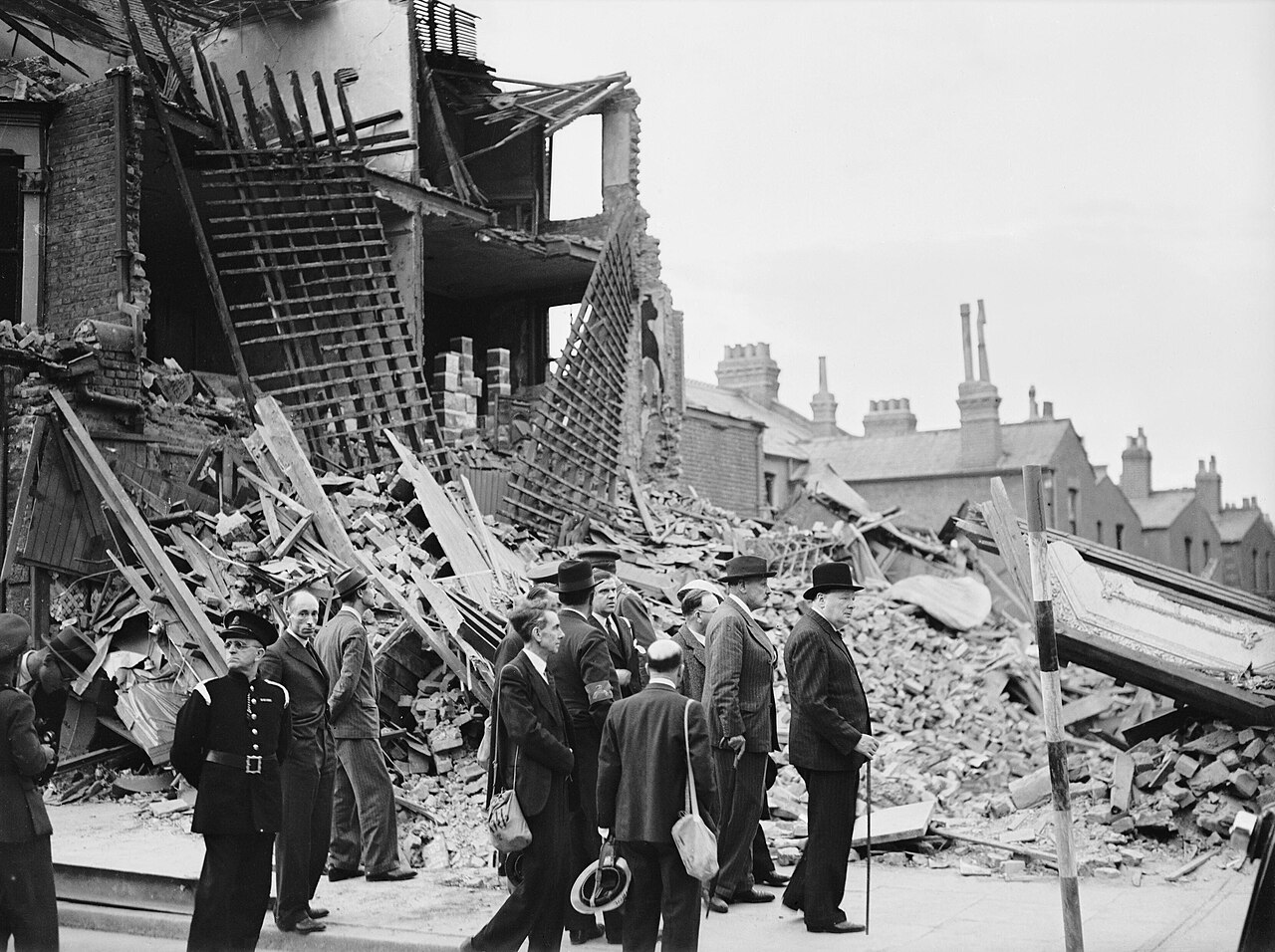
On September 7, 1940, a date commonly referred to as "Black Saturday," the German Luftwaffe fundamentally altered its aerial campaign against Great Britain. This transition marked the beginning of The Blitz, a sustained period of strategic bombing that would continue for eight months.
Prior to this date, German operations primarily targeted Royal Air Force (RAF) infrastructure, such as airfields and radar stations. However, on September 7, the strategy shifted toward "area bombing." At approximately 4:00 PM, over 300 bombers, supported by hundreds of fighter escorts, launched a massive assault on London.
IWM records that the attacks of 7 September 1940 left about 430 people dead and 1,600 injured-numbers that help explain why this day is used as a psychological “hinge” in many London timelines, not just a tactical one.
And if you’re tracking “why the Blitz became the night,” Historic England notes the broad shift away from daylight bombing after October 1940 as Luftwaffe losses mounted.
Strategic Targets: Why The Docklands Bore The Brunt
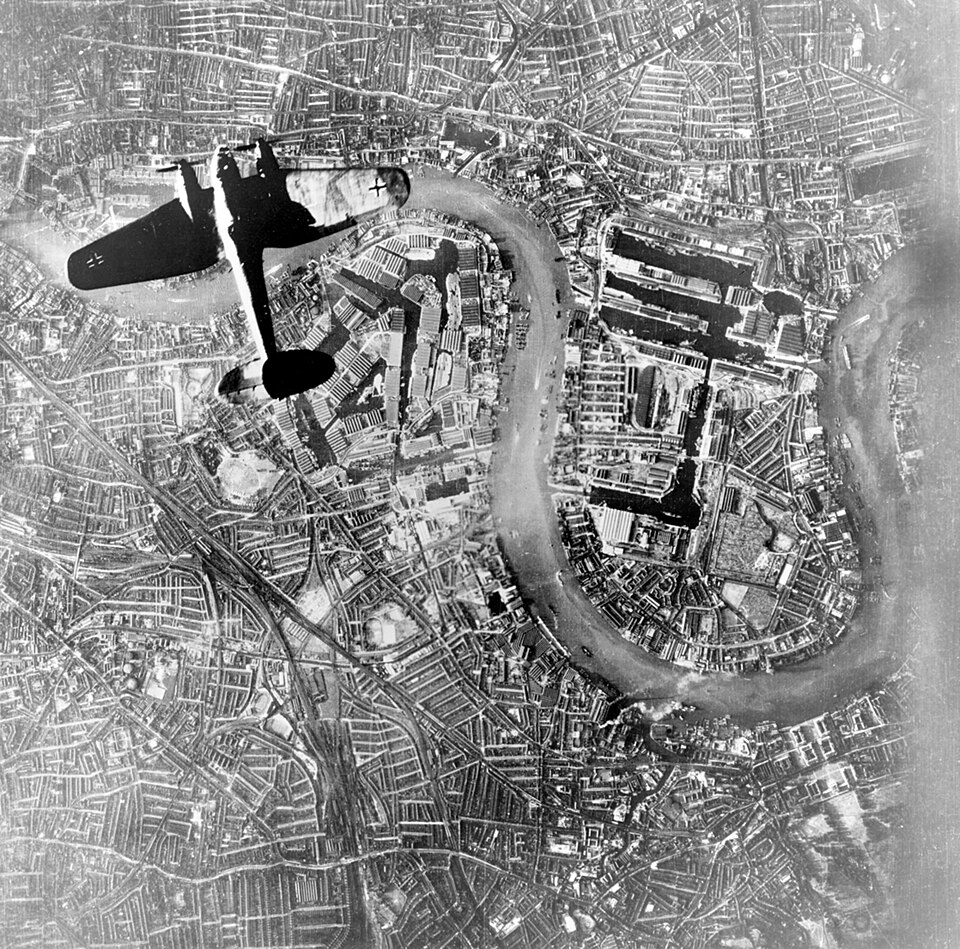
The Germans focused on the East End not just for terror, but for logistics. The London Docklands were the throat of the British Empire; if the Luftwaffe could choke the flow of food and materiel coming through the Royal Docks, they could starve the resistance.
Because of this, areas like West Ham and Stepney saw a disproportionate amount of destruction compared to the West End. This geographical disparity created a unique social tension, as the working-class East Enders felt they were "taking it" for the rest of the country.
Takeaway: London's transition to a war footing was defined by a shift from military-on-military combat to a total war that placed the civilian geography at the center of the bullseye.
London’s WWII Story In 5 Phases
This section gives you a clean mental model: five phases that explain what changed over time, plus the best “proof layer” for each phase so you can verify details.
Phase 1 (1938–39): Preparation-ARP, Gas Masks, Evacuation Planning
Before bombs fell, London prepared for the possibility that air raids would target civilians. That preparation shows up in civil defence planning, public messaging, and the early moves to protect children.
The dread of late 1939 London lived not in falling bombs, but in the bureaucratic encroachment of war into the living room. For the average household, the conflict remained a psychological abstraction defined by the tedious rigor of ARP drills and the literal darkening of windows, transforming homes into regulated outposts of civil defense.
This atmospheric prelude functioned as a chilling dress rehearsal, where the looming logistics of Operation Pied Piper forced families to weigh the trauma of evacuation long before a single siren broke the silence, proving that the state reshaped civilian life through paperwork well before the first strike of the Blitz.
IWM notes that around 1.5 million people were evacuated in the first days of September 1939, including many London children sent away from likely target areas.
Takeaway:London entered WWII already treating the home front as a target, not a spectator.
Phase 2 (Sept 1940–May 1941): The Blitz-why London, What Changed
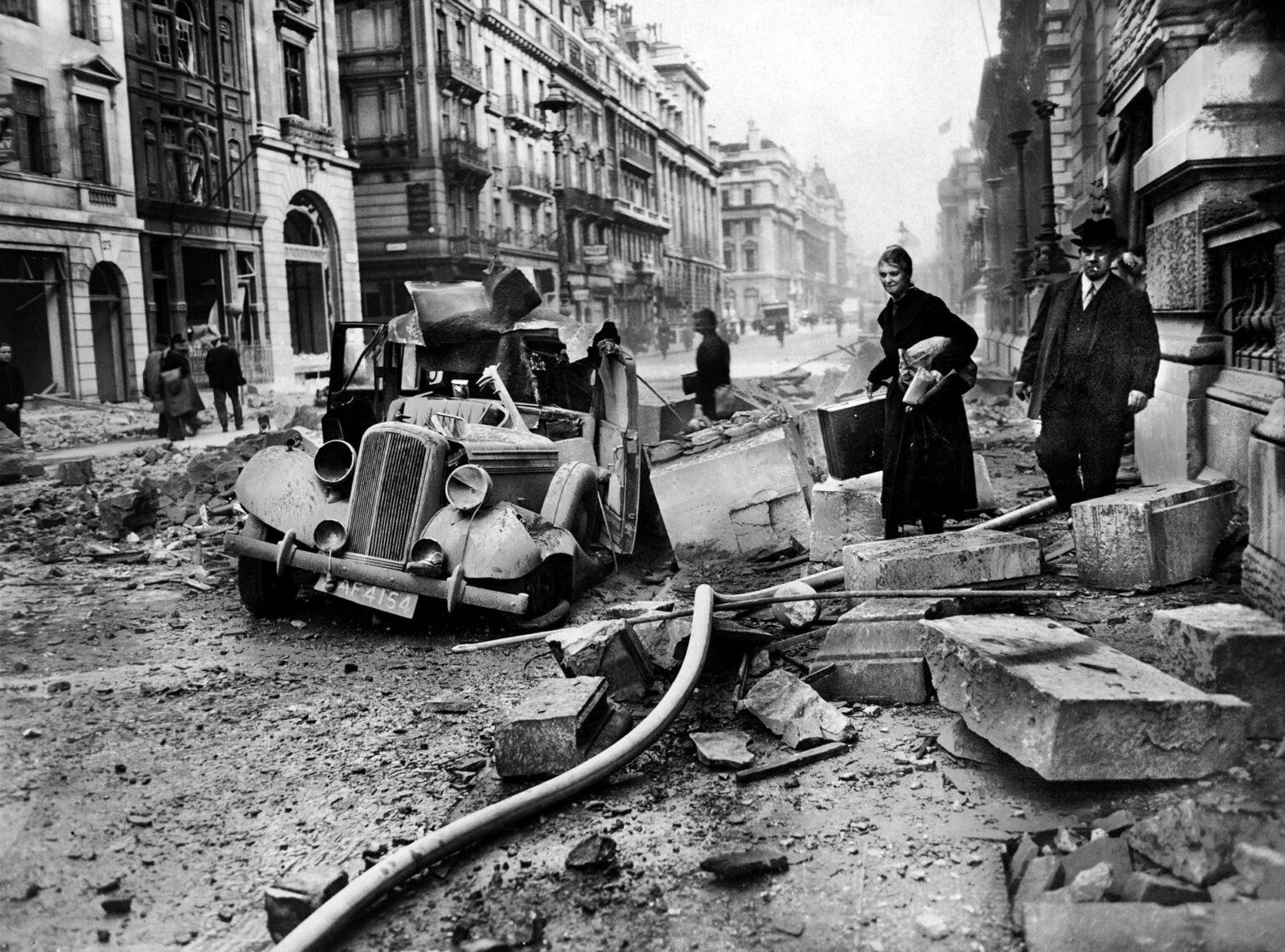
This subsequent phase of the campaign is characterized by sustained aerial bombardment, widespread displacement, and a civilian population forced into rapid adaptation.
A critical strategic pivot occurred following October 1940; due to unsustainable aircraft losses during daylight operations, the Luftwaffe abandoned diurnal raids in favor of nocturnal strikes.
The scale of this offensive is reflected in the empirical data provided by Historic England. Their records indicate that between October 7, 1940, and June 6, 1941, the Greater London area was struck by approximately 28,000 high-explosive bombs and over 400 parachute mines.
This intensive bombardment defined the city's experience of the conflict, marking a period of profound physical exhaustion and structural devastation.
Some sources treat 11 May 1941 as the last major Blitz raid, while others use datasets that extend into early June 1941-both can be accurate depending on whether you’re using a popular “end date” or a recorded-landing window.
The Blitz was not just “bombing”-it was an evolving campaign with changing tactics and relentless pressure.
Phase 3 (1941–early 1944): The Lull + Renewed Risk (context, Not Forgotten Years)
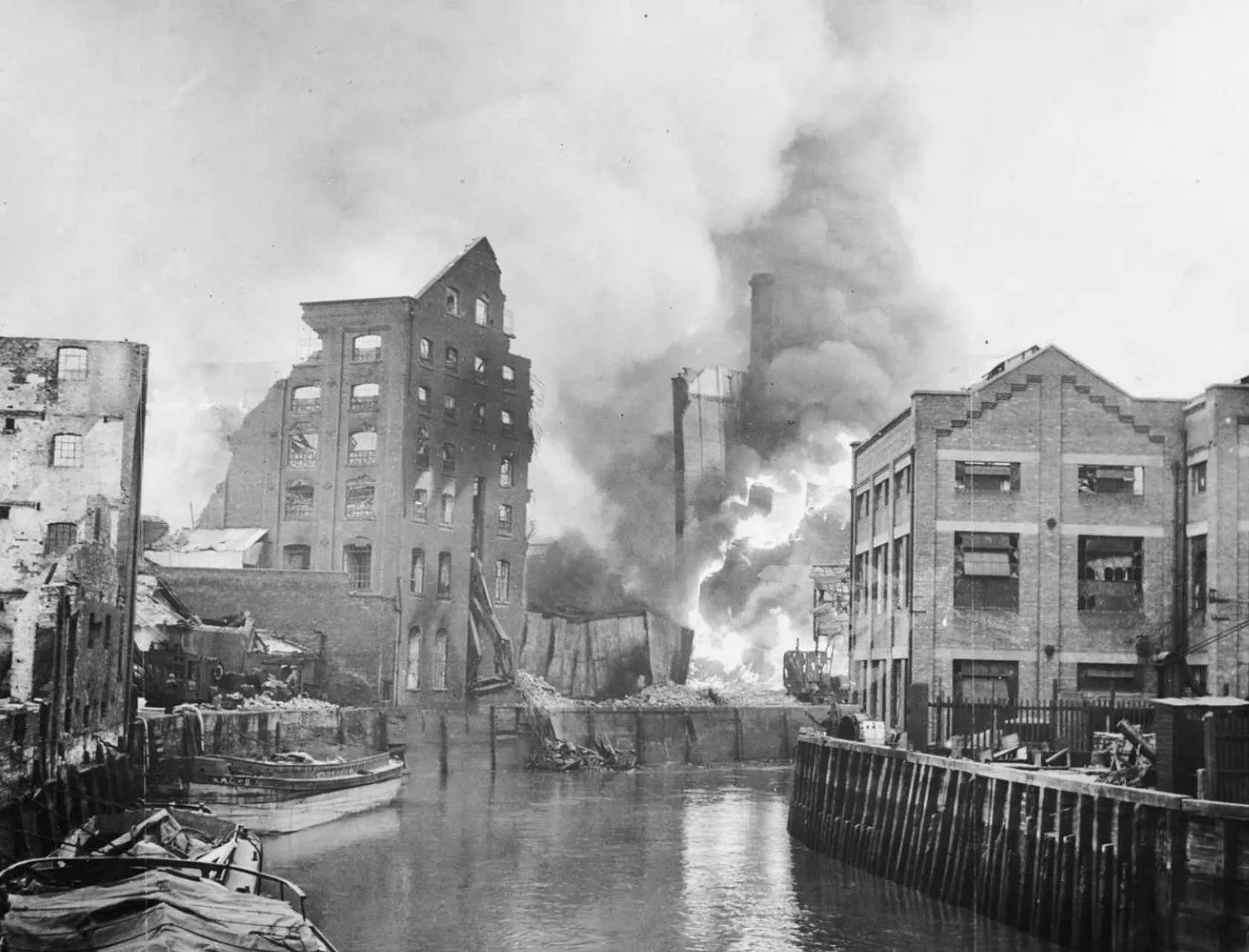
A common misconception regarding the Second World War is the assumption that the conclusion of the Blitz marked the end of aerial threats to London. In historical reality, while the period of sustained mass raids transitioned into a less frequent pattern, the danger to the civilian population did not dissipate.
The two-and-a-half years after the Blitz as “The Lull”-occasional raids by smaller numbers of aircraft, nothing like the earlier scale, but enough to keep fear and preparedness alive.
London’s wartime psychology didn’t reset in 1941; it carried forward through quieter, uncertain years.
Phase 4 (1944–45): Baby Blitz + V-1/V-2-how The Threat Evolved
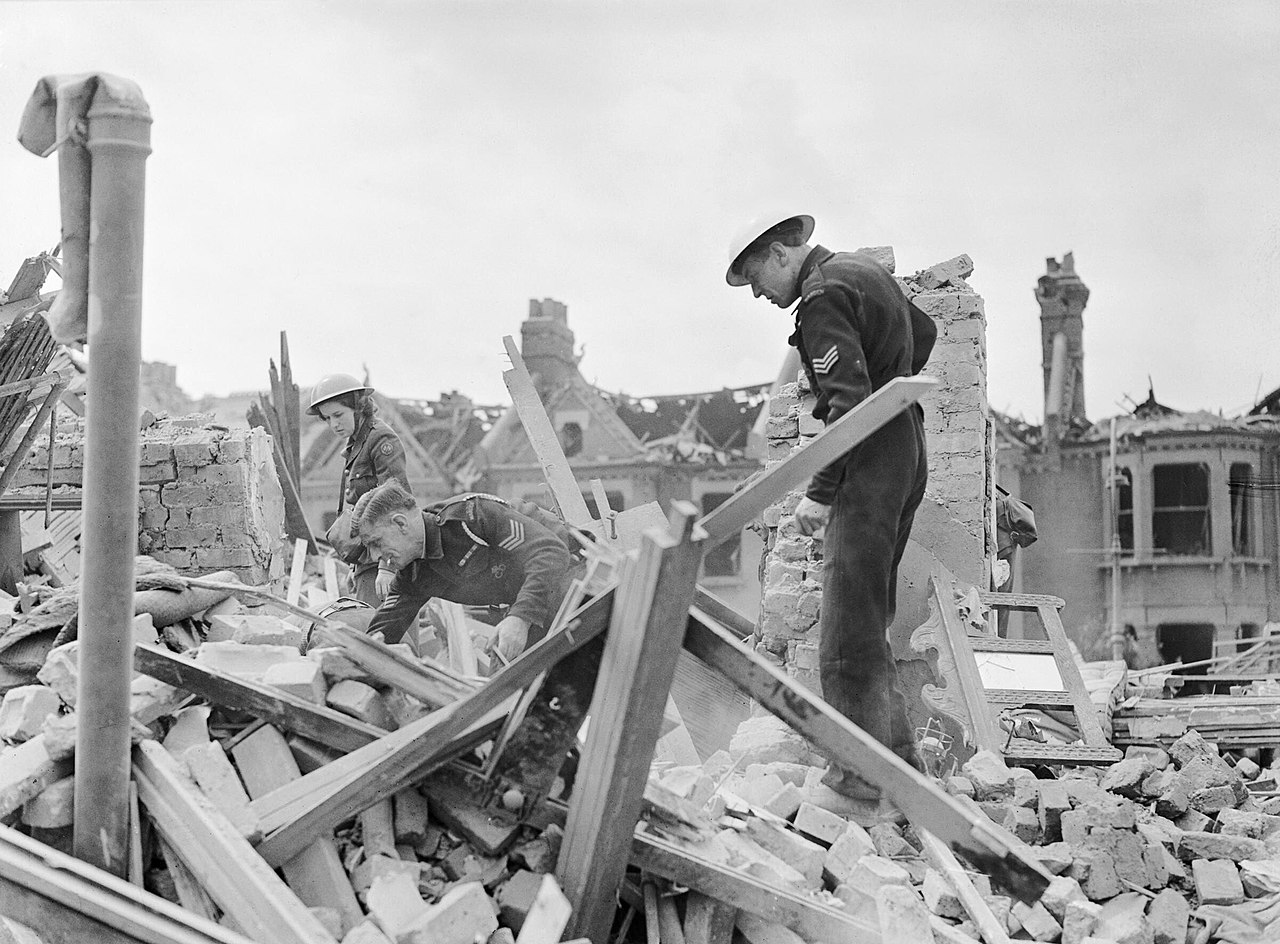
By 1944, London faced a different kind of terror: weapons that changed the rhythm of danger. V-1s could be heard, tracked, sometimes intercepted; V-2s largely could not.
There was no defence against V-2s, and places their campaign window between 8 Sept 1944 and 27 March 1945, with over 1,400 launched toward London and Norwich, killing almost 3,000and injuring over 6,500.
The introduction of V-weapons shattered the psychological safety of the traditional siren by eliminating the luxury of a warning. Unlike bombers that could be heard approaching, the V-1 "Doodlebug" turned silence into a deadly countdown the moment its engine cut out, while the supersonic V-2 struck without any audible herald at all.
This shift fundamentally redefined the architecture of fear, replacing the predictable interval of a siren with a sudden, total erasure of the boundary between peace and catastrophe.
Takeaway:Late-war attacks weren’t simply “more bombing”; they introduced new weapons, new uncertainty, and new limits on protection.
Phase 5 (1945 Onward): Aftermath-damage, Rebuilding, Memory
When the attacks end, the war doesn’t instantly stop shaping the city. London has to rebuild housing, infrastructure, and neighbourhood identity while carrying the memories of loss and survival.
This is where “London in WWII” becomes visible in unexpected places: gaps in terraces, post-war estates, rebuilt commercial streets, and public memorials that fix a date and a name to a vanished building.
One under-told fact: the LCC Bomb Damage Maps weren’t only a record of loss-they helped inform post-war planning. The London Picture Archive notes they were used by Forshaw and Abercrombie in the County of London Plan (1943) and Greater London Plan (1944).
Takeaway:The end of raids is not the end of London’s WWII story-it’s the start of how the city remembers and remakes itself.
| Phase (Dates) | Details |
| 1. Preparation (1938–39) | What changes: Civil defence planning, evacuation readiness • Best proof layer: Museum/archives context (IWM overview) |
| 2. Blitz (1940–41) | What changes: Sustained mass raids; night bombing dominates • Best proof layer: Bomb Census points + summaries (Historic England; Bomb Sight)What changes: Sustained mass raids; night bombing dominates • Best proof layer: Bomb Census points + summaries (Historic England; Bomb Sight) |
| 3. Lull (1941–early 1944) | What changes: Intermittent raids; ongoing readiness • Best proof layer: Historic England’s “Lull” framing |
| 4. V-weapons era (1944–45) | What changes: V-1/V-2 change warning and defence • Best proof layer: Historic England V-weapon data; National Archives resources |
| 5. Aftermath (1945+) | What changes: Rebuilding and memorialisation • Best proof layer: LCC Bomb Damage Maps; memorial records |
Why London Was Targeted (strategy, Geography, Symbolism)
This section explains the “why” behind the raids-so you can connect tactics to targets instead of treating bombing as random cruelty.
Docks, Industry, Transport, And Morale Targets
London mattered as a working machine, not just a symbol. Ports and docklands fed the economy and war effort; rail and road links moved people and material; dense housing made disruption widespread.
IWM’s overview captures a blunt truth: the worst hit places tended to be poorer districts, like the East End, while also noting that famous landmarks and institutions were hit too-evidence of both strategic targeting and the chaos of wide-area raids.
Takeaway:London was targeted because it combined logistics, industry, population, and national identity in one place.
Why Tactics Shifted (daylight → Night; Conventional → V-weapons)
Tactics shifted when costs changed. The abandonment of daylight bombing after October 1940, driven by unsustainable Luftwaffe losses, explains why the Blitz remains so indelibly linked to the night.
By shifting the assault to the cover of darkness, the German air force fundamentally altered the rhythm of British civilian life, transforming the nocturnal hours into a period of sustained peril and cementing the association between the setting sun and the sounding siren.
Later, the shift from aircraft raids to V-weapons wasn’t merely technological swagger-it reflected the changing battlefield and the attempt to keep pressure on Britain even as the war’s momentum changed across Europe. The result, for Londoners, was a new pattern of threat that didn’t behave like a raid you could hear approaching.
Takeaway:Understanding London’s WWII raids means tracking how strategy and technology reshaped what “danger” looked and felt like.
Where London Was Hit Hardest (a Borough-by-borough Way To Think About It)
This section helps you answer the question people most often ask next: “Which parts were bombed?”-without reducing London to one or two famous sites.
Hotspot Types (docks/warehouses, Rail Hubs, Government, Dense Housing)
Rather than memorising borough rankings (which can vary by dataset), it’s more accurate to think in hotspot types:
- Port and industrial zoneswhere disruption had outsized value.
- Rail hubs and junctionsthat affected movement and supply.
- Dense working-class housingwhere damage could be catastrophic and recovery slower.
- Symbolic/government areaswhere morale impact mattered.
This is why you’ll see repeated references to docklands and the East End in museum and heritage summaries-while also seeing landmark hits across central London.
Takeaway:“Most bombed” is often better answered by what kind of placeit was than by a single postcode.
How To Verify Locations Using Maps (Bomb Sight Vs LCC Damage Maps)
If someone wants to move from “I heard…” to “I can prove it,” two resources do most of the heavy lifting:
- Bomb Sightmaps Bomb Censuspoints for the London Blitz period 7 Oct 1940 to 6 June 1941, drawn from records that were once viewable only at The National Archives.
- LCC Bomb Damage Mapsrecord cumulative, building-by-building damagecaused by air raids and V-weapons across 1940–45, using colour keys to show severity.
A practical way to use them: if someone is researching a street, they can start with Bomb Sight to see whether bombs were recorded in the Blitz window, then use the LCC maps to understand the broader arc of damage and rebuilding.
Takeaway:“Where was bombed?” becomes answerable when you pair the right map with the right time window.
How Londoners Survived (civil Defence + Daily Life)
This section makes the war human. It explains how survival worked in practice: protection, routine, and the constant negotiation between normal life and sudden danger.
Shelters Explained (Anderson, Morrison, Tube)
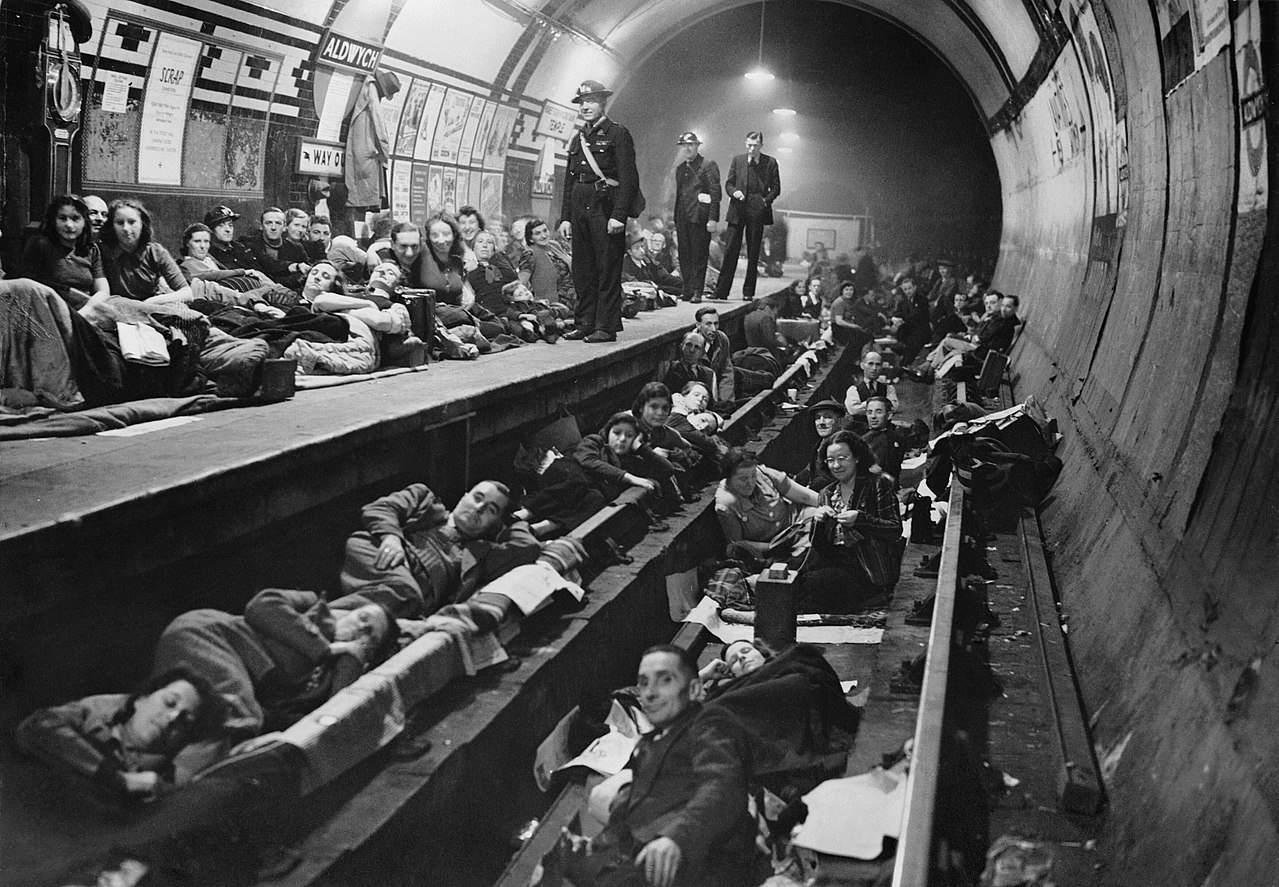
Civil defence wasn’t one solution; it was a patchwork of options with trade-offs.
- Home shelters(like the Anderson and Morrison) offered immediate access but varied in protection and comfort.
- Public shelters and the Undergroundoffered scale and proximity for many, but also brought crowding, stress, and risk.
It’s tempting to romanticise shelter life as communal grit. The records make clear it could also be terrifying and physically dangerous, especially under pressure and panic-something the Bethnal Green disaster tragically illustrates.
To replace cliché with reality, Transport for London’s archive guide shows how sheltering in the Tube became a mass, managed system: by 21 September 1940 around 120,000 people were sheltering in stations, rising to 124,000 by October.
It also captures an important tension: Tube stations were not originally intended as shelters under earlier policy, but Londoners began sheltering anyway-sometimes by buying tickets and refusing to leave-forcing practical arrangements to follow.
And it wasn’t “sleep anywhere, anytime”: TfL notes controlled routines (for example, arriving after evening hours and leaving by morning) and the logistics of bunks, lighting rules, sanitation, and crowd marshals-details that explain why sheltering could be both lifesaving and exhausting.
Takeaway:Survival often depended on what protection you could reach quickly-not what protection was ideal.
Blackouts, Rationing, Work, Sleep, Schooling, Evacuation
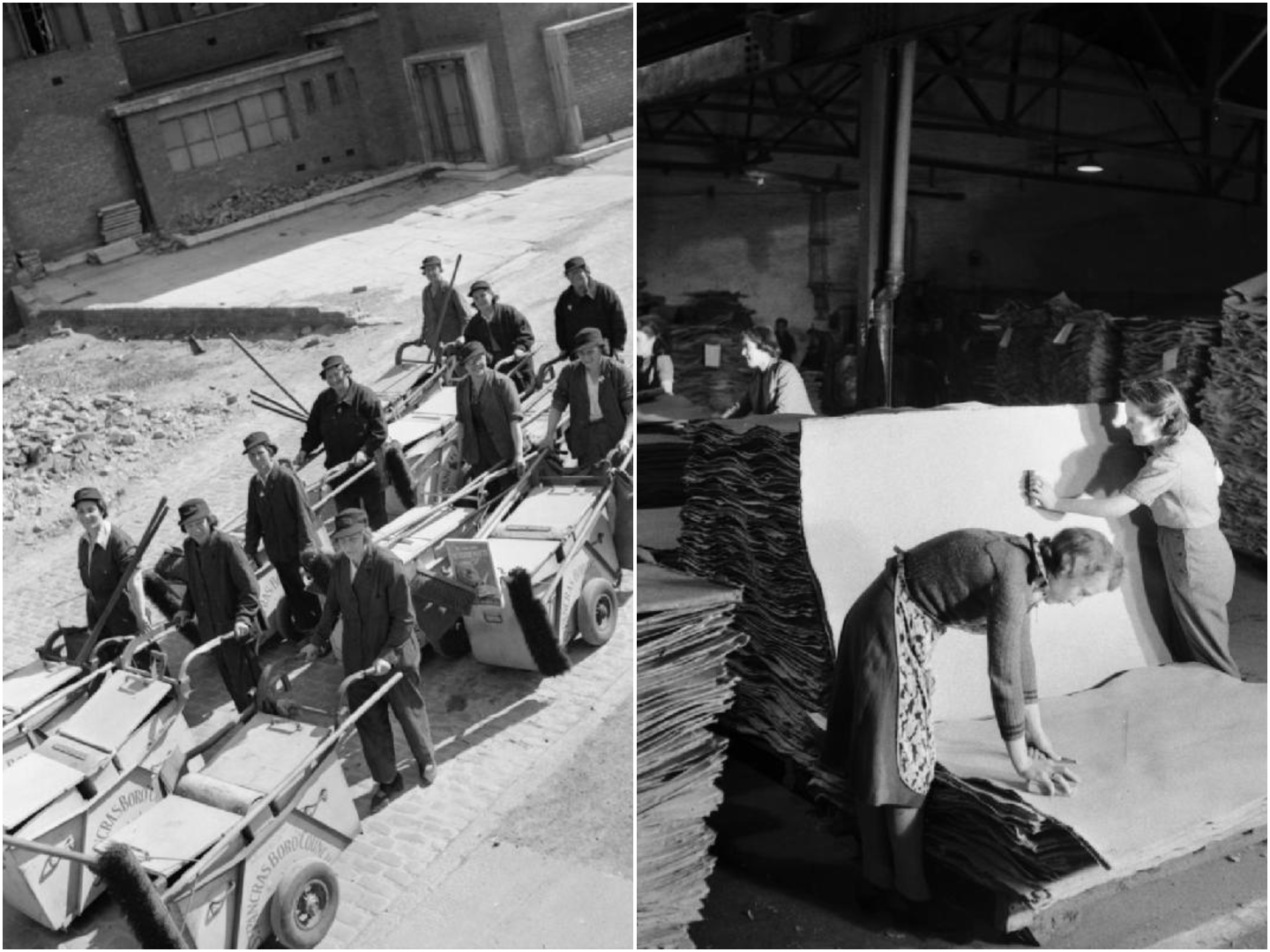
“Daily life” during London’s war often meant living in fragments: interrupted sleep, disrupted work, long queues, strict lighting rules, and persistent uncertainty.
A useful way to picture it is through a day-in-the-life scenario: someone finishes a shift, checks blackout rules, plans a rationed meal, and makes a decision about where to sleep-bed, shelter, or Tube-based on rumours of raids, recent hits nearby, and the needs of children or elderly relatives. Museums that focus on civilian experience underline this mix of perseverance and disruption, rather than heroic slogans.
Evacuation sits inside that daily-life reality, not outside it: families were forced into decisions about safety, separation, and schooling that could change more than once as the war evolved.
Takeaway:Londoners “coped” not through one grand emotion, but through thousands of practical choices repeated under strain.
Inequality And Risk (who Had Safer Options, Who Didn’t)
One of the least comfortable truths is also one of the most important: risk was not evenly distributed.
IWM notes that the worst hit places tended to be poorer districts, and even without intending it, that sentence points to the deeper pattern-housing density, building quality, proximity to industrial targets, and fewer options to relocate could all concentrate danger.
Any honest account of London in WWII has to include how geography and class shaped exposure to danger.
Tragedies, Turning Points, And What They Reveal
This section highlights moments that sharpen understanding: events that show the limits of civil defence, the evolution of threats, and the difference between memory and reality.
Bethnal Green Tube Shelter Disaster (1943)
By 1943, many Londoners felt the worst might be over. Then, on one night in March, a crush at Bethnal Green station turned a place of refuge into a deadly trap.
The National Archives records that 173 people lost their livesin the disaster, reminding us that wartime danger wasn’t only about direct hits-it was also about fear, crowd movement, and infrastructure under pressure.
“Safety” in wartime is never absolute, even underground.
The Last V-2 On London (27 March 1945) And What “end Of Attacks” Means
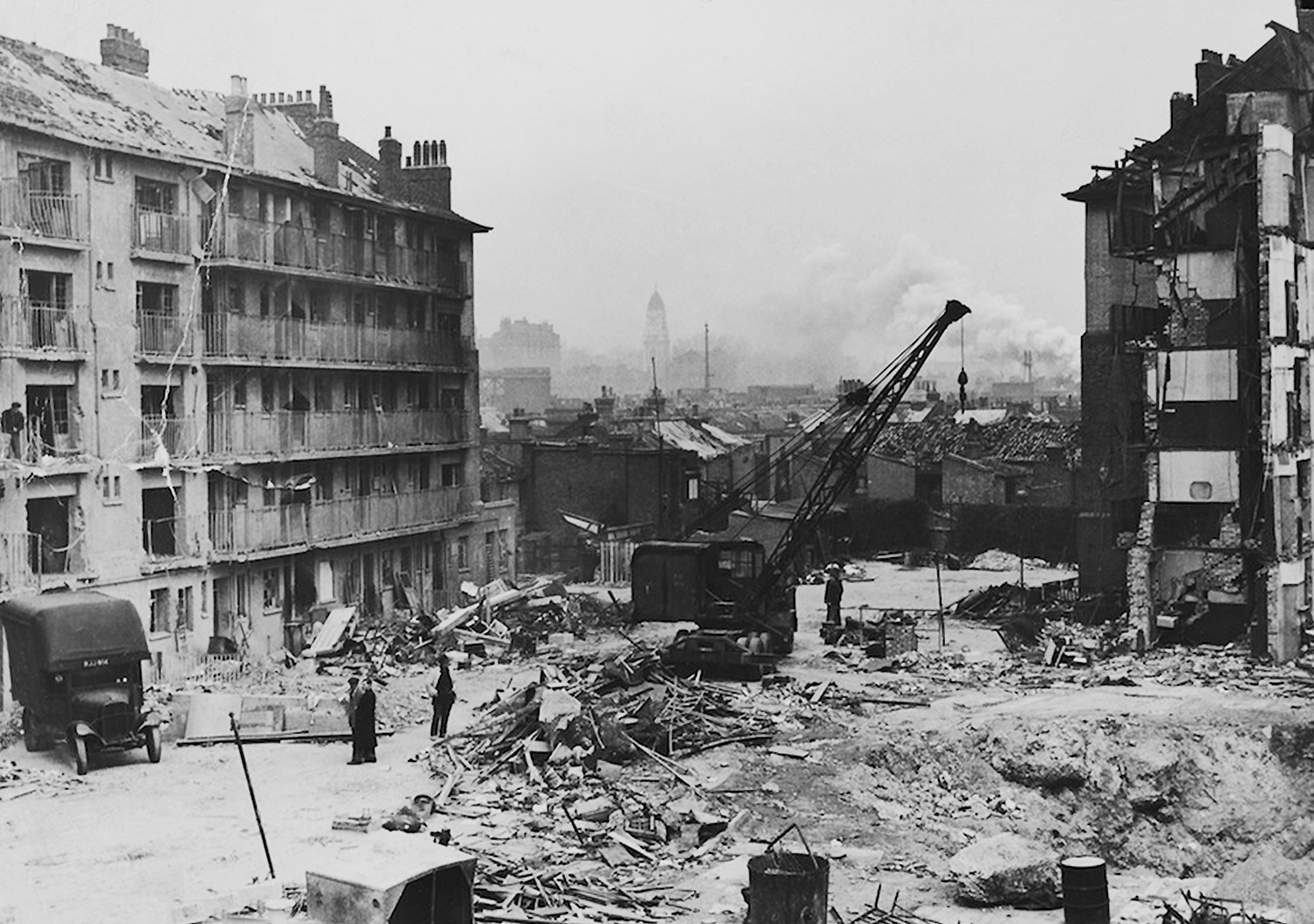
People often want a clean endpoint: “When did the last bomb fall?” The reality is messier, but we can be precise about specific events.
An Imperial War Museums memorial record commemorates a V-2 strike on 27 March 1945at Hughes Mansions, Vallance Road, noting 134 deathsat that site-often referenced as the last V-2 to fall on London.
Separately, The National Archives’ education resource states that the last V-2 attacked Orpington in Kenton the same date-an example of how “last on London” and “last in the wider area/UK” can be reported differently depending on scope.
When you see “last attack” claims, always check what geography the writer is using.
Landmarks And Cultural Memory (e.g., Tower Of London Wartime Role)
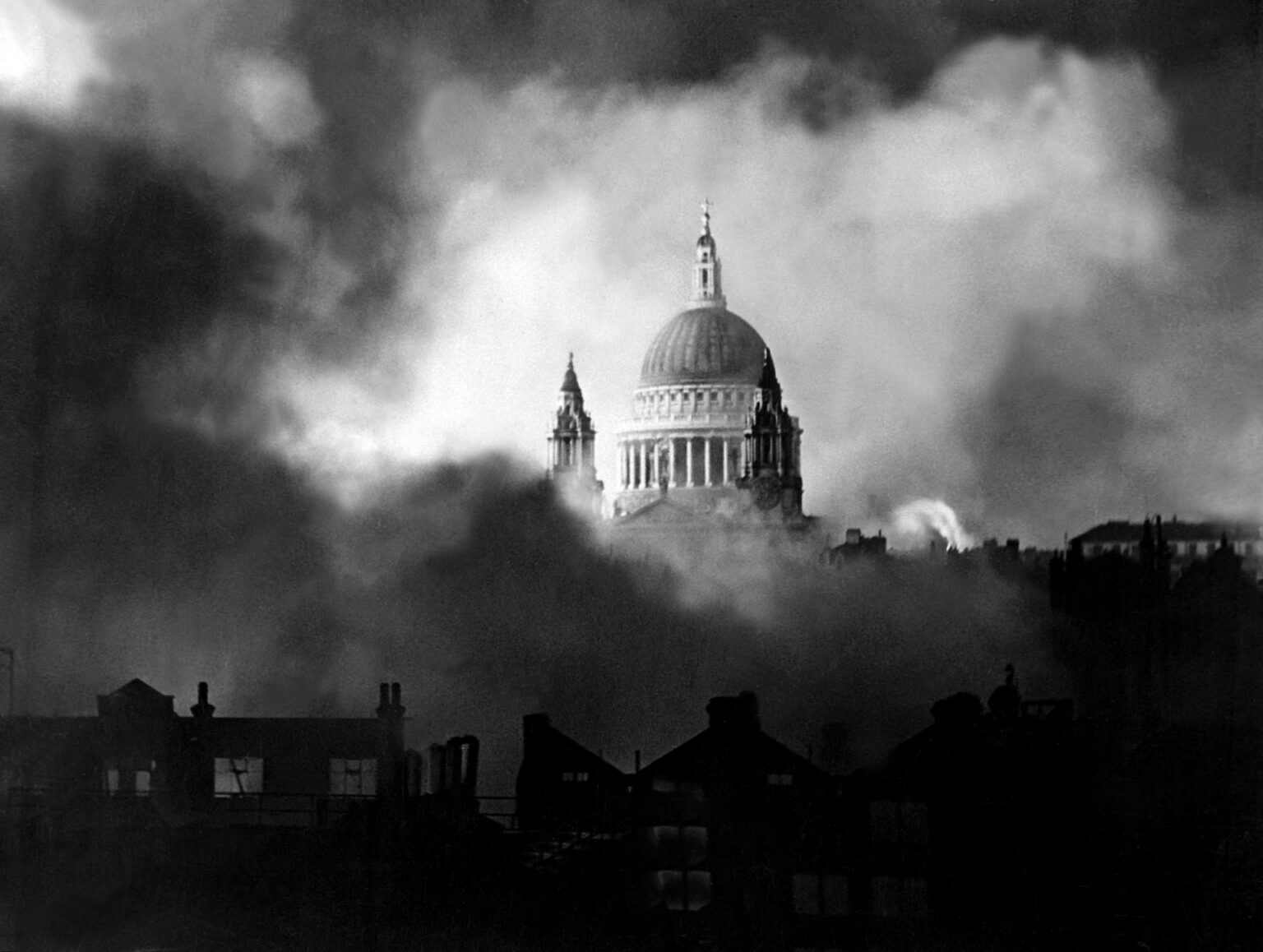
Landmarks matter because they become shortcuts in collective memory-but they also had practical wartime roles.
Historic Royal Palaces documents how the Tower of Londoncontinued as a public site while also living through wartime conditions and damage, helping anchor the war in specific, visitable places rather than abstract statistics.
Takeaway:London’s WWII story survives in places you can still stand inside-if you know where (and how) to look.
Evidence You Can Check Yourself (maps, Archives, And Primary Sources)
This section shows you how to verify the story. If you want confidence-not just atmosphere-these are the tools that turn “history” into “evidence.”
Bomb Census Records (what They Contain)
The National Archives’ research guide explains what Bomb Census survey records can include: bomb types and counts, locations, casualty statistics, and damage to buildings and infrastructure-mostly focused on London, but also covering other parts of the UK.
That matters for two reasons:
- It’s a primary source trail for “how we know” where bombs fell.
- It explains why some popular claims are unreliable: different records track different things.
Takeaway:When numbers conflict, go back to what the record set actually measures.
Bomb Sight (what Its Dates Cover; How To Use It)
Bomb Sight is most powerful when you treat it like what it is: a map built around Bomb Census data for 7 Oct 1940 to 6 June 1941.
A tight, practical approach:
- Search a street or landmark.
- Note the date window(it’s Blitz-focused).
- Treat each mapped point as “a recorded incident,” not a complete summary of every wartime impact.
If you use Bomb Sight outside its time window-say, to “prove” a 1944 V-1 hit-you’ll accidentally create misinformation.
LCC Bomb Damage Maps (what They Record; Why They Matter)
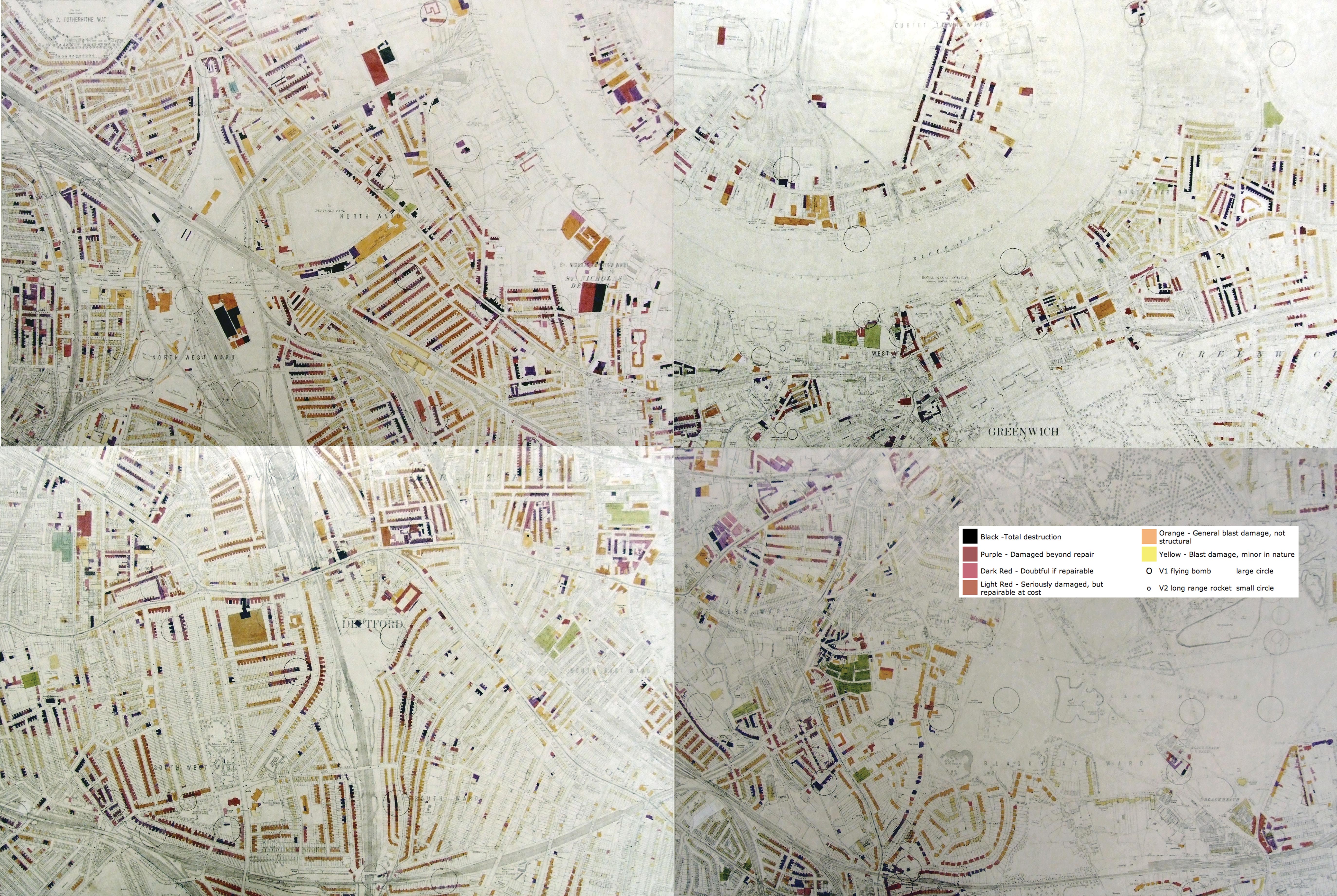
The London Archives describes the LCC Bomb Damage Maps as the most detailed record of damage to London’s built environmentfrom aerial bombardment during 1940–45, annotated building-by-building with colour keys.
The London Picture Archive adds crucial detail: these maps record cumulative damagein the County of London caused by air raids and V-weapons, and they’re based on Ordnance Survey sheets updated for wartime use.
Why this matters:
- They help you see not just where bombs fell, but what they did to the city block by block.
- They connect wartime damage to post-war redevelopment-why some streets feel “older” than their neighbours.
If you want building-level truth, the LCC maps are the closest thing to a wartime “damage ledger.”
How To Explore London’s WWII History Today (visitor-friendly, Respectful)
This section turns knowledge into action. It’s designed for the reader who wants to learn on-site-without turning trauma into sightseeing.
Best Museums/collections
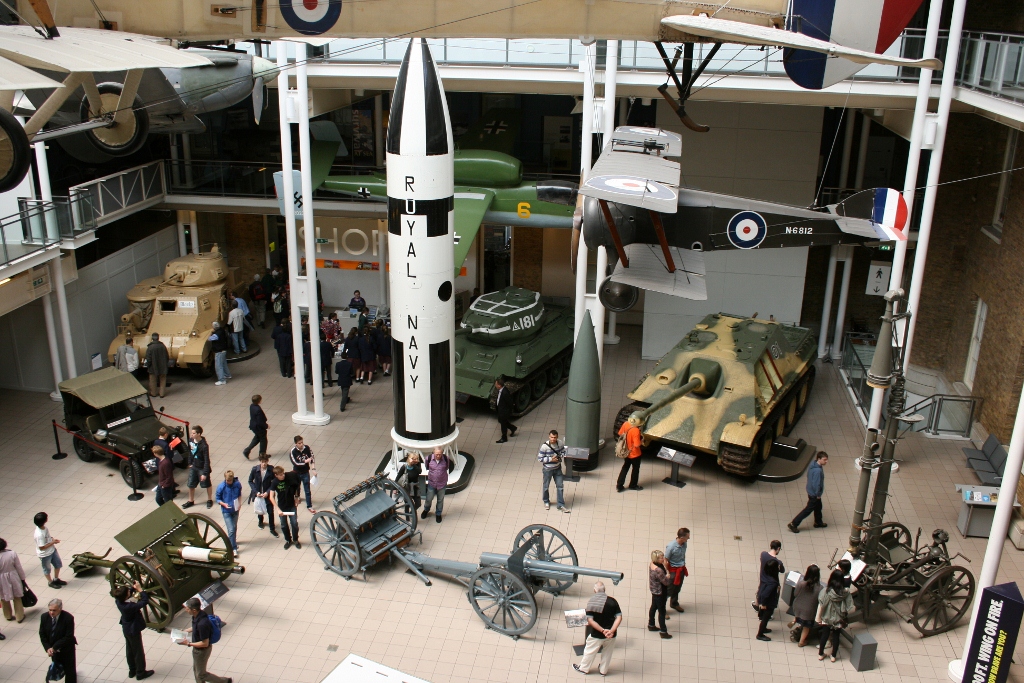
- Imperial War Museum (IWM) London:A strong anchor is the Imperial War Museumsoverview of London’s wartime experience, because it combines the big picture with specific, checkable statements about raids, damage, and civilian impact.
- Churchill War Rooms:Located in a secret underground bunker, this was Winston Churchill’s wartime headquarters. Visitors can walk through the original map rooms and communications centers where the British government directed the war effort.
- HMS Belfast:A Town-class light cruiser permanently moored on the Thames, this warship served throughout WWII, from escorting Arctic convoys to providing fire support for the D-Day landings.
- National Army Museum:This free museum covers 600 years of British military history; while it lacks a single WWII-specific gallery, the conflict is woven throughout its diverse collections and artifacts.
- London Transport Museum:Located in Covent Garden, its "London’s Transport at War" exhibition highlights the vital-and dangerous-role the city’s buses, trains, and tube stations played during the Blitz.
- Bletchley Park:Situated just outside London, this was the central site for Allied codebreaking. It is famous as the place where Alan Turing and his team cracked the Enigma code, a feat that significantly shortened the war.
Key Monuments & Memorials
- Battle of Britain Monument:Situated on the Victoria Embankment, this relief sculpture honors the airmen who defended the UK during the summer of 1940.
- Bomber Command Memorial:A striking Green Park tribute to the 55,573 aircrews who died in service, featuring 9-foot-tall bronze statues and a roof containing aluminum from a salvaged Halifax bomber.
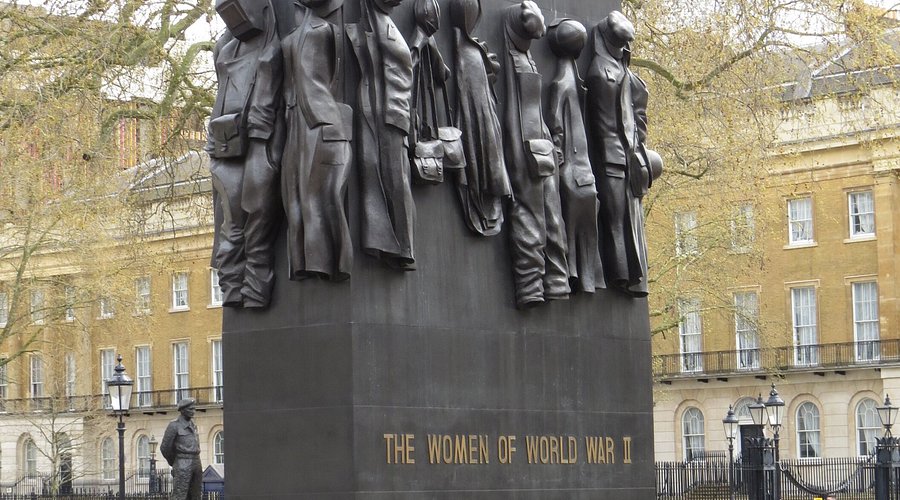
- Monument to the Women of World War II:Located on Whitehall, this monument features bronze sculptures of various wartime uniforms on pegs, symbolizing the millions of women who took on vital roles to support the war effort.
- Stairway to Heaven Memorial:A unique "inverted staircase" in Bethnal Green that commemorates the 173 civilians killed in a tragic 1943 crush at the local underground station during an air raid alert.
- Ruins of St. Dunstan-in-the-East:A hauntingly beautiful public garden set within the shell of a church destroyed during the Blitz in 1941, serving as a living reminder of the aerial bombardment's impact.
If someone is planning a day, an effective pattern is:
- Start with a museum narrative to get the timeline straight.
- Then use maps and memorial records to connect that narrative to streets and buildings.
Takeaway:Begin with a trusted narrative source, then “pin” it to place with evidence.
A Self-guided “evidence Walk” (map-first Itinerary; Optional)
- Stop 1:Choose one borough (e.g., East London, Docklands-adjacent, or central) and decide what question you’re testing: “Where did raids concentrate?”
- Stop 2:Use Bomb Sight for a Blitz-era layer (1940–41).
- Stop 3:Cross-check with LCC Bomb Damage Maps for cumulative damage (1940–45).
- Stop 4:Read a memorial inscription entry when available to connect place to people and dates.
Takeaway:The best “WWII walk” is evidence-first and people-aware, not thrill-seeking.
How To Research A Specific Street Or Borough (step-by-step With Maps)
If you want a repeatable method that works for almost any London location, use this:
- Define the time question.Are you looking for Blitz-era incidents (1940–41) or broader wartime damage (1940–45)?
- Check Bomb Sight for 1940–41 points.Record the nearest plotted incidents and dates, but remember the dataset window.
- Check LCC Bomb Damage Maps for cumulative damage.Note whether the building/street is marked light, severe, or destroyed.
- Read the “what the dataset includes” notes.This prevents false certainty (e.g., treating an absence as proof of safety).
- Only then summarise in one sentence.Example: “This street shows recorded Blitz-era incidents and later cumulative damage markings, suggesting repeated impact across the war years.”
Takeaway:Good local WWII research is mostly about asking the right time-bounded question-and using the right record set to answer it.
Myth Vs Reality (Blitz Spirit, “who Bombed First,” And Oversimplified Stats)
This section protects you from the most common misinformation traps: heroic simplifications, boundary confusion, and statistics stripped of context.
Why Numbers Differ (definitions, Boundaries, “London” Vs “civil Defence Region”)
If you’ve ever seen three different “bomb totals” in three different articles, it’s usually not because someone is lying. It’s because “London” can mean different areas and because record sets track different things.
Two examples make this concrete:
- Historic England’s bomb totalsare framed for Greater Londonin a specific date window (Oct 1940 to June 1941).
- IWM’s tonnage and civilian death estimaterefers to broader wartime bombing and “enemy action,” which covers more than one campaign and can use different inclusion criteria.
The honest move is to name the scope every time: geography + dates + what’s being counted.
Takeaway:When stats feel inconsistent, check scope before you judge accuracy.
What Careful Sources Agree On (with Citations)
Despite scope differences, high-quality sources converge on core truths:
- London suffered sustained raids in 1940–41 and later heavy V-weapon attacks in 1944–45.
- Recorded bomb impacts during peak Blitz months were vast, and civilian casualties were significant.
- The war reshaped London physically and socially, with uneven impact across districts.
Two Myths Worth Retiring Completely:
Myth:“The Tube was simply opened as a shelter from the start.” Reality: TfL’s archival guide shows it was contested-Londoners sheltered there in huge numbers and practical systems followed public behaviour.
Myth: “The war went quiet after 1941.” Reality: Historic England frames a lull-but also details renewed late-war raids (“Baby Blitz”) and then V-weapons that reshaped the threat entirely.
Takeaway:You don’t need perfect numbers to be precise-you need careful claims anchored to reliable sources.
Frequently Asked Questions
This section gives quick, quotable answers to the questions people ask most, using the same scope-and-source discipline as the main article.
Was London Involved In World War II?
Yes. London was a central wartime hub and a major target of air raids, especially during the Blitz and later V-weapon attacks.
Why Did The Germans Bomb London?
They aimed to disrupt the war effort and damage morale. Over time, the campaign intensified into sustained city attacks, with tactics changing as losses and conditions changed.
What Was The Blitz?
The Blitz was Germany’s sustained bombing campaign against Britain from September 1940 to May 1941, with London repeatedly targeted and night raids becoming dominant.
How Many Bombs Were Dropped On London In WWII?
Counts vary by dataset and boundary. Historic England records almost 28,000 high explosive bombs (plus 400+ parachute mines) landing on Greater London in a key 1940–41 window.
What Part Of London Was Bombed The Most?
“Most bombed” depends on the record set, but major damage often clustered around poorer districts and areas tied to docks, industry, and dense housing. Maps provide the most reliable pattern view.
Was London Badly Damaged In WWII?
Yes. IWM estimates more than 12,000 metric tons of bombs fell on London and nearly 30,000 civilians were killed by enemy action, with damage recorded in detailed maps and archives.
When Did The Blitz Start And End?
Major London raids began on 7 September 1940. The Blitz is commonly dated through May 1941, with Historic England recording heavy bomb impacts into early June 1941.
What Was The “Baby Blitz”?
It’s a late-war return to intensified bombing after the 1941–44 “Lull,” used to describe renewed attacks before and alongside the V-weapon threat.
What Were V-1 And V-2 Attacks On London?
V-1s were pilotless flying bombs and V-2s were rockets. Historic England places major V-2 launches toward London and Norwich between 8 Sept 1944 and 27 March 1945.
When Was The Last Major Attack On London In WWII?
One of the final, widely cited V-2 strikes on London occurred on 27 March 1945; an IWM memorial record documents a deadly V-2 impact that morning at Vallance Road.
How Did Londoners Protect Themselves During Raids?
Through ARP measures, shelters (home and public), blackouts, and civil defence. Protection varied, and safety was never guaranteed, as shelter incidents like Bethnal Green show.
What Was Daily Life Like In London During WWII?
It was shaped by blackouts, rationing, disrupted sleep, and repeated alerts-alongside routines of work, school, and community support under strain.
What Happened At Bethnal Green In 1943?
A crush in a Tube shelter stairwell on 3 March 1943 killed 173 people, showing how wartime danger could come from panic and crowd pressure, not just bombs.
Did Britain Bomb Germany First?
Air warfare escalated in stages, with raids and reprisals evolving during 1940. Because “first” depends on definitions and targets, it’s best treated as a scope question rather than a slogan.
Where Can I See WWII London History Today?
You can explore it through trusted museums and archives, then connect stories to places using Bomb Sight and the LCC Bomb Damage Maps to research specific streets and buildings.
Quick Recap
London in World War IImakes the most sense when you treat it as five phases, then verify claims with the right record set-Bomb Census points for the Blitz window, and LCC maps for cumulative damage across 1940–45. If this page helped, sharing it with a student, traveller, or local-history group is one small way to keep careful, evidence-based history louder than myth.
Jump to
London In World War II: Where Bombs Fell, How People Lived, And What You Can Still See
Understanding London In World War II
London’s WWII Story In 5 Phases
Why London Was Targeted (strategy, Geography, Symbolism)
Where London Was Hit Hardest (a Borough-by-borough Way To Think About It)
How Londoners Survived (civil Defence + Daily Life)
Tragedies, Turning Points, And What They Reveal
Evidence You Can Check Yourself (maps, Archives, And Primary Sources)
How To Explore London’s WWII History Today (visitor-friendly, Respectful)
Myth Vs Reality (Blitz Spirit, “who Bombed First,” And Oversimplified Stats)
Frequently Asked Questions
Quick Recap

James Rowley
Author
James Rowley is a London-based writer and researcher covering London life, cultural geography, London travel, live London webcam pages and selected public figures across entertainment, sport, business and public life.
For over 15 years, he has focused on verified sources, first-hand local context and clear explanations that help readers understand both places and people more deeply. His work combines street-level London knowledge with careful research into career credits, media work, business interests and, where relevant, transparently explained net worth estimates.
He writes and reviews articles published on LondonWebcam.
Latest Articles
Popular Articles