London’s Illuminated Bridges - A Nighttime Walk Along The Thames
Experience London after dark with a nighttime walk along the Thames, where illuminated bridges reveal history, architecture, and art through light.
Author:James RowleyJan 17, 20261.6K Shares98.5K Views
Experiencing London's Illuminated Bridges After Dark
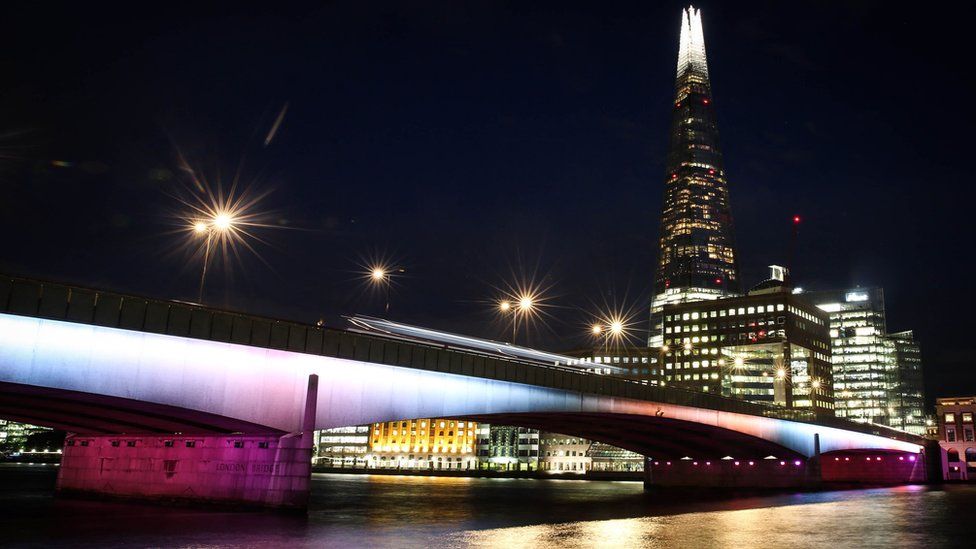
I stood on the South Bankat twilight, watching London Bridge shift from grey stone into a ribbon of moving light. In that moment, the Thames felt less like a river and more like an open-air gallery.
Every evening from dusk until 2 am, nine bridges across central London glow as part of the Illuminated River project, the world’s longest public art commission. Stretching for more than three miles along the Thames, the installation transforms everyday crossings into a connected artwork that reveals architectural details, reflects centuries of history, and links London’s neighbourhoods through light.
Free to experience and accessible year-round, London’s illuminated bridgesare best enjoyed on foot along the Thames Path, where each structure tells its own story after dark.
Before getting into what makes each bridge unique, here’s a quick overview to help you plan your visit.
London’s Illuminated Bridges - At A Glance
- Project name:Illuminated River
- Number of bridges:9
- Location:Central London, River Thames
- Distance covered:~2.5 miles (4 km walking route)
- Illumination times:From dusk until 2 am, every night
- Cost:Free
- Best time to visit:Blue hour (30-45 minutes after sunset)
- Best way to see them:Walking the South Bank and Thames Path
What Is The Illuminated River Project?
The Illuminated River is a large-scale public art project transforming London’s central Thames bridges with dynamic LED lighting. Designed by American light artist Leo Villareal, working with British architects Lifschutz Davidson Sandilands, the project launched in 2019 and was completed in 2021.
Rather than treating each bridge as a standalone landmark, the project views the Thames as a single canvas. Each bridge receives its own colour palette and movement style, programmed so the light sequences never repeat exactly. The result is a living artwork that evolves night after night while respecting the character and function of each structure.
Environmental impact assessments guided every stage of the design. Studies on birds, bats, and river ecology shaped lighting levels and colour choices, ensuring the installation enhances the city without disrupting wildlife. Energy-efficient LED technology allows the bridges to glow nightly while minimising power use.
What follows is a closer look at each illuminated bridge, moving from east to west along the river, and how light transforms these everyday crossings into one of London’s most memorable nighttime experiences.
1. London Bridge
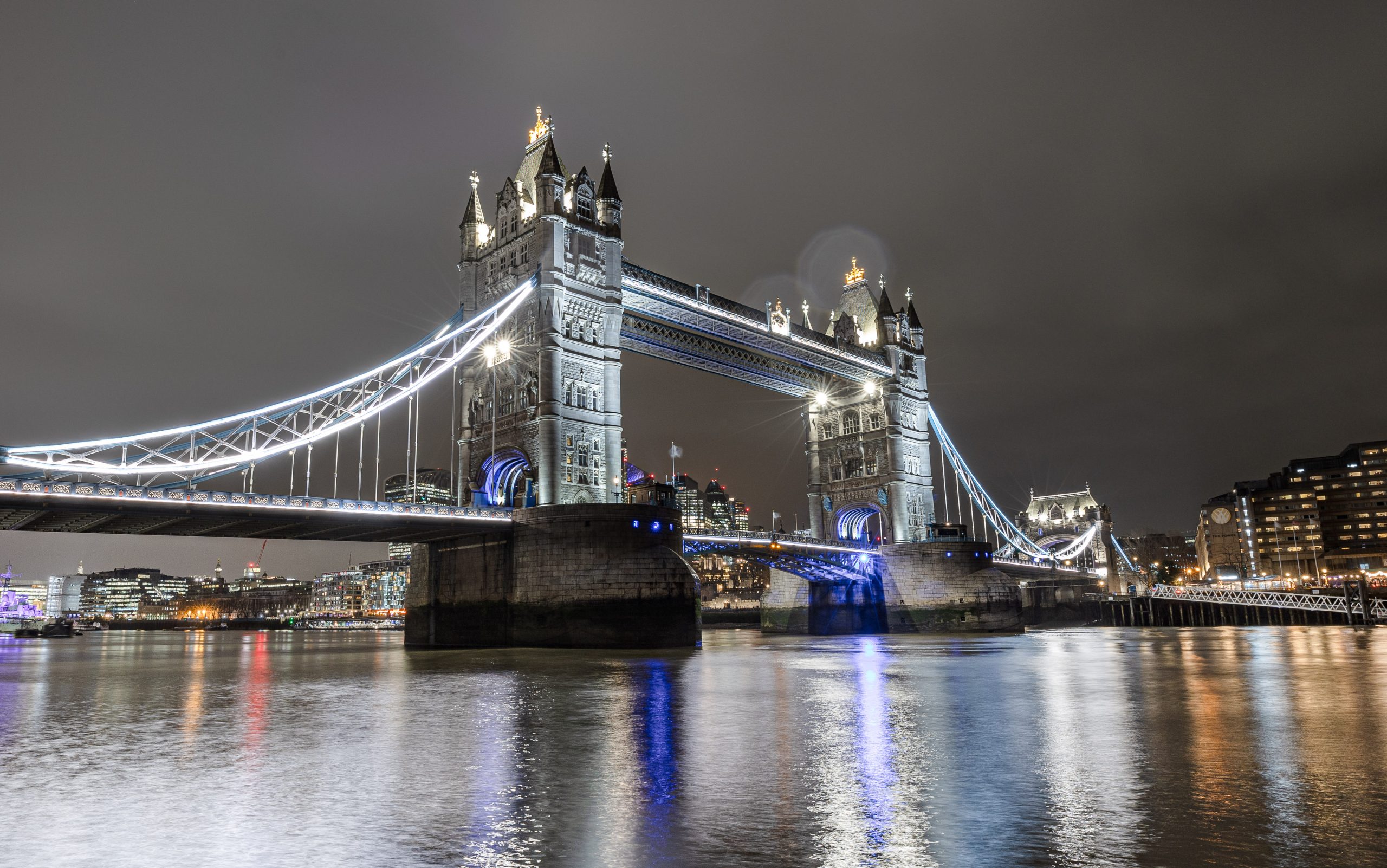
London Bridge features warm colors filling the structure, reflecting the cultural buzz and constant movement characterizing the area. The lighting emphasizes the bridge's modern design while acknowledging its ancient heritage as London's original Thames crossing.
A bridge has stood at or near this site since Roman times. Today's structure, completed in 1973, looks utilitarian by day but transforms dramatically after dark. The warm illumination creates an inviting glow visible from both riverbanks.
The area surrounding London Bridge pulses with activity: Borough Market's food stalls, office workers crossing to Southwark, tourists heading to the Shard. The lighting design captures this energy through subtle animations suggesting perpetual motion.
2. Cannon Street Railway Bridge
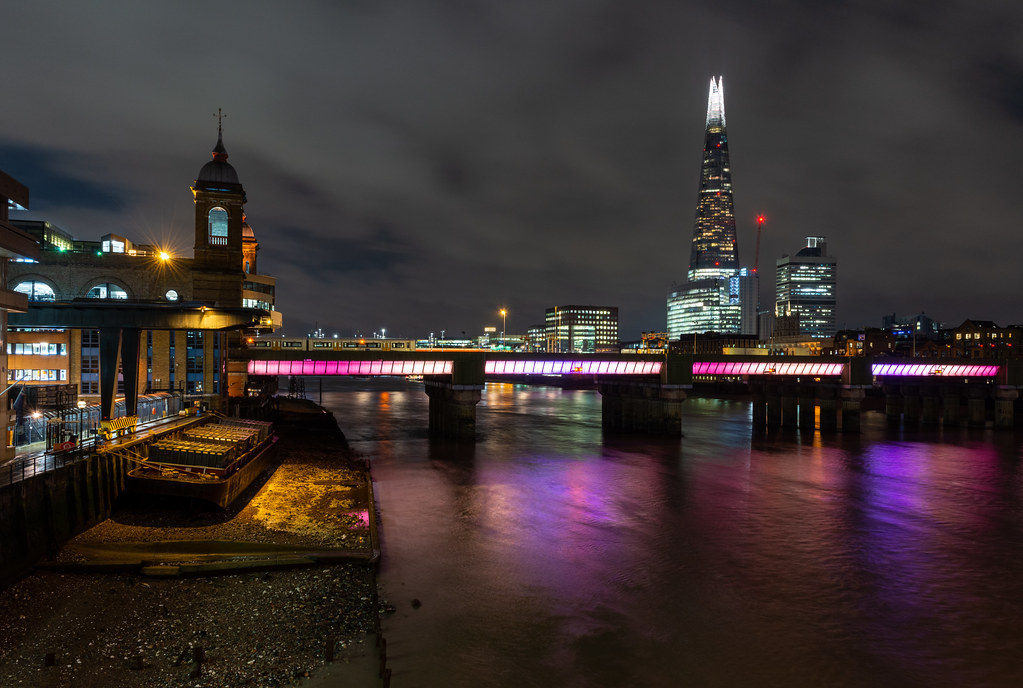
The Cannon Street Railway Bridge features dynamic colors that complement the motion of trains running along the bridge. This functional railway crossing often goes unnoticed by tourists, but its illumination reveals its industrial beauty.
The lighting responds to train movement, creating visual rhythms matching the bridge's primary purpose. When trains cross overhead, light sequences acknowledge their passage. During quiet periods between services, gentler patterns maintain visual interest.
This bridge demonstrates how Illuminated River doesn't just decorate structures but celebrates their function. Railway bridges deserve recognition as engineering achievements that shaped London's growth.
3. Southwark Bridge
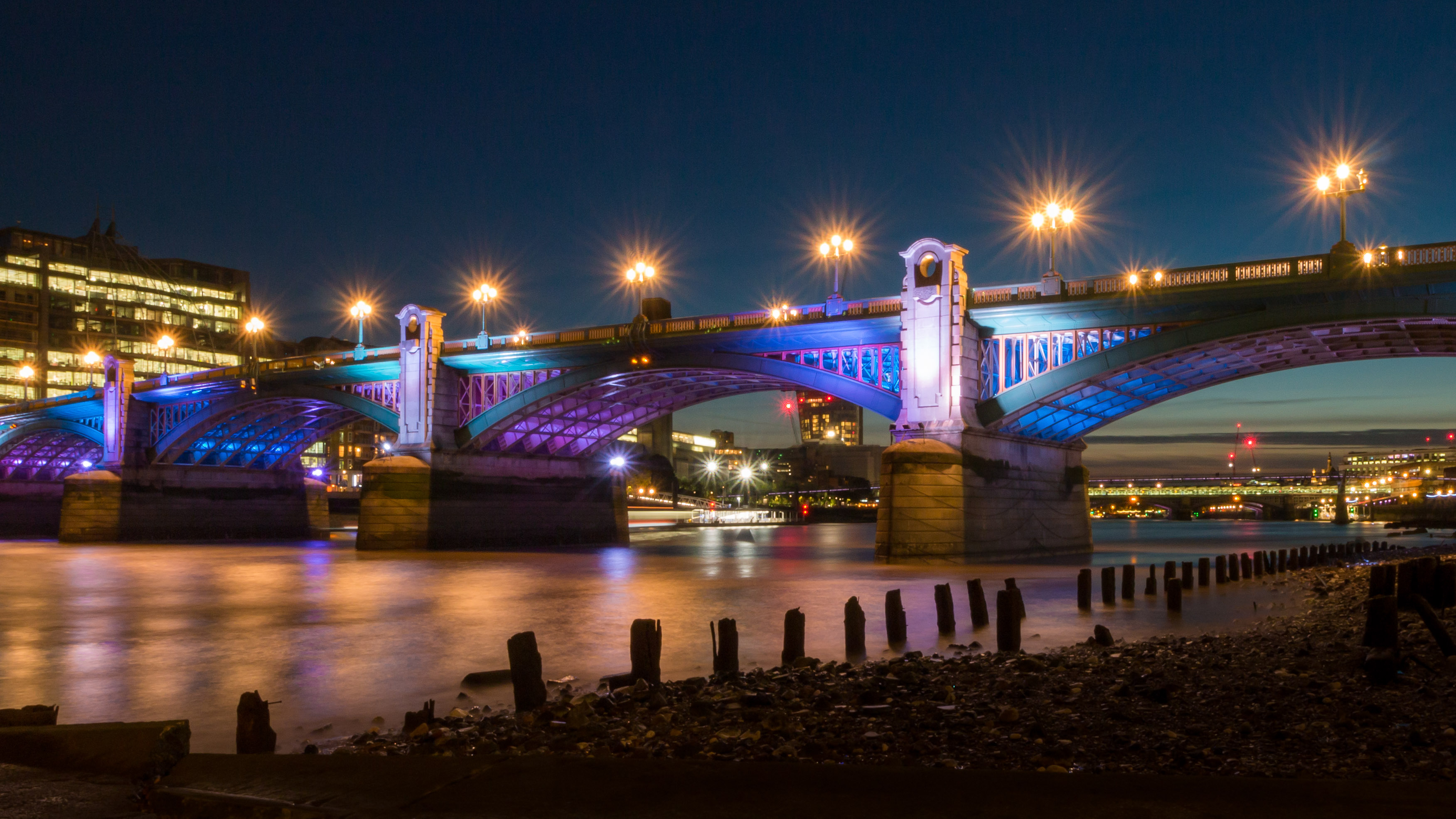
Southwark Bridge draws inspiration from impressionist paintings with highly saturated colors, creating an artistic atmosphere. The color palette changes more dramatically here than on other bridges, with bold hues suggesting painted brushstrokes.
Built in 1921, Southwark Bridge connects the City's financial district with Southwark's cultural venues, including Tate Modern and Shakespeare's Globe. The artistic lighting style suits this creative corridor.
Photographers love this bridge for its color variety. The saturated tones photograph beautifully, especially during blue hour when natural twilight complements artificial illumination.
4. Millennium Bridge
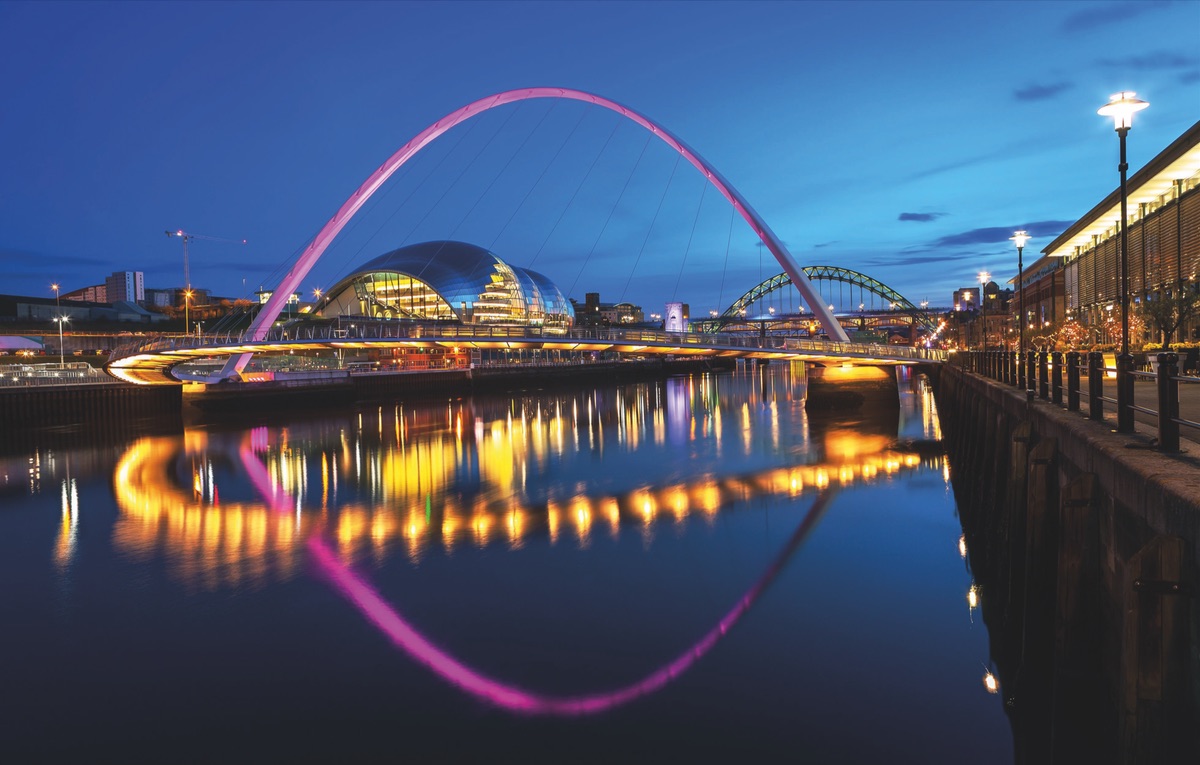
Millennium Bridge features a pulse of light emphasizing people on this pedestrian bridge, casting light on their faces. As London's first new pedestrian Thames crossing in over a century, it deserves illumination, celebrating the human scale.
The bridge connects St. Paul's Cathedralwith the Tate Modern, handling constant foot traffic from morning to night. Light sequences respond to pedestrian movement, creating subtle animations as people cross.
Initially known as the "wobbly bridge" due to lateral vibration issues that were resolved shortly after its opening, the Millennium Bridge now stands as an engineering success. Evening illumination transforms it into a blade of light crossing the Thames.
5. Blackfriars Bridge
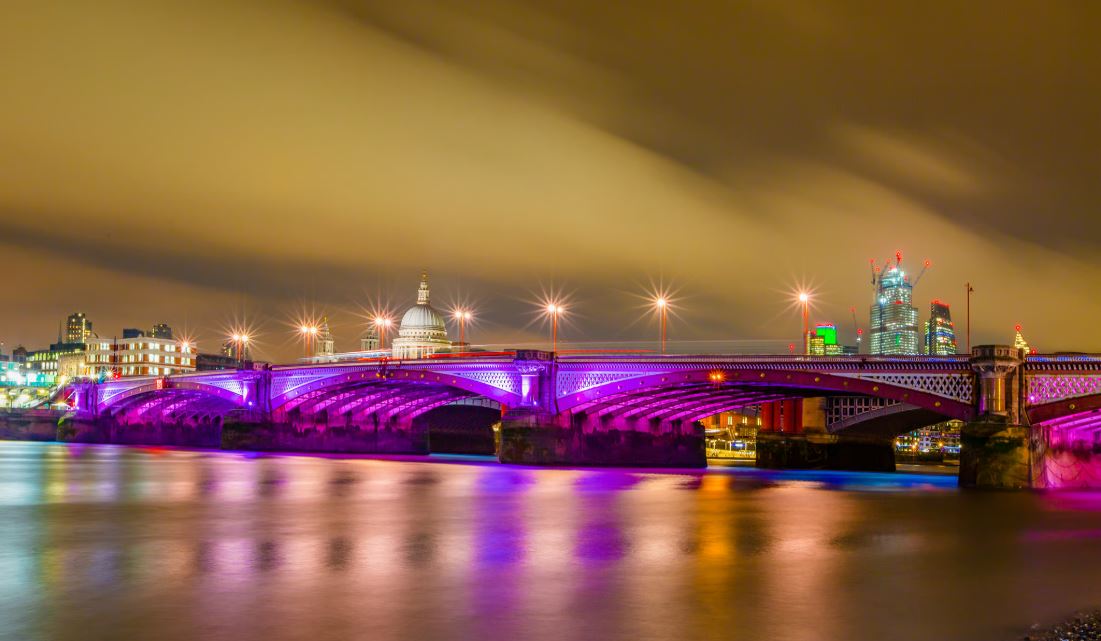
Blackfriars Bridge illumination complements the red pillars supporting the structure. The bridge's distinctive red-painted columns make it immediately recognizable among Thames crossings.
Built in 1869, Blackfriars serves both road and rail traffic, with Blackfriars Railway Bridge running parallel. The lighting design respects this complexity, highlighting architectural elements without overwhelming them.
The bridge's name commemorates a Dominican priory that once stood nearby. Evening illumination gives this heavily trafficked crossing dignity often overlooked during busy daytime hours.
6. Waterloo Bridge
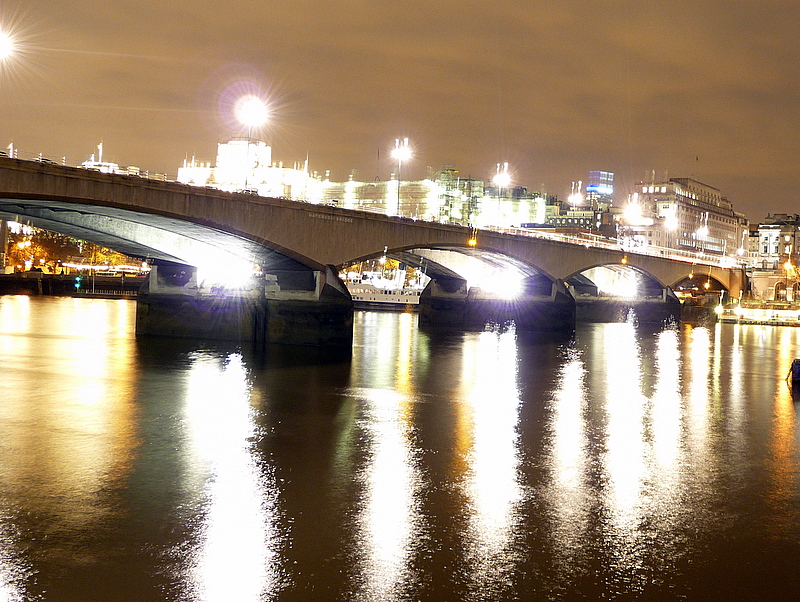
Waterloo Bridge features illuminations in constant movement, speaking to the flowing river beneath. This elegant five-arched structure deserves its reputation as London's most beautiful Thames crossing.
Built during World War II largely by women workers while men served in the military, Waterloo Bridge earned the nickname "Ladies' Bridge." The flowing light patterns honor both the builders and the river's perpetual motion.
From this bridge, views extend in both directions: Westminster and the London Eyeto the west, the City's skyscrapers to the east. The lighting creates visual connections with landmarks visible from the bridge.
7. Golden Jubilee Footbridges
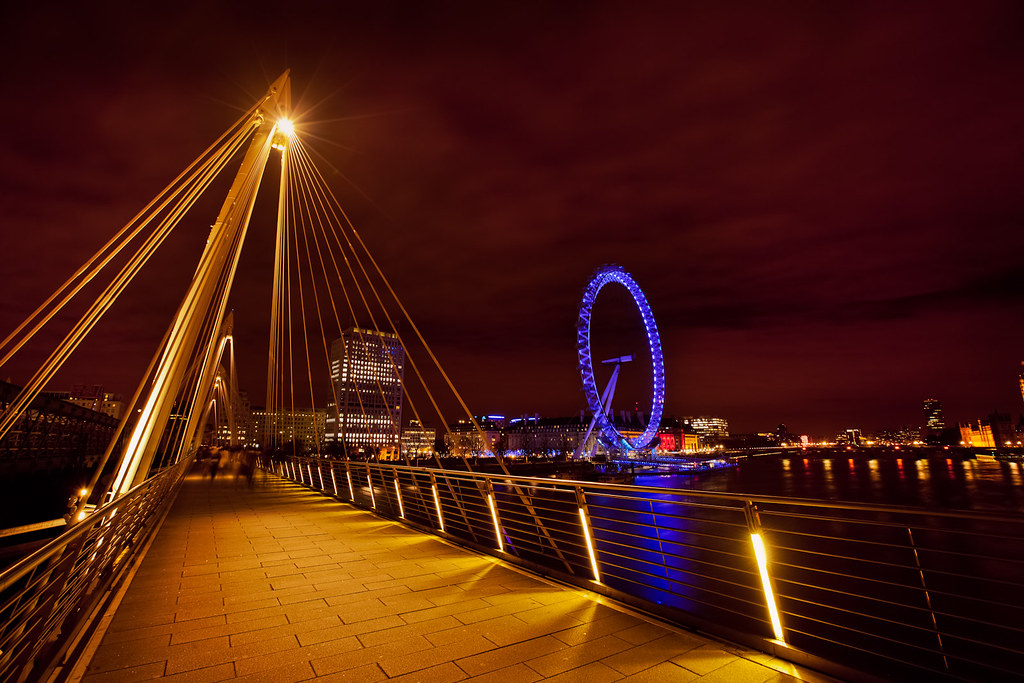
Golden Jubilee Footbridges receive monochromatic lighting mirroring the modern design of these structures. These twin pedestrian bridges flank Hungerford Railway Bridge, creating a three-span crossing.
The restrained monochrome palette suits the bridges' contemporary design. White and grey tones create elegant simplicity, contrasting with more colorful illumination on neighboring bridges.
Heavy pedestrian traffic crosses these bridges, accessing the Southbank Centre and Embankment Gardens. The clear, bright illumination provides practical visibility while creating architectural drama. For anyone exploring London after dark, these bridges are among the best places to visit in London at night, offering both safety and stunning views of the Thames and city skyline.
8. Westminster Bridge
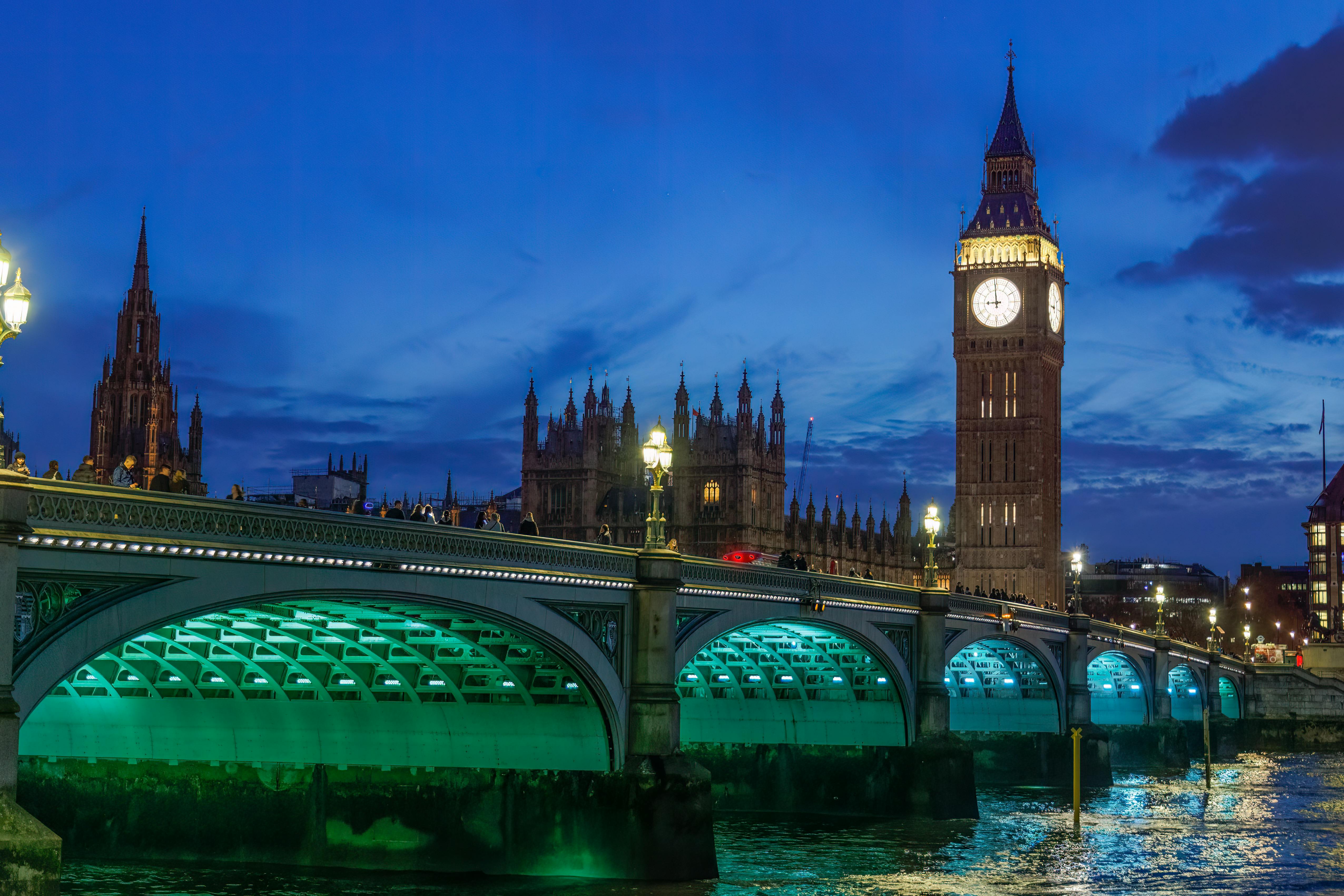
Westminster Bridgefeatures soft green tones highlighting the latticework of this Grade II-listed structure. The green color reflects the House of Commons' traditional green theme.
This bridge offers iconic views: Big Ben and Parliament to the north, the London Eyeto the south. Tourists crowd the bridge throughout the day, but evening illumination provides a fresh perspective on familiar landmarks.
Built in 1862, Westminster Bridge replaced an earlier structure. The cast-iron construction features decorative details invisible during the day but revealed through careful lighting.
9. Lambeth Bridge
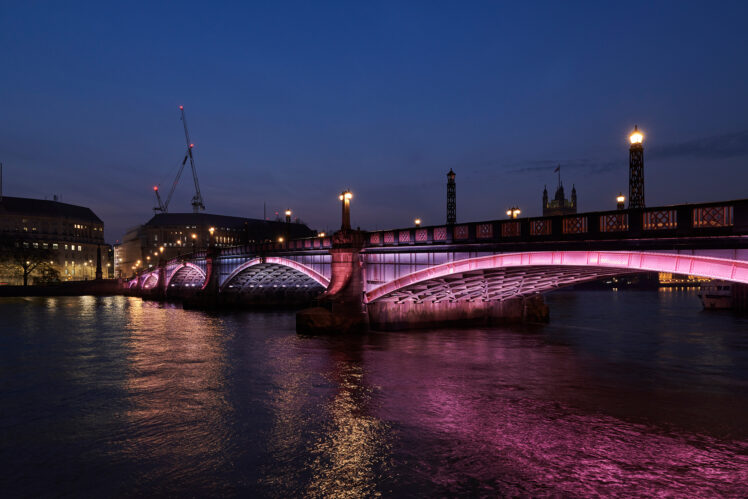
Lambeth Bridgereceives warm light radiating under handrails, working with the red underside of the bridge. The red color scheme connects to the House of Lords' traditional red theme.
This bridge marks the western extent of the Illuminated River project. The warm tones create a gentle conclusion to the light sequence stretching from London Bridge.
Lambeth Bridge handles significant traffic but remains relatively unknown compared to Westminster Bridge nearby. Illumination elevates it from an overlooked crossing to an appreciated architectural element.
Best Viewing Spots For Illuminated Bridges
The South Bank provides excellent walking routes with unobstructed bridge views. The Thames Path runs continuously, allowing you to visit all nine Illuminated River bridges in a single evening walk. The route covers approximately 2.5 miles, taking 1 to 1.5 hours depending on stops.
The North Bank offers equally good views from different angles. Victoria Embankment provides paved walkways with benches for sitting and observing. Tower Hill and areas around the Tower of London offer prime Tower Bridge viewing locations.
Elevated viewpoints provide dramatic perspectives. Sky Garden offers free panoramic views across the Thames, capturing multiple illuminated bridges simultaneously. The Shard's viewing platforms on floors 69 and 72 provide spectacular 360-degree city views, including bridges.
River level access appears during low tide. Check tide times before attempting to access the riverbank directly beneath bridges. Muddy and uneven terrain requires appropriate footwear, but the unique perspective rewards careful exploration.
Photography Tips For Illuminated Bridges
- Blue Hour Timing:The period just after sunset, when the sky glows deep blue, provides ideal lighting. Natural twilight balances artificial bridge illumination, preventing harsh contrasts. Aim to arrive 30-45 minutes after sunset.
- Long Exposure Techniques:Capture moving light sequences and create traffic light trails using a tripod. Set ISO to 100-200 for minimal grain, apertures around f/8-f/11 for sharpness, and experiment with 5-15 second exposures.
- Reflections in the Thames:Calm water doubles the visual impact. Shoot during calm conditions, ideally at low tide, for clear reflections of the bridges.
Foreground elements add depth and context. Include riverbanks, boats, or architectural details framing bridge views. Leading lines from embankment walls or railings draw viewers' eyes toward illuminated structures.
Illuminated River Official Boat Tours
Official boat tours provide unique perspectives, gliding beneath all nine illuminated bridges with commentary from City of London and Westminster Guides explaining each bridge's history. Tours depart from Tower Pier, lasting approximately 40 minutes.
The water-level viewpoint reveals lighting details invisible from land. Looking up at the illuminated bridge undersides shows how light transforms structural elements. The sequential experience of passing beneath each bridge demonstrates how the art installation connects individual structures into cohesive artwork.
Tours operate regularly with departures scheduled throughout the evenings. Booking advance tickets guarantees availability, especially during peak tourist seasons. The onboard cafe bar provides refreshments as you cruise.
Environmental Considerations
Environmental impact assessments supported planning applications, with river bird breeding assessments by the London Wildlife Trust and bat activity surveys conducted by Thomson Environmental Consultants. Data collected guided design modifications, reducing impact on natural habitats while increasing environmental sensitivity.
LED technology provides energy efficiency critical for installations running nightly year-round. The lights consume significantly less power than traditional lighting while offering greater control over color and intensity.
The energy-efficient LED lighting connects seamlessly to Interact Landmark software, monitoring the installation from a single secure dashboard, detecting and managing faults, and performing remote diagnostics, improving asset management while reducing costs.
Planning Your Visit
- The bridges illuminate automatically from dusk until 2 am every evening, year-round. No tickets or reservations are needed for viewing from public areas, making Illuminated River freely accessible.
- Allow at least two hours for a complete walking tour covering all nine bridges. Start at either end, London Bridge in the east or Lambeth Bridge in the west. The continuous Thames Path makes navigation simple.
- Combine bridge viewing with other nighttime activities. Many riverside restaurants, pubs, and cultural venues provide perfect bases for watching the bridges between meals or shows.
People Also Ask
How Can I Get The Best View Of The Illuminated Bridges?
The best views of the illuminated bridges are often from vantage points along the Thames River. Consider visiting locations such as Southbank, the areas around Tower Bridge, or the viewing platforms at the London Eye for excellent perspectives. Additionally, walking across the bridges themselves provides unique photo opportunities and allows you to experience the illumination up close.
Is There Public Transportation Available For Reaching The Bridges?
Yes, London’s public transportation system is extensive and convenient. Many of the bridges are accessible via the London Underground, with nearby stations providing easy access. Buses and riverboats also offer scenic routes that can get you close to the bridges. Make use of transport apps or maps to plan your route effectively.
Can I Walk Across All Of London’s Illuminated Bridges At Night?
Most of London’s major bridges are open to pedestrians at all hours, allowing you to walk across them and enjoy their nighttime illuminations. However, it’s always a good idea to check for any maintenance work or temporary closures that might affect access. Official websites or local information boards can provide the latest updates on bridge accessibility.
Are There Any Food And Drink Options Available Near The Illuminated Bridges?
Yes, many of the areas around London’s illuminated bridges have a range of dining options. From cafes and pubs to fine dining restaurants, you can find a variety of places to enjoy a meal or a drink. Popular spots include Southbank, where there are numerous eateries with views of the Thames and the bridges. It’s a great way to combine a night walk with a dining experience.
Final Thoughts
London’s illuminated bridges change how we see this ancient city, turning everyday crossings into artworks that reveal architectural beauty and layers of history. Free to experience and open every night from dusk until 2 am, the installation invites anyone to walk the Thames and encounter the world’s longest public art commission.
Visit around blue hour for the best views, but any time after dark offers a striking reminder of how light can transform the familiar.
Jump to
Experiencing London's Illuminated Bridges After Dark
London’s Illuminated Bridges - At A Glance
1. London Bridge
2. Cannon Street Railway Bridge
3. Southwark Bridge
4. Millennium Bridge
5. Blackfriars Bridge
6. Waterloo Bridge
7. Golden Jubilee Footbridges
8. Westminster Bridge
9. Lambeth Bridge
Best Viewing Spots For Illuminated Bridges
Photography Tips For Illuminated Bridges
Illuminated River Official Boat Tours
Environmental Considerations
Planning Your Visit
People Also Ask
Final Thoughts

James Rowley
Author
James Rowley is a London-based writer and urban explorer specialising in the city’s cultural geography. For over 15 years, he has documented the living history of London's neighbourhoods through immersive, first-hand reporting and original photography. His work foregrounds verified sources and street-level detail, helping readers look past tourist clichés to truly understand the character of a place.
His features and analysis have appeared in established travel and heritage publications. A passionate advocate for responsible, research-led tourism, James is an active member of several professional travel-writing associations.
His guiding principle is simple: offer clear, current, verifiable advice that helps readers see the capital with informed eyes.
Latest Articles
Popular Articles