Quay London - West India Quay, South Quay & More
Explore Quay London with a London-based writer. From West India Quay’s heritage to South Quay’s towers, choose the right waterfront for living or leisure.
Author:James RowleyFeb 10, 2026
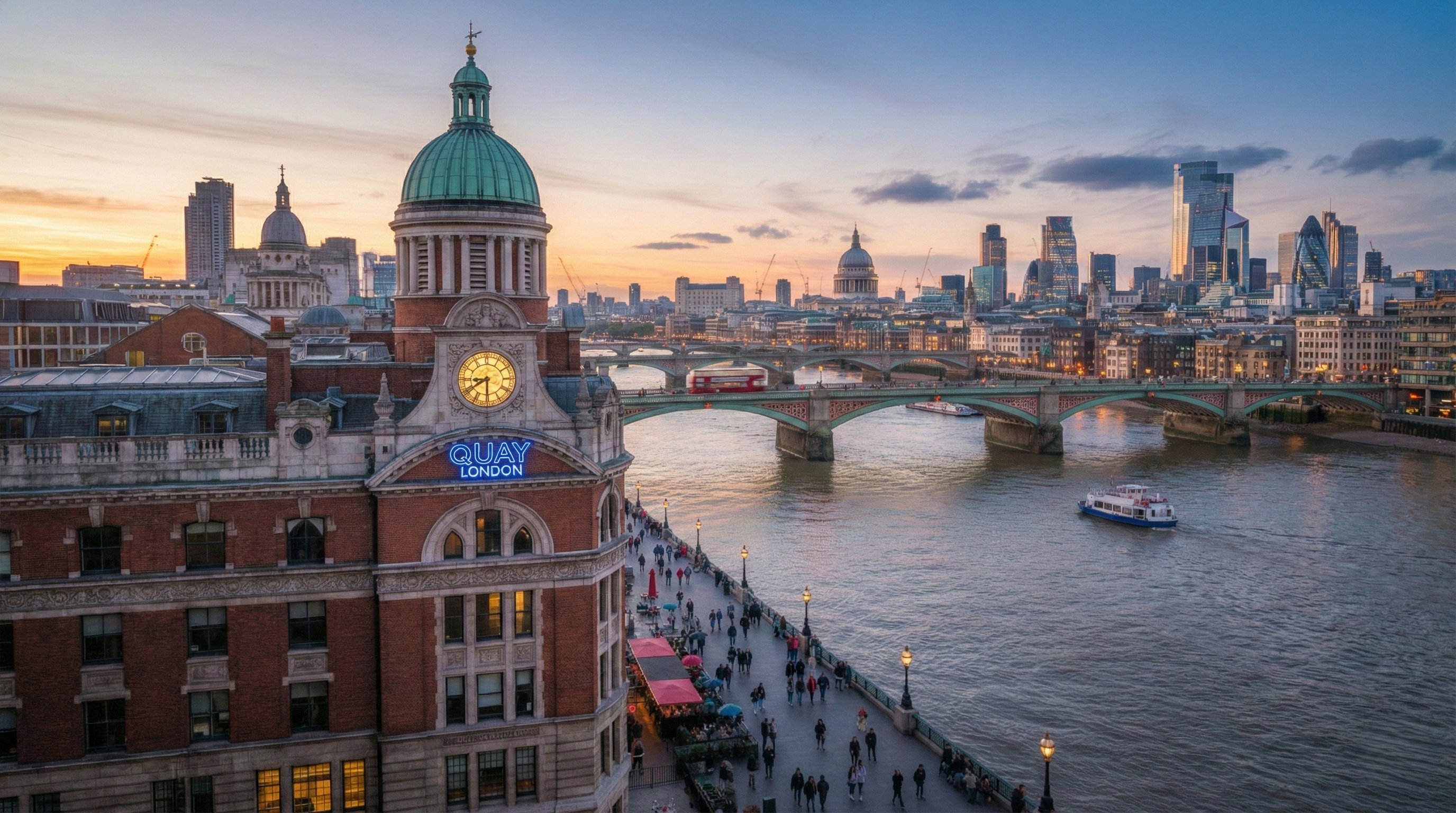
Quay London Uncovered: The Best Waterfronts For Living And Leisure
If you’ve typed quay londoninto search, there’s a good chance you’re not looking for a single, neat landmark.
You’re trying to decode a waterfront word that Londonuses in several different ways: a historic riverside edge, a Docklands place-name, a modern development label, or sometimes an events venue that’s borrowed the romance of the Thames.
This piece exists for that exact moment of confusion: when a listing, an invitation, or a half-remembered recommendation says quay, and you need to know which quay, where it is, and what it’s actually like.
Key Takeaways: The Quay Landscape
- West India Quay:Best for history buffs and dining. Features Georgian warehouses and the Museum of London Docklands.
- South Quay:Best for high-rise living. Home to skyscrapers like South Quay Plaza and strictly residential vibes.
- St Katharine Docks:Best for leisure. A marina filled with yachts, cafes, and a vacation atmosphere.
- Woods Quay:Best for luxury events. A private, architectural jetty on the Victoria Embankment, separate from the Docklands.
What A Quay Is
- Quay:a long structure at the water’s edge where boats can tie up to load/unload or board.
- Wharf:often used similarly in London; it’s the working edge where goods and people meet water.
- Dock:typically an enclosed water area often man-made) where ships are kept and worked.
The Takeaway:quay in London can mean the literal edge of the Thames, or it can be a clue-word in a place-name that’s doing a lot of marketing work.
Quick Disambiguation
If you meant QUAY, the eyewear brand, that’s a different search universe entirely. Most people searching for quay, London, though, are trying to anchor a location on London’s waterfront.
Section Takeaway:Quay London is best treated as a category of places, not a single pin on the map, and a quick purpose check gets you to the right one faster.
Which London Quay Fits Your Plan?
| If your plan is… | Start with… |
| Docklands history + a waterside walk with food options | West India Quay |
| Modern high-rise living near Canary Wharf links | South Quay |
| Marina leisure and a mini break feel near the Tower area | St Katharine Docks |
| Dock-neighbourhood living with a calmer, residential rhythm | Surrey Quays / Canada Water |
| A private event setting where the river is the backdrop | Woods Quay |
| Roman/medieval river history near classic landmarks | Three Quays Lower Thames Street |
The Heritage Of London’s Quays
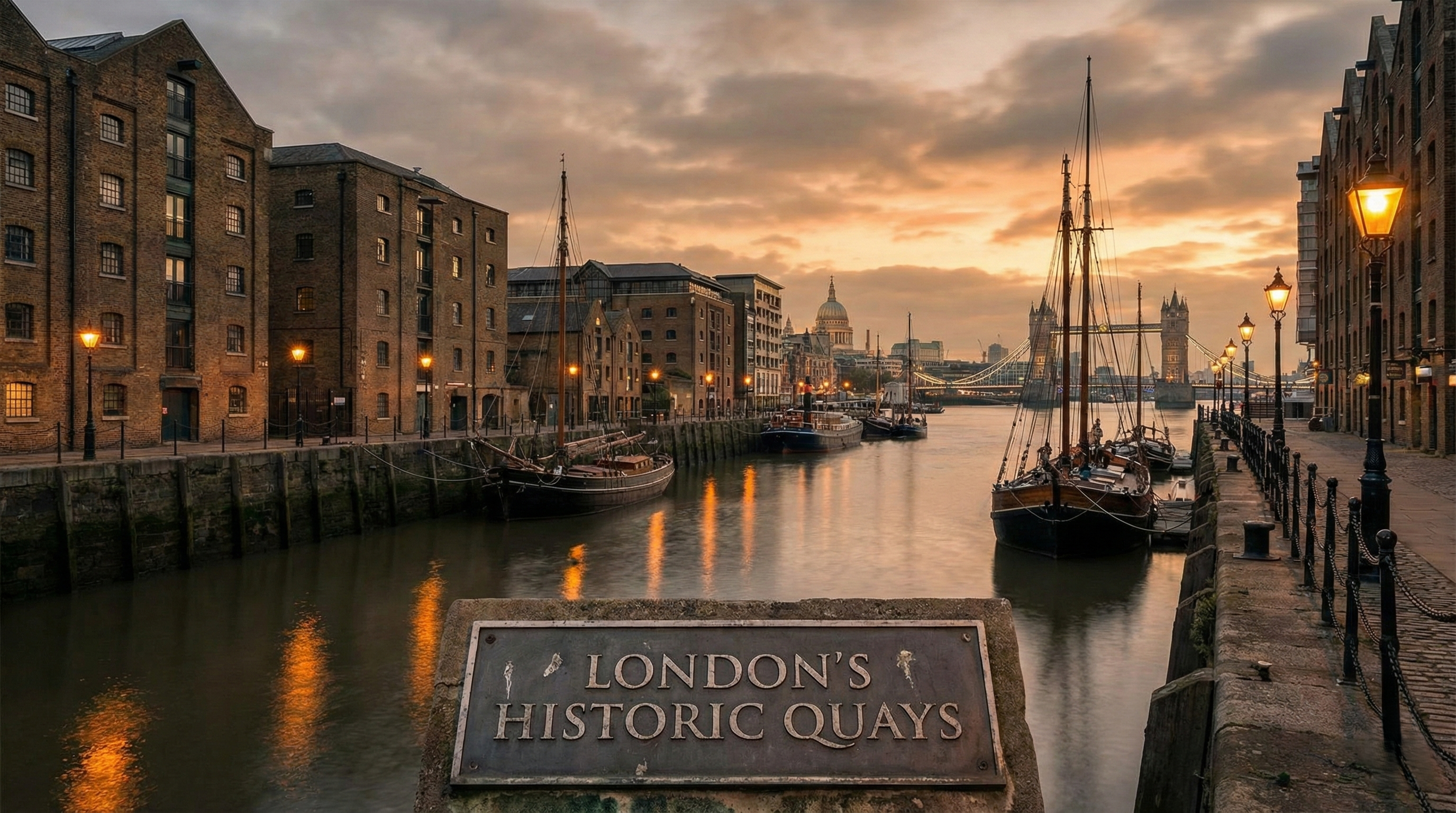
To understand London’s quays, it helps to treat the river like a long, changing border: sometimes a highway for trade, sometimes a line of control, sometimes a stage-set for the city’s self-image.
Here’s what the heritage lens adds:it stops quay being a decorative word and turns it into a way of reading power, work, and movement along the Thames.
From Legal Quays To Modern Waterfronts
For centuries, London needed to manage what came off ships and where it landed. The concept of Legal Quays captures that: designated places where goods could be legally unloaded under customs control.
Even if you never use the term again, it explains why so many historic quays cluster along specific stretches of river: the Thames wasn’t just scenery. It was infrastructure.
The Port Of London: Order On A Crowded River
The Port of London Authority describes being created to bring order to chaos and congestion on the Thames as different river users competed for space and business.
That’s a useful detail, because it corrects a common misconception: London’s waterfront wasn’t naturally elegant. It was often loud, contested, and intensely practical.
Docklands As A Turning Point
If a central Thames quay is about the city’s origins, Docklands quays are about London’s reinvention.
The London Museum notes that while West India Docks remained active long after the abolition of slavery, shipping later moved out of London in the 1980s, and the docks were transformed into today’s Canary Wharf district.
That one sentence explains why Docklands can feel like a different city: it’s a modern landscape built over a working port’s afterlife.
Section Takeaway:London’s quays aren’t interchangeable nice riverside bits; they're layers of trade, control, and redevelopment written along the water.
Prime Locations Along The Thames
This section gives you a usable mental map: not every quay, but the quays and quay-adjacent areas people most often mean when quay London appears in conversation, listings, or plans.
Central Thames
If someone’s itinerary includes a morning by Tower Bridge, they’re usually in the part of London where the river reads like history.
Three Quays: Why It Matters Historically
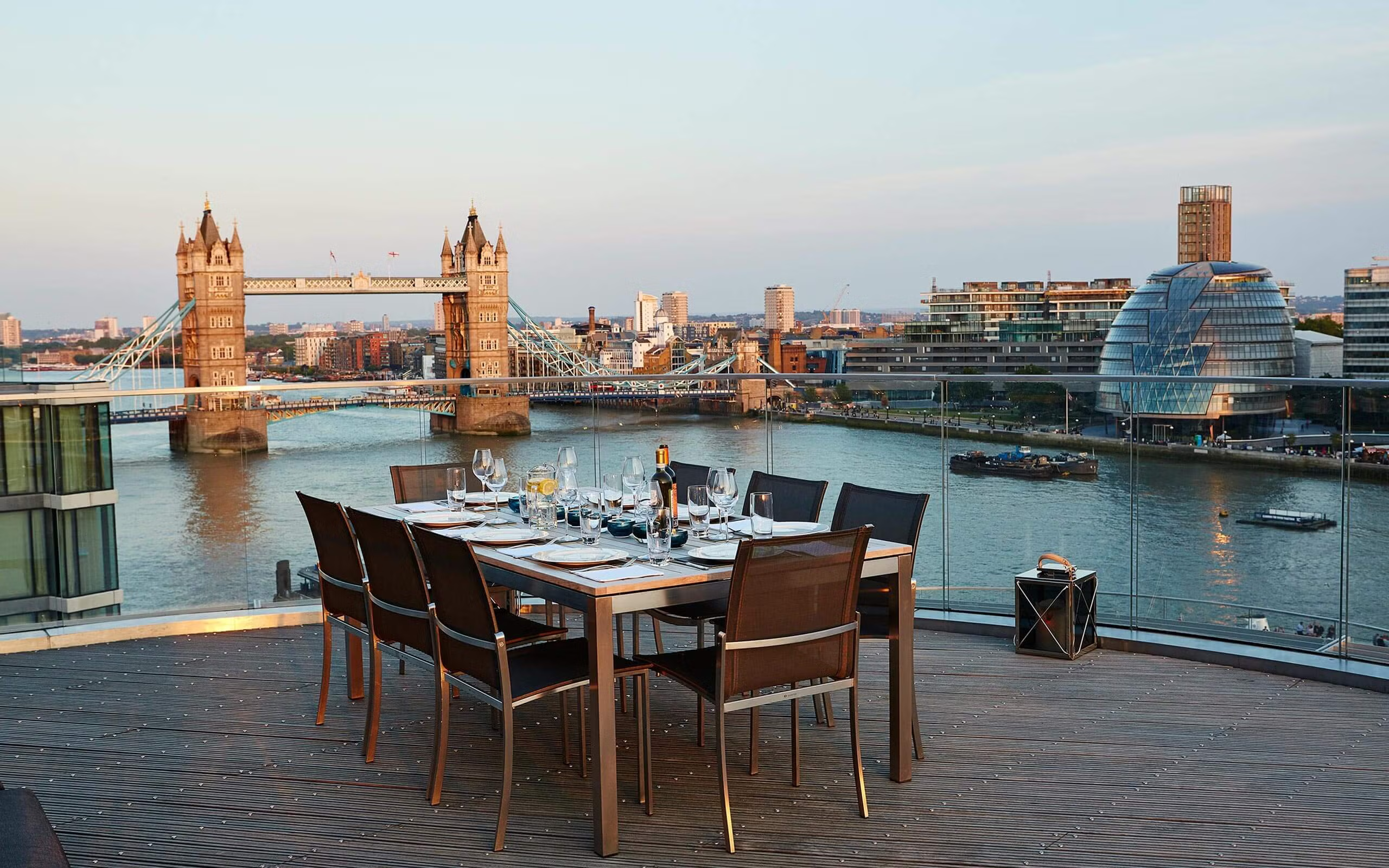
Historic England records the Roman riverside wall and wharves at Three Quaysas nationally significant, with Roman and medieval waterfront structures surviving as buried remains and exceptional archaeological preservation.
It also notes group value with other surviving riverside wall sections, including Sugar Quay and the Tower of Londonarea.
Illustrative scenario:
A visitor steps off the Tube near Tower Hill expecting postcard London. The surprise isn’t the Tower, it's realising the river edge nearby is not just a view, but a palimpsest: Roman engineering, medieval waterfront, modern traffic, and tourists all stacked into one stretch of embankment.
St Katharine Docks: London’s Marina-style Waterfront
If you want waterfront leisure rather than a long riverside walk, St Katharine Docks is the easiest answer. It’s a marina basin tucked close to the Tower of London, with boats, terraces, and the feeling of being slightly removed from the main street rush.
Illustrative Scenario:A visitor who’s been doing big landmarks all morning ducks into the docks for a reset coffee by the water, slower footsteps, and a calmer kind of London atmosphere.
Practical Tip:It’s the sort of place that changes with the calendar, busy when the weather is kind, quieter when it isn’,t so it helps to check what’s on before you go.
Section Takeaway:St Katharine Docks is less a Thames promenade and more a central marina break, which is why it’s often the best leisure pick.
Docklands & Canary Wharf
Docklands quays often feel cleaner, wider, and newer, because many of them are part of a redevelopment story.
West India Quay
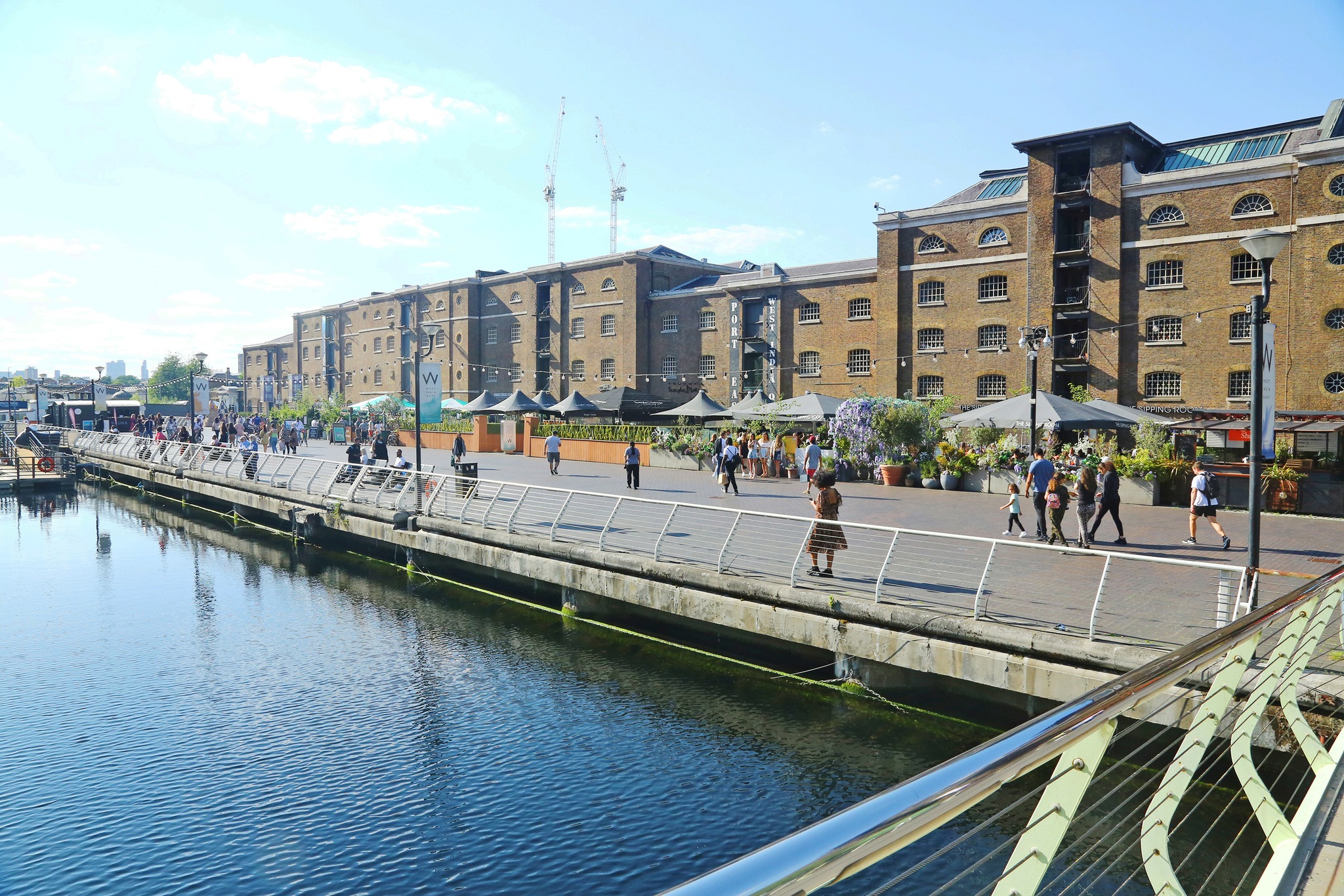
The London Museum’s West India Docks story makes West India Quay more than a restaurant-and-walkway destination: it frames the area as a place where London’s wealth, labour, and brutality intersected and how the physical docks later became the Canary Wharf landscape.
One detail worth knowing:London Museum Docklands sits in a surviving early-19th-century dock warehouse often referenced as No. 1 Warehouse, which helps explain why this part of Docklands still feels physically connected to its trading past.
The museum also frames the West India Docks story as inseparable from Caribbean plantation commerce and the wealth London built through its context that changes how the waterfront looks once you know what you’re seeing.
Section Takeaway:West India Quay is more than a pleasant dock-edge walk; it’s one of the clearest places to connect Docklands’ present to its past
North Quay / One North Quay

While often described generically as mixed-use, North Quay is actually undergoing a specific transformation. The flagship project, One North Quay, is being built as a vertical life sciences campus with laboratories and research hubs stacked 23 stories high.
Why this matters:It signals a shift from Canary Wharf being just about finance to becoming a science and tech hub. For residents and investors, this brings a different type of workforce and long-term stability to the area.
South Quay / South Quay Plaza
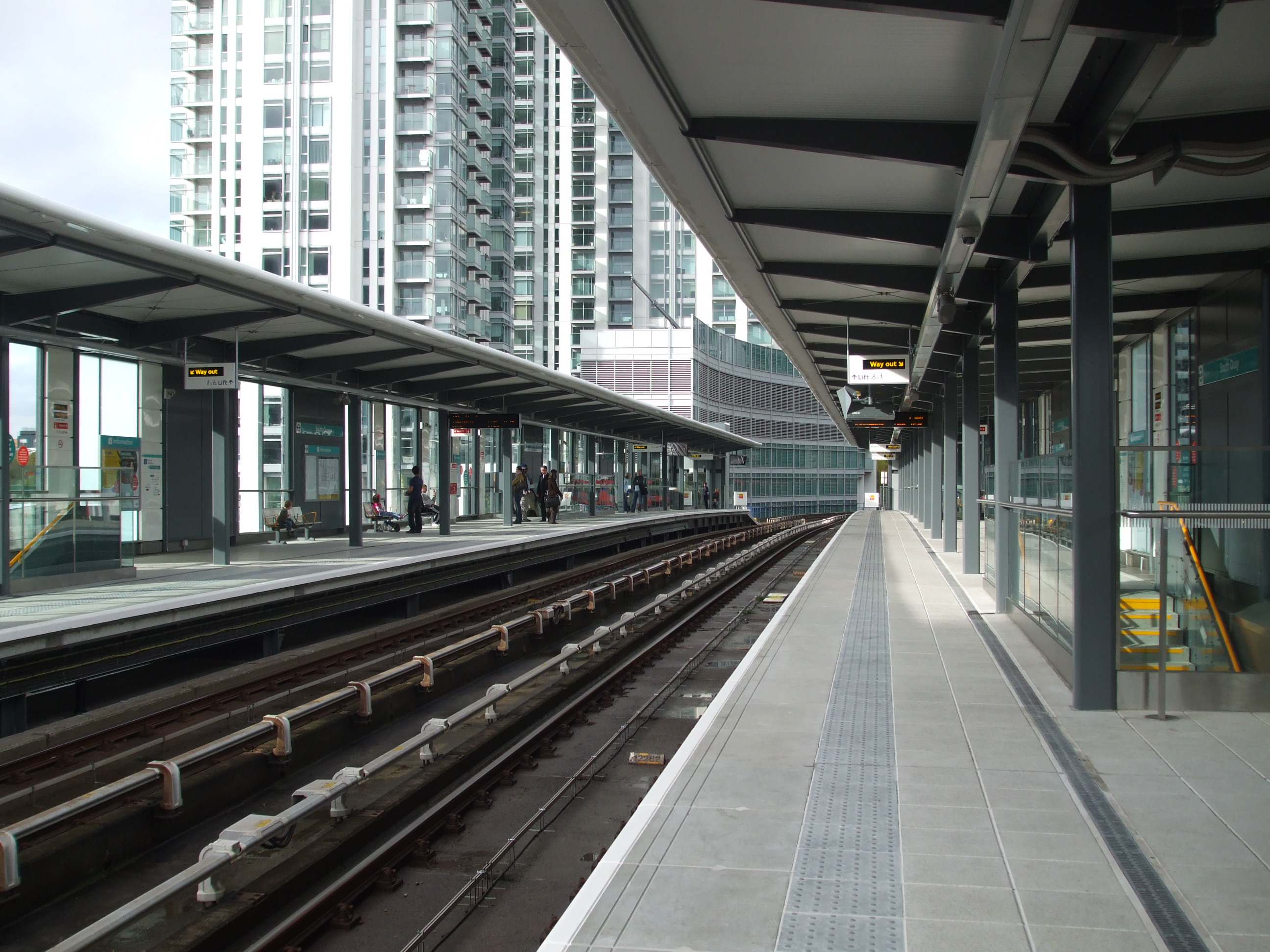
Berkeley’s South Quay Plaza page positions the development around Canary Wharf living, with local amenities and walk times framed as part of the pitch.
Treat this kind of information as directional, then verify specifics that matter to you, commute reality, service charges/building management, and how the area feels at night.
Southeast Dock Neighbourhoods
Surrey Quays is often searched because it sits close enough to the centre, but not central, in the category waterfront-adjacent without being a tourist riverfront.
A Canada Water history page from British Land describes Surrey Quays Shopping Centre opening in 1988 on an infilled section of Canada Dock and as part of wider former-dock redevelopment. For day-to-day orientation, the more practical anchor is Greenland Dock and the river connection.
Section Takeaway:The Thames gives you the classic London quays; Docklands gives you redevelopment quays; the southeast gives you dock-neighbour quays, choose based on what you want to feel and do.
Experience And Setting At Quay London
This is which quay? What's it like? Because waterfront London isn't in a single mood. A quay can feel like a promenade, a corridor, a wind tunnel, or a quiet edge where the city finally lowers its voice.
What A Quayside Day Feels Like
Illustrative Scenario:
A couple plans a riverside stroll and expects calm. They get two Londons at once: sun on the water, and a steady churn of footsteps, traffic, and the occasional smell of the river at low tide. The setting isn’t peaceful. It’s alive, and that’s the point.
Illustrative Scenario:
A commuter chooses Docklands because it looks efficient on a map. On the ground, the experience is sharper: wider walkways, taller buildings, more wind off the water, and a sense of the city built in chapters of old dock edges repurposed as public realm.
Local Insight:If you visit South Quay or cross the footbridges in winter, dress warmer than you think you need to. The cluster of tall skyscrapers creates a canyon effect or wind tunnel where gusts can be significantly stronger than in central London. Locals know to hold onto their hats literally when crossing the South Quay footbridge.
Illustrative Scenario:
A resident near Surrey Quays likes the water because it changes the neighbourhood’s rhythm. Weekdays are practical; weekends widen out. The water becomes a reference point, not a spectacle.
Choosing The Right Quay For Your Purpose
A quick way to choose without overthinking it:
- Sightseeing and London texture:the central Thames edges near historic landmarks.
- Modern city energy:Docklands / Canary Wharf quays.
- Residential waterfront feel:southeast dock neighbourhoods.
Staying Near A Quay: What Makes A Good Base
If quay is part of a stay, ask one simple question: Do you want to walk out into London or commute into it?
- If you want London to begin when you step outside, the central Thames areas have the advantage.
- If you’re happy to commute but want a modern base, Docklands often fits.
One example often associated with the Tower area is Cheval Three Quays, positioned as serviced apartments beside the Tower of London, useful as a reference point for central by the river stays.
Section Takeaway:The best quay is the one that matches your purpose: central quays for immediate London, Docklands for modern access, dock neighbourhoods for residential calm.
Fine Dining And Entertainment
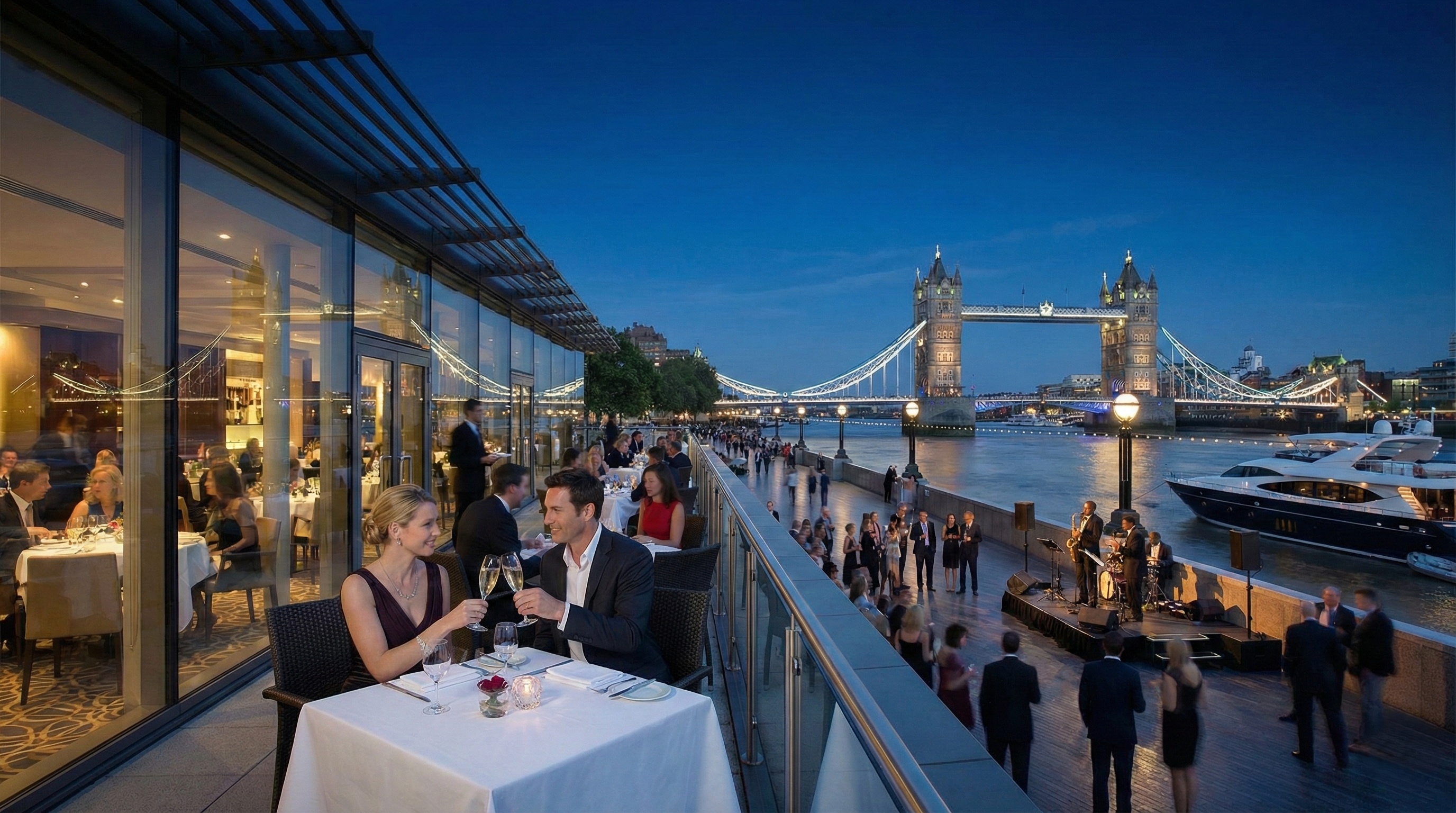
This section helps you avoid a common London mistake: assuming the water guarantees a great night out. A quay gives you a setting. It doesn’t guarantee sound levels, service style, or value.
What Waterside Really Signals In London
A waterside address usually signals:
- Views and atmosphere:especially at golden hour
- Seasonality:it can be magical in summer, punishing in winter wind
- Crowd patterns:tourist-heavy in the central Thames; after-work heavy in business districts
How To Pick A Spot Without Hype
Illustrative scenario:
Someone books riverside dining for a birthday because the photos look cinematic. The night is fine, but the table is inside, the view is partial, and the most memorable part is the walk outside afterwards.
The lesson:book the experience you actually want, not the marketing adjective.
Practical selection cues:
- If the view matters, confirm the window/terrace seating policy before you go.
- If conversation matters, check whether it’s positioned as a party venue or a dining room.
- If you’re going in winter, plan for wind exposure and the walk between transport and the venue.
Events And Nightlife: What To Check Before You Commit
Before committing to a quayside event:
- Last transport options, especially if you’re not in Zone 1
- Step-free access if needed
- Weather contingency for any outdoor-facing space
- Return route to a quayside location can feel different after midnight
Section Takeaway:A quay enhances a night out when you match the venue type to your goal view, mood, noise tolerance, and travel plan.
Connections And Accessibility
Getting to a quay in London is rarely difficult, but it can be deceptively fiddly if you assume the river equals central. This section gives you a simple transport model that works across the city.
The Fast Mental Model
- Central Thames:usually easiest via Tube + short walk.
- Docklands / Canary Wharf:often best via DLR / Elizabeth line / Jubilee line connections, plus short waterside walking routes.
- Surrey Quays / Canada Water area:typically Overground and Jubilee line connections plus local walking; river services can be a bonus rather than the default.
Quick Commuter Cheat Sheet:
- To The City Bank Station:~12 minutes DLR
- To West End Bond Street:~15 minutes Elizabeth Line
- To Heathrow Airport:~45 minutes Elizabeth Line
- To London Bridge:~6 minutes Jubilee Line
Docklands Connectivity In Plain Terms
Docklands stations can be close on a map but feel far in how long it takes to exit a station, cross a footbridge, and find street level. Build in a few minutes buffer for:
- vertical movement lifts/escalators
- large junction spaces
- weather exposure along open water
River Access And Piers
River services are best treated as:
- A scenic commute option:when it aligns with your route
- A strong plan B:when rail work disrupts weekends
For Surrey Quays residents and visitors, Uber Boat by Thames Clippers describes Greenland Pier as located next to Greenland Dock and South Dockmarinas, and notes its first river bus service departing in 1999.
That’s a useful anchor because it ties the dock-neighbourhood experience to the wider river network.
Section Takeaway:Plan quayside trips with a simple rule: Tube for central, rail links for Docklands, and river services as a smart supplement when they suit the route.
Woods Quay: A Distinct Setting On The River Thames
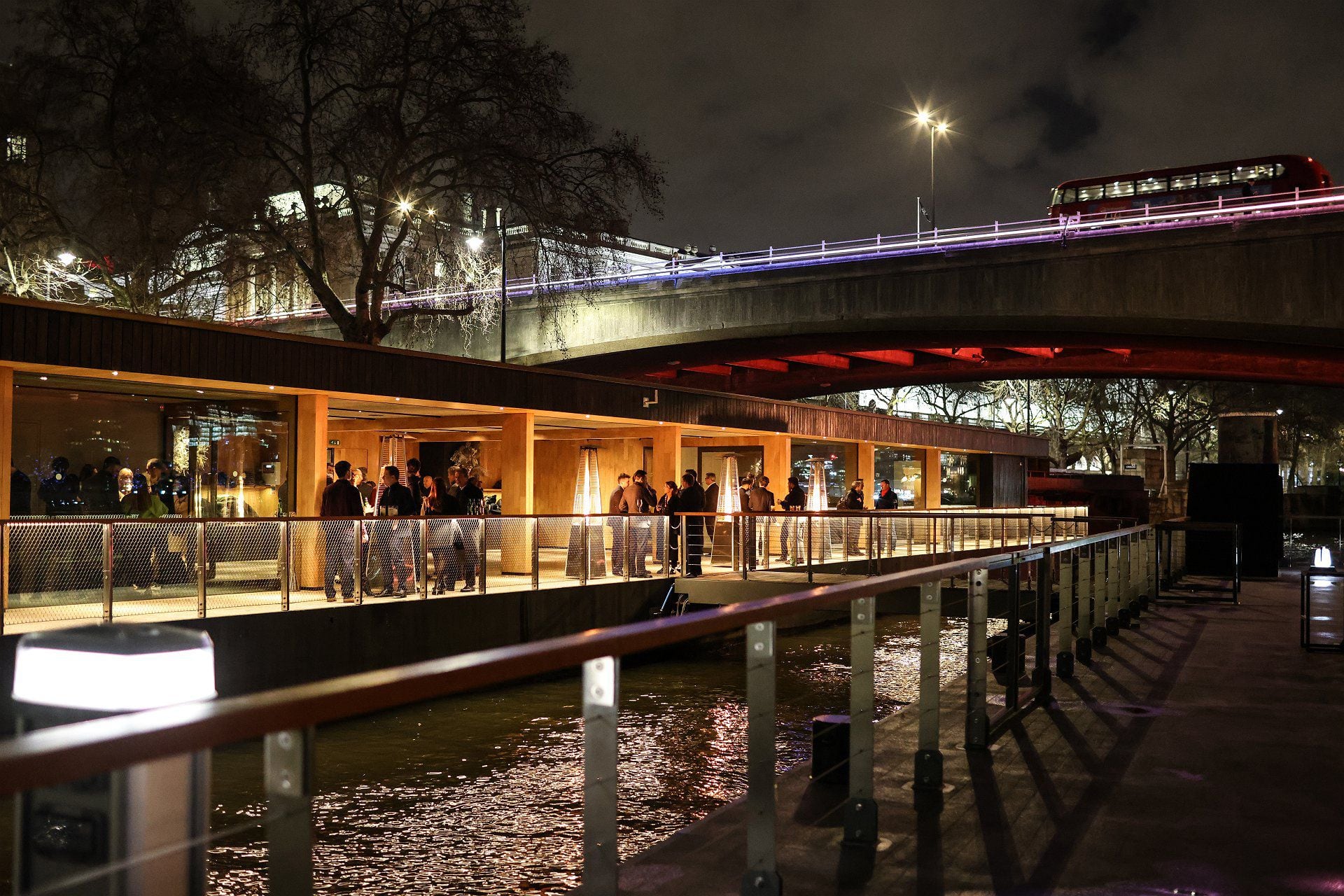
This heading exists because Quay London sometimes points to a specific venue identity rather than a broad place category, and Woods Quay is a good example of that pattern.
What Woods Quay Is
Woods’ Silver Fleet describes Woods Quay as a moored venue on the Thames used for private events.
The key point:it’s not a neighbourhood. It’s not a historic dock. It’s a purpose-built hospitality setting using quay in its branding.
Who It Suits
Illustrative scenario:A small team wants a setting that feels unmistakable, without needing a sightseeing schedule. A moored riverside venue solves that: the city becomes the backdrop, and the river does the atmospheric work.
Illustrative scenario:A company wants an event space that reads special but still feels logistically manageable. The moored-venue model can work well provided everyone knows the transport plan and timing.
Practical Checks
Even when a venue is polished, the river stays real. Before committing:
- Ask how the space handles weather and wind.
- Confirm arrival flow: where people actually enter, gather, and queue.
- Build in time for the walk from transport, especially for guests unfamiliar with the Embankment.
Section Takeaway:Woods Quay shows how a quay can be a useful, distinctive, and very different from quays as neighbourhood geography.
Research And Understanding Through Place
This is the section that turns waterfront curiosity into better decisions, whether you’re planning a day out, choosing where to live, or trying to interpret a listing that leans heavily on the quay as a lifestyle promise.
Reading Listings And Names Like A Local
A simple rule:Quay in a name doesn’t always mean direct riverfront access. It can mean:
- a historic reference to what was once there,
- proximity to a dock basin or marina,
- or pure branding.
That’s why the earlier Quay Finder matters:it anchors you in a type of place, not just the word.
Renting/buying Near The Water: Due Diligence That Matters
This isn’t financial advice, just practical reality-checking that helps people avoid expensive surprises.
Riverside Checklist
- Transport reality:Do the routes still work at your typical travel times, not just midday?
- Microclimate:Waterfront wind is real; check how exposed your street and building entrance feels.
- Noise profile:Promenades can amplify sound test evenings and weekends if possible.
- Building management:Ask about maintenance cycles and communal-area upkeep.
- Flood risk:Use the official GOV. The UK long-term flood risk service is to understand risks from rivers/sea, surface water, groundwater, and reservoirs.
Responsible And Research-led Tourism
When someone understands that West India Docks and adjacent areas carry histories bound up with exploitation and that London’s wealth was shaped by those systems, waterfront sightseeing changes tone.
The London Museum explicitly points to the brutal trade that made the city rich and the later transformation into Canary Wharf.
That doesn’t mean a visitor can’t enjoy the place. It means they’re less likely to treat it as a theme park and more likely to notice what the architecture, street names, and museums are trying, sometimes imperfectly, to say.
Section Takeaway:Quay is a clue, not a conclusion. Use it to research the type of place, then verify the practical realities that shape daily life by the water.
Frequently Asked Questions (FAQ)
What Does Quay Mean In London?
A quay is a long structure at the water’s edge where boats tie up to load, unload, or board.
Is Quay London One Place Or Many?
Many. It can refer broadly to London quays, or to specific places, developments, and venues that use quay in their names.
What’s The Difference Between A Quay, A Dock, And A Wharf?
A quay/wharf is the working edge for mooring and loading. A dock is usually an enclosed basin where ships are kept or worked.
Where Are The Main Quays In London?
Key clusters sit along the central Thames City/Tower/Westminster edges and in Docklands/Canary Wharf, plus dock redevelopments like Surrey Quays in southeast London.
Is Surrey Quays In Central London?
No. Surrey Quays is in southeast London, Southwark. It’s a former docklands area with strong links to central London via rail connections.
What Is West India Quay Known For?
It’s a Docklands quay area tied to the former West India Docks, now associated with Canary Wharf redevelopment and port history interpretation.
What’s The History Behind The West India Docks?
The London Museum notes the docks thrived long after slavery was banned, were busiest in the 1960s, and later transformed into Canary Wharf in the 1980s.
What Are The Legal Quays In London?
Legal Quays were designated places where imported goods could be legally unloaded under customs supervision, created to control trade and customs collection.
What Are Three Quays On Lower Thames Street?
Historic England records major Roman and medieval waterfront remains at Three Quays, including Roman riverside wall and wharf structures with high archaeological significance.
Is There A Sugar Quay History Worth Knowing?
Yes. Historic England notes that Three Quays has group value with other surviving riverside wall sections, including Sugar Quay, linking them to Roman London’s waterfront.
What Is North Quay?
Canary Wharf Group presents North Quay as a major future development site and publishes official planning information and project details through its North Quay page.
What Is South Quay Plaza?
South Quay Plaza is a Berkeley residential development in Canary Wharf, marketed around local amenities and proximity to Docklands transport links.
How Do I Get To Surrey Quays By River?
Greenland Pier sits beside Greenland Dock and connects to Uber Boat by Thames Clippers river services; check routes and times with the operator.
What Should I Check Before Renting Or Buying Near A Quay?
Check transport at your real travel times, building management, noise and wind exposure, and flood risk using the GOV.UK long-term flood risk checker.
Where Is Woods Quay In London?
Woods Quay is a moored Thames venue operated by Woods’ Silver Fleet; it’s best understood as an event space rather than a neighbourhood.
Final Words
Quay London becomes much easier once you stop treating Quay as a single destination and start treating it as a map key.
Central Thames quays give you London’s oldest layers; Docklands quays show you how the city rebuilt itself; dock-neighbourhood quays offer everyday waterfront living with a different rhythm.
If you’re exploring London through a place street by street, edge by edge, keep the quay habit: ask what the name is signalling, confirm what’s actually on the ground, and let the river explain the city back to you.
If that’s your kind of travel, you’ll find more neighbourhood field notes like this on the London Webcam blog.
Also Check Out:Best Neighborhoods To Stay In London
Jump to
Quay London Uncovered: The Best Waterfronts For Living And Leisure
Which London Quay Fits Your Plan?
The Heritage Of London’s Quays
Prime Locations Along The Thames
Experience And Setting At Quay London
Fine Dining And Entertainment
Connections And Accessibility
Woods Quay: A Distinct Setting On The River Thames
Research And Understanding Through Place
Frequently Asked Questions (FAQ)
Final Words

James Rowley
Author
James Rowley is a London-based writer and researcher covering London life, cultural geography, London travel, live London webcam pages and selected public figures across entertainment, sport, business and public life.
For over 15 years, he has focused on verified sources, first-hand local context and clear explanations that help readers understand both places and people more deeply. His work combines street-level London knowledge with careful research into career credits, media work, business interests and, where relevant, transparently explained net worth estimates.
He writes and reviews articles published on LondonWebcam.
Latest Articles
Popular Articles