Why Is Marylebone Called Marylebone? What The Name Means
Why is Marylebone called Marylebone? Get the clearest explanation of St Mary, the Tyburn, and the long spelling history behind the name.
Author:James RowleyMay 07, 2026212 Shares70.7K Views
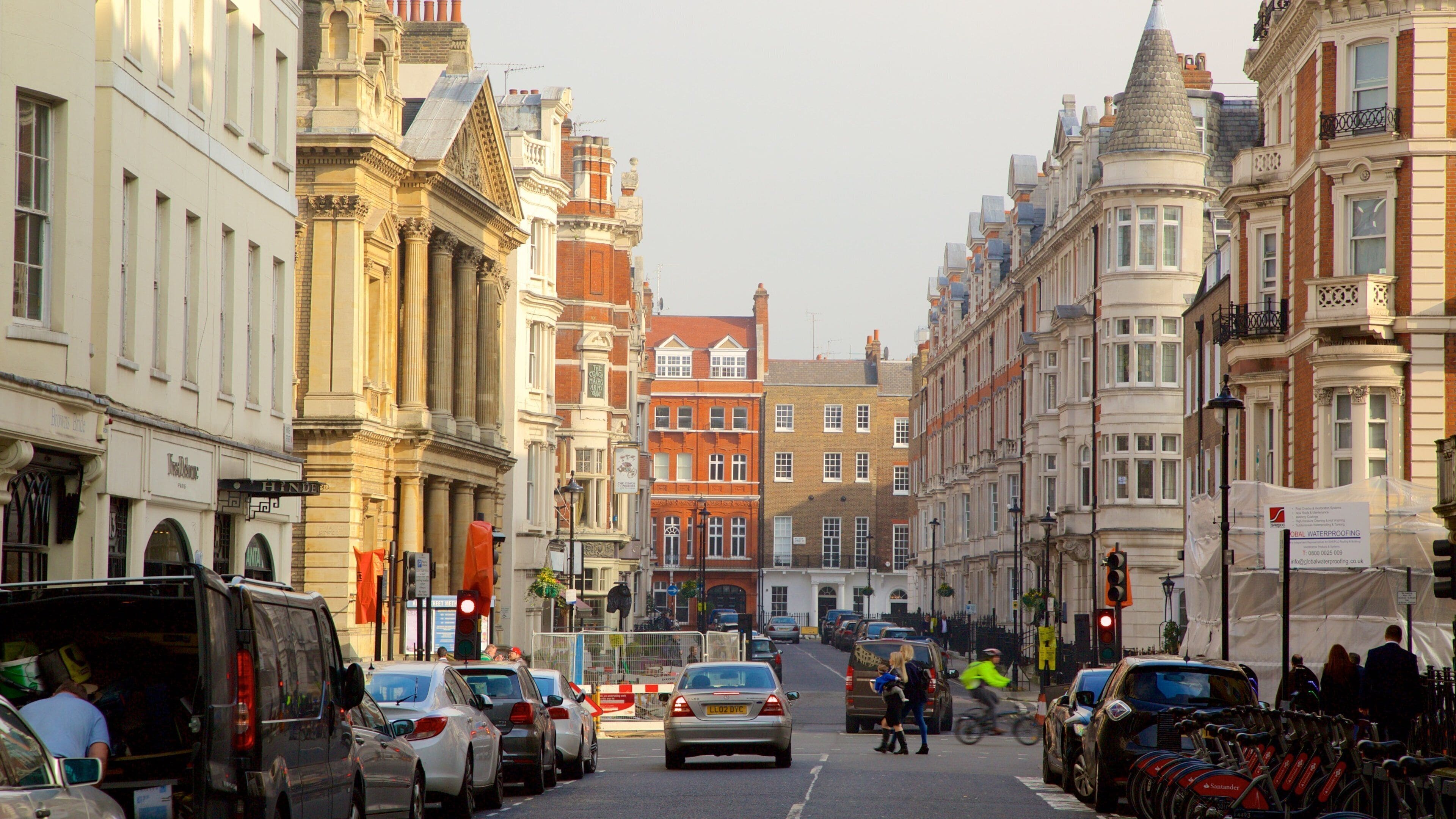
How Did Marylebone Get Its Name?
Maryleboneis commonly explained as deriving from St Mary’s church by the bourne, with “bourne” meaning a small stream and the stream in question identified with the Tyburn.
Before Marylebone became the dominant local form, the area was more closely associated with Tyburn. Over time, the descriptive phrase was shortened and reshaped through spellings such as Maryborne, Marybone, and Mary le Bone before settling into Marylebone.
That long spelling history is why the modern name looks less intuitive than its origin really is.
Key Takeaways
- Marylebone is named after St Mary’s churchand a nearby stream.
- That stream was the Tyburn, which still flows underground.
- The modern spelling came after centuries of variation, including forms such as Marybone and Maryborne.
- Its pronunciation feels odd today because the spelling preserves older history rather than modern phonetics.
- The clearest short answer is that Marylebone means something like “St Mary by the stream,” but the fuller story is stronger because it explains the older Tyburn setting, the church shift, and the long spelling journey that produced the modern form.
A Short Timeline Of The Name
- Earlier medieval period- Tyburn: the older landscape name, tied to the stream and manor before Marylebone became the dominant local form.
- Early parish period - older church association: the area’s earlier church was associated with Tyburn and, according to St Marylebone’s own church history, was dedicated to St John the Evangelist.
- Early 1400s - St Mary by the bourne:a later church dedicated to St Mary helped shift naming toward the St Mary + stream formulation.
- Later usage - Maryborne / Marybone:shortened written forms appear in everyday use.
- 18th century into early 19th - Mary le Bone / Marybone / Marylebone:later spellings circulate before the modern standard settles.
Before Marylebone, This Was Tyburn
To understand the name properly, you need the landscape first. Before Marylebone was known by its present name, the area was closely associated with Tyburn- both as a stream and as an older local identity.
British History Online says the place was “anciently called Tiburn,” linking that older name to its position near a small brook or rivulet. Marylebone Villagealso ties the district directly to the Tyburn, describing it as the brook that once ran through the village toward the Thames and still flows beneath the streets today.
That matters because old place-names usually start with whatever helped people identify a place on the ground: a church, a hill, a crossing, a boundary, or a stream. In Marylebone’s case, the stream was not decorative background. It was one of the defining local facts.
There is also an important historical transition here. The area’s older identity was Tyburn, but as settlement patterns shifted and the parish focus moved northward, the later St Mary association became more prominent.
In other words, Marylebone emerged out of an older Tyburn landscape rather than appearing as a single original word from nowhere.
Also Check Out: Why Is Mayfair Called Mayfair?
How St Mary’s Church Shaped The Name
This is the part that explains the “Mary” in Marylebone. Once you know which church is involved and how older communities named places, the name becomes much easier to decode.
The St Marylebone Societysays the area’s name can be traced to the medieval phrase “St. Mary’s Church by the Bourne,”referring to the church dedicated to St Mary and the nearby Tyburn stream.
Marylebone Village gives the same basic explanation in more compact form, saying that the village took its name from the Tyburn and the local church of St Mary.
That means the “Mary” is nota random person named Mary, and it is not a decorative prefix. It refers to St Mary, the dedication of the church. The other crucial term is bourne, an old word for a small stream or brook. British History Online uses “bourn” in exactly that geographical sense when describing the older setting of the place.
The earlier parish church was not originally the later St Mary church at all. St Marylebone’s own heritage history traces an earlier church dedicated to St John the Evangelist, with a later church dedicated to St Mary becoming central after the village shifted north.
The key meaning is therefore straightforward: the place around St Mary’s church by the stream. What later became a single district name began as a practical local description.
How The Name Changed Into “Marylebone”
A UCL Survey of Londonarticle explains that the old name was Marybone, itself a corruption of Maryborne, referring to the church of St Mary by the bourne built in the early 1400s.
It adds that forms such as “Mary le Bone”were in widespread use during the eighteenth century, even while Maryboneremained the common name into the early nineteenth.
British History Online likewise says the church’s relocation near the brook led to the name St. Mary at the bourn, later corrupted into St. Mary le boneor Marybone.
That gives you the real chain of development:
| Name stage | What it shows |
| Tyburn | The older landscape and local identity tied to the stream/manor. |
| St Mary by the Bourne | A descriptive phrase: St Mary’s church by the brook. |
| Maryborne / Marybone | Natural shortening and respelling in everyday use. |
| Mary le Bone / Marylebone | Later written forms that lead to the modern standard. |
The important point is not one perfect original spelling, but a chain of surviving written forms that show the name changing over time.
Why The “le” Is There
The “le” is part of the later written development of the name, but it is not the heart of the explanation. The core structure still comes from St Mary plus the bourne.
That is why the “le” should be treated as secondary rather than decisive. It helps explain the name’s written history, but it does not replace the underlying church-and-stream meaning.
What I Wouldn’t Oversimplify
Myth:Marylebone just means “Mary” plus a strange suffix.
Fact:The strongest explanation is a church-and-stream phrase that later passed through changing spellings.
Myth:The “le” is the whole secret.
Fact:The “le” matters, but it is secondary to the older St Mary + bourne structure.
Myth:One neat old spelling proves everything.
Fact:The name developed across multiple written forms before the modern spelling settled.
Takeaway:the modern word looks odd because it is the survivor of a long spelling journey, not because its origin is obscure.
Why Marylebone Is So Hard To Pronounce
If you have ever seen Marylebonewritten down and then heard it spoken aloud, this section is the part that resolves the tension. The name feels inconsistent only if you assume the spelling is modern and phonetic.
Why The Spelling Looks Misleading Today
Modern readers instinctively sound out place-names letter by letter. London names punish that habit. Marylebone’s spelling preserves older layers of usage, while present-day pronunciation reflects later speech patterns and reductions. That mismatch is normal for long-lived English place-names.
The Most Common Modern Pronunciations
Authoritative dictionaries such as Cambridgeand Oxford Learner’s Dictionariesprovide pronunciation guidance for Marylebone, which is your clearest sign that the word is not meant to be read literally from the page. The practical lesson is simple: do notsay it as a fully spelled-out “Mary-lee-bone.”
What To Say If You Want The Safe, Local-friendly Version
The safest real-world approach is to follow a British dictionary audio model and keep the middle syllables light rather than over-pronouncing every letter. If you are speaking casually, what matters most is avoiding the fully literal reading.
Takeaway:the pronunciation seems strange only because the modern spelling hides the older name-history underneath it.
If the spelling has ever thrown you off, a separate guide on how to pronounce Marylebonemakes the modern spoken form easier to remember.
What You Can Still See In Marylebone Today
This section turns the history into something you can picture on the ground. The best place-name explanations are not abstract; they leave clues in the streets.
Marylebone Lane And The Buried Tyburn
Marylebone Lane is one of the clearest surviving clues. UCL’s Survey of London says the lane followed the route of the Tyburn or Ay Brook, and search results tied to local history sources consistently note that its winding line predates the later street grid.
What I’d Notice on a Marylebone Walk
If I wanted to make the name feel real in five minutes, I would start with Marylebone Lane. Its crooked course tells you this was once a stream-side route, not a tidy later planning exercise. Once you notice that, “the bourne” stops sounding like a textbook word and starts looking like visible local history.
The Parish Church Tradition
The second clue is the enduring church tradition itself. The St Marylebone Society still anchors the area’s history in St Mary’s Church by the Bourne, preserving the same explanatory framework that underpins the place-name.
Marble Arch, Tyburn, And The Older Landscape
The wider area around modern Marble Arch still carries echoes of the earlier Tyburn landscape in historical accounts. Even when the stream disappeared underground and the district urbanized, the older geography did not vanish from the name. It simply became harder to see unless you know what you are looking for.
Takeaway:Marylebone is one of those London names that still makes sense on the ground if you know where to look.
How A Village Name Became A Prestigious London Address
This section connects the name story to the Marylebone most people recognize today. The district did not stay a village; it grew into one of central London’s best-known neighborhoods.
How Georgian Development Changed Marylebone
The St Marylebone Society describes Marylebone’s eighteenth-century rise as a fashionable residential district of elegant townhouses and later nineteenth-century expansion tied to the railway. That helps explain why a name with medieval roots now belongs to a place associated with Georgian streets and central-London prestige.
Why The Area Became Associated With Village Charm And Status
Modern Marylebone’s “village” identity is still actively cultivated by the estates that shape much of the neighborhood. The Howard de Walden Estatedescribes its role across Marylebone Village and Harley Street, while the Portman Estatedescribes a large Marylebone holding that includes residential, retail, office, hotel, and restaurant properties.
That does not explain the original name, but it does explain why the name now carries a second meaning in everyday conversation: not just an old parish by a stream, but a polished central London district with a strong identity of its own.
Takeaway:the word began as geography and devotion, but today it also signals one of London’s most recognizable neighborhoods.
Common Myths About The Name Marylebone
This section clears away the shortcuts that leave readers half-informed. A good etymology article does not just give the answer; it shows you which tempting wrong answers to avoid.
It Does Not Simply Mean “Mary The Good”
The neat-sounding French-style explanation is attractive, but it is not the best-supported one. The weight of accessible local-history and place-name evidence points back to St Mary + the bourne, not a flattering descriptive phrase about Mary herself.
It Was Not Named After The Station
This one is easy to correct. Marylebone stationtakes its name from the district, not the other way round. The district and parish history long predate the station.
The Short Answer Is Right, But Incomplete Without The Spelling History
If you only remember “St Mary by the bourne,” you are already mostly correct. But the fuller explanation is better because it also tells you why the modern name looks so irregular, why the “le”is there, and why the pronunciation feels counterintuitive.
Takeaway:the myths fall away once you keep all three pieces together - church, stream, and spelling change.
Frequently Asked Qusetions
Is Marylebone A Posh Area?
Yes, it is generally regarded as one of central London’s more affluent districts. Official estate sites emphasize prime Marylebone property, curated retail streets, major residential holdings, and the Harley Street medical area, which all support that upscale reputation.
What Is Marylebone Famous For?
Today Marylebone is known for its village feel, Georgian streets, Marylebone High Street, Harley Street, Baker Street connections, and a blend of residential calm with West End proximity. Local estate and neighborhood sources consistently frame it as a distinct, high-profile London district.
Which Estates Dominate Marylebone Today?
Two of the most visible landowners in modern Marylebone are the Howard de Walden Estateand the Portman Estate, both of which describe major holdings and long-term stewardship roles within the area.
Which Famous Streets Define Marylebone Now?
Among the best-known are Marylebone High Street, Harley Street, Baker Street, and Marylebone Lane. They represent different layers of the district’s identity: retail village, medical prestige, literary fame, and the older Tyburn route.
Final Thoughts
The cleanest answer is still the right one: Marylebone comes from St Mary’s church by the bourne, the stream identified with the Tyburn. But the reason the name sticks in people’s minds is that it did not stay simple. It passed through centuries of local usage, respelling, and pronunciation change before becoming the polished modern form on street signs and station boards.
Once you see that chain - Tyburn → church by the stream → Maryborne/Marybone → Marylebone- the name stops being a London oddity and starts working like a tiny piece of historical evidence. That is what makes it worth knowing: one neighborhood name quietly preserves a lost river, a church dedication, and the long memory of the city.
Continue Reading: Why Is Soho Called Soho?
Jump to
How Did Marylebone Get Its Name?
Before Marylebone, This Was Tyburn
How St Mary’s Church Shaped The Name
How The Name Changed Into “Marylebone”
Why Marylebone Is So Hard To Pronounce
What You Can Still See In Marylebone Today
How A Village Name Became A Prestigious London Address
Common Myths About The Name Marylebone
Frequently Asked Qusetions
Final Thoughts

James Rowley
Author
James Rowley is a London-based writer and researcher covering London life, cultural geography, London travel, live London webcam pages and selected public figures across entertainment, sport, business and public life.
For over 15 years, he has focused on verified sources, first-hand local context and clear explanations that help readers understand both places and people more deeply. His work combines street-level London knowledge with careful research into career credits, media work, business interests and, where relevant, transparently explained net worth estimates.
He writes and reviews articles published on LondonWebcam.
Latest Articles
Popular Articles