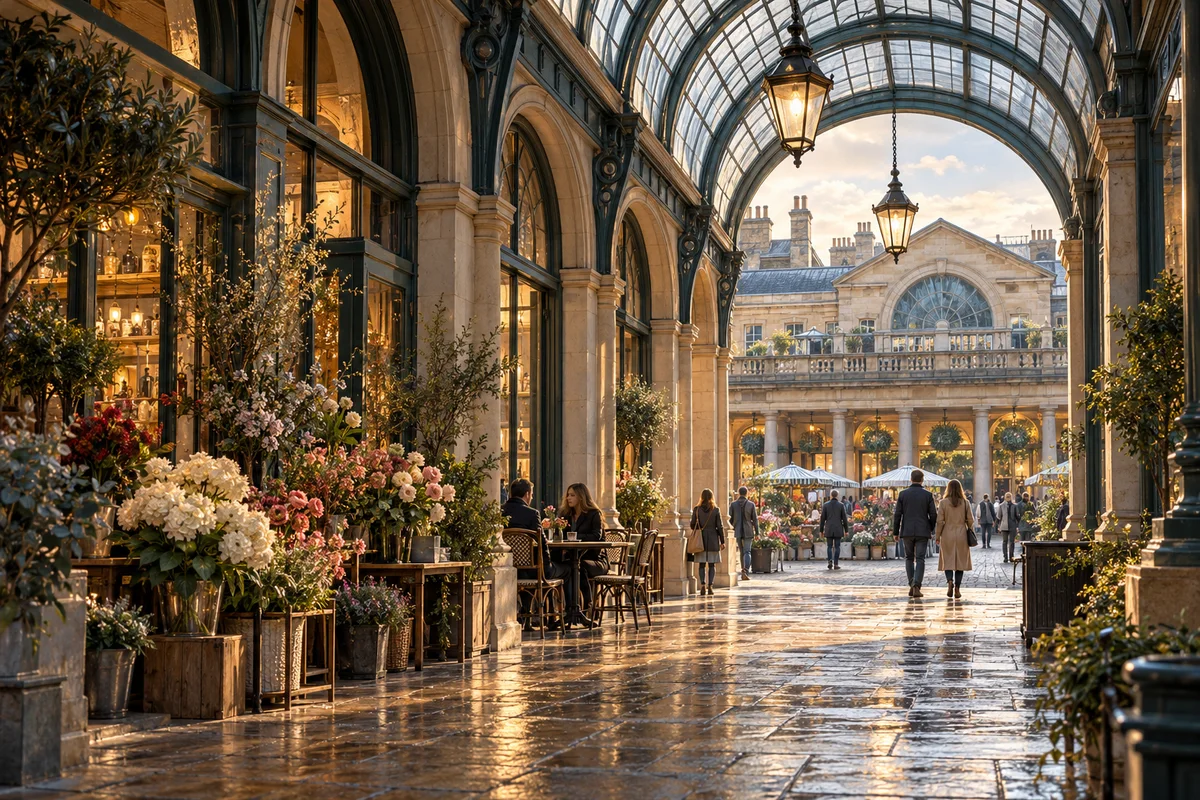
Piccadilly Circus
A familiar West End junction.
Begin with a bridge, a junction or a familiar frontage: fifteen London camera locations offer a place to start looking. Open a camera for a refreshed TfL image, then choose Play on its page to load a short clip.
Choose a London camera. Open its image, then Play a short TfL clip.
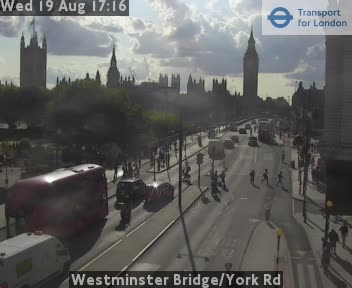
TfL image · Capture time is not independently verified. Refreshed images and short clips, rather than a continuous broadcast.
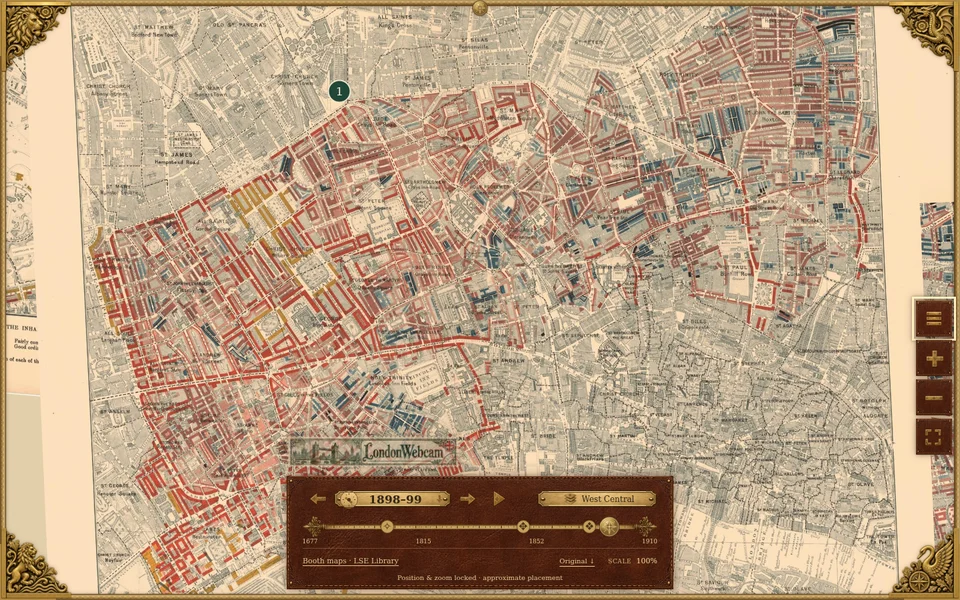
Before the familiar streets, another London. Unfold historic plans, move through the years and keep your place as the city changes.
Open the time atlas Drag to explore · Zoom into the streets · Follow the timelineBehind that famous face is a world of falling weights, patient pendulums and a very big bell. Open the tower. Follow the clockwork. Make it chime.
Step inside Big Ben →Find cameras on a map → · Explore the wider TfL road network →
15 of 15 cameras
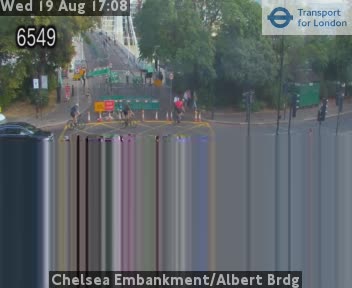
How do the two approaches frame the same crossing?
Follow the road towards the span in each available frame. Notice what the near end conceals. The images do not establish a shared capture time.
Compare the approaches ↗Albert Bridge
Two approaches to Albert Bridge · schematic, not to scale.
Pre-decimal pennies adjust the Great Clock’s pendulum. Adding one makes the clock gain two-fifths of a second over twenty-four hours; the mechanism it regulates weighs five tonnes. A familiar coin has become an instrument of precision.
Source: UK Parliament’s clock facts and figures.
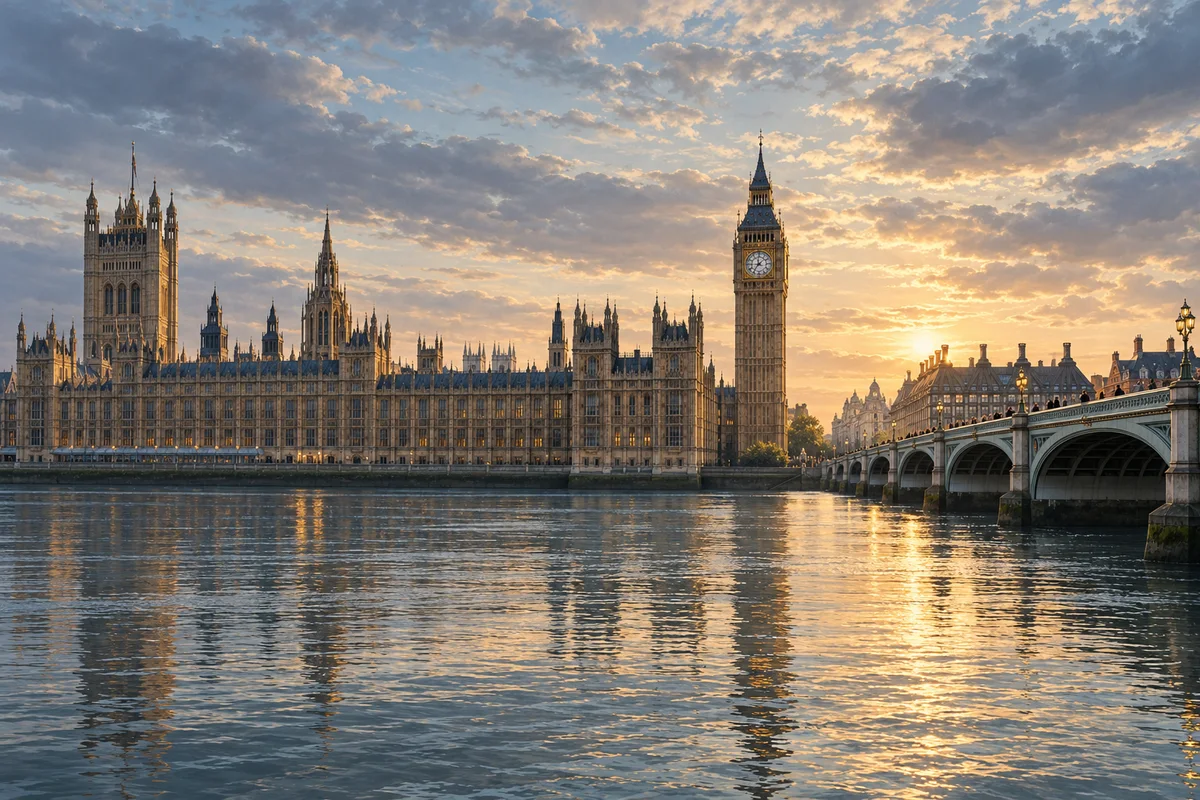
If the tower appears in the Westminster frame, begin with its public face. Then consider the working parts the image cannot show.
Read about the bell, clock and tower ↗A long department-store facade must address the street and make its entrances legible. Look beyond the name above the door.
Read the Selfridges architecture guide ↗A still offers one frame; a requested clip adds a brief sequence. Neither makes this a continuous broadcast or verifies when the scene was captured.
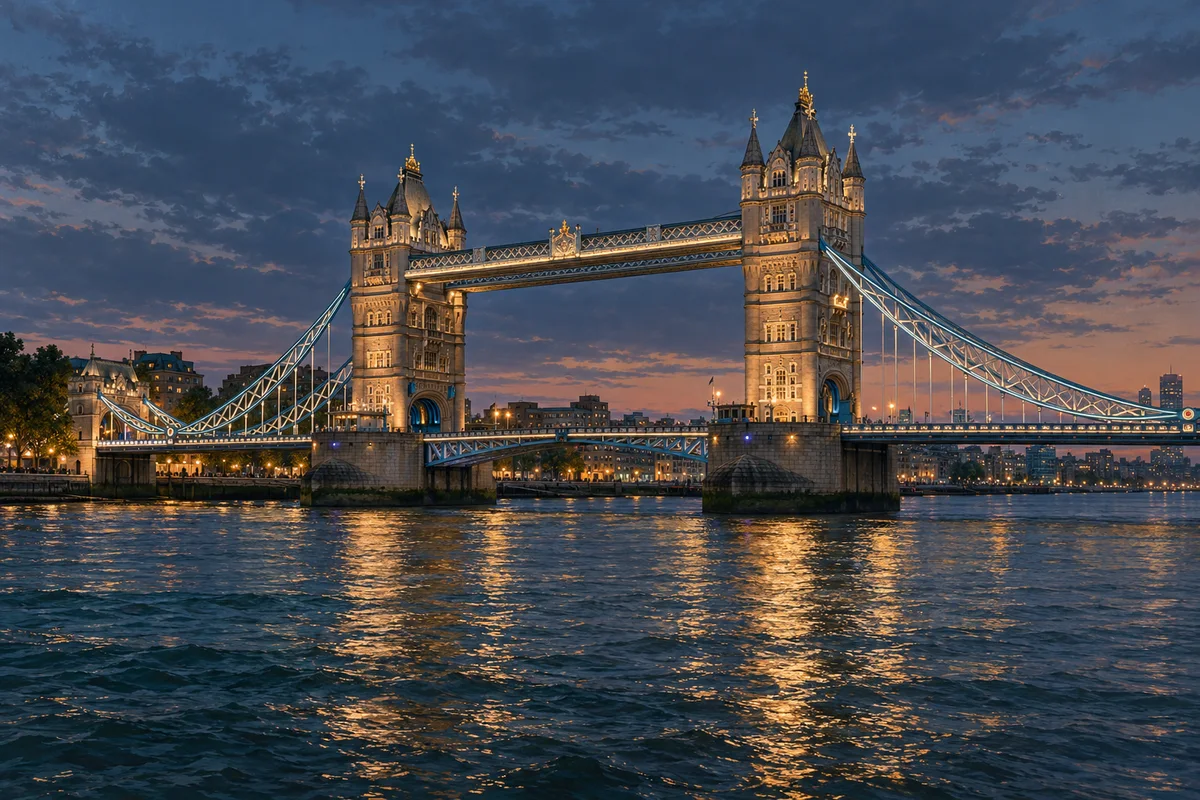
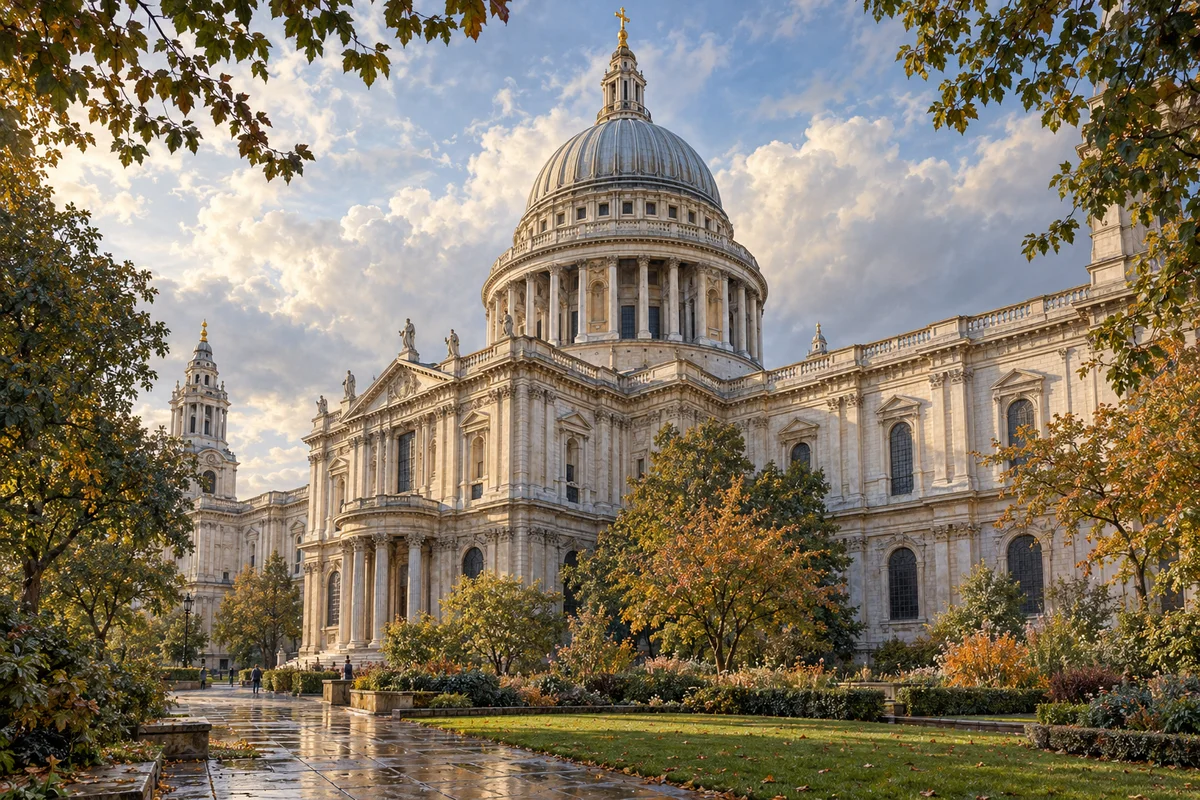
Understand camera previews and clips ↗Explore the history and details behind these illustrated London scenes. These are artworks; camera coverage is listed separately in the camera collection.
A familiar outline hides three different jobs. Look inside the clock and try its penny arithmetic.
Raise the roadway, reveal the counterweights and follow the balance beneath the towers.
A changing cathedral, an enduring silhouette, and the small framing decisions that help us see it.
Follow the columns and roof of a market whose architecture outlasted its wholesale trade.
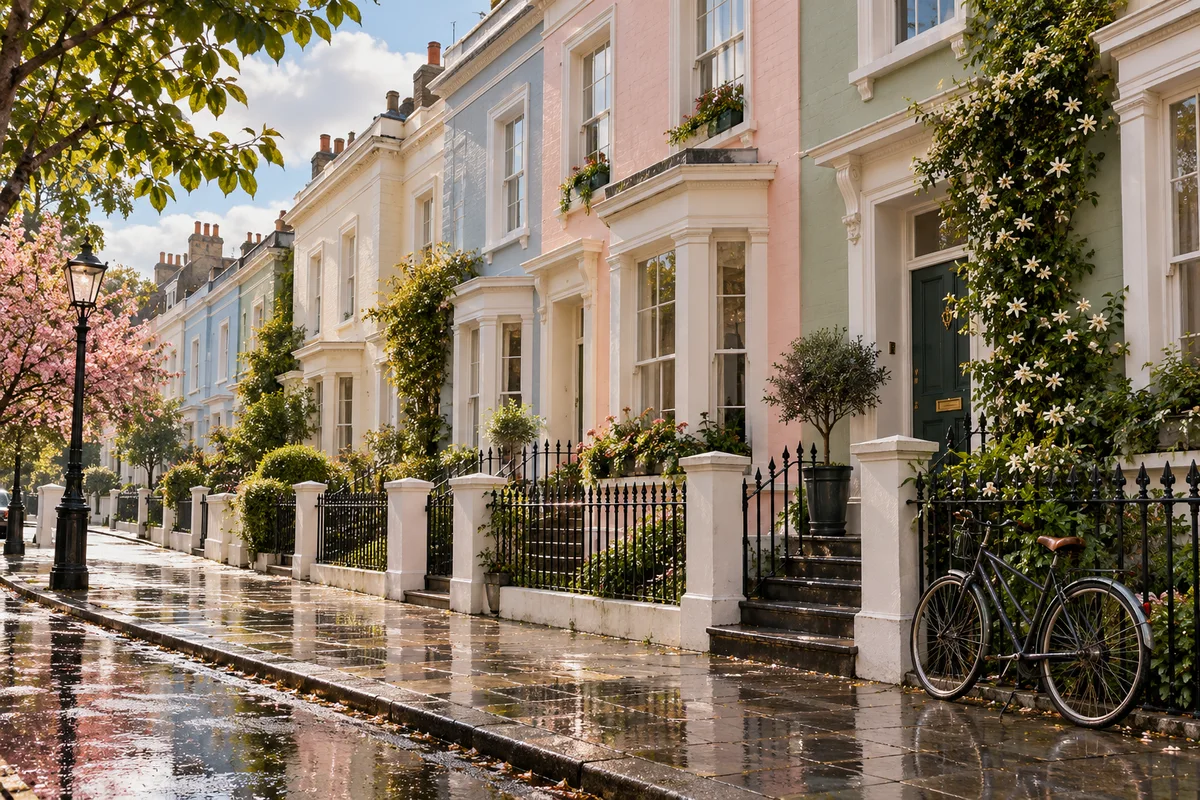
Look past the pastel paint to repeated frontages, different neighbourhoods and Portobello’s trading history.
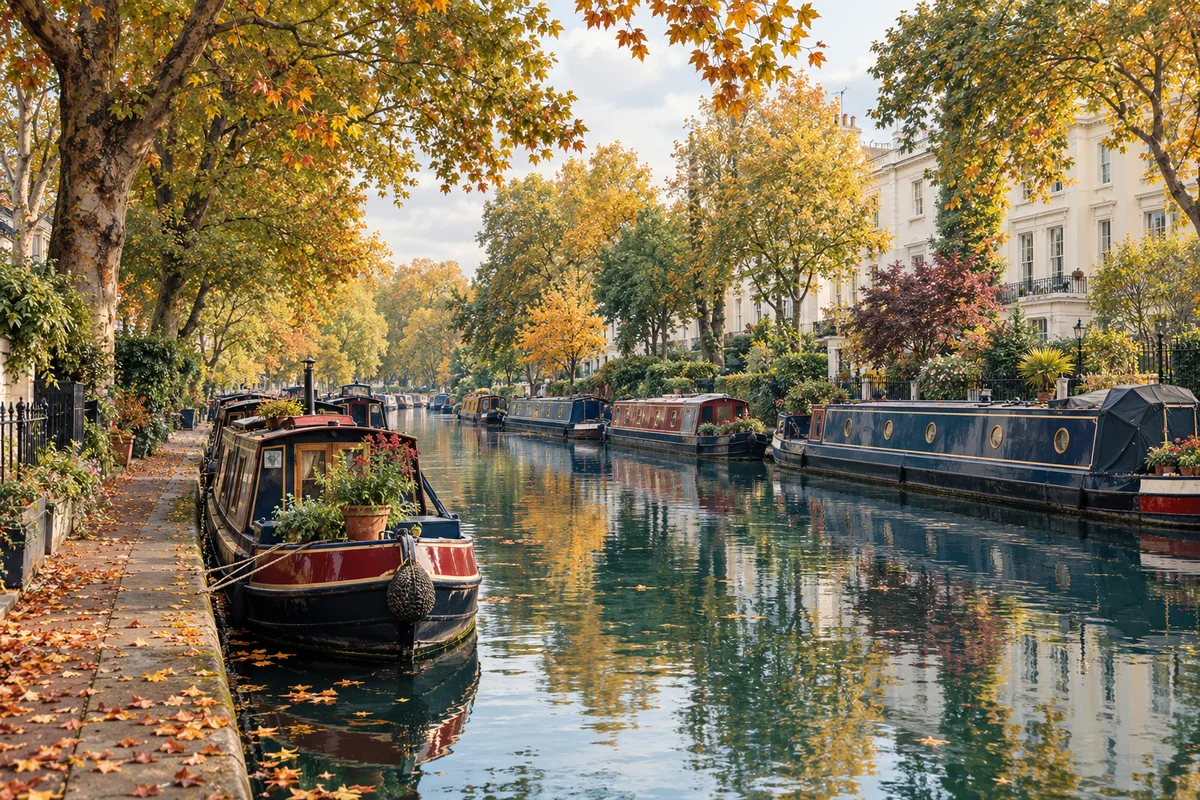
Quiet reflections belong to a working network. Trace the canal routes behind the waterside scene.