How To Get Around London | Contactless, Tube And Bus
Learn how to get around London with contactless, Oyster, Tube, buses, airport routes, fare caps and smart tips to avoid tourist mistakes on your trip.
Author:James RowleySep 28, 20269K Shares153.3K Views
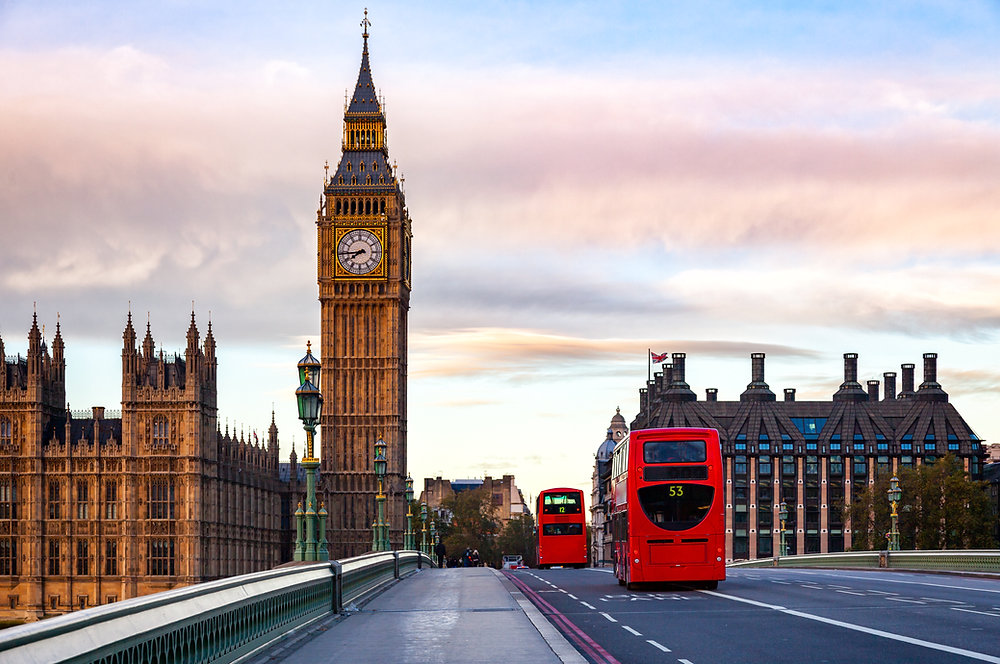
How To Get Around London Without Stress, Overpaying Or Guesswork
The best way to get around Londonis usually contactless pay as you go, using the Tube or Elizabeth linefor longer journeys, buses for cheaper trips, walking for short central routes, and taxis only when convenience matters more than cost.
For most visitors, the easiest setup is simple: use one contactless card or mobile device per person, install TfL Gofor live updates, and avoid buying paper tickets for everyday travel. TfL says visitors can pay as they go with contactless, Oyster or Visitor Oyster across its services, and pay as you go is cheaper than buying single tickets.
If you want the cheapest paid option, use buses. If you want the fastest option across the city, use the Tube or Elizabeth line. If you are staying in central London, walk more than you think. If you are arriving with luggage, travelling late at night, or moving as a family, choose the route with the fewest awkward changes.
Quick Answer And Best Recommendation First
Start with the practical decision first: what is cheapest, what is easiest, and who should use each option.
- If you are a first-time visitor, use contactless unless you have a specific reason to use Oyster.
- If you are travelling with children aged 11-15, Oyster or Visitor Oyster may matter because TfL can add a Young Visitor discount to an Oyster product.
- If you are travelling with heavy luggage, the easiest route is often a direct train, Elizabeth line, or taxi for the final leg.
| Decision | Best choice |
| Cheapest paid travel | Bus, especially for short journeys and multiple rides within an hour |
| Easiest payment for most adults | Contactless card, phone or watch |
| Best for fast cross-city travel | Tube, Elizabeth line, DLR, Overground or National Rail |
| Best for short central trips | Walking |
| Best for families | Contactless for adults, Oyster/Visitor Oyster for some child discounts |
| Best with heavy luggage | Direct train, Elizabeth line, taxi or step-free route |
| Best late at night | Night Tube where available, night bus, licensed taxi or planned rail route |
| Best if avoiding the Tube | Bus, walking, Elizabeth line, DLR, Overground, rail or taxi |
- Use one payment method per person.
- Do not switch between card, phone and watch.
- Use the Tube or Elizabeth line for longer journeys.
- Use buses for cheap, scenic or local journeys.
- Walk short central routes.
- Check TfL Go before airports, late nights, disruptions and step-free journeys.
TfL’s March 2026 fares update says the adult bus and tram pay-as-you-go fare is frozen at £1.75until 5 July 2026, with unlimited bus and tram journeys within one hour under the Hopper fare. The bus and tram daily cap is £5.25. Data as of 2026 - check the latest TfL guidance before travelling.
How The London Transport System Actually Works For Visitors
London transport looks complicated because there are many options. In practice, most visitors only need to understand a few core ideas: TfL, zones, pay as you go, and when each transport type makes sense.
Transport for London, usually called TfL, runs or manages much of the city’s transport network. That includes the Tube, buses, DLR, London Overground, trams, river services, cycle hire, roads and parts of the Elizabeth line experience for visitors.
The useful thing is that many services work with the same basic payment habit: tap in, travel, and let the system calculate the fare.
The Main Ways To Travel
The Tube, also called the London Underground, is the classic fast option. It is best when you need to cross the city quickly and your start and end points are close to stations.
Busesare slower in traffic, but cheaper and often better for sightseeing. You see London as you move, and they can be easier than deep Tube stations if you have a buggy or want to avoid stairs.
The Elizabeth lineis excellent for east-west travel and Heathrow. TfL says you can use pay as you go to travel to and from Heathrow on the Tube and Elizabeth line.
London Overgroundis useful for neighbourhoods the Tube does not connect as directly. DLRis especially useful for Canary Wharf, Greenwich, Docklands and London City Airport.
National Railmatters for airports, outer London and day trips. Walkingis often best in central London. Taxis and ride-hailing appsare useful when you need door-to-door travel.
How London Zones Work
London is divided into fare zones. Zone 1is central London, and the zones spread outward from there.
Most visitors spend much of their time in Zones 1 and 2, where many major sights, museums, theatres, shopping streets and central neighbourhoods are located. Airports and outer neighbourhoods usually sit farther out, so those journeys can cost more.
Zones affect:
- Pay-as-you-go fares.
- Daily and weekly caps.
- Travelcard prices.
- Airport journey costs.
- Whether a route is cheaper by Tube, rail or bus.
You do not need to memorise all the zones. Use a route app, then check the current fare if you are travelling far, crossing several zones, or going to an airport.
Mode Comparison Table
| Transport mode | Speed, cost, best use and common mistake |
| Tube / Underground | Fast for longer city journeys; costs more than buses; best for crossing London; common mistake: using it for tiny central trips that are quicker on foot. |
| Bus | Slower in traffic but usually cheapest; best for short trips, views and simple local journeys; common mistake: assuming buses are only for locals. |
| Elizabeth line | Fast and comfortable for east-west travel and Heathrow; best for longer cross-city trips; common mistake: not checking whether it stops near your hotel. |
| DLR | Useful for Docklands, Greenwich connections and London City Airport; common mistake: ignoring it when staying in east London. |
| London Overground | Good for neighbourhood-to-neighbourhood journeys outside the centre; common mistake: routing everything through Zone 1 unnecessarily. |
| National Rail | Best for airports, outer London and day trips; common mistake: assuming every rail journey works exactly like the Tube. |
| Walking | Free and often fastest for short central routes; common mistake: trusting the Tube map as if it shows real walking distance. |
| Taxi / ride-hailing | Convenient but usually more expensive; best for luggage, late nights or awkward routes; common mistake: using taxis during heavy central traffic. |
| River Bus | Scenic and useful along the Thames; usually not the cheapest; common mistake: treating it like a normal budget commute. |
| Santander Cycles | Good for confident short rides; common mistake: cycling in busy traffic without checking safer routes first. |
The key is not to find one perfect transport method. The key is to switch intelligently.
Fares, Caps And Payment Basics
For most visitors, fares are simpler than they look: tap in with one payment method, tap out where required, and let TfL calculate the fare.
TfL says contactless and mobile payments work across its services. Overseas transaction fees may apply for non-UK cards, so international visitors should check their bank fees before relying on contactless for every journey.
Contactless Vs Oyster
Use contactlessif you have a card, phone or watch that works in the UK and each traveller has their own payment method.
Use Oyster or Visitor Oysterif you do not have contactless, want to top up with cash, prefer a separate travel card, or need certain child discounts.
Visitor Oyster is a prepaid smartcard for London public transport. It can be useful, but many adult visitors do not need one if contactless works smoothly for them.
If you are also comparing attraction passes with transport payment, read our London Pass vs Oyster Cardguide so you do not confuse sightseeing discounts with TfL travel payment.
Daily And Weekly Caps
A daily caplimits how much you pay for eligible travel in one day. A weekly caplimits what you pay across a week when you keep using the same payment method.
TfL says adult pay-as-you-go caps and Travelcard prices for Tube, DLR, London Overground, Elizabeth line and National Rail services are frozen until 2027. Its 2026 fares page lists the adult Zones 1-2 daily cap as £8.90and the Monday-to-Sunday cap as £44.70. Data as of 2026 - check the latest TfL guidance before travelling.
The One Rule That Prevents Most Payment Problems
Use the same card or devicefor the whole journey.
Do not tap in with your bank card and tap out with your phone. Do not switch between phone and watch. Even if they connect to the same bank account, TfL may treat them as different payment methods.
That can cause incomplete journeys or missed caps.
How To Tap Correctly
On the Tube, Elizabeth line, DLR, London Overground and many National Rail journeys:
- Touch in at the yellow reader.
- Complete your journey.
- Touch out at the yellow reader.
On buses and trams:
- Touch in when you board.
- Do not touch out when you get off.
This is simple, but it is one of the easiest places to make an expensive mistake.
When To Use The Tube, Bus, Train, Taxi Or Walking
The best transport choice depends on what you care about most: speed, price, comfort, luggage, accessibility, views or simplicity.
Use The Tube When Speed Matters
The Tube is usually best for longer journeys across central London. It avoids road traffic and connects many major visitor areas.
Use it for trips like:
- King’s Cross to Westminster.
- South Kensington to Covent Garden.
- Camden to Waterloo.
- Liverpool Street to Notting Hill.
- Stratford to central London.
Tube tips that make you look less like a confused tourist:
- Stand on the right on escalators.
- Let passengers off before boarding.
- Move down inside the carriage.
- Keep bags off seats.
- Check the train’s final destination.
- Step away from exits before checking your phone.
- Check station crowds before you travel. Major central interchange hubs can get incredibly congested. You can see the live foot traffic outside one of the busiest stations right now on our Oxford Circus webcam.
Avoid the Tube for very short central journeys. The map is designed for clarity, not walking distance, so nearby places can look farther apart than they are.
Use Buses When Price Or Views Matter
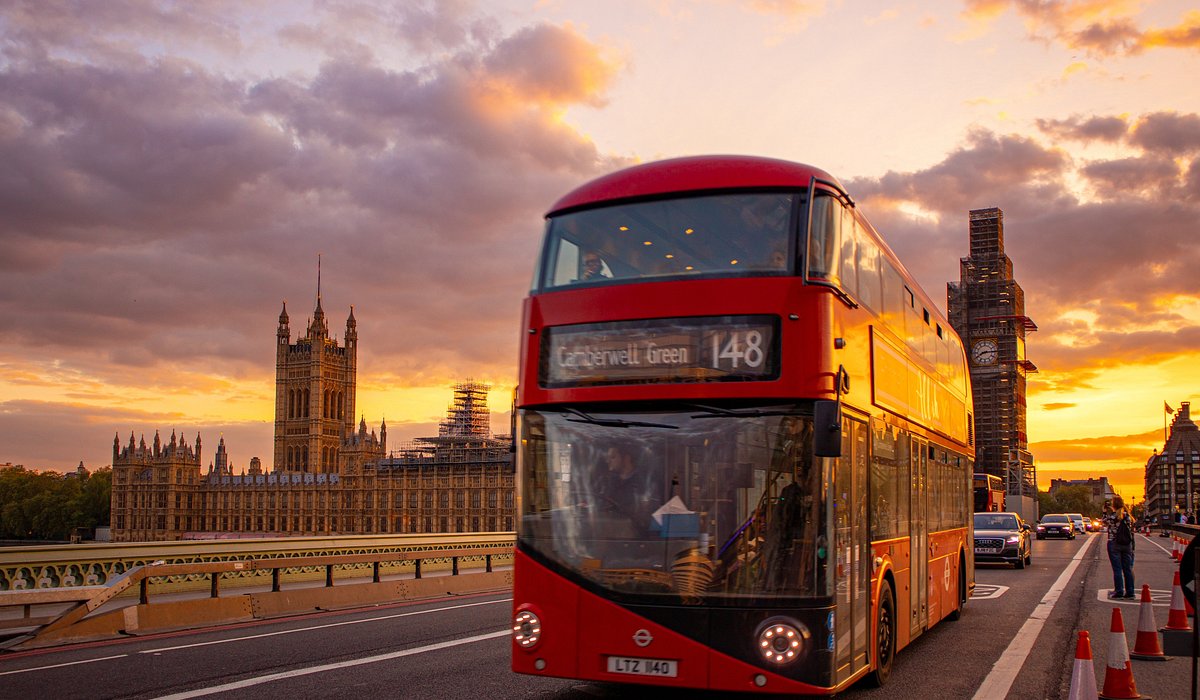
London buses are excellent for visitors. They are cheaper than the Tube, run through neighbourhoods you actually get to see, and often stop closer to your final destination.
If you want to preview that street-level experience before travelling, London bus ride live streamscan show how the city looks and feels from a passenger-style viewpoint.
Use buses when:
- You are not in a rush.
- You want a cheaper journey.
- You want to see the city.
- You are travelling a short distance.
- You have a buggy or want to avoid deep stations.
- Your route is more direct by road.
For sightseeing, sitting upstairs on a double-decker bus can be better than disappearing underground. Routes across Westminster Bridge, through the West End, along Park Lane or near St Paul’s can turn a normal journey into a low-cost city view.
Use Trains, Overground And DLR For Specific Routes
The Elizabeth line, Overground, DLR and National Rail can be better than the Tube when they match your journey.
Use the Elizabeth linefor Heathrow and fast east-west travel.
Use DLRfor Canary Wharf, Greenwich, Stratford, Docklands and London City Airport. TfL says pay as you go works to and from London City Airport on the DLR.
Use London Overgroundwhen travelling between neighbourhoods outside the centre.
Use National Railfor Gatwick, Stansted, Luton, outer London and day trips.
Use Walking For Short Central Routes
Walking is one of the best ways to experience London and often the smartest way to travel.
Walk in areas such as:
- Covent Garden.
- Leicester Square.
- Soho.
- Westminster.
- South Bank.
- Trafalgar Square.
- Mayfair.
- The City.
- Notting Hill.
- Camden.
Example: Covent Garden to Leicester Square looks like a Tube journey on the map, but it is usually only a short walk. Once you include escalators, platforms and exits, walking often wins.
If you are walking between Soho, Leicester Square and Theatreland, the Shaftesbury Avenue webcamcan help you see how busy the area looks before you set off.
Use Taxis When Convenience Matters More Than Price
Taxis and ride-hailing apps are useful, but they should not be your default.
Use them when:
- You have heavy luggage.
- You are arriving late.
- Public transport is disrupted.
- You are travelling with tired children.
- Your route requires several awkward changes.
- You need door-to-door travel.
Traffic can make taxis slow in central London, so they are not always faster. If you are deciding between a black cab and an app, compare the likely costs in our London taxi vs Uber vs Bolt cost comparisonbefore booking.
Use River Bus, Santander Cycles, Trams Or Driving For Specific Trips
Some London transport options are useful only in the right situation. You probably will not use them every day, but they can solve specific travel problems better than the Tube or bus.
Use River Bus When Your Route Follows The Thames
The River Bus is useful when your journey runs along the Thames, especially around Westminster, London Bridge, Tower, Greenwich or Canary Wharf. It is scenic, calmer than the Tube, and can feel like sightseeing built into your journey.
It is not usually the cheapest everyday option. TfL says you can use contactless or Oyster on River Bus services operated by Uber Boat by Thames Clippers, but River Bus journeys are not capped, so check the fare before using it as normal transport.
Use The IFS Cloud Cable Car For A Scenic Thames Crossing
The IFS Cloud Cable Car is more of a scenic Thames crossing than an everyday transport choice, but it can be useful around Greenwich, the Royal Docks, The O2 and ExCeL.
Use Santander Cycles For Short, Confident Rides
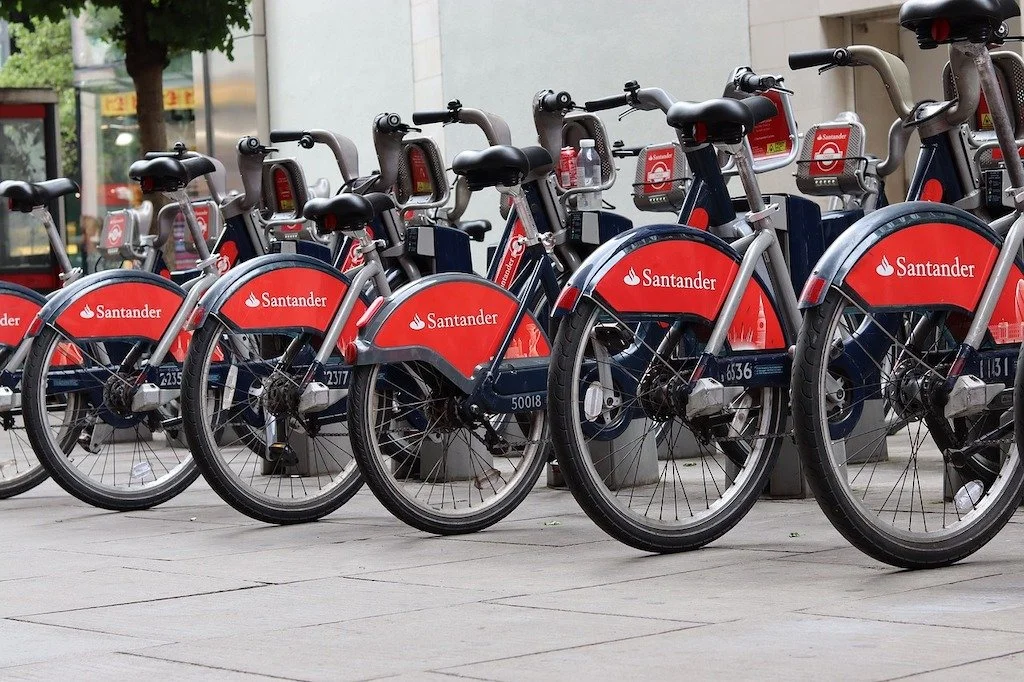
Santander Cycles can work well for short journeys in central and inner London, especially through parks, along quieter cycle routes, or when the Tube would take you out of your way. TfL says there are more than 12,000 bikes at around 800 docking stations, and bikes can be hired through the app or at a docking station.
Use them if you are confident cycling in a busy city. If you are nervous, start with parks, riverside routes or protected cycle lanes rather than heavy central traffic.
Use Trams Only If Your Route Is In South London
Most first-time visitors will not need London trams, but they are useful in parts of south London, especially around Croydon and nearby areas. They work more like buses than the Tube for payment: you touch in before boarding or when boarding, but you do not touch out.
For most central sightseeing trips, trams will not appear in your route. If your app suggests one, use it the same way you would use other TfL services: check the route, tap correctly and follow live updates.
Avoid Driving Unless You Have A Specific Reason
Most visitors do notneed a car in London. Public transport, walking and occasional taxis are usually easier than driving, parking and dealing with central traffic.
Driving can also trigger extra costs. TfL lists the Congestion Charge as £18 per dayif paid in advance or on the day, with set charging hours in the central zone. Data as of 2026 - check the latest TfL guidance before driving.
If you are driving your own or a rental vehicle, also check whether the Ultra Low Emission Zone applies to your vehicle, because it is separate from the Congestion Charge.
Travel Planner Checklist
Before you leave your hotel, airport or attraction, run through this quick checklist.
- Check your route in TfL Go, Citymapper or Google Maps.
- Confirm whether walking is faster for short central trips.
- Check live status for Tube, rail or step-free journeys.
- Use the same payment method as earlier.
- Keep your card, phone or Oyster ready before the gate.
- Avoid peak periods if travelling with luggage or children.
- Save a backup route for airport transfers or night travel.
- Check the last train or Night Tube/night bus option for late returns.
- For step-free journeys, check lift status before leaving.
- For airport journeys, plan from your hotel location, not just the airport name.
The habit is simple: plan, verify, then travel.
Examples: Airport Arrivals, Busy Sightseeing Days And Night Travel
Concrete examples make London transport easier to understand than abstract rules.
Example 1: Arriving At Heathrow With Luggage
If you land at Heathrow and your hotel is near Paddington, Bond Street, Tottenham Court Road, Farringdon, Liverpool Street or Canary Wharf, the Elizabeth line is often a strong choice because it gives a direct or simple route through central London. TfL confirms pay as you go works from Heathrow on the Tube and Elizabeth line.
If your hotel is on the Piccadilly line, the Tube may be cheaper and direct. If you have several large bags, small children or a late arrival, a taxi for the final leg may be worth it.
Best strategy: choose the route with the fewest changes, not just the lowest fare.
Example 2: A Busy Sightseeing Day In Central London
Do not take the Tube for every hop. Walk between nearby stops, use the Tube only for longer jumps, and use a bus when you want a break with a view.
A good pattern might be:
- Tube to Westminster.
- Walk to South Bank.
- Walk or bus toward Covent Garden.
- Walk to Soho or Leicester Square.
- Tube back to your hotel if you are tired.
Best strategy: cluster sights by area and walk the short links.
Example 3: Getting Back Late At Night
Late-night travel needs more planning.
Some Tube lines have Night Tube services on certain nights, but do not assume your exact route is covered. Buses may run when trains do not, but they can be slower. Taxis and ride-hailing apps can be useful after a theatre show, concert or late dinner.
Best strategy:
- Check your return route before going out.
- Save a night bus or taxi fallback.
- Avoid waiting until your phone battery is low.
- Travel with other people when possible.
- Use licensed taxis or reputable booked services.
- Monitor central traffic conditions. If you are catching a cab from the West End after a show, you can check the real-time traffic flow and cab availability on our live Piccadilly Circus webcam.
Best strategy: decide your return route before the night starts.
Getting Around London From The Airports
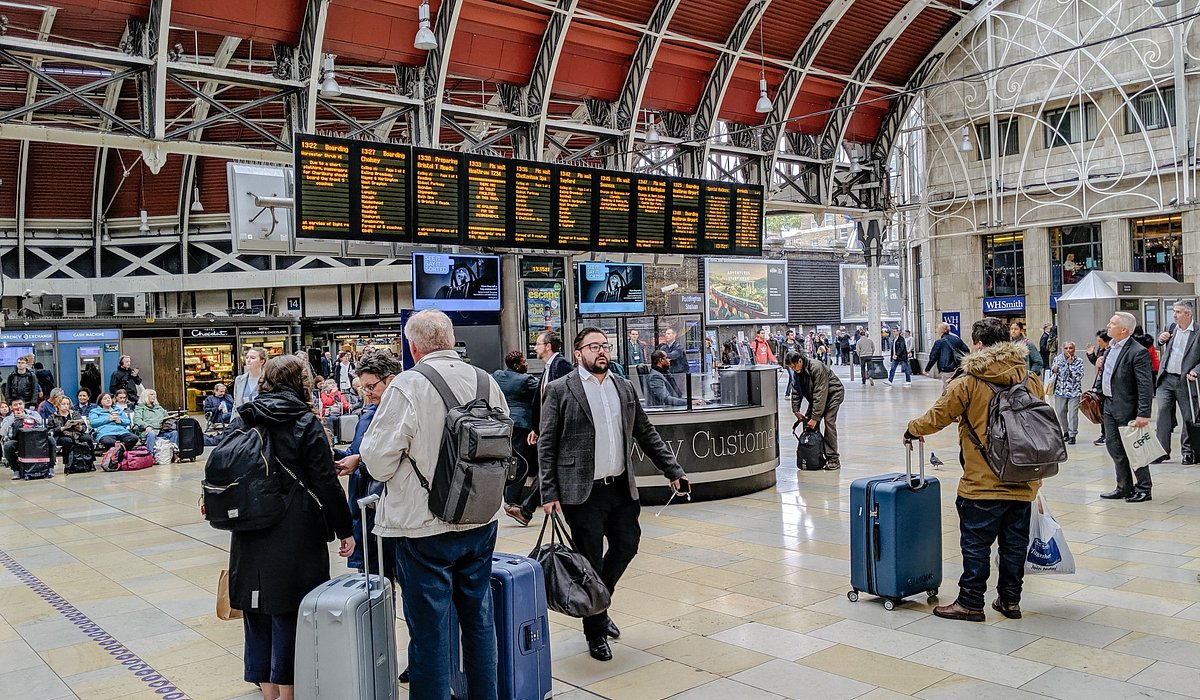
Airport transfers are where visitors often overpay or choose the wrong route. The best option depends on your airport, your luggage and your hotel area.
TfL says pay as you go can be used to travel to and from Heathrow on the Tube and Elizabeth line, Gatwick on Gatwick Express, Southern and Thameslink, and London City Airport on the DLR.
If you are still comparing Heathrow, Gatwick, Stansted, Luton and London City routes, our London airport guidebreaks down the best arrival options by airport.
Heathrow Airport
Heathrow gives you several options:
- Piccadilly line:usually cheaper, slower and useful if your hotel is on the line.
- Elizabeth line:faster and more comfortable for many central/east-west routes.
- Heathrow Express:fastest to Paddington, usually more expensive.
- Taxi/private transfer:useful for groups, lots of luggage or late arrivals.
TfL says the Elizabeth line journey between Paddington and Heathrow takes 28 minutes.
Gatwick Airport
Gatwick works well by rail.
Use:
- Gatwick Expressfor Victoria.
- Southernfor Victoria and other south London routes.
- Thameslinkfor London Bridge, Blackfriars, Farringdon, St Pancras and beyond.
Choose based on your hotel station, not just the train brand.
London City Airport
London City Airport is one of the easiest airports by public transport because it connects to the DLR. It works especially well for Canary Wharf, Bank, Stratford and east London.
Use DLR if it matches your destination. Use a taxi if you have heavy luggage or an awkward final connection.
Stansted, Luton And Southend
These airports usually need National Rail or coach planning.
Check:
- First and last services.
- Engineering works.
- Whether your full route accepts contactless.
- Coach journey times.
- The best arrival station for your hotel.
- Luggage practicality.
Airport rule: plan backwards from your hotel door.
Recommended Strategy By Trip Type
The best ticket or payment strategy changes depending on how long you are staying and how much you will travel.
| Trip type | Cheapest and easiest strategy |
| One day in London | Use contactless or Oyster, walk short central routes, and use the Tube only for longer jumps. |
| Two to three days | Use pay as you go, group sights by area, rely on daily caps, and avoid buying a pass before checking your plans. |
| Four to six days | Keep using the same payment method, watch your zones, and avoid unnecessary cross-city backtracking. |
| One week | Compare weekly cap and Travelcard value, but keep using one payment method consistently. |
| Budget trip | Walk often, use buses, avoid taxis, and stay near useful public transport. |
| Family trip | Use contactless for adults, check child fare rules, use buses for easier short journeys, and avoid peak crowds. |
| Airport-heavy trip | Treat airport journeys separately because they can change your costs and route choices. |
| Tube-avoidant trip | Use buses, Elizabeth line, DLR, Overground, rail, walking and taxis as needed. |
The more you move around, the more important caps become. The less you move around, the more walking and buses can save.
Mistakes Tourists Make And How To Avoid Them
Most London transport problems are preventable.
- Do not use one contactless card for two people.
- Do not switch between card, phone and watch.
- Do not forget to touch out on Tube and rail journeys.
- Do not touch out on buses or trams.
- Do not buy paper singles for normal daily travel.
- Do not assume the Tube is always faster.
- Do not plan airport routes at the last minute.
- Do not ignore disruption alerts.
- Do not travel at peak time with luggage unless you have to.
- Do not assume every station is step-free.
- Do not stop at ticket gates, escalator exits or platform entrances to check your phone.
The easiest way to avoid these mistakes is to slow down for ten seconds before each journey: check the route, confirm your payment method, and know where you are going next.
Best Apps, Maps And Live Updates For Getting Around London
London is much easier when you use live information.
TfL Go is the official app. TfL says it can show live maps, disruptions, arrivals, quickest routes, bus-only routes, step-free routes, station facilities, walking routes, cycling routes, journey history and incomplete journeys.
Use TfL Gofor:
- Official line status.
- Live arrivals.
- Step-free route planning.
- Disruption checks.
- Station information.
- Bus-only routes.
- Travel cost management.
Use Citymapperor Google Mapsfor comparing route options, walking directions and mixed journeys. A good habit is to plan with your preferred app, then check TfL Go for official service status before important trips.
You can also check live London webcamsbefore heading into busy areas such as Westminster, Piccadilly Circus, Oxford Circus, Knightsbridge or the Thames bridges. They are not a replacement for TfL Go, but they can help you see real-time street conditions, crowds, weather and traffic before choosing between walking, bus, Tube or taxi.
Check live updates before:
- Airport transfers.
- Night travel.
- Theatre returns.
- Step-free journeys.
- Journeys with several changes.
- Any trip where being late would matter.
Apps do not replace judgement, but they stop you walking into avoidable disruption.
Getting Around London As A Family
Family travel needs a different strategy from solo adult travel.
The fastest route on paper may be awkward with children, buggies, tired legs or toilets to think about. A bus with fewer stairs may beat a Tube route with several changes.
TfL’s visitor payment guidance says children under five travel free with a fare-paying adult, while children under 11 can travel free on several services when conditions are met. For ages 11-15, a Young Visitor discount can be added to Oyster or Visitor Oyster for reduced pay-as-you-go fares for up to 14 days.
Best family habits:
- Sort child fares before your first busy travel day.
- Use buses for short, simpler journeys.
- Avoid peak commuting times when possible.
- Choose fewer attractions per day.
- Keep one adult responsible for payment cards.
- Check step-free access if using a buggy.
- Build in breaks rather than crossing London repeatedly.
Family travel works best when you optimise for comfort, not just speed.
Accessibility, Step-Free Routes And Travelling With Luggage
If you need step-free access or are travelling with heavy luggage, plan the exact route before setting off.
A station being “step-free” does not always mean every platform, train and interchange is equally easy. TfL Go lets users choose step-free mode and plan accessible journeys, and TfL says the app can check disruptions on lines and stations.
Check:
- Lift status.
- Platform gaps.
- Interchange walking distance.
- Whether stairs or escalators are involved.
- Whether a bus or taxi would be simpler.
- Whether the final station is easier than the closest station.
For luggage, avoid complicated interchanges where possible. A slightly longer direct route can be better than a cheaper route with stairs, crowds and platform changes.
The rule is simple: with luggage or access needs, the easiest route is often better than the theoretically fastest route.
Frequently Asked Questions
What Is The Easiest Way To Get Around London?
The easiest way for most visitors is to use contactless pay as you go, travel by Tube or Elizabeth line for longer journeys, use buses for cheaper trips, and walk short central routes.
Should Tourists Use Oyster Or Contactless?
Most adult tourists should use contactless if their card or mobile wallet works in the UK. Oyster or Visitor Oyster is useful if you need child discounts, cash top-ups, or a separate travel card.
What Tube Mistakes Do First-Time Visitors Make?
Common Tube mistakes include travelling during rush hour when avoidable, standing on the left of escalators, taking the Tube for very short central journeys, not checking line closures, and forgetting to tap in and out correctly.
When Is Public Transport Better Than Taxis?
Public transport is usually better than taxis for longer journeys across London, airport connections, busy central routes, and trips during heavy traffic. The Tube, Elizabeth line and buses are often cheaper and more predictable than taxis.
When Is It Better To Walk?
It is better to walk when two places are close in central London, especially around Covent Garden, Soho, Westminster, South Bank, Leicester Square, Trafalgar Square and the City. Walking can be faster than entering and exiting the Tube.
Are Buses Useful For Sightseeing?
Yes. London buses are genuinely useful for sightseeing because you see the city while travelling. They are also usually cheaper than the Tube, although slower in traffic.
Do You Need A Car In London?
No, most visitors should not rent a car for London. Public transport, walking and taxis are usually easier than dealing with traffic, parking, congestion charges and unfamiliar roads.
Quick Recap
London transport looks intimidating at first, but the system is logical once you know how to use it.
Use contactless or Oyster. Stick to one payment method per person. Take the Tube or Elizabeth line for speed, buses for price and views, walking for short central journeys, and taxis when convenience matters more than cost.
Plan airport routes separately. Check live updates before important journeys. Avoid switching payment devices. Walk more in central London.
The final rule is simple: choose the right mode for the journey in front of you, not the same mode for every journey.
Jump to
How To Get Around London Without Stress, Overpaying Or Guesswork
Quick Answer And Best Recommendation First
How The London Transport System Actually Works For Visitors
Fares, Caps And Payment Basics
When To Use The Tube, Bus, Train, Taxi Or Walking
Use River Bus, Santander Cycles, Trams Or Driving For Specific Trips
Travel Planner Checklist
Examples: Airport Arrivals, Busy Sightseeing Days And Night Travel
Getting Around London From The Airports
Recommended Strategy By Trip Type
Mistakes Tourists Make And How To Avoid Them
Best Apps, Maps And Live Updates For Getting Around London
Getting Around London As A Family
Accessibility, Step-Free Routes And Travelling With Luggage
Frequently Asked Questions
Quick Recap

James Rowley
Author
James Rowley is a London-based writer and researcher covering London life, cultural geography, London travel, live London webcam pages and selected public figures across entertainment, sport, business and public life.
For over 15 years, he has focused on verified sources, first-hand local context and clear explanations that help readers understand both places and people more deeply. His work combines street-level London knowledge with careful research into career credits, media work, business interests and, where relevant, transparently explained net worth estimates.
He writes and reviews articles published on LondonWebcam.
Latest Articles
Popular Articles