London Tourist Scams To Avoid: Common Tricks & What To Do
London tourist scams to avoid, what to do if you’re targeted, who to contact, and how to limit further loss from theft, fraud and fake services.
Author:James RowleySep 24, 202610K Shares204.7K Views
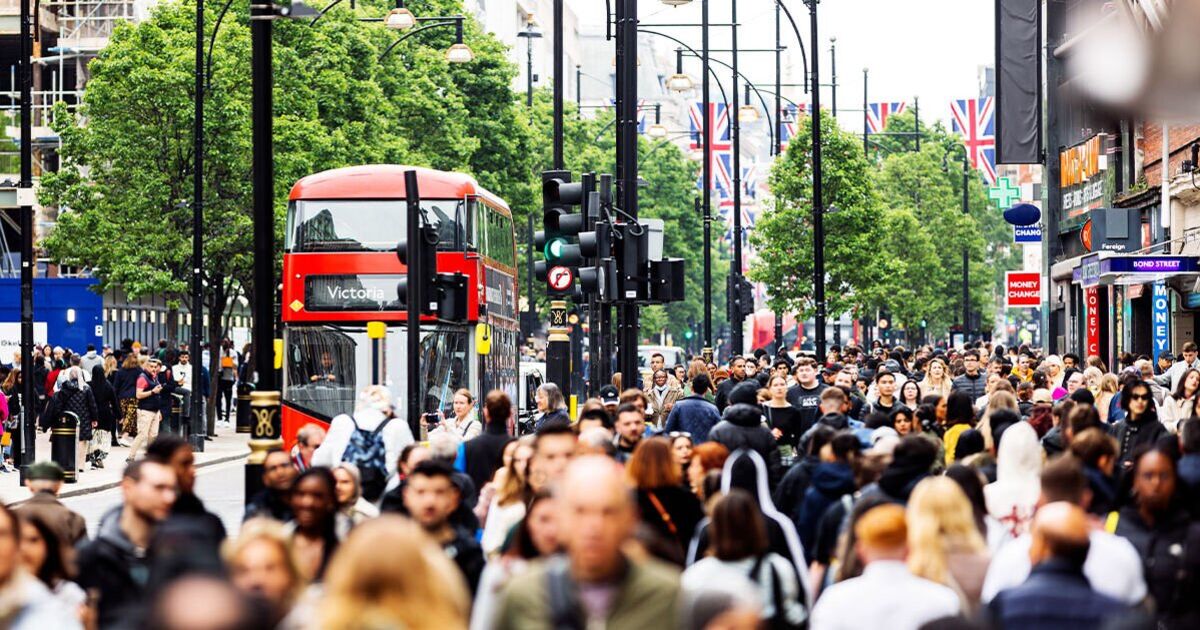
Which London Scams And Tourist Traps Should You Watch For?
Common risks for tourists include pickpocketing and phone theft, distraction scams, fake or unofficial tickets, street gambling, fake police approaches, unsafe minicabs, rickshaw overcharging, inflated nightlife bills, ATM fraud, accommodation scams and phishing attempts.
You do not need to memorise every scam. Most can be avoided by following a few simple rules:
- Keep your phone, wallet and passport secure in crowded places.
- Do not play street gambling games.
- Never hand an unlocked phone to an unsolicited stranger.
- Treat unexpected “free” gifts, offers and invitations with caution.
- Buy tickets through official or authorised sources.
- Never give your PIN or cash to someone claiming to be police.
- Use a licensed black cab or a pre-booked private-hire vehicle.
- Agree the total price before accepting unusual transport or services.
- Verify accommodation and payment details independently before paying.
- Be cautious with unexpected links, QR codes, Wi-Fi login pages and payment requests.
- If someone is creating urgency, slow down rather than speed up.
If you remember only one rule: do not let an unexpected stranger, offer or payment request rush you into acting before you verify it.
Not every risk below is technically a scam. This guide also covers common theft, fraud and safety tactics that tourists may encounter because the practical response is often similar.
What Should You Do First If You Are Scammed In London?
If you think you have been scammed, get somewhere safe, stop any further loss, then contact the appropriate service.
Use this sequence:
1. Get Somewhere Safe
Move into a hotel, shop, station, attraction, police facility or another staffed public place if you feel pressured, threatened or unsafe.
If there is an immediate emergency involving danger, serious injury or a crime in progress, call 999 or 112. For non-urgent police matters in London, call 101.
Do not argue with a scammer or try to recover stolen property yourself.
2. Stop Further Damage
Act quickly if your phone, card, account or booking is involved.
- Freeze or cancel a compromised card.
- Contact your bank or card provider about suspicious transactions.
- Lock a stolen phone remotely.
- Contact your mobile provider if appropriate.
- Change important passwords if an account may have been compromised.
- Stop further payments where possible.
- Contact your accommodation provider or booking platform if a reservation is involved.
3. Preserve Evidence Safely
- Do not put yourself in danger to collect evidence. If it is safe to do so, record:
- Time, location and business or vehicle details.
- Receipts and payment records.
- Screenshots of messages, bookings or websites.
4. Contact The Right Service
| Problem | First action |
| Immediate danger, robbery or serious injury | Get somewhere safe and call 999 or 112 |
| Theft with no immediate danger | Preserve details and report it to the Metropolitan Police via 101 |
| Stolen or compromised bank card | Freeze/cancel the card and contact your bank or card provider |
| Stolen phone | Lock the device, contact your provider and report the theft |
| Fraudulent payment | Contact your bank/card provider immediately |
| Fake accommodation | Stop further payment and contact the booking platform/property provider and Report Fraud |
| Suspected drink spiking | Stay with the affected person and seek medical help; tell venue staff and police |
| Unlicensed/unbooked taxi problem | Get to a safe public place and contact police if necessary |
| Fake ticket or tourist service | Stop further payment and contact the venue/provider and payment provider |
For fraud and cybercrime in England, Wales and Northern Ireland, Report Fraudis the current national reporting service. If a fraud or cybercrime is happening now and requires an immediate police response, use 999 for an emergency or 101 for a non-emergency matter.
London Tourist Safety Tips: The Simple Rules That Prevent Most Problems
Most London tourist scams follow a similar pattern:
Unexpected approach → distraction or pressure → request for money, valuables, information or access.
The safest response is to slow down.
Before accepting help, paying for something or handing over information, ask:
- Did I ask this person for help?
- Is the service official or independently verifiable?
- Is the price clear?
- Why am I being pressured to decide immediately?
- Can I check this through the official website or provider?
- Do I really need to hand over my phone, card, passport or personal information?
If something does not feel right, walk away and verify it yourself.
Common Scams In London And What To Do About Them
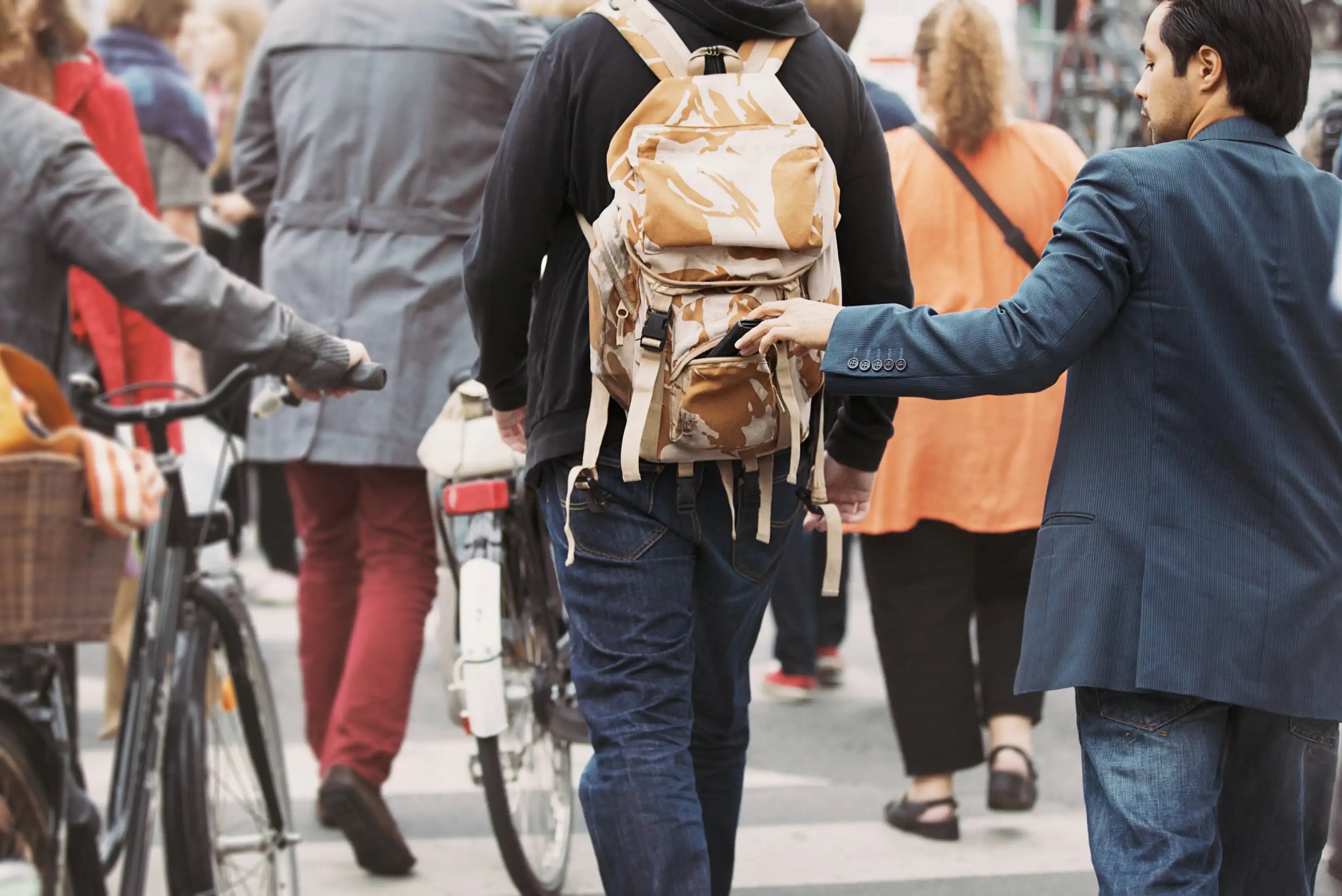
1. Pickpocketing In Crowded Places
Pickpockets may target visitors in crowded areas, particularly when people are distracted or physically bumped. The Metropolitan Police specifically advises tourists to keep wallets and valuables close and be alert in crowds.
Common situations include:
- busy Tube stations;
- escalators and exits;
- markets;
- queues;
- major attractions;
- busy shopping streets;
- crowded pedestrian areas.
Prevent it:Keep valuables in zipped compartments and avoid back pockets. You can also check live London webcamsto see how busy major areas and intersections are before you visit.
If it happens:Move somewhere safe, check your belongings immediately and freeze affected cards if anything is missing.
2. Bottleneck And Crowding Scams
A group can create congestion around an entrance, exit or narrow passage. The resulting physical contact makes it harder to notice someone reaching into a pocket or bag.
If it happens:Move somewhere safe, check your belongings immediately and freeze affected cards if anything is missing.
3. Phone Snatching And Moped Or Bike Theft
Phones are particularly vulnerable when tourists hold them out while:
- checking maps;
- photographing landmarks;
- reading messages;
- navigating;
- standing near roads or cycle routes.
In April 2026, the Metropolitan Police carried out an operationtargeting phone thieves around Southbank, Borough Market and Waterloo.
The Met said officers encountered suspects using distraction tactics and illegally modified e-bikes to steal phones and escape. Local conditions can change, so treat this as a current example rather than a permanent list of hotspots.
What To Do If Your Phone Is Stolen
Immediately:
- Use another device to lock or locate it.
- Contact your mobile provider if appropriate.
- Freeze cards or accounts accessible through the phone.
- Change important passwords if necessary.
- Report the theft to police.
Do not chase a thief into traffic or confront someone who has your phone.
4. Distraction Pickpocketing
The distraction might involve:
- asking for directions;
- asking you to take a photograph;
- a sudden argument;
- a street performance;
- someone pointing out a problem;
- a child or group approaching;
- something being spilled;
- someone asking you to interact with their phone.
The approach itself is not proof that a crime is happening. The warning sign is when the interaction unexpectedly puts someone close to your belongings or requires you to unlock your phone or produce valuables.
Best response:Secure your belongings first, then deal with the supposed problem.
5. Spillage And "Clean-Up" Distractions
Someone appears to spill food or drink on you and immediately offers to clean your clothing or belongings.
The distraction can make it easier for someone else to reach your wallet, phone or bag.
What to do:Step away, keep control of your belongings and inspect the problem yourself.
You do not have to accept help from a stranger.
6. Fake Flowers, Gifts And Friendship Bracelets
Someone may approach with:
- flowers;
- bracelets;
- keyrings;
- souvenirs;
- another supposedly free item.
After you accept it, they demand money.
What to do:Do not allow unsolicited items to be placed on you. A simple “No, thank you” followed by walking away is enough.
If someone becomes aggressive, do not argue over the item. Move towards a staffed public place.
7. Group Photo And Phone-Borrowing Scams
A stranger may ask you to take their photograph or offer to take yours. Another variation is an emergency story designed to persuade you to hand over your phone.
Safer Approach
- Use your phone's timer for photographs.
- Ask another traveller to take the picture.
- If someone claims they need to make an emergency call, make the call yourself rather than handing over your unlocked phone.
- Never unlock your phone for an unsolicited stranger unless you have independently decided that the situation is safe.
8. Gold Ring And "Found Valuable" Scams
Someone claims to have found a valuable ring or another item and offers it to you cheaply.
The supposed bargain is the attraction.
What to do:Do not buy jewellery or valuables from strangers based on a story about an item they supposedly found.
If you want jewellery or luxury goods, use an established retailer or authorised seller.
Ticket And Tourist Attraction Scams

9. Street Ticket Sellers
The Metropolitan Police advisesvisitors not to buy theatre or concert tickets from street toutsand instead to use reliable sources.
The risks include:
- invalid tickets;
- inflated prices;
- tickets for the wrong event;
- counterfeit tickets;
- no reliable refund route.
What to do:Buy tickets from the attraction or venue's official website, official box office or an authorised ticket seller.
If someone approaches you on the street claiming to have a special price, do not let urgency replace verification.
10. Tickets For Free Attractions
Some London experiences can be viewed without buying a general admission ticket, while others may require booking or offer optional paid experiences.
If somebody approaches you claiming you must buy a ticket, check the attraction's official website first.
This is particularly important for famous public ceremonies and outdoor attractions where tourists may not understand exactly what is free, what requires booking and what offers optional paid upgrades.
Rule:Verify the requirement independently before paying.
For planning your sightseeing, see the London attractions guideto compare what to book and what to see.
11. Counterfeit Designer Goods
A street seller may describe a bag, watch, perfume or clothing item as:
- genuine old stock;
- factory surplus;
- a cancelled order;
- an employee bargain;
- a one-time opportunity.
A dramatic discount is not evidence of authenticity.
What to do:If authenticity matters, buy through an established retailer or authorised channel.
12. Pop-Up And Mock Auctions
Temporary auctions can create artificial urgency around electronics, watches, furniture or other goods.
Warning signs include:
- unclear seller identity;
- pressure to bid immediately;
- unusually enthusiastic "buyers";
- unclear return arrangements;
- no reliable proof of provenance;
- pressure to pay before you have inspected the product.
Do not make an expensive purchase simply because other people appear to be buying.
Street Gambling Scams
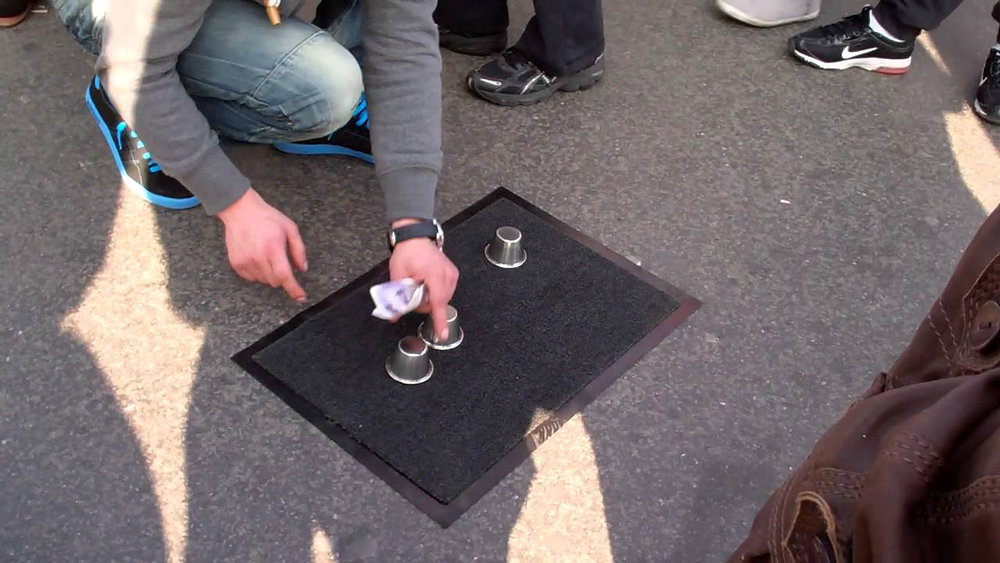
13. Cups-And-Ball Games
The Met explicitly warns touriststhat these games are likely to result in losing money and that participants can also become more vulnerable to pickpocketing when distracted or surrounded by a crowd.
Do not:
- place a "small" test bet;
- accept an invitation to play;
- assume apparent winners are genuine;
- stop to watch when the crowd becomes part of the performance.
Keep walking.
Fake Police And Authority Scams
14. If Someone Claiming To Be Police Asks For Your Money Or PIN
A person may claim to be an undercover police officer and ask to inspect your wallet, cash or identification.
The Metropolitan Police says genuine plain-clothes officers should explain why they have stopped you and show an official warrant card. They will not ask for your PIN or cash. If you are concerned about the identity of an officer, police guidance says their details can be verified through 101.
What to do:
- Do not provide your PIN.
- Do not hand over cash.
- Ask for the officer's warrant card.
- If appropriate, verify their identity through the police.
- If you believe you are being threatened or are in immediate danger, call 999 or 112.
Transport Scams In London
15. Unlicensed Or Unbooked Minicabs
This is an important London transport rule to know.
The Metropolitan Police says that only taxis, commonly known as black cabs, can be stopped in the street. Minicabs/private-hire vehicles must be pre-booked. An unbooked minicab that picks up passengers from the street is illegal and uninsured.
Remember:
- Black cab:Can be hailed in the street.
- Minicab/private hire:Must be booked.
If someone approaches you outside a station, airport or nightlife area offering a cheap ride, do not simply get into their vehicle.
Use a licensed taxi, taxi rank or pre-booked private-hire service instead.
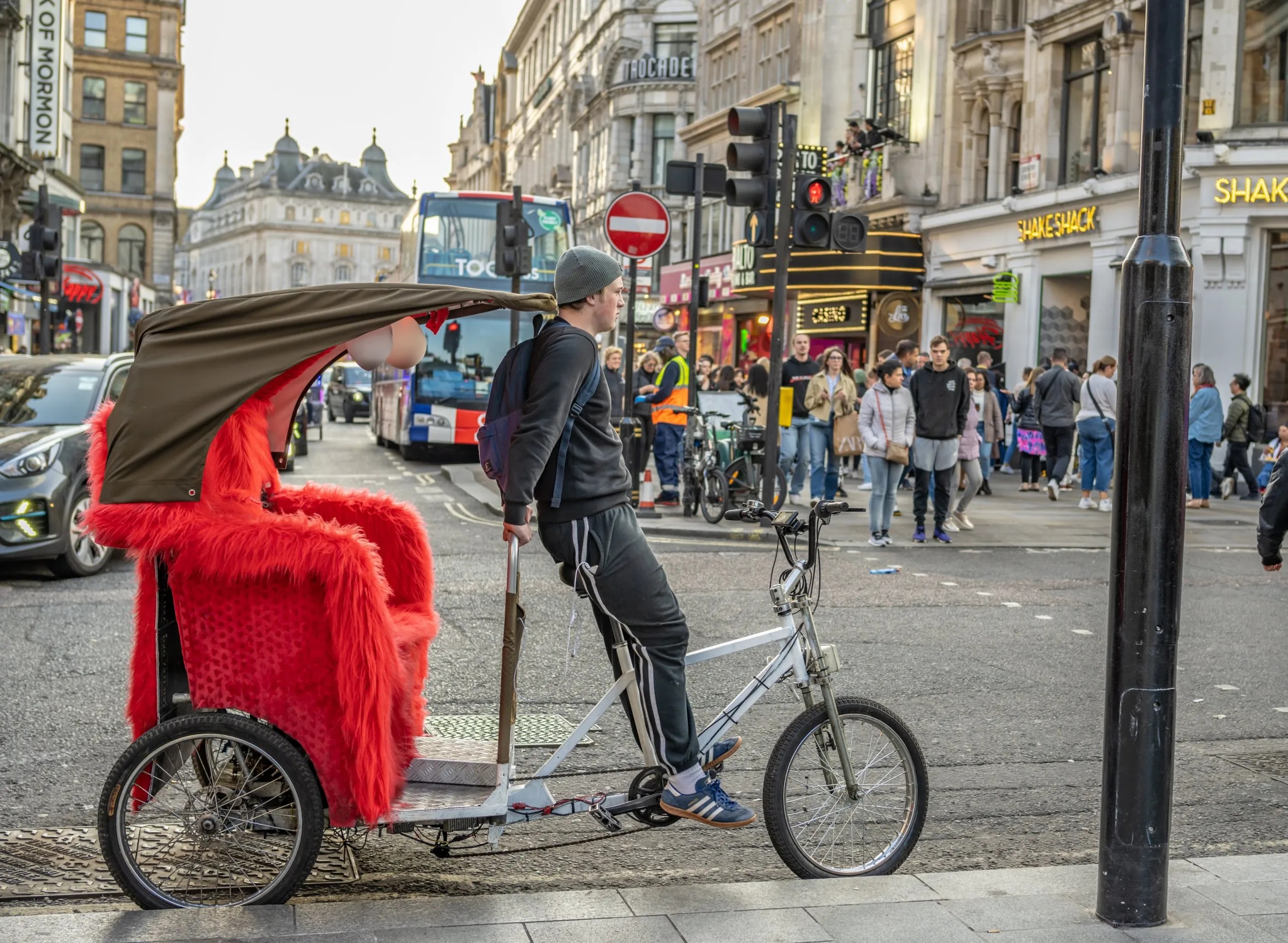
16. Rickshaw And Pedicab Overcharging
The Metropolitan Police warns that some pedicab/rickshaw journeys can result in very high charges for short distances.
Before getting in:Ask:
“What is the total price for the whole journey?”
If the driver will not give you a clear figure, decline.
Pedicab Rules Are Changing
TfL is introducing licensing for pedicab driversand operators from 30 October 2026, with regulated maximum fares also coming into force from that date. Vehicle licensing is due to become mandatory from February 2027.
If you are travelling before the new fare rules take effect, agreeing the total price before the journey is especially important.
Nightlife Scams And Drink Safety

17. Inflated Bar Bills
The Metropolitan Police specifically warns visitors about some Soho bars advertising sex shows where customers may face very high prices for drinks and additional charges.
This does notmean Soho is unsafe or that every bar is problematic.
The useful warning sign is:
A stranger approaches you → strongly recommends a venue → prices are unclear → you feel pressured to enter.
What To Do: Check the venue independently and look at prices before ordering. If the bill is unexpectedly high, ask for an itemised bill and avoid escalating the situation physically.
18. Drink Spiking
Drink spiking is a serious safety issue.
If you or someone with you suddenly becomes unusually confused, disoriented, unwell or unable to communicate normally, treat it seriously.
What To Do First
- Stay with the person.
- Tell venue staff immediately.
- Get medical help if necessary.
- Report suspected spiking to police.
The NHS advises people who think their drink has been spiked, but have not been sexually assaulted, to call 111 for urgent medical advice if they have symptoms they are worried about. If sexual assault is suspected, specialist sexual-assault services, a GP, A&E or a sexual health clinic can provide support.
Do not leave the affected person alone or assume they simply drank too much.
ATM And Card Scams
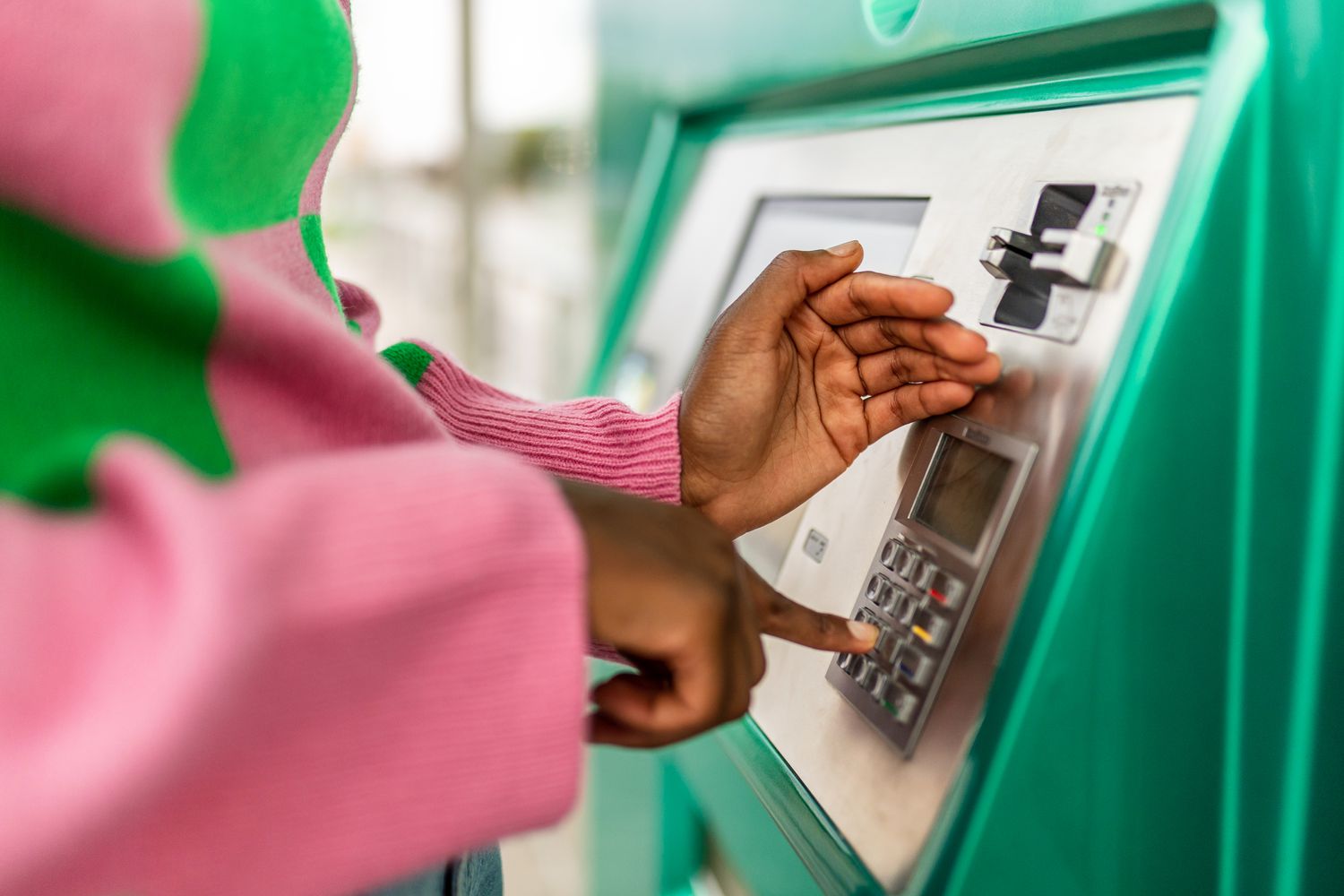
19. ATM Skimming And Shoulder Surfing
When using an ATM:
- shield your PIN;
- be aware of people standing unusually close;
- stop if the machine looks altered;
- never tell anyone your PIN;
- check your account afterwards if something seems suspicious.
The Metropolitan Police specifically advises visitors to be aware of who may be around them when using an ATM and never to give their PIN to anyone, including someone claiming to be an undercover police officer.
20. Suspicious Card Payments
Keep your card under control where possible and check the amount before approving a payment.
If your card or banking details may have been compromised:
- Contact your bank immediately.
- Freeze or cancel the card if advised.
- Check recent transactions.
- Report fraudulent transactions promptly.
Do not wait until the end of your holiday simply because the transaction appears small.
Accommodation And Online Scams
21. Fake Hotel And Apartment Listings
Accommodation fraud can happen before you arrive in London.
Warning signs include:
- a property priced far below comparable accommodation;
- copied or suspicious photographs;
- pressure to pay outside the booking platform;
- requests for bank transfer to an unfamiliar person;
- inconsistent property details;
- pressure to move the conversation to private messaging.
Before Paying
- Verify the property and address.
- Compare the listing with independent information.
- Check recent reviews.
- Prefer established booking platforms or direct payment to a verified accommodation provider.
- Be especially cautious about irreversible payment methods.
If a supposed host suddenly asks for extra money to “fix” a reservation, verify the request independently through the booking platform or property's official contact details.
22. Fake Hotel Wi-Fi
A scammer may claim that the hotel's Wi-Fi has changed and send you to a fake login or payment page.
What To Do: Ask reception for the exact Wi-Fi name and login process. Do not enter your card or account details into a page simply because it contains the hotel's logo.
23. QR-Code And Phishing Scams
QR codes can be legitimate, but they can also lead to phishing websites.
The National Cyber Security Centre advises people to be cautious with unexpected QR codes and to check where they lead before providing information.
Before entering payment details:
- check the destination website;
- confirm the domain;
- avoid unexpected payment requests;
- use the official app or website directly where possible.
How To Prepare For London Tourist Scams Before You Travel
Before your trip, a few simple preparations can make it much easier to prevent or deal with theft, fraud or other problems.
- Save important contacts:your bank/card provider, travel insurer, accommodation and emergency contacts.
- Save your accommodation address offlineso you can access it without internet.
- Enable phone tracking and remote lockingbefore you travel.
- Keep secure copies of important travel documentsand booking details.
- Carry a backup payment methodseparately from your main wallet.
- Know the transport rules:licensed black cabs can be hailed in the street; minicabs/private-hire vehicles must be pre-booked.
- Use official ticket and attraction websitesrather than buying from street sellers.
- Check accommodation details before paying, particularly when booking online.
- Avoid carrying all your cash, cards and valuables together.
Is London Safe For Tourists?
Yes, London is generally safe for tourists, but normal city precautions still matter.
The Metropolitan Police's visitor guidance specifically tells tourists to protect valuables, beware of pickpockets, be cautious at ATMs, avoid street ticket touts and cups games, and use licensed transport.
The safest approach is therefore not to ask:
“Which parts of London are completely safe?”
Instead ask:
“Where am I more likely to be distracted, unfamiliar with the rules or under pressure?”
That usually means being more alert in:
- crowded attractions;
- busy Tube stations;
- markets;
- nightlife areas;
- major shopping streets;
- unfamiliar transport pickup points.
What Are The Safest Areas In London?
There is no London neighbourhood that can honestly be described as scam-proof.
For tourists choosing accommodation, the more useful criteria are:
- good transport connections;
- well-used streets;
- convenient access to your planned activities;
- accommodation with established reviews;
- an easy route back after dark;
- proximity to staffed transport or hotel services.
If you are choosing where to stay, use the best areas to stay in london guideto compare neighbourhoods by transport, sightseeing, nightlife, family needs and budget.
For nightlife-focused trips, best areas to stay in london for nightlifeguide provides a more specific comparison of neighbourhood bases.
Frequently Asked Questions
What Should I Do First If I Am Scammed In London?
Get somewhere safe, stop any further financial or account damage, then contact the appropriate service. Call 999 or 112 for an immediate emergency, 101 for a non-emergency police matter, and your bank immediately if a card or payment is involved.
Who Should I Contact After A Tourist Scam?
Contact the organisation that can stop the immediate damage first. Use the police for theft, threats or criminal activity; your bank for card or payment fraud; the accommodation or booking platform for booking problems; and Report Fraud for fraud and cybercrime in England, Wales and Northern Ireland.
Can A London Tourist Scam Be Fixed Quickly?
Sometimes, but there is no guarantee that money or property will be recovered. A card can often be frozen immediately, a stolen phone can be remotely locked, and a suspicious booking may sometimes be stopped before further payment. Acting quickly mainly helps limit further loss.
What Should I Do If My Phone Is Stolen In London?
Move somewhere safe, lock the phone remotely and secure your accounts. Contact your mobile provider, freeze payment methods accessible through the device and report the theft. Do not chase or confront the thief.
What Should I Do If My Bank Card Is Stolen?
Freeze or cancel the card immediately through your bank. Check recent transactions and ask your bank whether additional security measures are needed. If fraudulent transactions have already occurred, report them immediately.
What Should I Do If I Suspect Drink Spiking?
Stay with someone you trust, tell venue staff and seek medical advice. The NHS advises calling 111 for urgent medical advice if you have symptoms you are worried about, or using emergency services if necessary. Contact police to report suspected spiking. If sexual assault is suspected, specialist support is available through a sexual assault referral centre.
What Should I Do If A Taxi Or Rickshaw Demands Much More Money Than Expected?
Do not put yourself in danger arguing with the driver. If you feel unsafe, prioritise getting to a public, staffed location. Keep any payment record, vehicle details and other evidence you can safely obtain. For future journeys, remember that minicabs should be pre-booked, while licensed black cabs can be hailed in the street. Agree a pedicab price before travelling.
How Can I Avoid London Tourist Scams Next Time?
Use official ticket sources, pre-book minicabs, secure your phone and wallet in crowds, avoid street gambling, verify unexpected payment requests and never give your PIN to someone claiming to be police. Most importantly, do not let a stranger's urgency become your urgency.
Final Takeaway
London travel safety does not require constant suspicion.
It requires a few reliable habits:
Secure your valuables → verify unexpected approaches → use official services → slow down when pressured → act quickly when something goes wrong.
If a problem happens, remember the sequence:
Get safe → stop further loss → contact the right person → preserve evidence → prevent it happening again.
That is far more useful than trying to memorise every individual scam.
And if you are unsure whether an offer, ticket, transport service or payment request is legitimate, walk away and verify it independently first.
Jump to
Which London Scams And Tourist Traps Should You Watch For?
What Should You Do First If You Are Scammed In London?
London Tourist Safety Tips: The Simple Rules That Prevent Most Problems
Common Scams In London And What To Do About Them
Ticket And Tourist Attraction Scams
Street Gambling Scams
Fake Police And Authority Scams
Transport Scams In London
Nightlife Scams And Drink Safety
ATM And Card Scams
Accommodation And Online Scams
How To Prepare For London Tourist Scams Before You Travel
Is London Safe For Tourists?
What Are The Safest Areas In London?
Frequently Asked Questions
Final Takeaway

James Rowley
Author
James Rowley is a London-based writer and researcher covering London life, cultural geography, London travel, live London webcam pages and selected public figures across entertainment, sport, business and public life.
For over 15 years, he has focused on verified sources, first-hand local context and clear explanations that help readers understand both places and people more deeply. His work combines street-level London knowledge with careful research into career credits, media work, business interests and, where relevant, transparently explained net worth estimates.
He writes and reviews articles published on LondonWebcam.
Latest Articles
Popular Articles