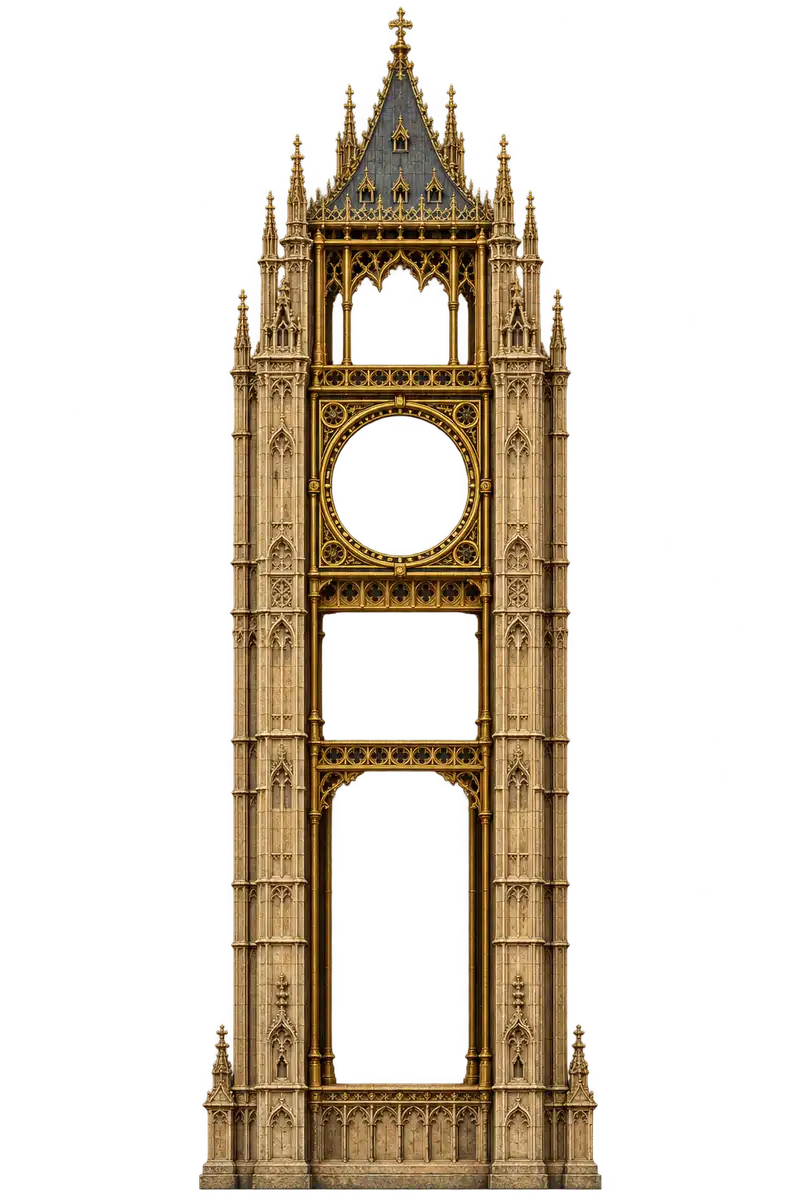
A falling weight. A patient swing. A bell that speaks to a city. Step behind London’s famous clock face and discover how a little tick does a very big job.
The clockwork starts when this exhibit comes into view. Choose a numbered stop, pause it or step one beat at a time. Tap a brass number to hear its part of the story: winding for the weights and wheels, ticking for the timekeeper, and a deep strike for the Great Bell. The sound switch is waiting at the top whenever you want quiet.
Meet the clockwork
Hover over a brass number, or reach it with the Tab key, to discover its job. Tap a number to explore and listen.
1 · The falling weights
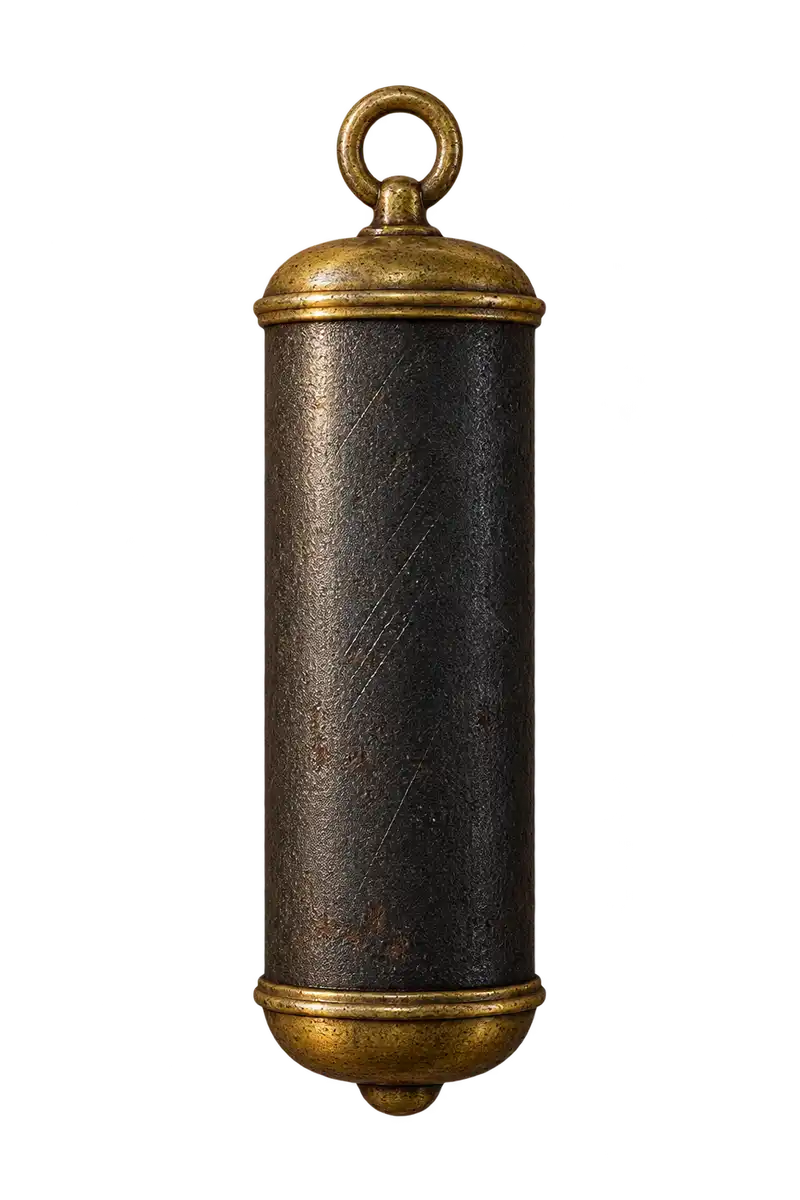
Raised weights store energy. Winding lifts them; their slow descent powers the clock.
2 · The gear trains
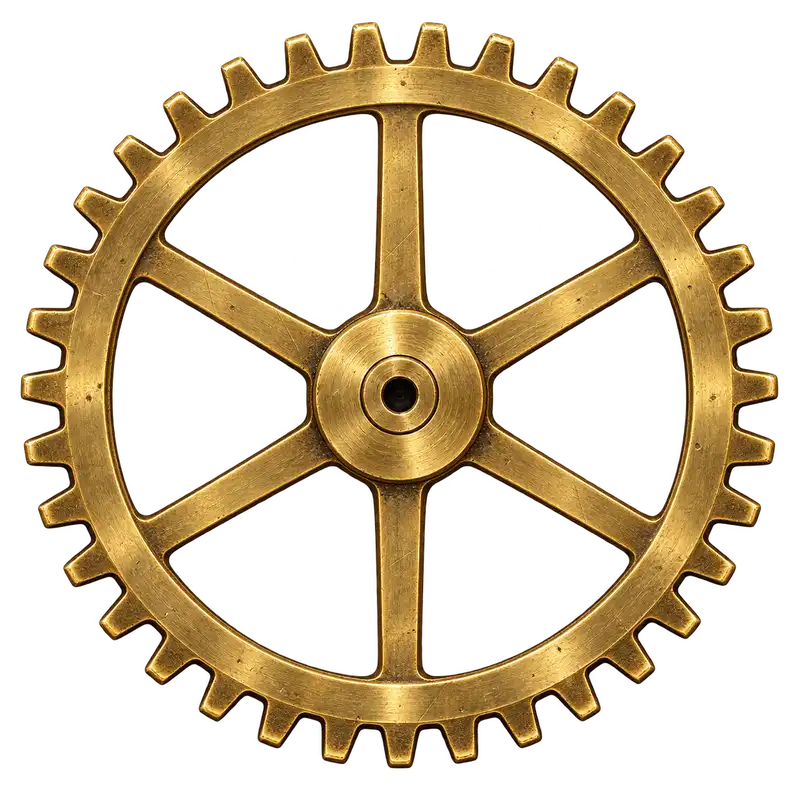
Connected wheels pass motion between the hands, quarter chimes and hour strike.
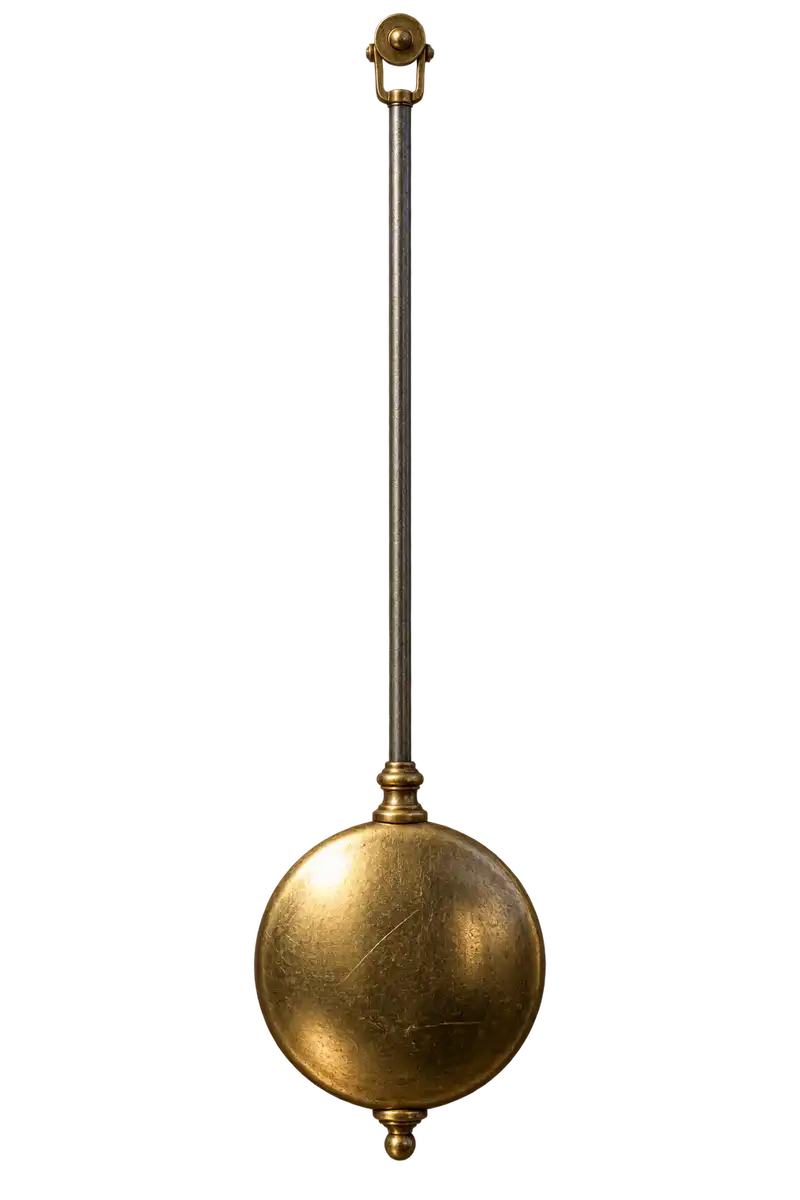
3 · The pendulum
A two-second beat gives the clock its rhythm: one side, then the other.
4 · The escapement
The escapement releases the wheels in steps and helps keep the pendulum’s beat steady.
5 · The bells & hammer
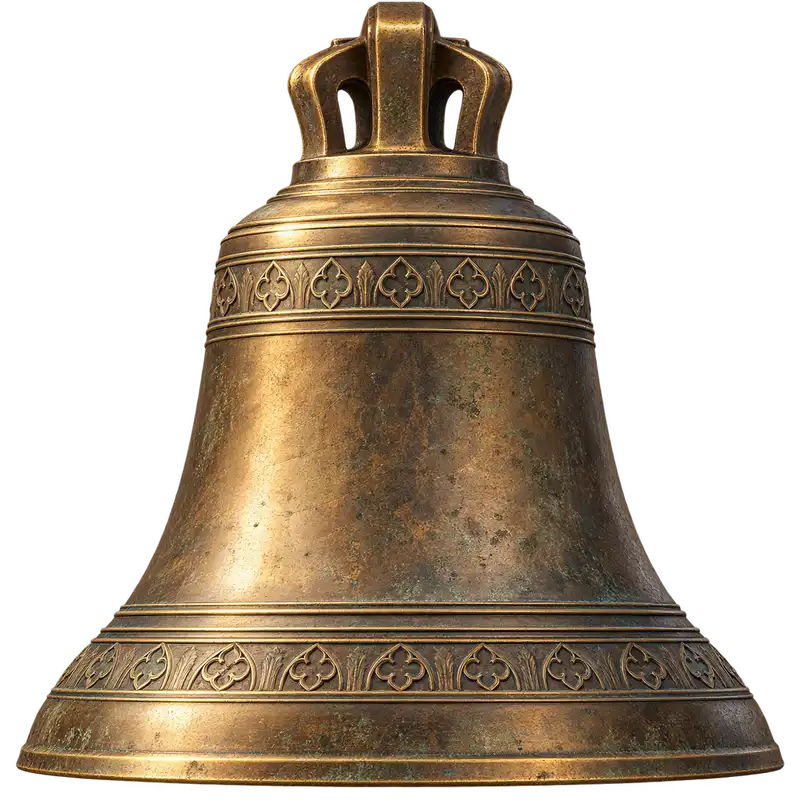
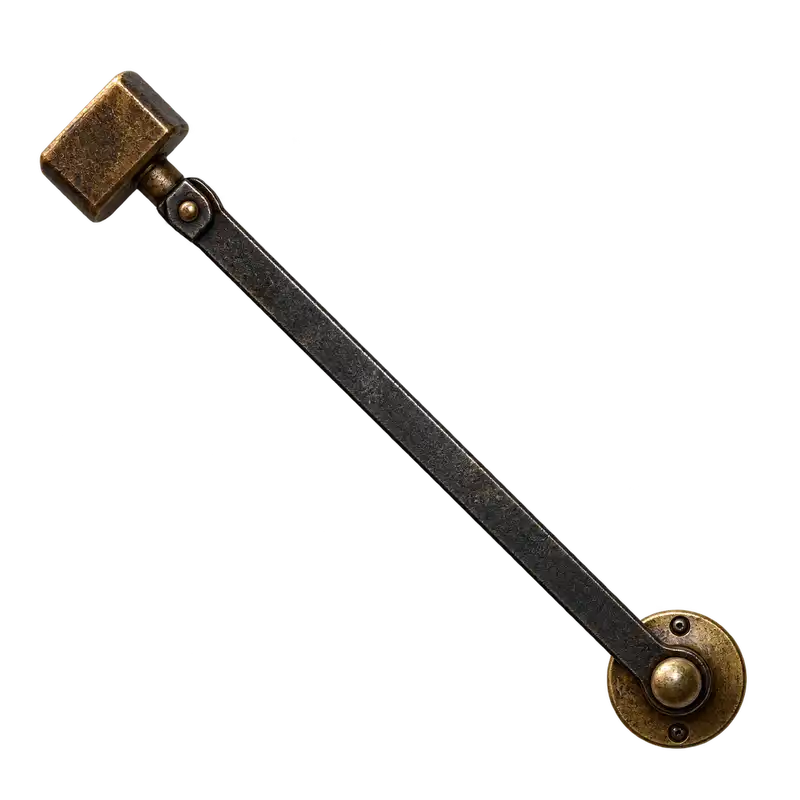
The bell stays fixed. An outside hammer strikes the bronze and makes it vibrate.
A window into the clock: follow the brass numbers from the energy store to the bell. Tap a number, listen, and watch the explanation unfold.
01 · The falling weights
Gravity pays the energy bill.
Raised weights store energy. As they descend, they turn the clock’s wheels. Winding lifts them up again. The pendulum controls the pace; the falling weights supply the power.
Look below the wheels: the hanging weights are the clock’s energy store.
Clockwork is paused. 0 beats stepped. Gears show the idea of movement, not the real ratios. Reset tower winds the weights back up.
Reduced motion is on. The mechanism stays still; Step one beat changes its state.
Listen for the steady tick of the clockwork.
01 / Follow the power
What keeps a five-tonne clock going?
The face gives you the answer. Behind it is a machine doing the work: storing energy, measuring intervals, moving hands and deciding when to ring. The names help. Elizabeth Tower is the building, the Great Clock is the timekeeping mechanism, and Big Ben is the Great Bell. We use “Big Ben” for the whole landmark in conversation; inside the tower, the distinctions become useful.
Imagine lifting a heavy bag, then slowly lowering it while its rope turns a wheel. You put energy in by lifting; gravity gives it back as the bag descends. The clock uses that principle. Raised weights pull on the mechanism as they fall, and winding raises them for another run. The clock’s three gear trains divide the labour: going, chiming and striking.
A gear train is simply a linked set of toothed wheels. Each wheel passes motion to the next. Different wheel sizes let a mechanism trade speed for turning force. The going train sends motion to the hands; the other trains have their own weights and operate the bell hammers. The pendulum does not haul those heavy hands around. It supplies the rhythm that controls the release of energy.
Look closer: three jobs, three trains
Parliament’s virtual tour describes the going train’s 254 kg driving weight and the much heavier 1,180 kg weights for the chiming and striking trains. These are driving weights, separate from the pendulum and from the five-tonne clock mechanism. The tour also shows the ropes and barrels that do the lifting. Our tower plate separates the functions but compresses the room layout.
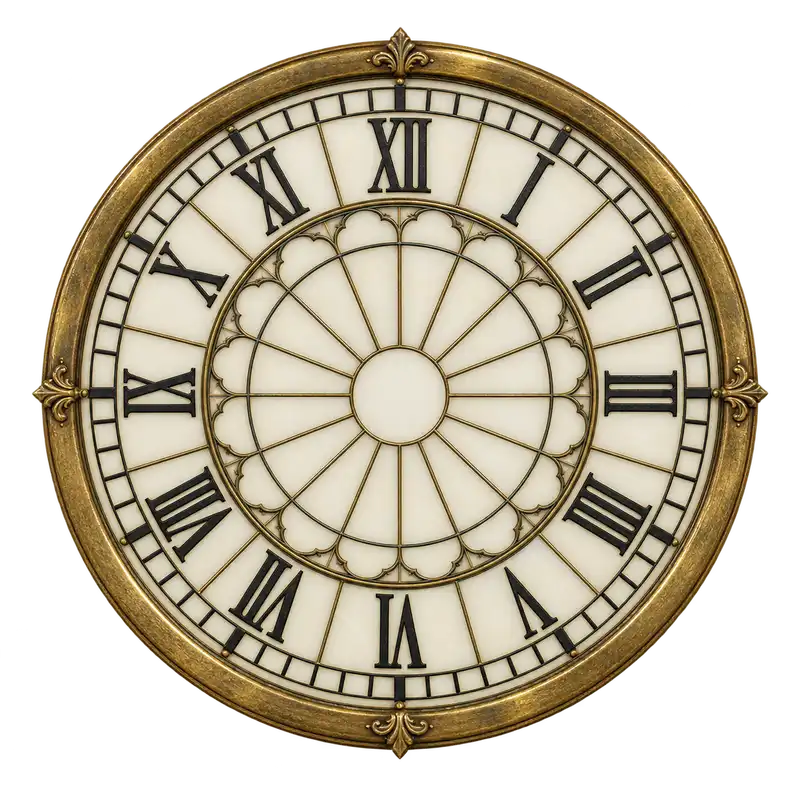
Four enormous dials let London read the time from different directions. Their hands are driven by the same going train. Imagine keeping four school clocks in step with a single mechanism.
7 mfrom edge to edgeLift the brass label +
That is the diameter of each dial. Its radius is half as much: 3.5 metres. Walk around an imaginary dial laid on the ground and you would cover about 22 metres.
324pieces of light in each dialLift the brass label +
Opal glass fills the cast-iron framework like a great illuminated mosaic. Across four dials, that adds up to 1,296 carefully fitted pieces. Try the glass-counting challenge in the notebook.
02 / Keep the beat
The clock’s patient heart.
A swinging pendulum takes almost the same time to repeat a small swing. That makes it a useful timekeeper. The Great Clock’s pendulum is 4.4 metres long, and Parliament gives each beat as two seconds. A beat carries it from one side to the other; returning makes a full cycle of about four seconds. Try counting slowly: left … right … left.
There is a catch. Friction and air resistance would eventually stop a pendulum left on its own. The escapement keeps it going with small impulses while allowing the clockwork to advance in controlled steps. Think of a gate that opens briefly, then catches the mechanism again. That is the job, though the real device is much more subtle than a simple gate.
Edmund Beckett Denison designed the Great Clock’s double three-legged gravity escapement to help the clock keep its rhythm despite outside pressures, including wind on its enormous hands. It gives the timekeeper some protection from the work being done elsewhere. The illustration shows the relationship; it does not claim to reproduce that escapement’s geometry.
Try it: longer or shorter?
Predict first: will a longer pendulum make fewer swings or more swings in the same time?
❦
0.5 m4.0 m
for one complete out-and-back swing
Reduced motion is on: use the still diagram and calculated period.
The grown-up bit: what the model assumes
For an ideal small-angle pendulum, T = 2π√(L/g), using g = 9.81 m/s². T is the full period. Increasing length increases the period; doubling length multiplies it by √2. The bob’s mass does not appear in this ideal formula.
This simple pendulum is a teaching experiment. The Great Clock’s compound pendulum, escapement, air resistance and temperature are outside the calculation. Its documented beat is two seconds; this slider does not calibrate the real clock.
Because precision sometimes needs a very small adjustment. A pre-decimal penny placed on the pendulum’s adjustment tray makes the real clock gain about 0.4 seconds in a day. This is a special way of adjusting this mechanism. It does not mean that adding mass to the bob of any pendulum makes it swing faster.
Try it: the penny adjustment
Add up to five pre-decimal pennies and calculate the extra time gained, using Parliament’s approximate rate of 0.4 seconds per penny per day.
Each dial is seven metres across. Its 324 pieces of opal glass make a luminous mosaic inside a cast-iron frame. The minute hand stretches 4.2 metres: it has a long way to travel, even when its motion looks gentle from the street. The hour hand moves much more slowly.
The relationship is familiar but remarkable. In twelve hours, the minute hand turns twelve times while the hour hand turns once. When the minute hand goes halfway round, the hour hand must creep halfway towards its next hour mark. Both move continuously in this reading model, so half past ten is not drawn with the hour hand stuck exactly on ten.
Try it: turn twelve hours
❦
12:0012 hours
The dial in the tower above follows this control too. This is your model time, not a live clock.
Look at the Westminster camera afterwards. The tower and a readable dial may be visible, but the street view cannot reveal the pendulum or the bell chamber. The drawing supplies an explanation of what is hidden; the camera supplies a view from outside.
In the belfry, four quarter bells carry the tune and Big Ben counts the hours. All five stay fixed. Hammers strike their outside surfaces, rather than a clapper striking inside a swinging bell. Big Ben weighs 13.7 tonnes; even its hammer weighs 200 kilograms.
The quarter chimes mark the passing quarter-hours. At the hour, the Great Bell adds the count. The quarter bells have different notes, giving the mechanism a small musical vocabulary. Parliament’s detailed bell record lists G sharp, F sharp, E and B. Those are the four bell identities, not the order of the complete Westminster tune.
Try it: a little bell keyboard
Tap a note and listen to its voice. Which sounds highest? Try singing it back, then compare another. These four notes give us a little laboratory for pitch.
Listen for the steady tick of the clockwork.
About the sounds in this exhibit
Our listening room uses specially created ticking, winding and bell sounds, alongside a four-note electronic bell keyboard. The full production notes are in Sources below. The quiet ticking begins when your browser permits it; if it asks for a tap first, use Start ticking at the top. Mute and Stop sounds give you quiet at any time. Hiding the tab pauses the audio; returning resumes the ticking unless you muted or stopped it.
Here is the lovely thing about a clock: you can see numbers doing useful work. A circle becomes an angle, a falling weight becomes stored energy, and a repeating swing becomes a way of counting seconds. You do not need to know all the formulas before you begin. Try a prediction, move a control, then work through the numbers.
Start with the counting questions if you are new to this. For a deeper challenge, keep the units beside every number. They are clues: metres divided by metres per second must leave seconds. A calculator is welcome; explaining your answer is the real achievement.
1. Count the rhythm, not just the swings.
Listen to two beats: tick … tock. One beat takes the Great Clock’s pendulum from one side to the other in two seconds. It needs another beat to come back. That makes a full cycle four seconds long. Mixing up a beat and a complete swing would make a calculation twice as large or half as large as it should be.
Your turn · Pencil & paper welcome
How many beats in a minute?
One beat takes 2 seconds. How many beat intervals fit into 60 seconds?
Show the working
60 ÷ 2 = 30 beats. Two beats make one full cycle, so that is 15 complete out-and-back swings. In an hour: 3,600 ÷ 2 = 1,800 beat intervals.
Your turn · Pencil & paper welcome
Four times the length
An ideal 1 m pendulum has a period of about 2 seconds. If its length becomes 4 m, about how many seconds will one complete swing take?
Show the working
T = 2π√(L/g). Multiplying L by 4 multiplies T by √4 = 2. About 2 × 2 = 4 seconds. Our slider gives 2.01 s and 4.01 s using g = 9.81 m/s². This assumes a simple pendulum and a small swing, rather than the Great Clock’s extended pendulum assembly.
Your turn · Pencil & paper welcome
Small coins, a whole week
Each penny makes the clock gain about 0.4 seconds per day. How many extra seconds would 3 pennies add over 7 days?
Show the working
3 × 0.4 = 1.2 seconds per day. Then 1.2 × 7 = 8.4 seconds. We are extending Parliament’s approximate adjustment rate, not predicting an exact observed error.
2. Gravity is the battery.
When you lift a book onto a shelf, you store energy in the Earth–book system. Let it fall and that gravitational potential energy can become motion. In a clock, the rope and wheels let a raised weight give up that energy gradually. Winding is the work of putting the energy back.
Near Earth’s surface, the change in potential energy is E = m × g × h. Here m is mass in kilograms, g is about 9.81 metres per second squared, and h is the vertical drop in metres. The result is in joules. Twice the drop gives twice the energy; twice the mass does too.
Energy bench · A what-if calculation
Give the driving weight a little height.
Take the going train’s 254 kg driving weight from Parliament’s virtual tour. Choose an imagined descent below. This is a calculation of energy released by that drop; we are choosing the height, rather than measuring the clock’s actual travel.
❦
0.5 m3 m
254 kg × 9.81 m/s² × 1.0 m
of gravitational potential energy released
Energy tells us how much work could be done. Power tells us how quickly it is done. If this chosen drop took one hour, its average released power would be E ÷ 3,600 = 0.69 watts. Friction, the other trains and the real winding schedule need their own measurements before we could describe the whole clock’s power use.
Your turn · Pencil & paper welcome
Double the drop
For an imagined 1 m descent, use g ≈ 10 m/s² to estimate the energy from a 254 kg weight. How many joules?
Show the working
E ≈ 254 × 10 × 1 = 2,540 joules. A 2 m drop would release about 5,080 J. With the more precise g = 9.81, the 1 m result is 2,491.74 J. Both calculations make sense when you state which approximation you used.
3. Teeth trade speed for turning force.
Imagine marking one tooth on each of two meshed gears. Every tooth passing the meeting point must fit a gap in the other wheel. A little 20-tooth wheel must turn three times to pass as many teeth as one revolution of a 60-tooth wheel. The large wheel turns more slowly, and turns the opposite way. That is how a fast motion can become a slower, stronger turning action.
Gear bench · An example pair
Drive 20 teeth into 60.
❦
3 rpm18 rpm
at the larger gear, in the opposite direction
Output speed = 6 × 20 ÷ 60
These are classroom gear sizes. The tower illustration introduces the parts; this pair lets us isolate the ratio. In an ideal pair, the slower gear has three times the turning force, or torque. Real teeth and bearings lose some energy as heat.
Your turn · Pencil & paper welcome
A new pair of gears
A 12-tooth driver turns at 10 rpm and meshes with a 40-tooth gear. What is the larger gear’s speed?
Show the working
10 × 12 ÷ 40 = 3 rpm, in the opposite direction. Both gears pass 120 teeth through the meeting point per minute: 10 × 12 = 3 × 40.
4. Make a circle tell the time.
A full turn is 360°. Divide it into 60 minutes and you get 6° for each minute of the minute hand. The hour hand takes twelve hours for its full turn: 30° per hour, or just half a degree per minute. At half past ten, it belongs halfway between ten and eleven. Try that on the dial above.
Your turn · Pencil & paper welcome
A quarter of an hour
The minute hand moves 6° each minute. How many degrees does it turn in 15 minutes?
Show the working
6 × 15 = 90°, one quarter of a circle. During those same 15 minutes, the hour hand moves 15 × 0.5 = 7.5°. The hands are always moving together, at different speeds.
Your turn · Pencil & paper welcome
Around one giant dial
A dial is 7 m across. Use π ≈ 3.14 and circumference = π × diameter. How many metres around its circular edge?
Show the working
3.14 × 7 = 21.98 metres, or about 22 m. Be careful with diameter and radius: C = πd = 2πr, and here r = 3.5 m.
Your turn · Pencil & paper welcome
A tower full of glass
Each of the four dials contains 324 pieces of opal glass. How many pieces across all four?
Show the working
4 × 324 = 1,296 pieces. The arithmetic is quick; imagine the care needed to fit each piece into those enormous iron frames.
5. The bell rings here. You hear it there.
The hammer gives the bronze a sudden push. The bell’s surface vibrates, squeezing and releasing the surrounding air. Those pressure changes travel outwards. The bronze does not fly down the street to your ear; the disturbance travels through the air, rather like a ripple spreading across water.
Sound has a speed, so distance becomes a delay. In air at about 20°C, use 343 metres per second. Warmer air, wind and the route sound takes can change the arrival time. Our bench assumes a straight path through still air at that temperature.
Listening bench · Distance ÷ speed
Stand back and let the sound catch up.
❦
50 m1,000 m
BellListener
for the sound to reach you after the strike
Time = 100 m ÷ 343 m/s
This is the direct, one-way journey. An echo needs a reflection and an extra stretch of travel. Light travels so much faster that, at these distances, seeing the hammer strike gives you a useful starting point for thinking about the sound delay.
Your turn · Pencil & paper welcome
Half a kilometre away
At 500 m from the bell, estimate the sound’s one-way travel time. Divide 500 by 343 and round to two decimal places.
Show the working
500 ÷ 343 = 1.4577… ≈ 1.46 seconds. This is a delay after the strike, rather than an echo or a delay inside the clock mechanism.
The bell keyboard offers another experiment. The example E tone is about 330 hertz: roughly 330 vibrations each second. B is about 247 hertz, so it sounds lower. A bell carries several frequencies at once; the combination and the way they fade give bronze its rich, recognisable voice. Pitch and loudness are different: a quieter note can still be higher.
Fire, ambition, and a sound London learned by heart.
Before this clock could measure a single second, Westminster had to rebuild. On 16 October 1834, fire devastated the old Palace of Westminster. Burning obsolete wooden tally sticks in underfloor stoves set off the disaster. Westminster Hall survived, but Parliament needed a new home. The familiar tower belongs to the rebuilding that followed; it was never part of the medieval palace.
Charles Barry won the competition for the new palace, working with Augustus Welby Pugin on its Gothic Revival detail. Pointed forms, elaborate carving and a soaring roof give the tower an old-world appearance. Yet the machinery inside answered a very Victorian challenge: how could a large public clock keep dependable time while driving huge hands exposed to the weather?
Each brass date opens a short chapter. Notice how invention, breakdown and careful repair belong to the same history.
The tower begins to rise
The foundation stone was laid on 28 September. Materials arrived by road and river, and the builders worked upwards from inside the structure. Beneath the carved stone is a great body of brickwork.
Edward John Dent was appointed to build the mechanism to Edmund Beckett Denison’s design. After Dent died, his stepson Frederick completed it in 1854. The machinery was ready years before it could be installed in the unfinished tower.
The first Great Bell cracked during testing in 1857. A replacement was cast at the Whitechapel Bell Foundry in 1858. Making a bell of this scale was a feat of casting and handling, with no guarantee of success at the first attempt.
The Great Clock began keeping time on 31 May. Big Ben first sounded on 11 July, but the replacement bell also cracked later that year. The clock could keep time while the Great Bell was silent; the largest quarter bell took over the hour strikes.
Big Ben returned to service after being turned so that a lighter hammer struck a different spot. The repair allowed this enormous casting to keep doing its job. The surviving crack is part of the bell’s story.
The BBC first broadcast the chimes to the United Kingdom on New Year’s Eve. International broadcasts followed in 1932. Radio let people recognise the tower by listening, even if they had never visited London.
The air raid of 10–11 May destroyed the Commons Chamber and damaged Westminster Hall and the Clock Tower. Parliament’s collections also record wartime damage to the south dial’s glass. The clock and bell continued working: survival did not mean the building escaped harm.
A fly-fan failure allowed part of the mechanism to run out of control, causing major damage. The bells were silent for nearly nine months. It is a dramatic reminder that controlling a machine’s speed matters as much as giving it power.
The Clock Tower became Elizabeth Tower in honour of Queen Elizabeth II’s Diamond Jubilee. Big Ben remained the name of the Great Bell. The building, clock and bell each carry their own history.
A major conservation programme repaired the tower and overhauled the clock. Regular service returned in 2022. Conservators used paint analysis to recover historic colours, including the deep Prussian blue revealed on the restored North Dial in 2019.
Two often-repeated stories point to Sir Benjamin Hall, who oversaw the works, or the boxer Ben Caunt. MPs discussed both explanations in 2012. Those retellings show that the stories circulated; they do not settle which one gave the bell its name. A popular nickname can outlive the evidence for how it began.
Astronomer Royal George Airy set a demanding target: the clock should strike the hour within one second of the correct time. Read that carefully. It was a design requirement for the hour strike, rather than a promise that every clock reading would always be perfect. To check the new clock, time from Greenwich’s accurate chronometers was sent to Westminster by telegraph.
Imagine the partnership: a pendulum counting out its rhythm in Westminster, precision timekeepers at Greenwich, and an electrical message linking the two. Checking a mechanical machine against a distant reference made accuracy something that could be tested.
Wind pushing on a giant hand changes the load on the wheels. Denison’s double three-legged gravity escapement helps isolate the pendulum’s rhythm from those changing demands. The cleverness lies in letting a large mechanism do heavy work while keeping the timekeeper’s impulses regular.
Try a thought experiment: you are keeping a steady clapping beat while someone asks you to lift different bags. Which arrangement would help—doing both jobs yourself, or letting a separate lifter take the changing load? The clock’s solution is mechanical, but separating jobs is the useful idea.
The going train moves the hands. Chiming and striking have their own trains and falling weights, with fly fans regulating their speed. Air resistance on the turning fans helps restrain the descent: the pendulum is not being asked to set every hammer’s movement directly.
Electric assistance was added for winding in 1913. That lifts the weights again; it does not turn the pendulum into a quartz clock. Look back at the energy bench: winding replenishes the store that gravity then releases.
The four dials make time readable from different directions; the bells carry it beyond the face. The Ayrton Light near the top adds another message, signalling when Parliament is sitting after dark. Dial lighting changed from gas to electricity in 1906. The tower’s technology has been adapted while its mechanical heart has been conserved.
That is part of its importance: architecture, precision mechanics, sound, lighting and human maintenance work together. A landmark can be beautiful and useful at the same time.
Paint analysis helped conservators recover a colour scheme obscured by later paint and pollution. The Prussian blue on the restored dial was a return to historical evidence. Preserving a machine asks two questions together: which parts need repair, and what evidence tells us how it once looked and worked?
The tower stands at the northern end of the Palace of Westminster, beside Parliament Square and Westminster Bridge. Nearby Westminster Hall is part of the palace; Westminster Abbey is a separate building. Keeping those places distinct helps us put the right story in the right setting.
Some events below happened long before the present tower existed. These are stories of the surrounding Westminster neighbourhood, rather than events that all took place inside Elizabeth Tower.
1605 · The old Palace of Westminster
The Gunpowder Plot is discovered.
In the early hours of 5 November, Guy Fawkes was found with gunpowder beneath the House of Lords. The plot threatened James I and the assembled Parliament. This was the earlier palace: placing today’s Big Ben in that scene would move it backwards by more than two centuries.
Charles I’s trial began in Westminster Hall on 20 January, after the Civil War. It raised fundamental questions about the authority of a king and who could hold him to account. The Hall predates the Victorian tower; its survival lets several eras share one palace site.
On 18 November, suffragettes trying to reach Parliament faced violence from police and members of the crowd. The day became known as Black Friday. The clock was already part of this landscape, but the people beneath it were still fighting over who could take part in democracy.
From 14 to 19 September, Queen Elizabeth II lay in state in Westminster Hall, where members of the public came to pay their respects. The tower had been named in her honour ten years earlier. The same neighbourhood can hold political argument, everyday journeys and shared mourning.
Choose 1605, 1859 or 2022. Could the present tower appear in a picture of that year? Would the clock already be working? Use the dates above to explain your answer. Then ask what a photograph can show—and what needs a written record, a surviving object or a witness’s account.
Check your reasoning
In 1605, the present tower did not exist. During 1859 it was completed, with the clock starting on 31 May and the Great Bell first sounding on 11 July. In 2022 the tower was part of the skyline during the lying-in-state; regular bell service returned later that year. The date within a year can matter as much as the year itself.
When you return to the Westminster Bridge view, look for the relationship between tower, palace and river. A present-day camera gives us one moment. The records linked here help us understand the layers of time around it.
09 / Take a little clockwork away
Three questions for the journey home.
A great machine is easier to understand when you can name the job of each part. Before closing the tower, try answering these aloud. Then open the folds to check your reasoning.
What supplies the energy: the pendulum or the weights?
The descending weights supply energy. The pendulum sets the rhythm, while the escapement controls the release and keeps the pendulum moving. Winding stores more energy by raising the weights.
Why does a longer pendulum take more time?
For the ideal small-angle model, its period grows with the square root of its length. The length slider shows the consequence: longer means a slower return. Changing the mass alone does not change the period in that model.
What moves when Big Ben strikes?
The external hammer moves to strike the fixed Great Bell. The bell vibrates to make sound, but does not swing from side to side.
The layered tower opens up the relationships between the parts; its room positions, wheel counts and moving gear ratios are simplified. The ticking, winding and single bell sound were created with ElevenLabs for this lesson, rather than recorded inside Elizabeth Tower. The bell keyboard uses browser synthesis at illustrative octaves; it is a pitch experiment, rather than a performance of the Westminster Quarters. The notebook’s chosen heights and gear sizes are worked examples. The page neither measures the real clock nor changes it.