
The London field guide.
The stories, streets and small details behind London’s camera views. Explore a landmark, understand a neighbourhood, or learn to make more of a street-level image.
By LondonWebcam. Historical claims are supported by the references in each guide.
Six places, a closer look.
Explore the history and details behind these illustrated London scenes. These are artworks; camera coverage is listed separately in the camera collection.

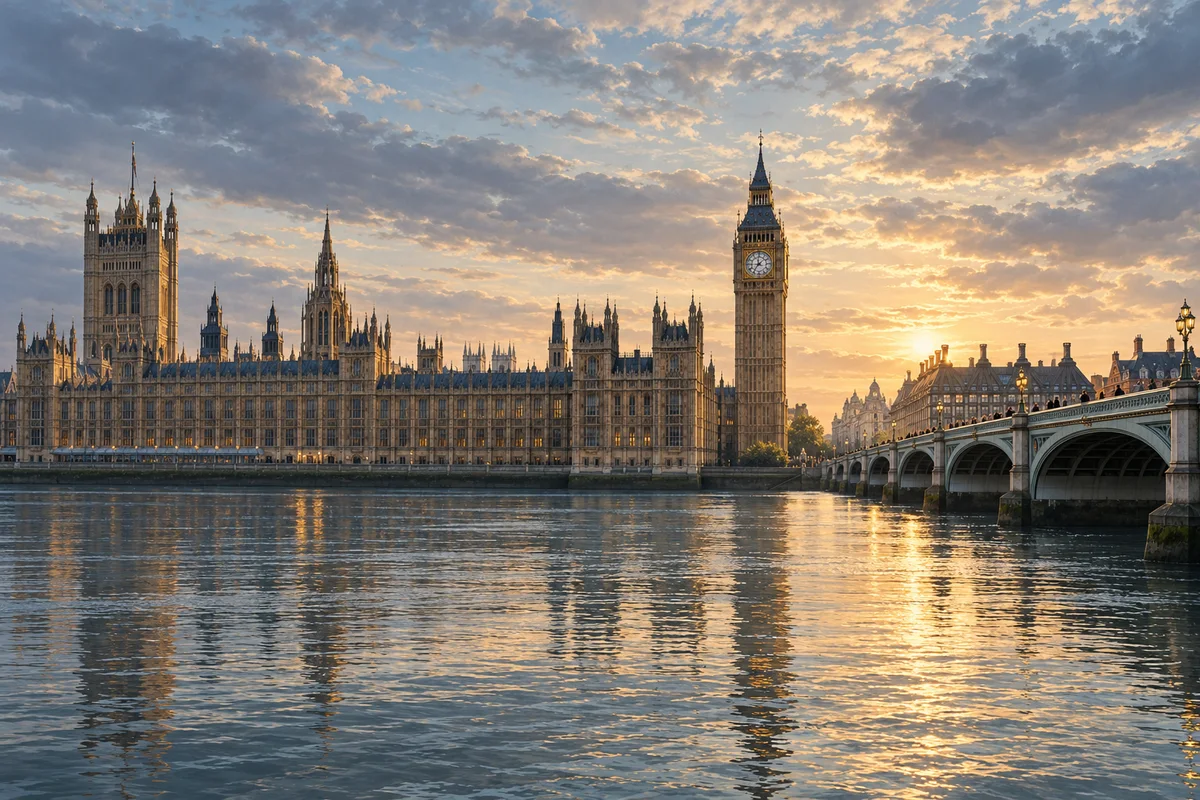
Big Ben: the bell, the clock and Elizabeth Tower
A familiar outline hides three different jobs. Look inside the clock and try its penny arithmetic.
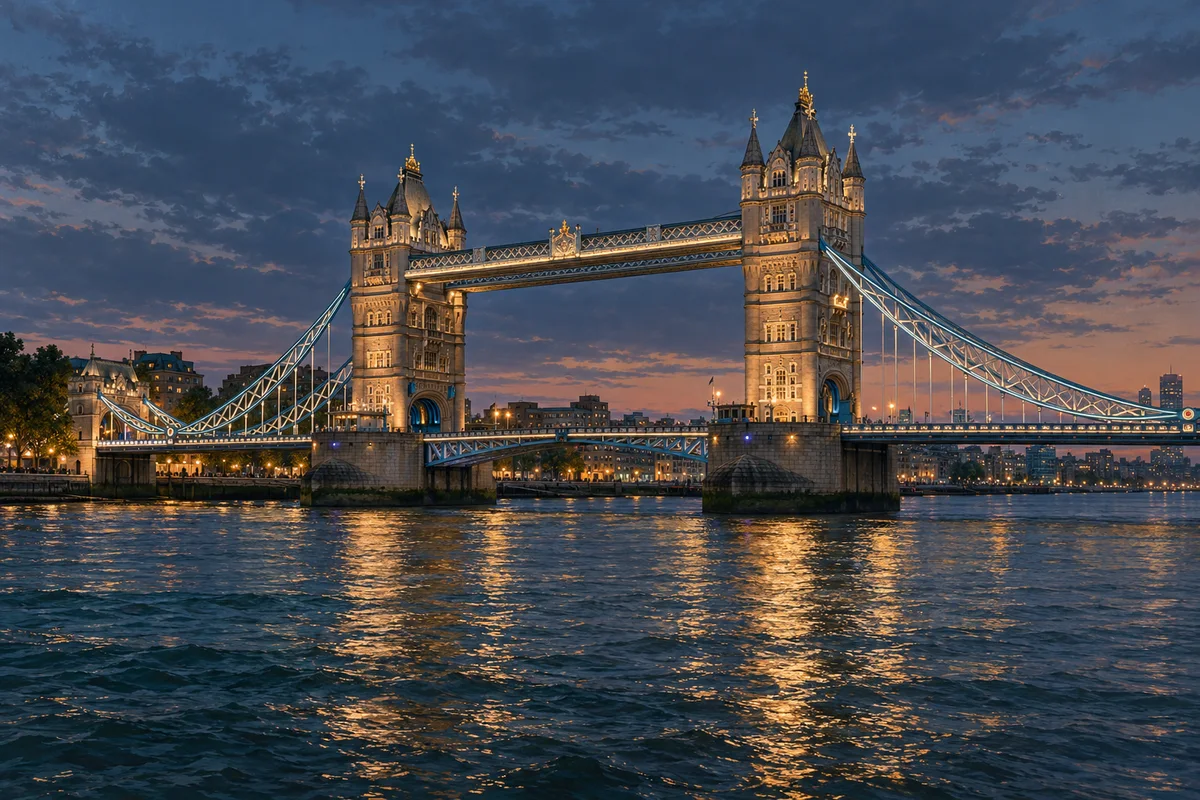
Tower Bridge: the river gets a turn
Raise the roadway, reveal the counterweights and follow the balance beneath the towers.
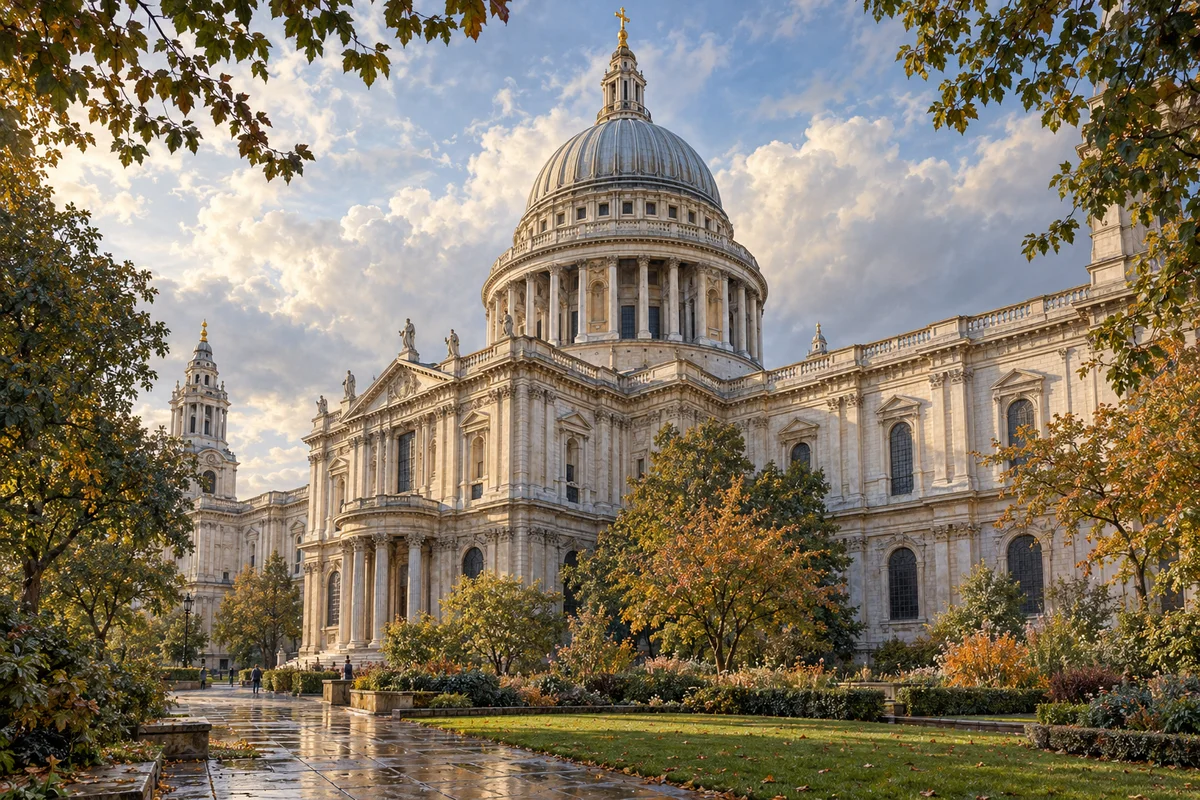
St Paul’s: a dome beyond the garden
A changing cathedral, an enduring silhouette, and the small framing decisions that help us see it.
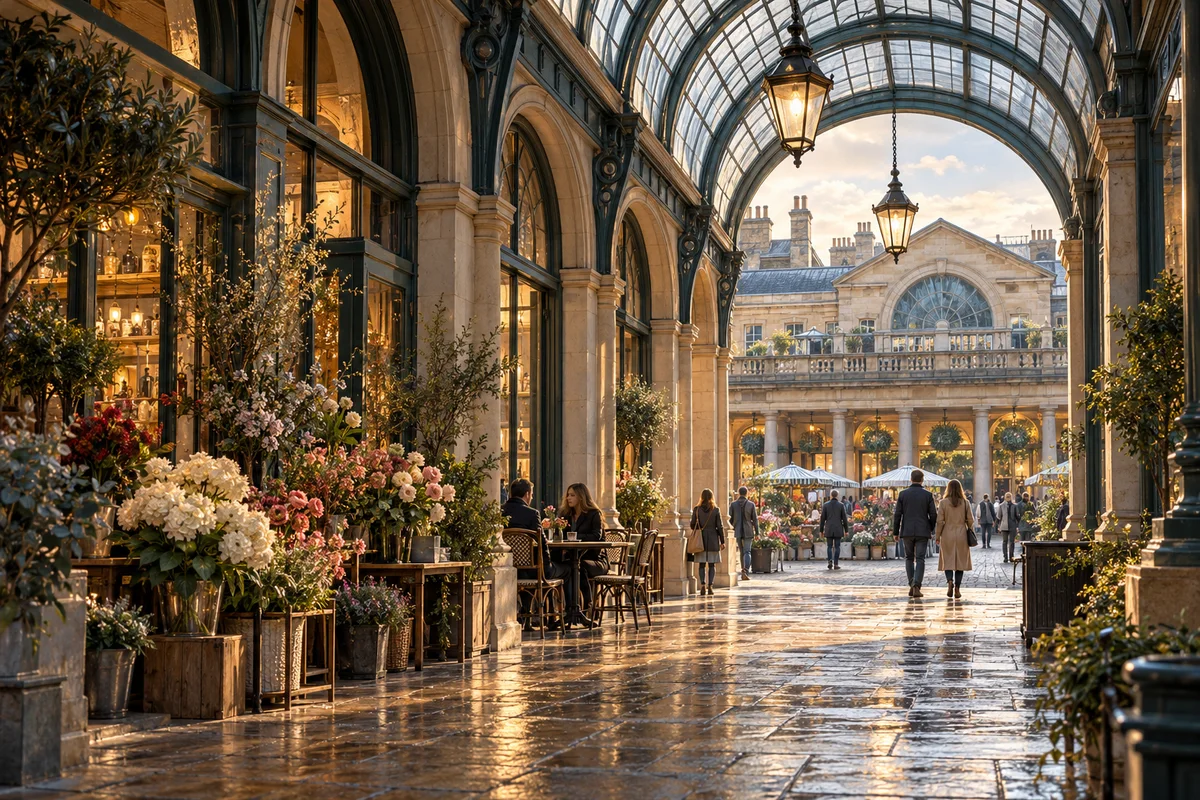
Covent Garden: beneath the market roof
Follow the columns and roof of a market whose architecture outlasted its wholesale trade.
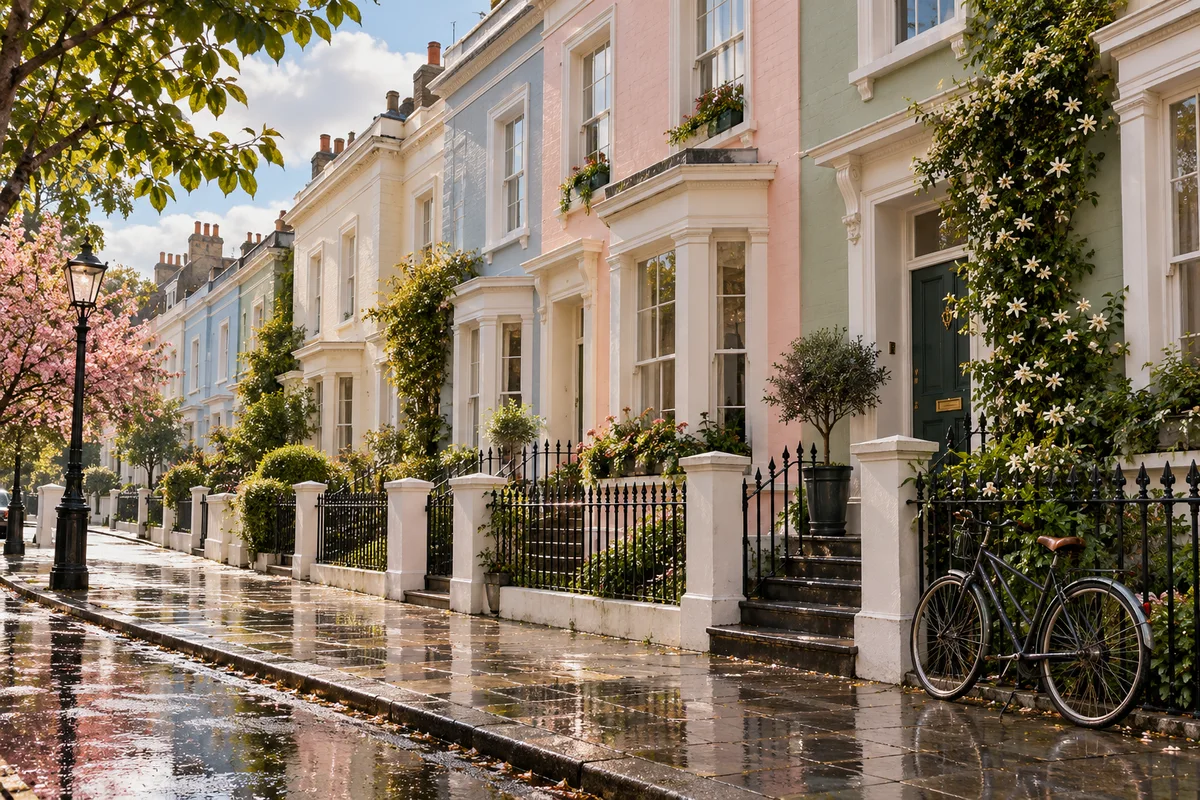
Notting Hill: terraces and the market street
Look past the pastel paint to repeated frontages, different neighbourhoods and Portobello’s trading history.
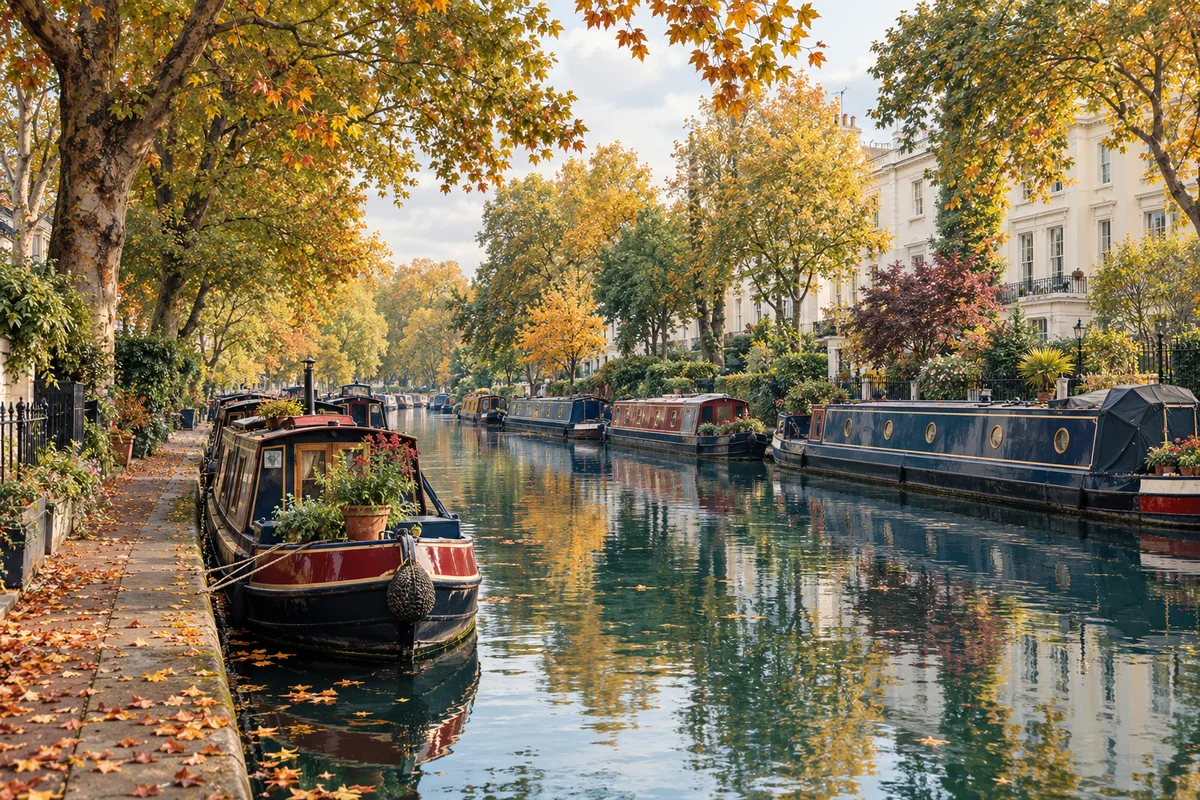
Little Venice: a junction made of water
Quiet reflections belong to a working network. Trace the canal routes behind the waterside scene.
Six ways into the field guide.
Begin with one question and a few selected guides. The complete index of all 54 guides follows below.
Which camera should I open?
Find the view that suits your question: a bridge approach, a square or a shopping street.
What makes this building work?
Discover the machinery, materials and later repairs behind familiar London outlines.
How does this piece of London fit together?
Place a street within its neighbourhood, from Soho to the two banks of the Thames.
What changes when I change the view?
Try another perspective and notice what framing, light and a different street reveal.
- London shopping streets: Oxford Street versus KnightsbridgeNeighbourhoods · 7 min read
- London webcams at night: choosing light and movementViewing · 7 min read
- London rain through a camera: observation versus forecastViewing · 7 min read
- A virtual London camera tour: four contrasting districtsNeighbourhoods · 7 min read
What am I actually watching?
Understand refreshed images, short clips and the clues a picture can give about its age.
How do I look more closely?
Bring one useful question to a crossing or a frontage, then record what you notice.
- London street crossings: how corners and islands shape a junctionViewing · 7 min read
- A repeat-viewing notebook for London street camerasViewing · 7 min read
- London architecture through cameras: comparing street characterCity stories · 7 min read
- Saving cameras privately in your browserViewing · 5 min read
All 54 guides
54 of 54 guides
Big Ben: the bell, the clock and Elizabeth Tower
Separate Big Ben, the Great Clock and Elizabeth Tower, then discover how pennies regulate the pendulum and how the bell is struck.
Albert Bridge: its structure and two riverbanks
Understand Albert Bridge’s combined suspension and cable-stayed structure, its later strengthening and the surviving tollbooths at its two river approaches.
Soho through Shaftesbury Avenue: reading the neighbourhood edge
Use the Shaftesbury Avenue camera to read the seam between Soho’s older small plots and the Victorian avenue, without claiming to see the whole district.
Red buses in street views: recognising London transport
Use a passing red bus as a moving scale mark against a London frontage, and record a route number or destination only when the display is legible.
London rain through a camera: observation versus forecast
Read what a wet London street image shows, then use Met Office observations and forecasts for the separate questions each is designed to answer.
London camera map: location is not viewing direction
Separate three facts about any London camera: where its pin sits on the map, which way the catalogue says it looks, and what the frame actually shows to a viewer.
Westminster Bridge: reading a riverside view
Read Westminster Bridge as a crossing and a riverside landmark, with architectural clues and a practical way to compare London’s Westminster camera views.
Parliament Square: understanding the civic setting
Explore Parliament Square’s garden, monuments and Westminster neighbours, and learn what a street camera can show about this distinctive London civic space.
The Palace of Westminster: recognising the riverfront
Understand the Palace of Westminster’s Gothic riverfront, distinguish its major towers, and choose camera views without expecting a complete parliamentary panorama.
Westminster Abbey: a building of three periods
How Westminster Abbey's apparent unity was made: Henry III began the Gothic church in 1245, later builders followed his design, and the west towers were added only in 1745.
Piccadilly Circus: a junction, not a roundabout
Make sense of Piccadilly Circus as a West End junction, separate the fountain from the illuminated screen, and choose a camera for the scene you want to read.
The Shaftesbury Memorial Fountain: Eros and Anteros
Explore why Piccadilly Circus’s winged archer is called Eros, how Anteros enters the story, and what a traffic-camera image can reveal about the memorial.
Piccadilly Lights: understanding a changing landmark
Learn how Piccadilly Lights combines a recognisable setting with changing screen content, and why short traffic clips cannot tell the whole advertising story.
Albert Bridge after dark: reading the lights
Explore Albert Bridge’s lighting history and learn to read an available night image without assuming the lights, camera angle or capture time are current.
Chelsea Embankment: the riverside setting
Explore Chelsea Embankment’s engineered river edge and historic lamps, then use the Albert Bridge camera pages to understand the surrounding riverside setting.
Battersea Park: beyond the bridge camera
Place Battersea Park beside Albert Bridge: an 1846 Act, a formal opening in 1858, and a designed landscape whose lake, promenade and gates belong to the map rather than the bridge camera.
The Green Park: a royal park beside Piccadilly
Understand The Green Park’s grassland, trees and royal history, and use Piccadilly camera views to explore the boundary between the park and the city street.
Hyde Park Corner: a moved arch and a changed road
How Wellington Arch was built as a palace gate, dismantled in the 1880s to ease traffic, and rebuilt facing Constitution Hill — and how to read the changed corner.
The Ritz and Piccadilly: a streetscape guide
Read the Ritz's Piccadilly frontage as two things at once: a classical stone face and an early steel frame, with the 1906 photograph that records the whole elevation.
Harrods and Brompton Road: reading the district
Understand Harrods’ Brompton Road frontage and department-store history, then compare Knightsbridge camera views for a clearer sense of the surrounding streets.
Selfridges and Oxford Street: architectural context
Read Selfridges’ stone frontage, steel construction and Queen of Time entrance as an architectural composition, then study its Oxford Street setting.
Kensington High Street: old village and urban street
Trace Kensington's older centre from the High Street: a Roman road alignment, the parish church of St Mary Abbots, and Kensington Square, laid out in 1685.
Earls Court: a station district beyond the exhibition grounds
Separate three things called Earl's Court — the Underground station, the neighbourhood and the former exhibition site — and use the road camera for the street they share.
Earls Court's blue police box: public service and the TARDIS
A blue police box stands outside Earl's Court station. London Museum calls it a replica, explains the public service the design performed, and records the television association that made it famous.
Oxford Street cameras: choose the view for your question
Match the question to the camera: Selfridges for the Oxford Street frontage, another street for a different enquiry, Piccadilly Circus for a junction.
Oxford Circus: choose an alternative that answers your question
Oxford Circus has no playable source configured on this site. Choose Selfridges, Piccadilly Circus or Shaftesbury Avenue by the subject you wanted, not the name.
Shaftesbury Avenue: how a theatre street works
Read Shaftesbury Avenue at two scales: the documented addresses of its theatres and the ordinary pavement that carries people past their doors.
Knightsbridge in three views: frontage, corner and road
Give the Harrods, Scotch Corner and Brompton Road cameras three different tasks, using the catalogue’s descriptions rather than a famous name to decide.
Piccadilly cameras: choosing between three views
Pick Piccadilly Circus for the junction, the Ritz view for a built frontage or Green Park for the park edge — three different subjects on one street.
Westminster cameras: bridge versus square
Compare the bridge approach, which looks towards Big Ben with Parliament on the left, with the square’s southward view across a civic setting.
Albert Bridge cameras: Chelsea versus Battersea
Choose Albert Bridge’s Chelsea or Battersea approach by the feature you want — tower, deck or riverbank — and finish with one paired sentence.
London webcams at night: choosing light and movement
Choose a London night view by the edges its light reveals, then separate fixed lamp standards from moving vehicle light to read the street scene.
London traffic images: what congestion looks like
Read a London traffic queue’s visible limits — stop line, bend or crop edge — and leave its cause and duration to TfL’s reported road status.
London street crossings: how corners and islands shape a junction
Study how pavement corners, crossing lines and refuge islands organise a junction in a camera view, and note where the layout leaves the frame.
London architecture through cameras: comparing street character
Compare Westminster, Oxford Street and Albert Bridge through one question — how each visible structure meets road and pavement — with a short vocabulary.
The West End through cameras: a geographic orientation
Place Oxford Street, Regent Street, Piccadilly and Shaftesbury Avenue in relation to one another, then choose three West End cameras as deliberate starting points.
London shopping streets: Oxford Street versus Knightsbridge
Compare the documented fabrics of Selfridges and Harrods, then use two street views to judge frontage, pavement and road without guessing about shops.
London parks at street level: choosing a park-edge view
Choose a London park edge by the boundary you want to see — Piccadilly, Kensington’s southern frontage or the Battersea riverside — using official maps first.
A virtual London camera tour: four contrasting districts
Take a four-stop London camera viewing session — approach, junction, frontage, spanning structure — and give each stop a different spatial question.
A repeat-viewing notebook for London street cameras
Keep repeat observations of one fixed feature, using the five fields of the site’s observation notebook and recording uncertainty as clearly as fact.
Are London webcams really live?
These pages show periodically refreshed TfL stills and short clips, not an uninterrupted live broadcast. A file loading successfully does not verify when the scene was captured.
Why a London webcam image can look old
Separate the age of a pictured scene from the freshness of a cached file. Reloading may change the copy; it cannot date the scene inside it.
Reading detail in a TfL camera image
TfL’s open-data description does not state a standard image dimension. Inspect the particular file and crop, describe only the detail they resolve, and switch sources when you need more.
Why a camera angle changes
A catalogue label names a configured view; the current frame shows what is visible. Neither alone explains why an individual camera now faces a different way.
What to do when a camera clip will not play
Retry a failed clip once, check whether its separate still preview works, then try another camera. One failed video request does not identify its cause.
Why a camera source can disappear
A camera page can remain listed while its image is unavailable. Separate an unconfigured source, a failed request and media the browser cannot display; a blank player alone does not identify which occurred.
Camera previews and video clips: which to choose
Use a still for layout and a clip for movement. A configured camera may still fail to supply either file, and this site has not verified that clips add image detail.
Saving cameras privately in your browser
Keep useful camera views together, return to the list from Saved views, and select Saved again to remove one. The shortlist stays in this browser.
Comparing two camera images responsibly
Compare the shape each camera shows, not how busy two different places appear. The Westminster bridge-and-square study gives the method a concrete pair.
Using street cameras before a London visit
Use a camera to learn a place’s visible layout, then use TfL’s journey tools for current routes and disruption. A camera is not a route or accessibility assessment.
St Paul’s: a dome beyond the garden
Read St Paul’s familiar silhouette through its changing cathedral history, Wren’s dome and the garden foreground.
Covent Garden: beneath the market roof
Explore Fowler’s market, later iron-and-glass roofs and the wholesale trade’s move from Covent Garden.
Notting Hill: terraces and the market street
Look past Notting Hill’s pastel paint to repeated frontages, conservation-area histories and Portobello’s market street.
Little Venice: a junction made of water
Trace Little Venice’s canal junction, the Regent’s Canal freight route and the history behind overlapping waterway names.