How To Plan A Weekend In London: A Practical 2-3 Day Guide
Plan a London weekend without rushing. Learn how to choose priorities, group sights by area, book key attractions and build a flexible 2–3 day itinerary.
Author:James RowleyOct 17, 2026
Planning A Weekend Trip To London Without Rushing
Londonlooks simple until you start planning it. Put Westminster, the Tower of London, Camden, Greenwich and Notting Hillon a list and it feels like you have a weekend sorted.
Then you look at the map.
The problem is rarely a lack of things to do. It is trying to fit too many things into too little time, often with long journeys between attractions.
A better approach is to plan London around three things: how much usable time you have, which areas make sense together, and which experiences actually matter to you. The result is a weekend with enough structure to see the highlights without turning every hour into a race.
For most first-time visitors, the simplest approach is to start with three to five priorities, group them by area, choose one main booking for each day and leave space around it. The right plan depends on whether you have 48 hours, three full days or a long weekend.
How To Plan A Weekend In London
Use this framework before booking anything:
- Work out your real sightseeing time- 48 hours, three days or a long weekend are very different trips.
- Choose three to five prioritiesrather than trying to see every famous attraction.
- Choose a well-connected basethat supports your itinerary.
- Build each half-day around one area, not several attractions scattered across London.
- Choose one main paid anchor per day, then surround it with walks, parks, markets, museums or food.
- Keep a backup for rain, crowds and low energyso one problem does not derail the day.
- Check official transport, attraction and event information shortly before travelling.
The basic principle is simple: plan London like a route, not a checklist.
For broader planning see the London travel guides, and for practical advice on transport, accommodation, free attractions, safety, etiquette and food, see these first-time London travel tips.
Start With The Shape Of Your Weekend
Before choosing attractions, establish how much time you genuinely have. Your arrival and departure times can turn a theoretical 72-hour trip into considerably less usable sightseeing time.
| If you have | A practical approach |
| 48 hours | Focus on central London and choose one main sightseeing area for each day. Prioritise the attractions you would most regret missing. |
| 3 full days | Use the first two days for major central sights, then give the third day to one museum area, neighbourhood or slower route. |
| Friday to Monday | Use the additional time to explore more slowly rather than adding another packed sightseeing day. |
| A late arrival or early departure | Treat arrival and departure days as partial sightseeing days and keep activities close to your accommodation or departure route. |
48 Hours In London
With two full days, prioritisation is essential.
A strong first-time structure is:
- Day 1:Westminster → St James's Park → Buckingham Palace→ Covent Gardenor South Bank→ evening in the West End.
- Day 2:Tower of London → Tower Bridge → Borough Market → South Bank or the City → flexible evening.
You do not need to visit every attraction along these routes. Pick the ones that matter most and treat the rest as optional.
With only 48 hours, avoid adding distant neighbourhoods, day trips and several major paid attractions unless they are genuine priorities.
Three Days In London
A third full day gives you room to add depth rather than simply adding more landmarks.
Possible third-day themes include:
- South Kensington:Natural History Museum, V&A and the surrounding area.
- Bloomsbury:British Museum, Russell Square and Covent Garden.
- Notting Hill:Portobello Road and neighbourhood exploration.
- Camden:Market and Regent's Canal area.
- Greenwich:A change of pace away from central London.
- West London:A slower neighbourhood-focused day.
The important point is not which third day you choose. It is that you have enough time to choose one without squeezing several into the same day. If you have three full days, see the three-day London itineraryfor a more detailed 72-hour route.
A Long Weekend
If you have Friday through Monday, do not automatically turn the extra time into another packed sightseeing day.
Use it to slow down:
- Give a major museum more time.
- Explore a neighbourhood properly.
- Add a theatre performance.
- Visit a market.
- Take a longer Thames walk.
- Build in a flexible half-day.
- Move a weather-sensitive activity to the best forecast window.
Use the extra day to slow the itinerary down rather than simply adding more stops.
Your Arrival And Departure Times Matter
Treat your arrival and departure days differently from full sightseeing days.
Friday arrival:Keep the evening close to your accommodation unless you arrive early and have plenty of energy.
Sunday departure:Avoid putting a distant attraction immediately before an airport, rail or coach journey.
Monday departure:You have much more freedom to use Sunday as a full sightseeing day.
Airport transfers: Factor in travel time from the airport. A journey from Heathrow, Gatwick or Stansted into central London can take an hour or more each way. For a short 48-hour trip, consider arriving at London City Airport, taking the Eurostar into St Pancras, or choosing a hotel with a direct rail connection to your arrival terminal.
Start with your actual usable hours, not the number of nights shown on your booking.
Planning rule:Count arrival and departure days as partial sightseeing days unless you know you will have enough time and energy for a full day.
Choose Your Priorities Before Choosing Your Attractions
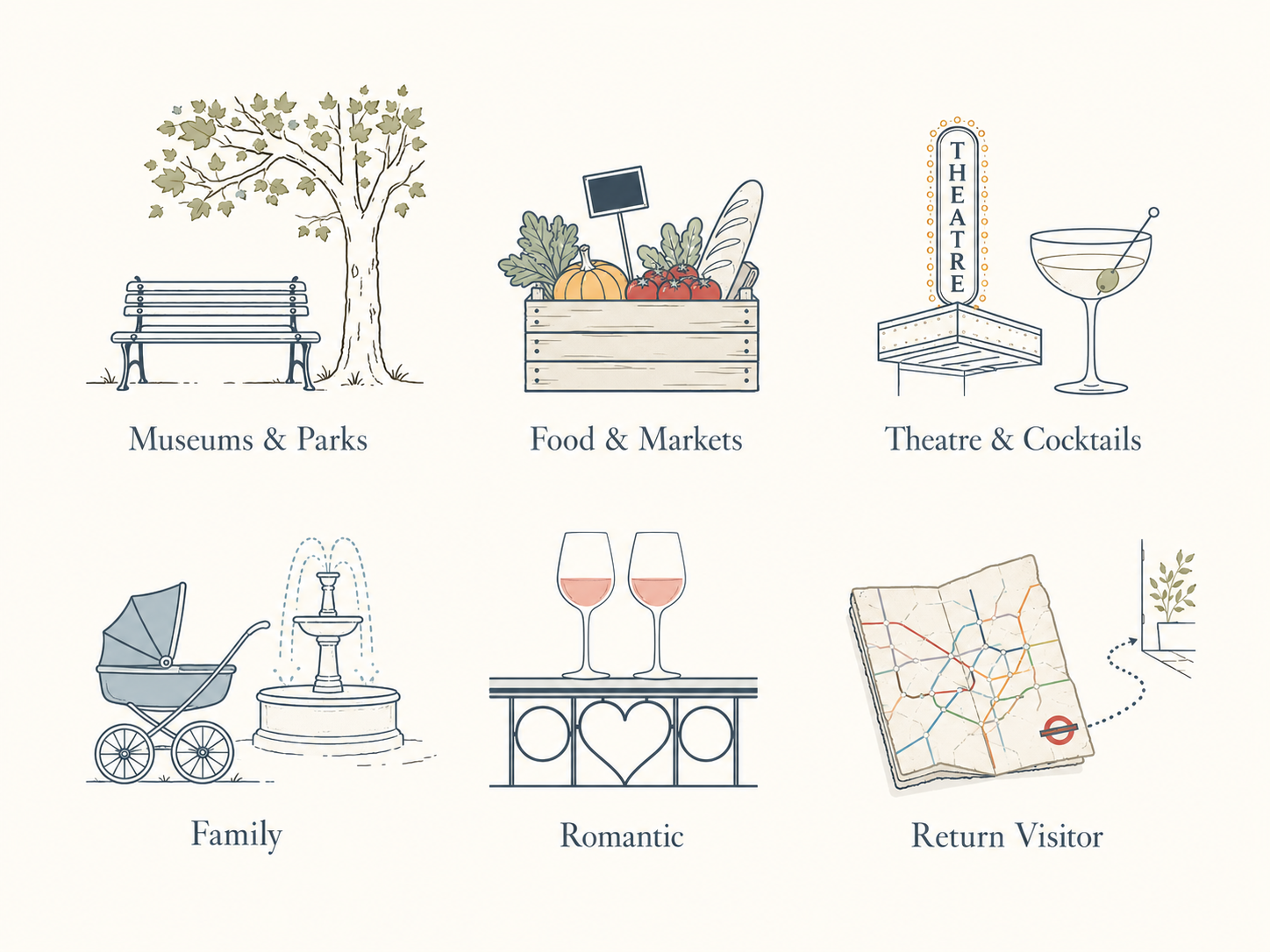
A short London weekend works better when you decide what matters most before filling your itinerary. Start with three to five priorities, then separate them into must-dosand nice-to-haves.
Your priorities might include:
- Major landmarks and first-time London highlights
- Museums and cultural attractions
- Theatre, food and nightlife
- Markets and neighbourhoods
- Parks and outdoor spaces
- Family-friendly activities
- A slower, more relaxed pace
If you need help deciding which sights deserve a place on a short itinerary, compare London attractions worth prioritisingby type, cost and route or browse these things to do in Londonby type and interest.
Start With Three To Five Priorities
Write down the three to five things you would most regret missing. These should shape your route rather than being added to it afterward.
For each priority, ask:
- Does it need advance booking?
- Is it close to another priority?
- How much time do I realistically want to spend there?
Separate Must-Dos From Nice-To-Haves
Put the experiences you would genuinely regret missing on your must-dolist. Everything else can go on your nice-to-havelist.
Build the weekend around your must-dos first. Add nice-to-haves only when they fit naturally into the route and do not make the day feel rushed.
If two priorities compete for the same part of the day, keep the one that matters more and move the other to your flexible list.
Choose One Paid Anchor Per Day
A useful rule for a short trip is to choose one main paid or time-sensitive anchor per day.
A paid anchor could be:
- Tower of London.
- Westminster Abbey.
- A major exhibition.
- London Eye.
- A West End show.
- Another attraction that genuinely matters to you.
Once that anchor is fixed, build the surrounding day around its location.
This prevents the common mistake of paying for several attractions and then rushing through all of them because you have another booking waiting.
Choose A Weekend Style Before Building Your Route
| Your priority | Better planning approach |
| First London visit | Focus on central landmarks and one main attraction per day. |
| Museums and culture | Choose one museum area and give yourself enough time to enjoy it. |
| Food and markets | Choose restaurants and markets that fit your sightseeing route. |
| Theatre and nightlife | Keep dinner, sightseeing and the theatre geographically close. |
| Family trip | Use shorter sightseeing blocks, nearby food options and regular breaks. |
| Budget weekend | Combine free museums, parks, walking and neighbourhoods with one or two paid highlights. |
| Relaxed weekend | Reduce the number of attractions and leave larger gaps between them. |
| Repeat visit | Give the weekend a theme such as a neighbourhood, museum, exhibition or food area. |
Decide what kind of weekend you want before deciding exactly where you will go.
Choose Where To Stay Based On Your Route
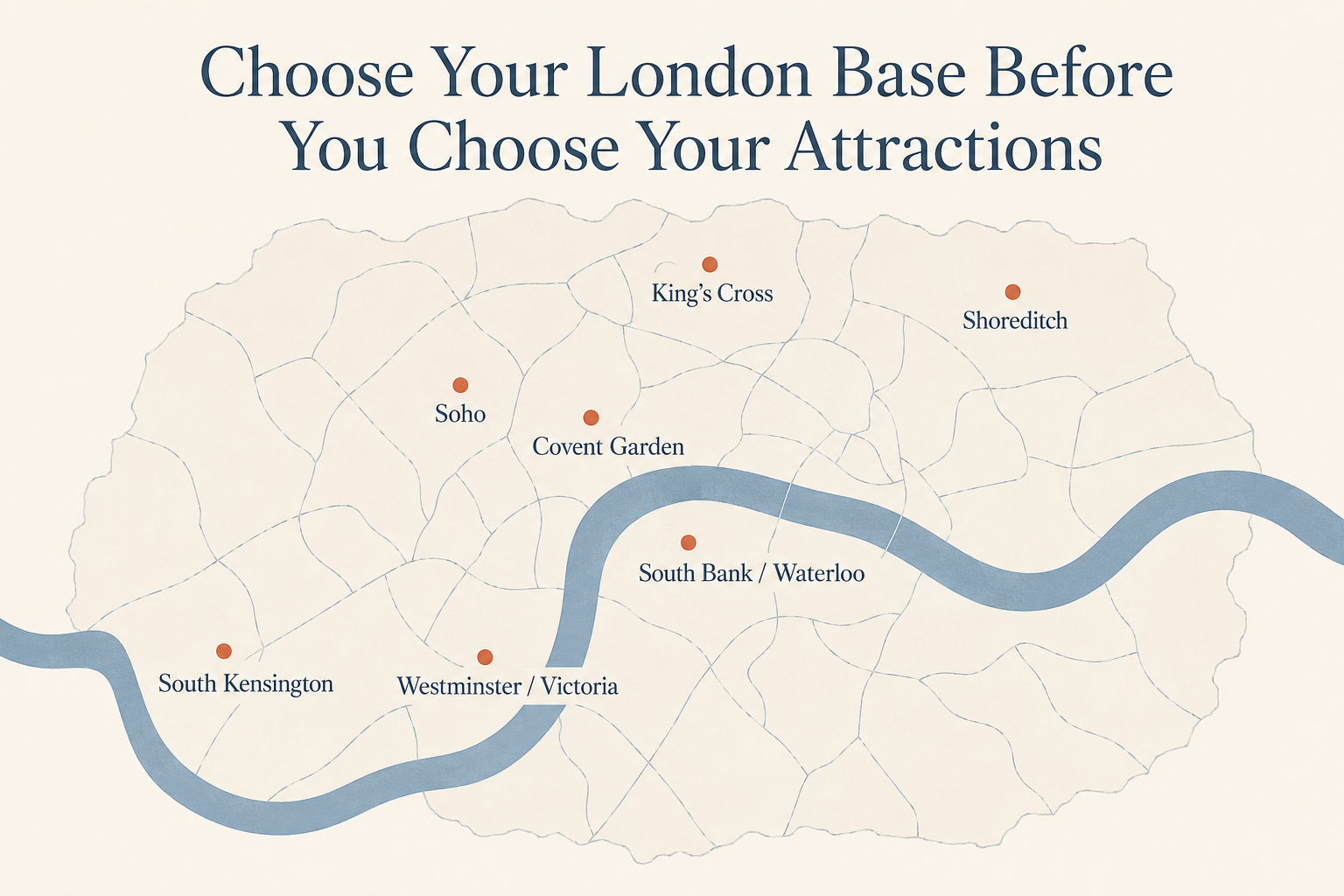
Your hotel can either simplify the weekend or quietly consume it.
For a short visit, the best location is not necessarily the one with the most famous postcode. Good transport connections and proximity to your priorities matter more.
If you have not chosen your base yet, compare the best areas to stay in Londonby transport access, trip style and neighbourhood.
Choose Your Base Around Your Itinerary
For a first London weekend, staying somewhere well connected can save more time than choosing accommodation purely by price. You do not need to stay in the exact centre, but you should be able to reach your main sightseeing areas without complicated journeys.
Areas around Westminster, St James's, Covent Garden, the South Bank and other well-connected parts of central London can work well for first-time visitors because they put several major sightseeing areas within relatively easy reach.
Instead of choosing a hotel first and building your itinerary around it, look at your priorities and choose a base that makes your main routes practical.
Pay particular attention to your first and final priorities. If you arrive late, you may want easy access to your first evening activity. If you have an early departure, staying somewhere with a straightforward route to your station or airport connection may be more useful than being closest to another attraction.
When A Less-Central Hotel Makes Sense
A less-central hotel can still work well if it has a convenient Tube, rail or bus connection to the areas you plan to visit.
The useful comparison is not simply hotel price. Consider hotel cost + travel time + transport convenience.
A cheaper room can become less attractive if you spend a significant part of each morning and evening travelling across London.
Takeaway:Choose the base that makes your actual itinerary easier.
Build Your London Weekend By Area
The easiest way to reduce wasted time is to build each half-day around places that are already close together. For more route ideas built around walkable groups of major sights, use this London landmarks guide.
Do not start with: Buckingham Palace → Tower of London → British Museum → Camden → Greenwich.
Instead, ask:Which places can I experience together without wasting time travelling between them?
Westminster And St James's Park
This is one of the strongest clusters for a first visit.
You can combine:
- Westminster Bridge.
- Big Ben.
- Houses of Parliament.
- Westminster Abbey.
- Parliament Square.
- St James's Park.
- Buckingham Palace.
If Westminster Abbey is one of your priorities, make it your paid anchor rather than trying to add several other ticketed attractions immediately afterwards.
If Changing the Guard matters to you, check the official schedule before building your morning around it. The ceremony can attract crowds and consume enough time to affect the rest of the morning.
Choose this cluster if:this is your first London visit and royal landmarks, Westminster and classic London views are high on your list.
South Bank And Tower Bridge
The South Bank works particularly well because it can connect naturally with other riverside sights.
A practical route could run:
Westminster → South Bank → Tate Modern area → Millennium Bridge → Borough Market → Tower Bridge
You do not have to complete the entire route. Stop where your priorities end. The route keeps most of your sightseeing on the same side of the river, reducing unnecessary journeys.
Choose this cluster if:you want a mix of riverside walking, major landmarks, food and cultural stops without repeatedly crossing central London.
Tower Of London And The City
The Tower of London can be a substantial part of a day.
Pair it with:
- Tower Bridge.
- Riverside walking.
- Borough Market.
- London Bridge.
- City of London sights.
Do not assume that because these places appear close on a map, you can visit every attraction thoroughly in a couple of hours.
Covent Garden, Soho And The West End
This is a useful cluster for:
- Restaurants.
- Theatre.
- Shopping.
- Trafalgar Square.
- National Gallery.
- Evening entertainment.
It is particularly useful on a theatre night because you can keep dinner and sightseeing close to the venue.
Choose this cluster if:theatre, restaurants, shopping and evening entertainment are important parts of your weekend.
South Kensington
For a museum-focused day, South Kensington gives you several major institutions in one area.
The Natural History Museum, Victoria and Albert Museum and Science Museum are close enough to form a logical museum district.
The mistake is trying to see all three in depth. Choose one as the main museum, then treat another as an optional second stop.
Choose this cluster if:museums are one of the main reasons for your trip and you would rather explore one museum area properly than spend the day travelling between attractions.
Other Neighbourhoods
Notting Hill, Camden, Shoreditchand Greenwich can all be worthwhile, but they should usually be chosen deliberately rather than added automatically.
If you want to make a neighbourhood the focus of your third day, compare these London neighbourhoodsby character and what there is to see.
If you only have 48 hours, a neighbourhood further from your main route may not be worth the transport time.
Decide What To Book Before You Arrive
Not every part of a London weekend needs advance planning. The trick is knowing which parts are vulnerable to sell-outs, timed entry or limited availability.
Book Your Essential Anchors First
Prioritise:
- Popular timed attractions.
- Theatre shows.
- Special exhibitions.
- Restaurants that are important to the trip.
- Other experiences where availability is limited.
Then build flexible activities around them.
Leave Some Parts Deliberately Unbooked
Good flexible options include:
- Parks.
- Neighbourhood walks.
- General sightseeing.
- Free museum collections where current entry arrangements permit.
- Markets.
- Riverside walks.
- Casual meals.
This gives you room to adapt if your journey is delayed, an attraction takes longer than expected or you simply get tired.
Do Not Create A Chain Of Fragile Bookings
Suppose you book:
10:00 attraction → 12:30 attraction → 15:00 attraction → 18:00 dinner → 19:30 theatre.
It looks efficient.
It is actually fragile.
A better structure is:
10:00 main attraction → flexible lunch → nearby afternoon choice → flexible break → dinner/theatre.
The second plan gives you room to recover if the morning runs late.
What To Book Ahead And What To Keep Flexible
| Book ahead | Keep flexible |
| West End show | South Bank walk |
| Tower of London | Borough Market browsing |
| London Eye | Parks and viewpoints |
| Afternoon tea | Covent Garden wander |
| Popular restaurants | Free museums, if you can accept queues |
| Timed exhibitions | Pub stops and cafés |
| Thames cruise | Photo stops |
| Special event | Live London webcams |
For real-time weather and crowd checks, view the live London webcams. The West End is not a single theatre but the broader entertainment district encompassing Leicester Square, Covent Garden and Theatreland. For area context, check Visit London’s West End guide.
Book the experiences that genuinely need reservations and leave the rest flexible.
A Practical Friday-to-Sunday London Weekend
The following is a framework rather than a rigid timetable. Move the activities around your arrival time, bookings and interests.
Friday Evening: Arrive, Eat And Keep It Local
Friday is not automatically a sightseeing day.
If you arrive after a flight or long rail journey, check in, drop your luggage and choose something close.
Good options include:
- Covent Garden.
- Soho.
- South Bank.
- A nearby restaurant.
- A short riverside walk.
- A local pub or café.
If you arrive early and feel fresh, use Friday evening for one additional activity. Otherwise, protect Saturday.
Saturday Morning: Westminster, St James's Park And Buckingham Palace
Start around Westminster for a strong concentration of classic London sights.
A sensible sequence is:
Westminster Bridge → Big Ben → Houses of Parliament → Westminster Abbey → St James's Park → Buckingham Palace
Choose whether Westminster Abbey is a priority before you arrive.
If it is, make the visit your anchor. If not, the exterior sights and walk through St James's Park can form a satisfying morning without adding another booking.
Saturday Lunch: Choose Your Afternoon Direction
Choose lunch based on where you want to go next.
Choose Covent Garden or Sohoif you want to continue towards the West End.
Choose Borough Marketif you want to continue east along the Thames towards London Bridge and Tower Bridge.
For a short trip, lunch should support the next part of the route rather than create another cross-city journey.
Saturday Afternoon: Pick One Main Direction
Do not try to do everything.
Option A - South Bank: Walk the river, explore the Tate Modern area, cross Millennium Bridge or continue towards Borough Market.
Option B - Tower: Visit the Tower of London, see Tower Bridge and explore the surrounding riverside.
Option C - West End: Explore Covent Garden, Trafalgar Square and the surrounding streets before dinner or theatre.
Choose the option that fits your Saturday priorities.
Saturday Evening: Theatre, Dinner Or The Thames
Keep your evening close to where the afternoon finishes.
If you have a theatre booking, eat nearby and allow a comfortable buffer before the performance.
If you do not have a booking, a riverside walk, restaurant or relaxed evening in Soho, Covent Garden or South Bank may be more enjoyable than adding another major attraction.
Sunday: Choose One Slower Focus
Sunday is where you should resist the temptation to add everything you missed on Saturday.
Choose one:
- South Kensington museums.
- British Museum and Bloomsbury.
- Notting Hill and Portobello Road.
- Camden.
- Greenwich.
- Hyde Park and a nearby neighbourhood.
- A relaxed final central-London route.
If you have a Sunday departure, choose something close to your luggage and departure route instead.
Use Friday gently, make Saturday your main sightseeing day and give Sunday one clear purpose. For a Sunday departure, make your final sightseeing area work backwards from your departure point rather than choosing it independently.
Build Rain, Crowd And Energy Backups Into The Plan
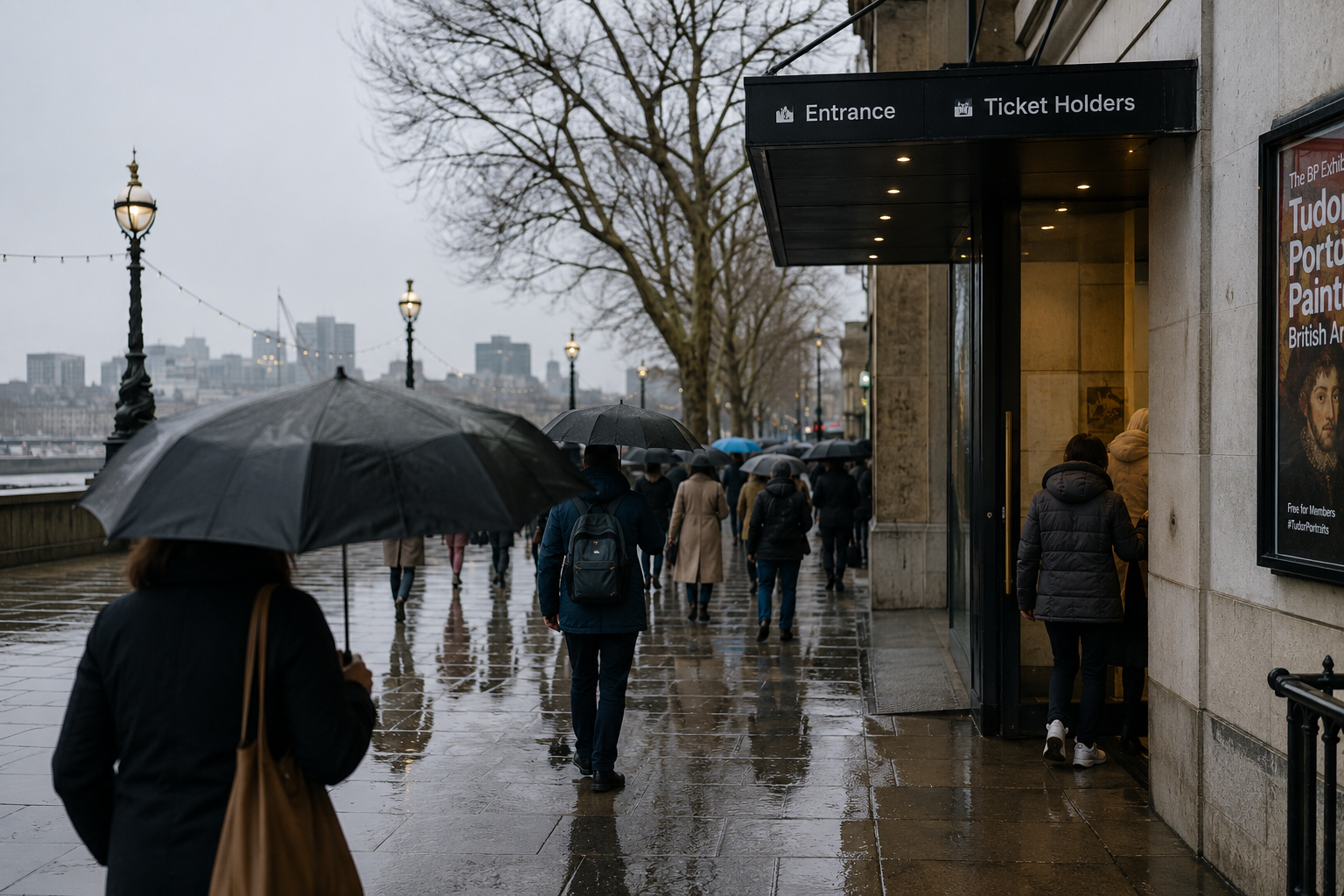
Build alternatives into the plan so rain, crowds or tiredness do not derail the day.
The Three-backup Rule
For every important sightseeing block, know:
- Rain backup:an indoor option nearby
- Crowd backup:a nearby alternative if the area becomes too busy
- Energy backup:an activity you can remove without breaking the day
Your Rain Plan
Pair every important outdoor block with a nearby indoor alternative.
For example:
- Westminster:Westminster Abbey or another indoor attraction
- South Bank:Tate Modern or another cultural stop
- Covent Garden:National Gallery or indoor shopping
- South Kensington:Museum-focused day
- Tower area:Indoor attractions or a shorter riverside route
Keep the backup close to the original route so bad weather does not force you to rebuild the entire day.
Your Crowd Plan
If a major area becomes unpleasantly busy:
- Move to a nearby attraction.
- Switch an outdoor stop with an indoor one.
- Have lunch earlier or later.
- Save the crowded attraction for another day if it is not a must-do.
Do not let one busy location force you into a completely different part of London.
Your Energy Plan
If your legs are tired, remove an attraction before removing your enjoyment of the trip.
A good energy backup might be:
- A café stop.
- A museum.
- A park bench and people-watching.
- A short Tube journey.
- A nearby restaurant.
- Returning to the hotel before dinner.
Your itinerary should contain optional activities that can be removed without breaking the whole route.
Takeaway:Every important day should have a rain option, a crowd option and an energy option.
Plan Transport Around The Route
London's transport network is extensive, but the best journey is not always the one that looks fastest on a journey planner.
Walking, Tube, bus, rail and river services can all make sense depending on the distance and circumstances. For a fuller explanation of walking, the Tube, buses, Elizabeth line, contactless and Oyster, see the guide to how to get around London.
Walk Within Sightseeing Clusters
Walking works particularly well when your attractions are already grouped.
For example:
Westminster → St James's Park → Buckingham Palace
is a natural walking sequence.
So is much of:
Tower Bridge → Borough Market → South Bank
Walking also lets you experience the city between attractions rather than seeing London only from stations. For longer self-guided routes that connect these kinds of sightseeing clusters, see the London walking routesguide.
Use Public Transport For Longer Jumps
Use the Tube, bus, Elizabeth line, London Overground and National Rail where they save substantial time or effort.
Do not feel that every journey has to be walked simply because it looks short on a map.
Station corridors, crossings, stairs and traffic lights can make a supposedly short walk considerably longer in practice.
Contactless And Oyster
For many visitors, contactless pay-as-you-go travel is straightforward. Oyster remains another option.
If you use contactless, use the same card or devicewhen touching in and out. For current fares, payment rules and fare caps, check the latest TfL informationbefore travelling.
Check Weekend Service Changes
Weekend engineering works can alter routes that normally look obvious. Check TfL service information before leaving each morning, especially if your plan depends on a particular Tube or rail connection.
A current transport check is more valuable than a route you researched several weeks earlier.
Takeaway:Walk when your attractions naturally connect; use public transport when it meaningfully reduces distance, effort or time.
Add Food, Markets And Experiences Without Overloading The Trip
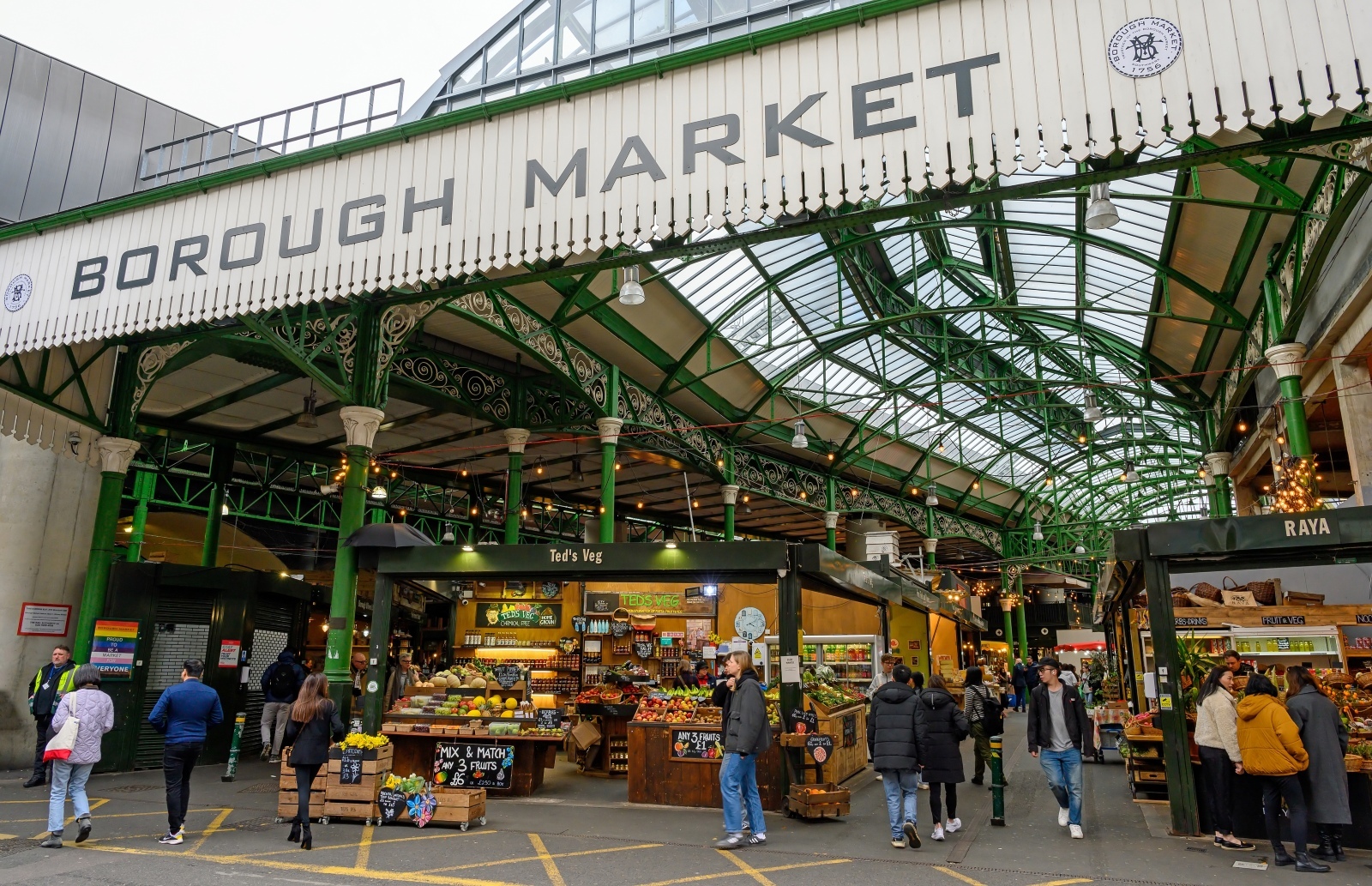
Food should fit your route rather than become another reason to cross London. For a weekend itinerary, a good restaurant in the right location is often more useful than a highly rated restaurant that requires a separate journey.
Plan Lunch According To The Next Area
If you are heading towards Tower Bridge, Borough Market can make sense. If you are continuing towards the West End, Covent Garden or Soho may be more convenient.
For a short trip, location and timing are part of the restaurant decision.
Use Markets As Part Of The Route
Markets can add atmosphere without requiring a separate major attraction.
Borough Market, Portobello Road and other markets can work well when they naturally connect with the day's neighbourhood. Check current opening arrangements before travelling because market schedules can change.
Add One Memorable Evening Experience
Choose one:
- West End theatre.
- Live music.
- Riverside evening.
- Special exhibition.
- Restaurant reservation.
- Evening neighbourhood walk.
One good evening experience usually adds more to a weekend than trying to fit three minor activities into the same night.
Takeaway:Let food and entertainment strengthen your route rather than create additional journeys.
Use Free Things And Budget Choices Strategically
A budget London weekend does not mean avoiding everything that costs money. It means deciding which experiences are worth paying for.
Free Museums And Galleries
London has major museums and galleries with free permanent collections, although special exhibitions can have separate charges.
London's major institutions, including the British Museum, National Gallery, Natural History Museum, Science Museum and Victoria and Albert Museum, offer free entry to their permanent collections.
If museums are a major priority, compare the top museums in Londonby area, budget and the amount of time you have.
Choose one that fits your route rather than visiting museums simply because they are free.
Parks And Walking
Parks are particularly useful because they add breathing room without requiring another ticket. For more ideas, compare the best parks in Londonby location, facilities, walking options and family suitability.
Depending on your route, consider:
- St James's Park.
- Hyde Park.
- Regent's Park.
- Greenwich Park.
Free Events
Free events can be excellent, but they are highly date-dependent. Check current listings for your exact weekend rather than relying on an old annual list.
Spend On The Things You Care About
A useful budget strategy is:
Save on:walking, parks, free museums, neighbourhood exploration and flexible activities.
Spend on:one or two experiences that genuinely matter to you.
For example, a visitor who loves history may spend on the Tower of London while keeping the rest of the day relatively inexpensive.
A theatre fan may prioritise a West End show instead. The objective is not to make the weekend uniformly cheap. It is to make your spending intentional.
Takeaway:Build your budget around priorities, not around trying to make every individual activity cheap. For a broader strategy covering accommodation, transport, food and free attractions, see the guide to London on a budget.
Check What's Happening During Your Weekend
Once your dates are fixed, check the London events calendar before finalising the itinerary.
Events And Exhibitions
Look for:
- Temporary exhibitions.
- Theatre productions.
- Festivals.
- Sporting events.
- Seasonal activities.
- Cultural events.
- Markets.
A special event can change which area makes sense on a particular day.
Bank Holidays And Unusual Weekends
Bank holiday weekends can affect:
- Events.
- Opening arrangements.
- Transport.
- Crowds.
- Restaurant availability.
Check the calendar before committing to a rigid plan.
Event listings and opening arrangements can change, so verify important details with the official organiser or venue for your exact dates.
Takeaway:Your dates are not just a constraint; they can reveal events that should shape the itinerary.
What To Check Before You Travel
The final planning stage is about reducing avoidable surprises.
Use Official Sources For Last-Minute Checks
Travel information can change. Before travelling, verify important details directly with the attraction, transport operator, event organiser or UK government.
This is especially important for opening times, timed entry, temporary closures, transport disruptions, event schedules and UK entry requirements.
Attraction Information
Check the official website for:
- Opening times.
- Timed-entry requirements.
- Ticket conditions.
- Temporary closures.
- Exhibition information.
Do this again shortly before travelling if you booked months in advance.
Tickets And Reservations
Confirm:
- Date.
- Time.
- Number of people.
- Entry instructions.
- Cancellation or amendment rules.
Keep confirmation emails accessible from your phone.
Transport
Check current TfL service information before setting out. Do not assume a normal weekday route will operate unchanged on your weekend.
Weather
Check the forecast close to departure.
You do not need to rebuild the entire weekend around a forecast several weeks away. Instead, identify which outdoor activities can move and which indoor alternatives are nearby.
Accommodation
Confirm:
- Check-in time.
- Check-out time.
- Luggage storage.
- Exact location.
- Route to your first activity.
UK Entry Requirements
Entry requirements depend on nationality and circumstances.
GOV.UK provides the current official information on whether travellers need an ETA, visa or another form of permission. Use that guidance rather than relying on a travel blog. Verify the latest GOV.UK requirementsfor your nationality before travel.
Departure Arrangements
Work backwards from your flight, train or coach.
Allow enough time for:
- Checking out.
- Collecting luggage.
- Reaching the departure point.
- Security or other departure procedures.
- Potential transport disruption.
Your final London activity should fit around your departure time.
Takeaway:The best final check is not “What else can I add?” but “What could disrupt the plan, and have I allowed for it?”
Common London Weekend Planning Mistakes
Most rushed London weekends go wrong for the same few reasons: too many stops, too much cross-city travel and too little flexibility.
- Trying to see everything:Choose the attractions you genuinely care about and skip anything that only appears on your list because it is famous.
- Crossing London unnecessarily:A morning in west London followed by an afternoon in east London can consume more time than expected. Build your itinerary geographically.
- Booking every hour:A rigid schedule has no resilience. Leave gaps between important bookings.
- Ignoring Sunday departure time:A brilliant Sunday itinerary is not useful if you have to abandon it halfway through to reach the airport.
A Simple London Weekend Planning Checklist
Use this sequence from booking to departure.
Before Booking
- Confirm your real sightseeing time.
- Choose three to five priorities.
- Separate must-dos from nice-to-haves.
- Choose the areas that contain your priorities.
- Choose accommodation based on those areas and your transport needs.
- Check your dates for major events, bank holidays and anything that could affect availability or transport.
Before Travelling
- Book your main paid anchors.
- Check official attraction opening information.
- Check current TfL service information.
- Check the weather forecast.
- Prepare a nearby rain alternative.
- Prepare a low-energy alternative.
- Confirm accommodation and transport details.
- Check current UK entry requirements if applicable.
During The Weekend
- Keep each half-day geographically focused.
- Use walking for natural local connections.
- Use public transport for longer jumps.
- Recheck transport before important journeys.
- Drop optional activities if the day becomes too crowded or tiring.
- Leave some time unplanned.
An empty hour is not a planning failure.It may be the hour that lets you sit down, explore a street that caught your attention, stay longer in a museum or simply enjoy being in London.
Frequently Asked Questions
How Do I Plan A Weekend In London?
Start by choosing three to five priorities, grouping them by area, booking essential attractions and leaving flexible time for transport, meals, weather and unexpected delays.
How Many Days Do I Need In London?
Two days are enough for a focused first visit covering major central sights, while three days gives you more time for a museum, neighbourhood or slower day.
Where Should I Stay For A First London Weekend?
Choose a well-connected area that makes your main sightseeing routes easy rather than choosing accommodation based only on price or postcode.
How Should I Group London Attractions?
Group attractions by geographical area so you can walk between nearby sights and avoid unnecessary cross-city journeys.
What Should I Book Before A Weekend In London?
Book experiences with limited availability first, such as popular timed attractions, West End shows, special exhibitions and important restaurant reservations.
How Do I Get Around London Easily?
Combine walking with the Tube, buses and rail services. Walk when attractions are naturally close together and use public transport for longer jumps, checking TfL for current weekend service changes.
Should I Use Contactless Or Oyster In London?
For many visitors, contactless pay-as-you-go is convenient, while Oyster remains an option. Check current TfL payment and fare guidance before travelling because rules and fares can change.
What Can I Do In London For Free?
Free museums, galleries, parks, walking routes, neighbourhood exploration and selected events can provide substantial sightseeing without admission charges.
Is London Good For A Family Weekend?
Yes. Shorter sightseeing blocks, nearby food, parks and regular breaks can make a family weekend easier to manage.
What Should I Skip With Only 48 Hours In London?
Skip distant day trips, unnecessary cross-city journeys and multiple major paid attractions. With only 48 hours, prioritise the sights that matter most to you and group them geographically.
Do I Need An ETA For London?
UK entry requirements depend on nationality and circumstances, so check the latest GOV.UK guidance before travelling.
Final Thoughts: Plan Less, Experience More
A good weekend plan gives your priorities enough time to be enjoyable.
Start with the time you actually have. Choose the experiences you genuinely care about, stay somewhere that supports them, group your days by area and use one main paid anchor to give each day structure.
Then leave room.
That space is what allows the plan to survive a delayed train, a rainy afternoon, a crowded attraction or simply the realisation that you would rather spend another hour beside the Thames than hurry to the next item on a checklist.
If you are unsure what to cut, remove the activity that adds the most travel time without being one of your priorities. A shorter route with time to stop, eat and explore will usually make a better weekend than a longer checklist.
Plan the route, not every minute. London is much easier to enjoy when your itinerary has room to breathe.
Jump to
Planning A Weekend Trip To London Without Rushing
Start With The Shape Of Your Weekend
Choose Your Priorities Before Choosing Your Attractions
Choose Where To Stay Based On Your Route
Build Your London Weekend By Area
Decide What To Book Before You Arrive
A Practical Friday-to-Sunday London Weekend
Build Rain, Crowd And Energy Backups Into The Plan
Plan Transport Around The Route
Add Food, Markets And Experiences Without Overloading The Trip
Use Free Things And Budget Choices Strategically
Check What's Happening During Your Weekend
What To Check Before You Travel
Common London Weekend Planning Mistakes
A Simple London Weekend Planning Checklist
Frequently Asked Questions
Final Thoughts: Plan Less, Experience More

James Rowley
Author
James Rowley is a London-based writer and researcher covering London life, cultural geography, London travel, live London webcam pages and selected public figures across entertainment, sport, business and public life.
For over 15 years, he has focused on verified sources, first-hand local context and clear explanations that help readers understand both places and people more deeply. His work combines street-level London knowledge with careful research into career credits, media work, business interests and, where relevant, transparently explained net worth estimates.
He writes and reviews articles published on LondonWebcam.
Latest Articles
Popular Articles